




Travel teaches you many things.
Languages.
History.
Architecture.
And occasionally…
human nature.
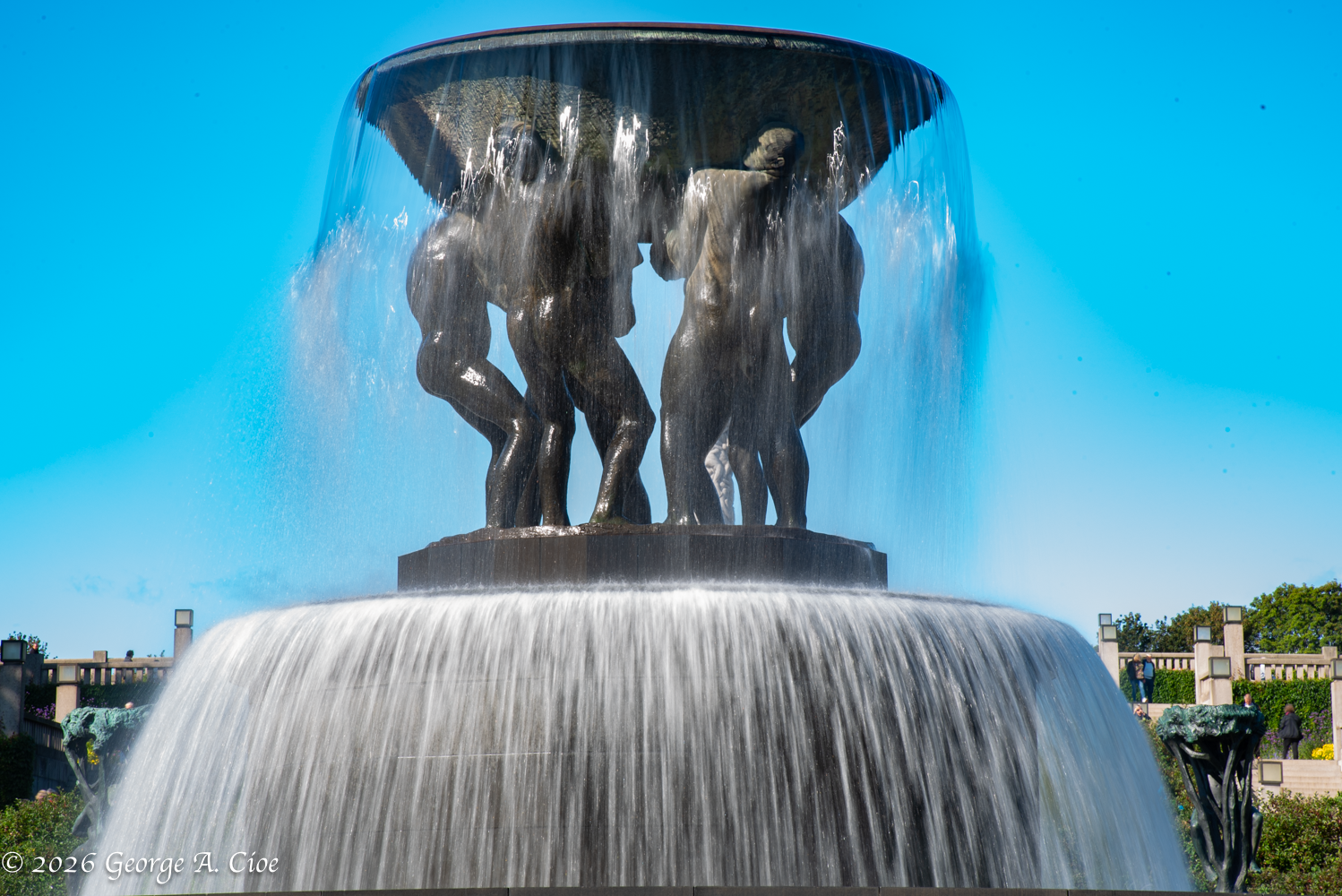
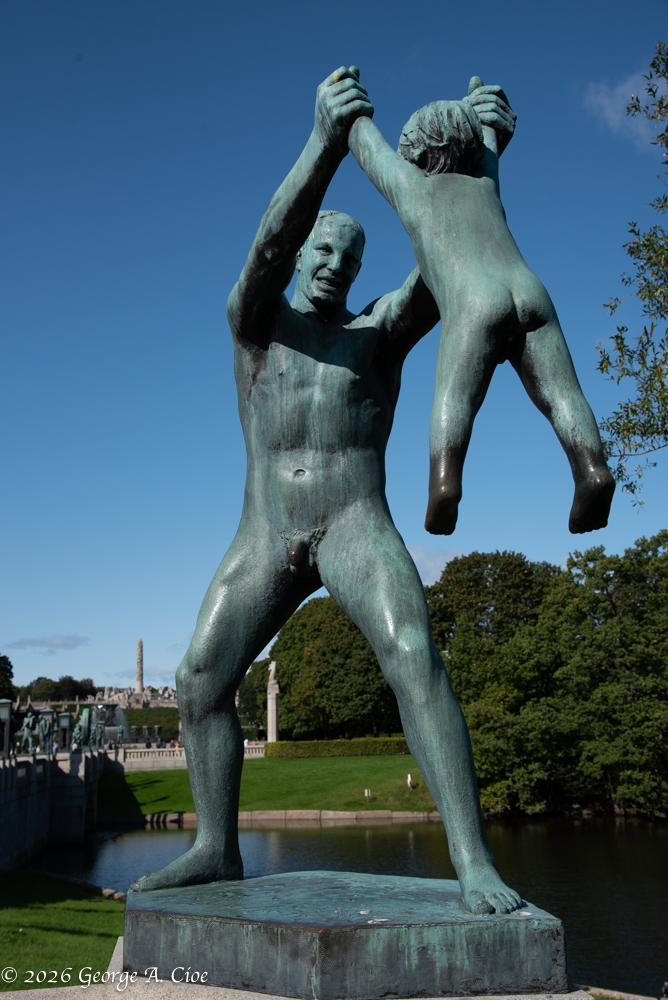
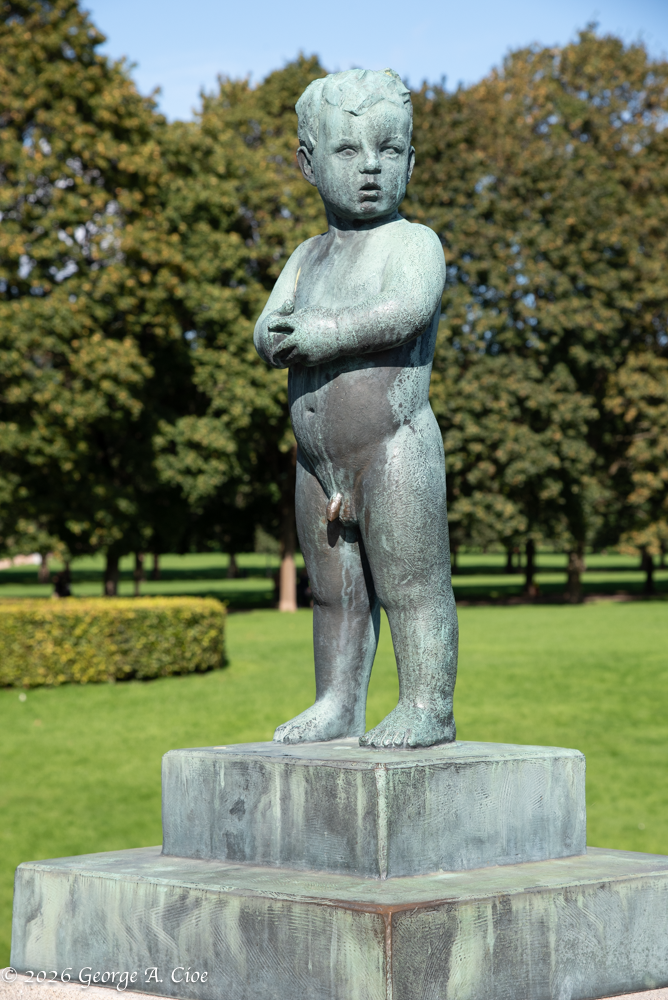
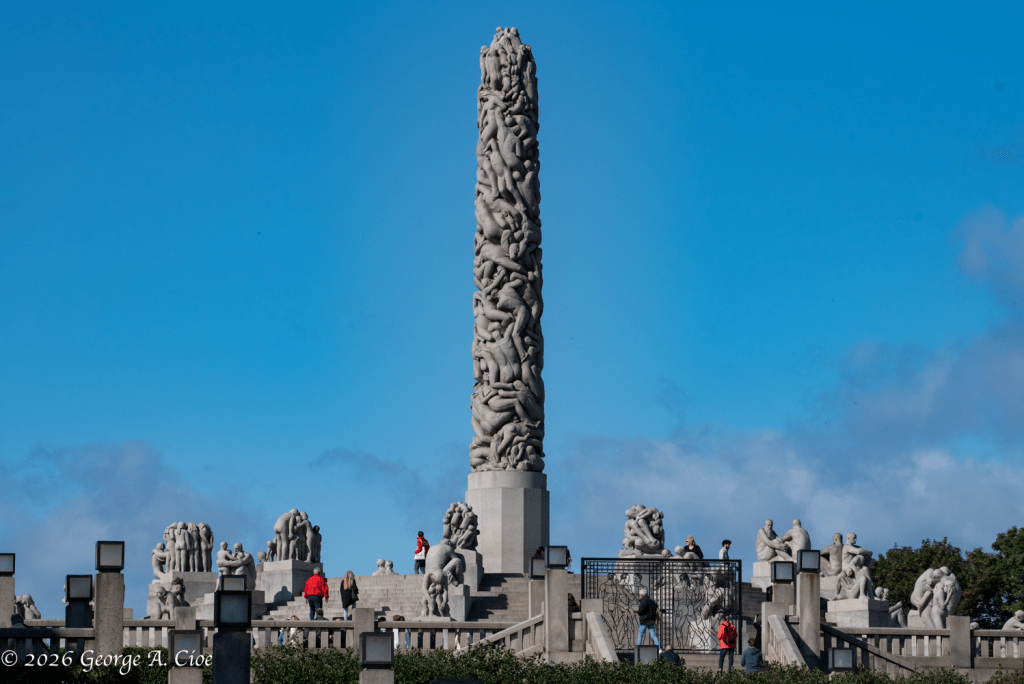
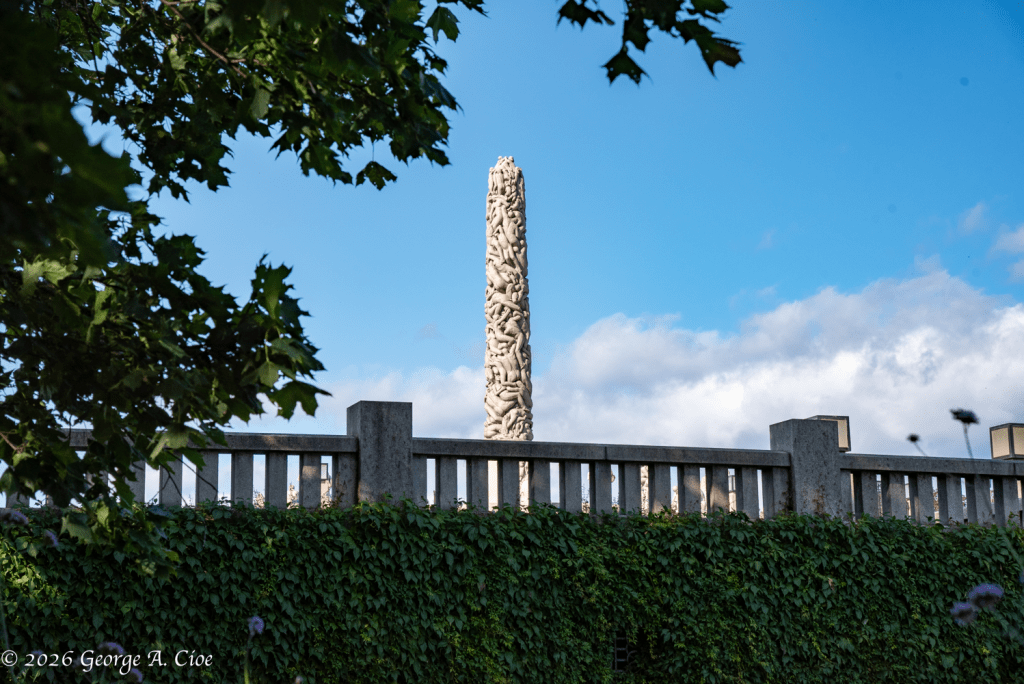
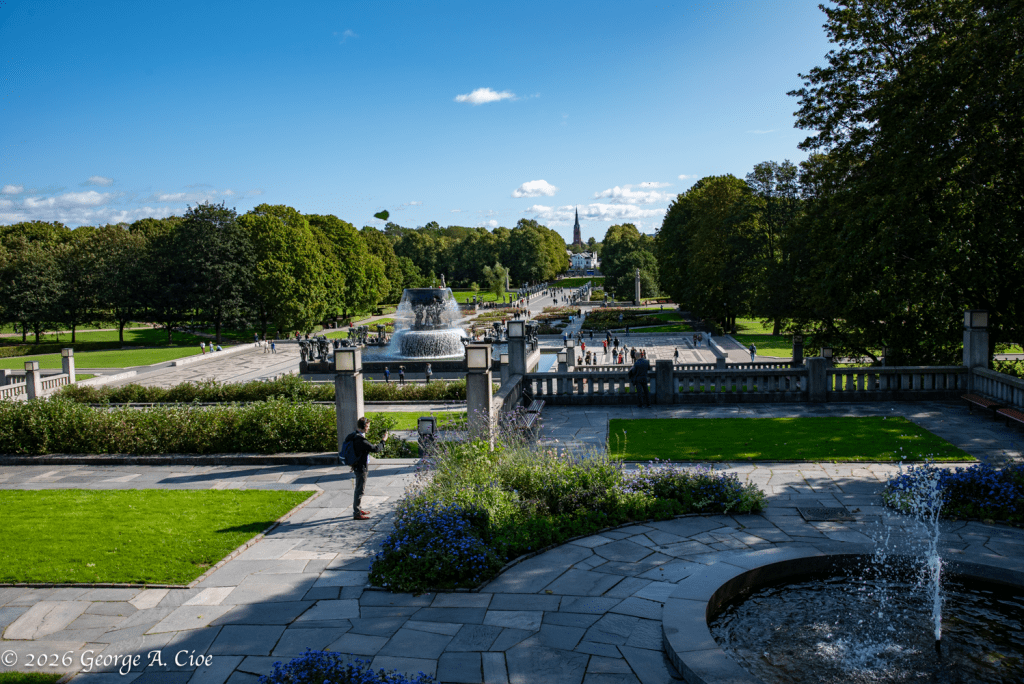
Which is how I found myself standing in Vigeland Park in Oslo, surrounded by hundreds of magnificent sculptures created by the Norwegian sculptor Gustav Vigeland.
Now let me say right up front — the park is breathtaking.
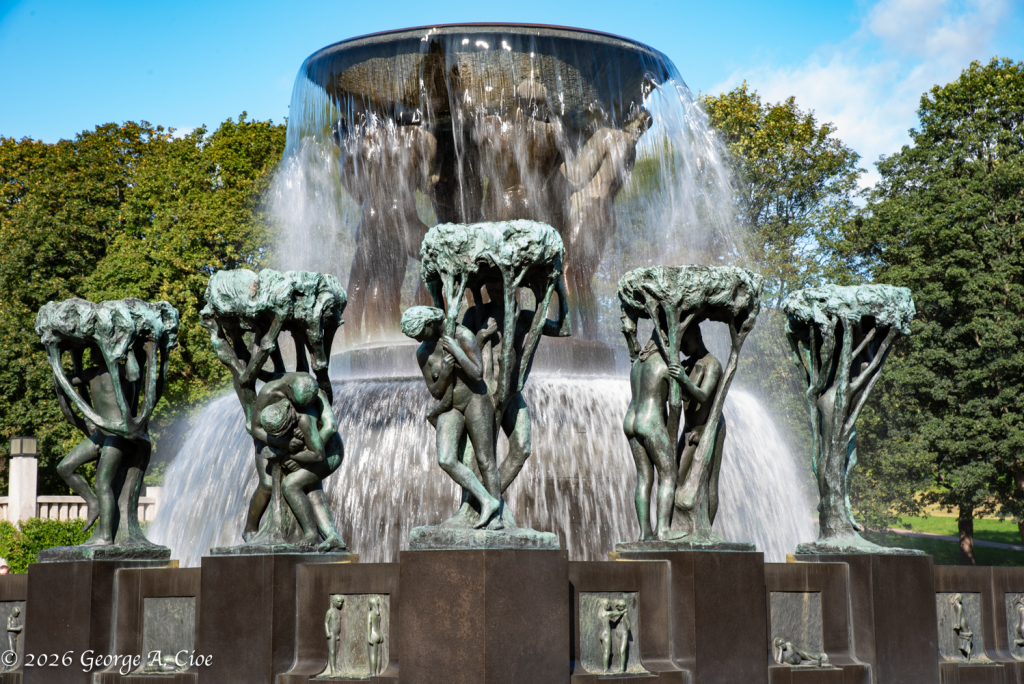
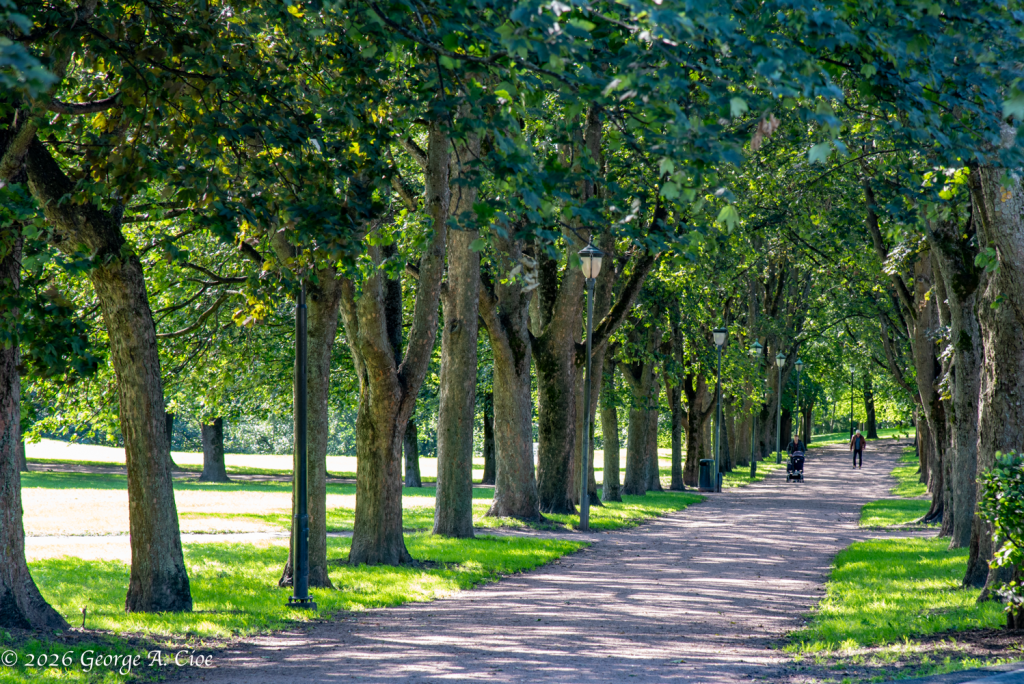
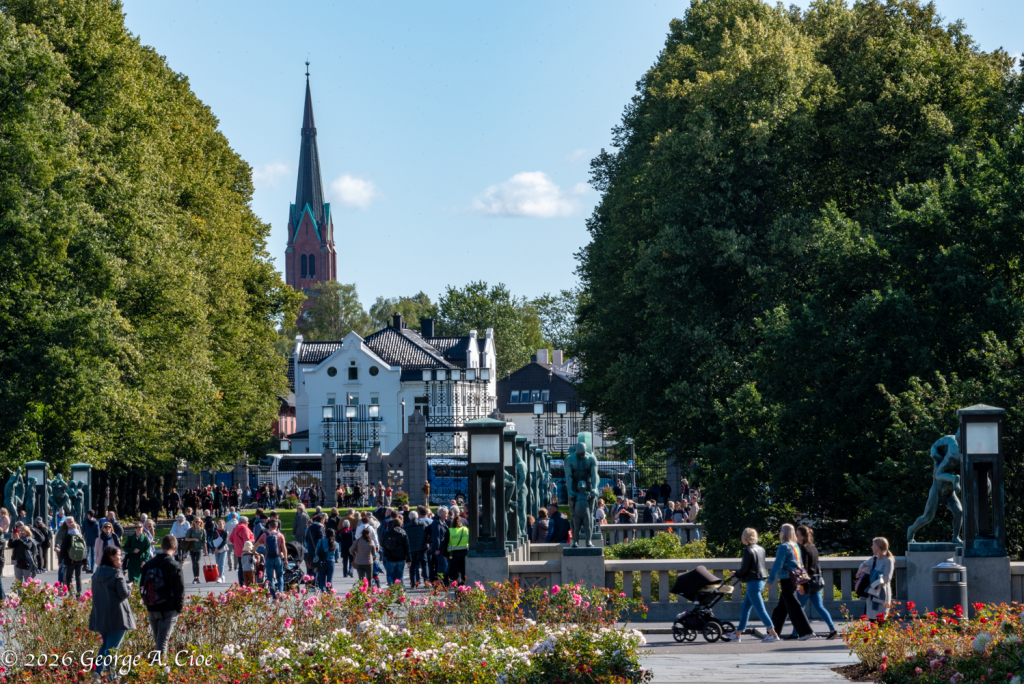
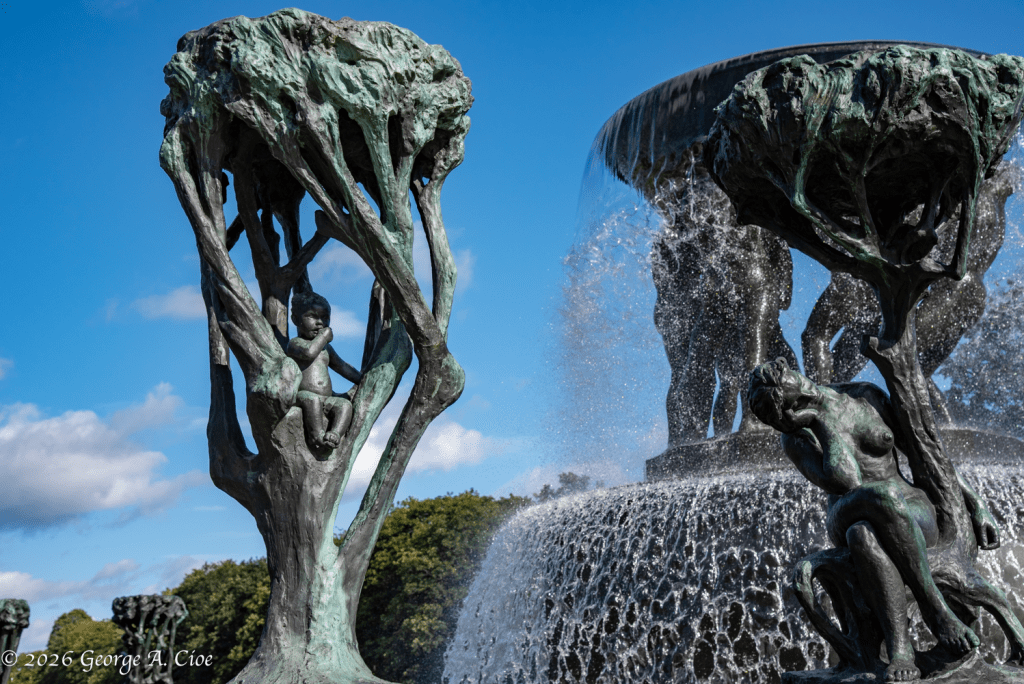
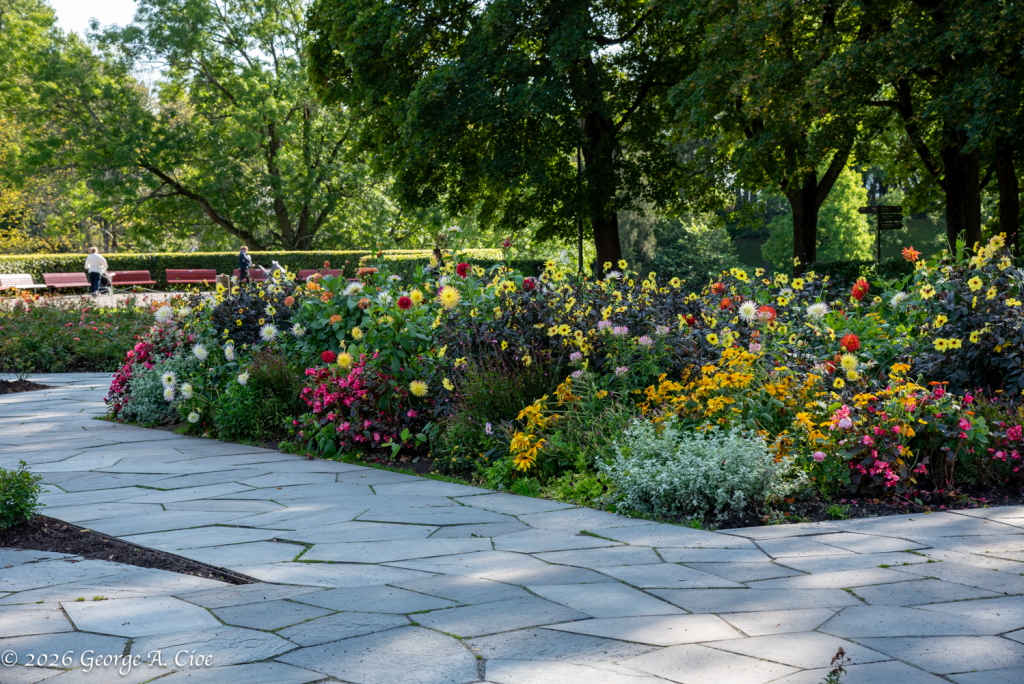
Wide green lawns. Tree-lined walkways. Sculptures everywhere. Families strolling. Couples walking hand in hand. Children laughing. Water cascading down the massive fountain at the center of the park.
And everywhere you look…
Bronze statues.
Lots of them.
Hundreds.
All depicting the human experience — life, struggle, love, family, aging.
Also…
A surprising number of fully naked men.
Now listen, I’m an adult. I’ve seen art before. Michelangelo didn’t exactly send his statues to finishing school either. But something quickly caught my eye.
Actually… several somethings.
Certain parts of the statues were very shiny.
Not the shoulders.
Not the arms.
Not the knees.
No.
These particular bronze sculptures had one very specific area polished to a brilliant golden sheen.
And I thought to myself:
“Well now… that’s curious.”
Bronze statues sitting outside for decades should weather evenly. They turn that beautiful green patina. Soft. Matte. Historical.
Except…
apparently…
when thousands of tourists decide to rub the same spot for good luck.
Suddenly those areas shine like the hood ornament on a brand new Cadillac.
And if you’re wondering what part of the statue people feel compelled to rub…
Let’s just say it’s not the elbow.
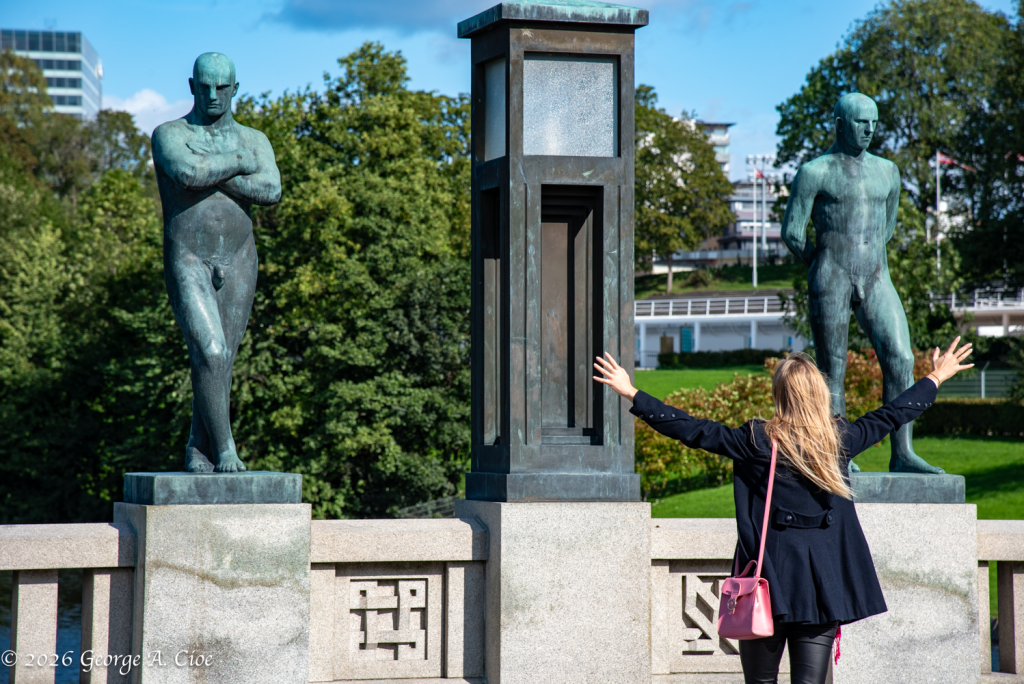
At one point I saw a young woman standing between two statues on the bridge.
Both statues had the tell-tale polished look.
I asked her, politely and purely for sociological research:
“So… which one?”
She didn’t hesitate.
She smiled.
“Both.”
Then she added, with admirable practicality,
“I’m going to give them both a rub.”
Now that’s the kind of efficiency I admire in international travel.
Why gamble your luck on just one bronze gentleman when the odds can be doubled in under ten seconds?
Meanwhile the statues themselves seemed completely unfazed by centuries of attention.
Stoic.
Dignified.
Quietly participating in what might be the most unusual superstition in Scandinavia.
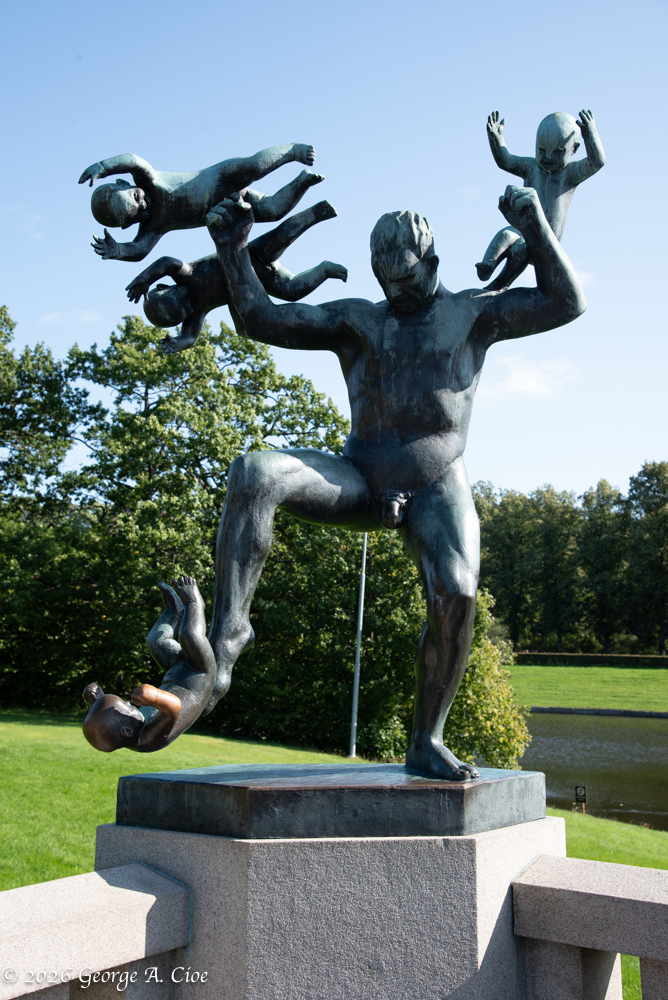
And as I continued walking through the park, photographing the sculptures — fathers tossing children into the air, families embracing, humanity frozen in bronze — I realized something wonderful about the place.
The park celebrates life in all its forms.
Birth.
Family.
Joy.
Chaos.
And apparently…
a global tradition of rubbing statues in extremely predictable locations.
Because no matter where you travel in the world, you eventually learn one universal truth about human beings:
Give us a statue…
and sooner or later…
someone is going to rub it.
For luck.
I’d love to share my posts with you. If you subscribe, they’ll come straight to your inbox—most days, like a little note from me to you. It means a lot to know you’re reading along.
Browse my complete art portfolio and shop for prints at imagesbygacioe.shop




Leave a Reply