
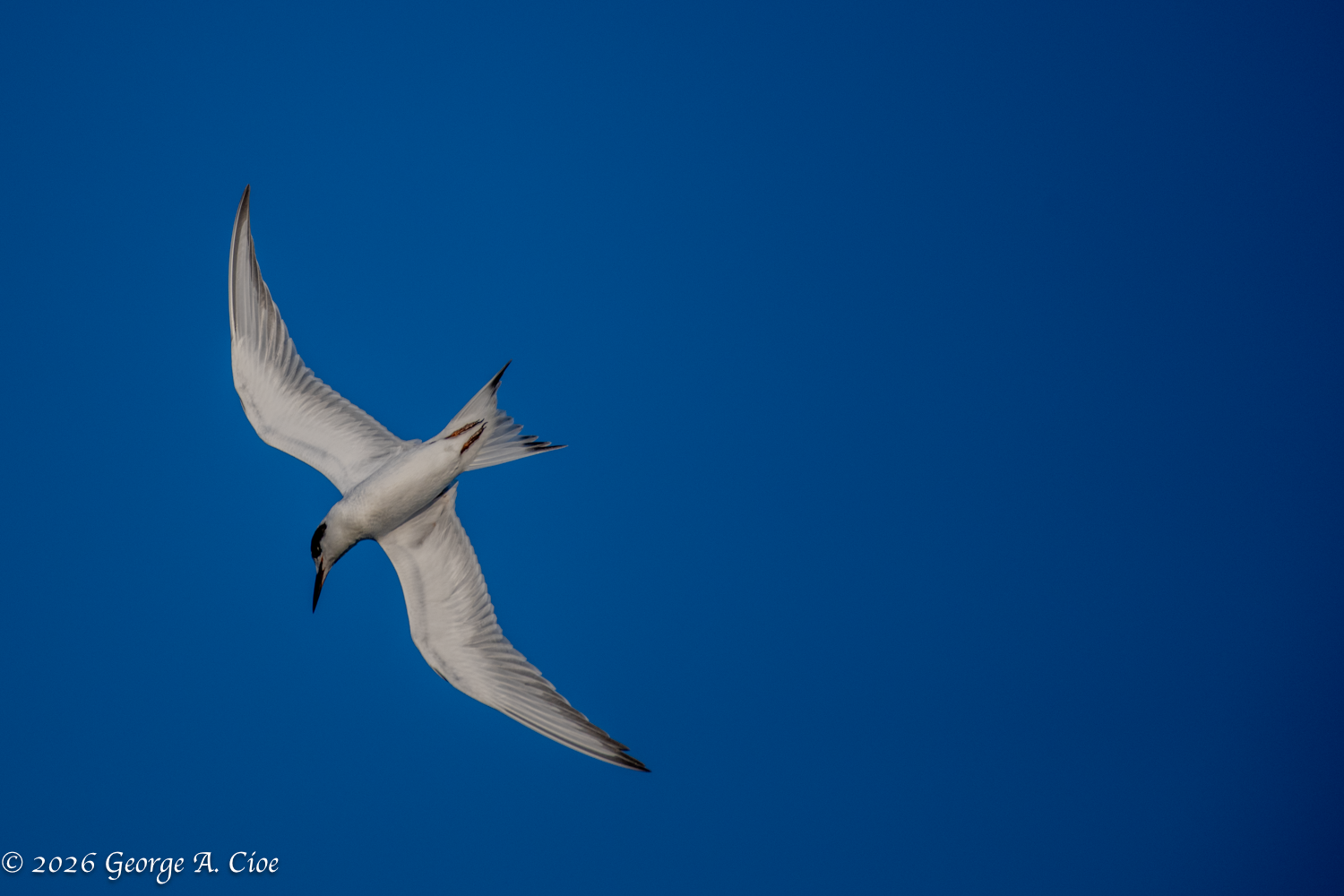
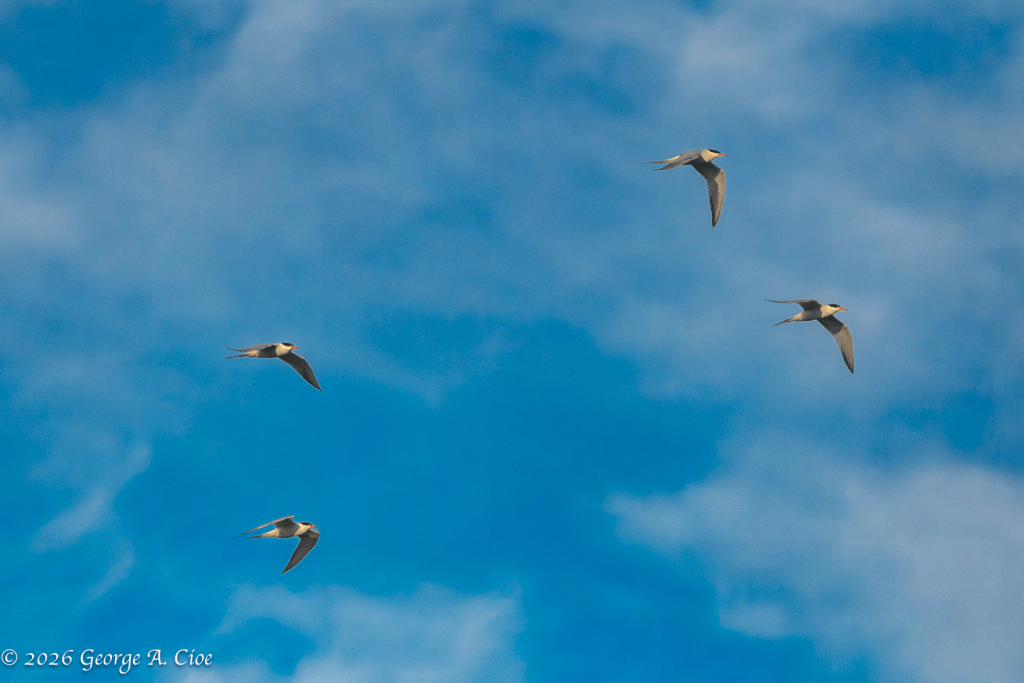
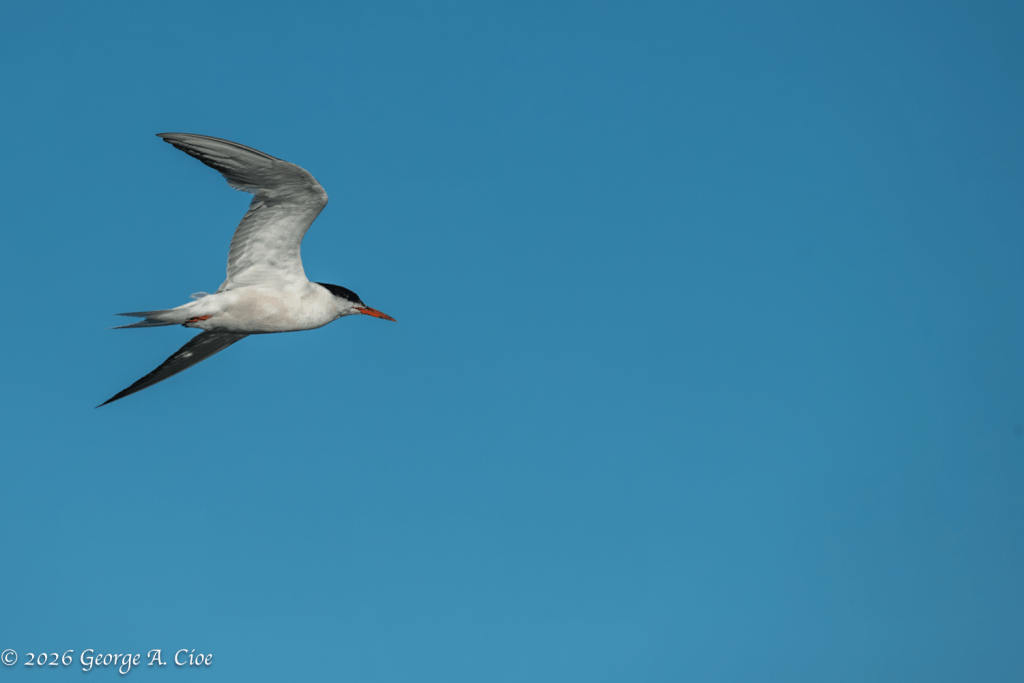

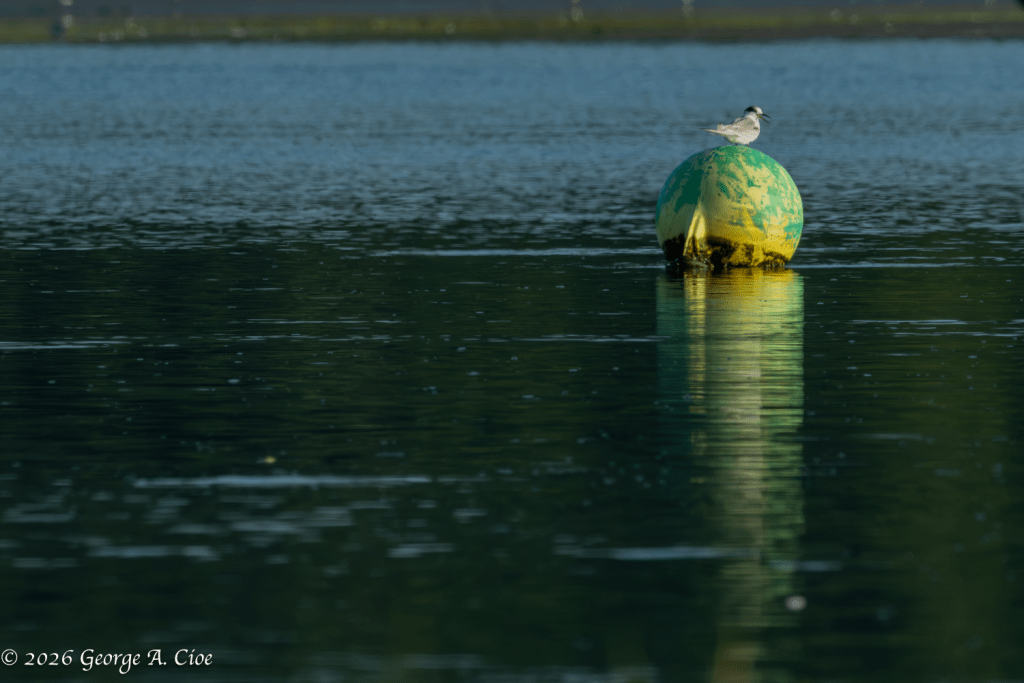


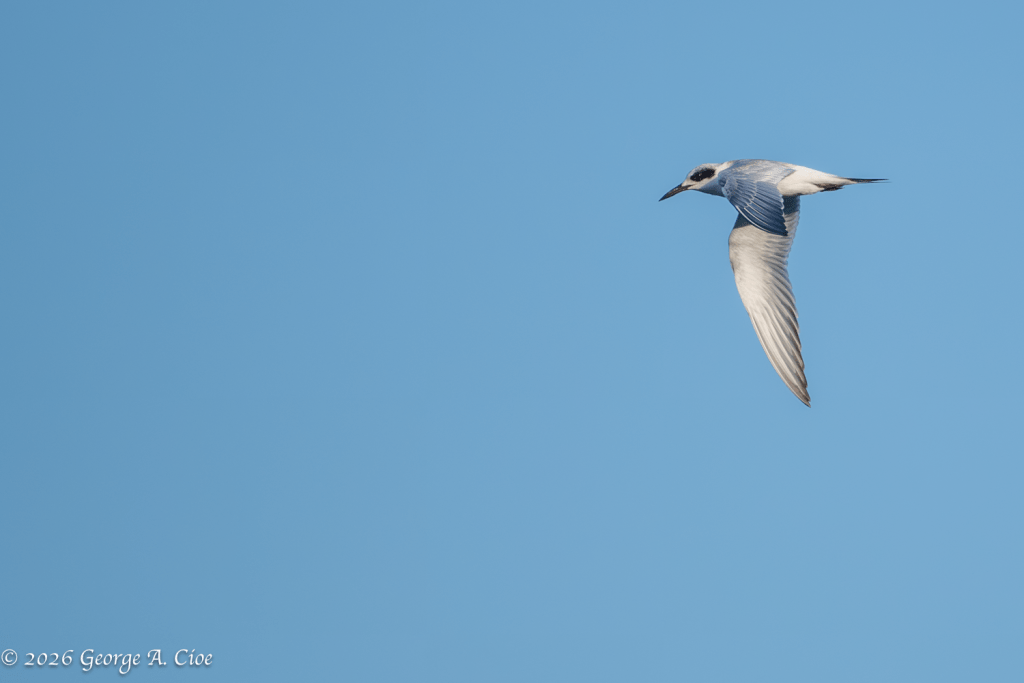


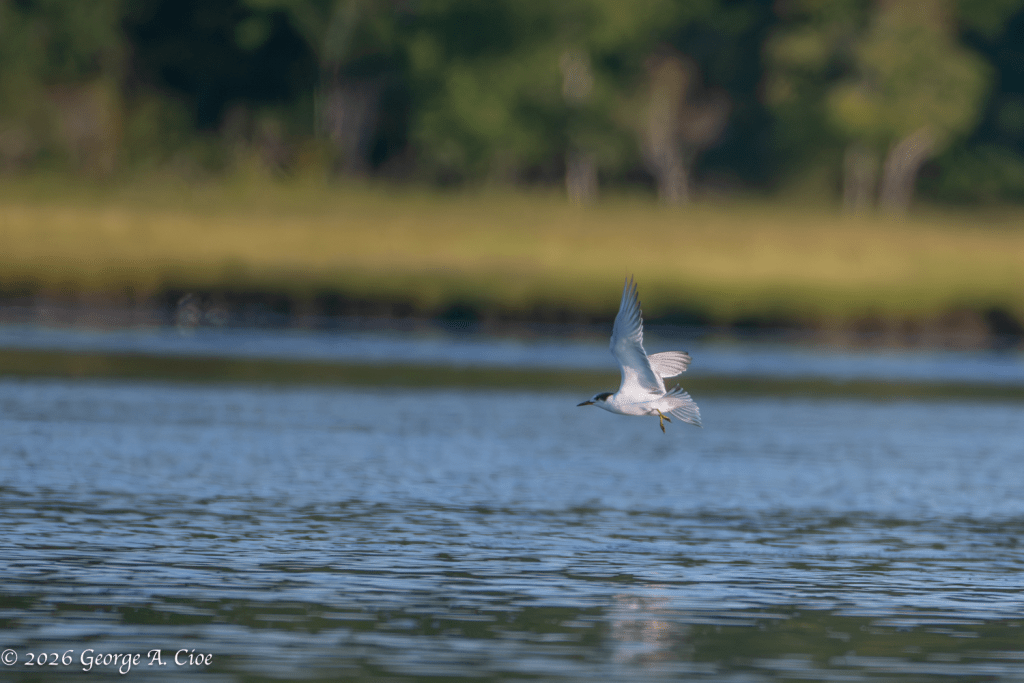

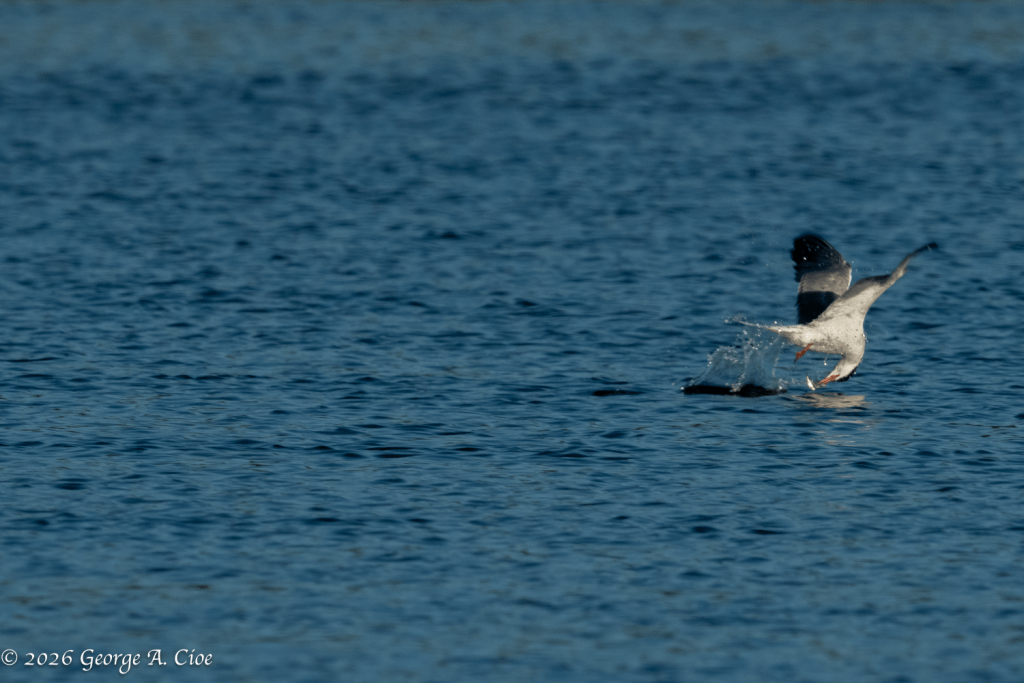
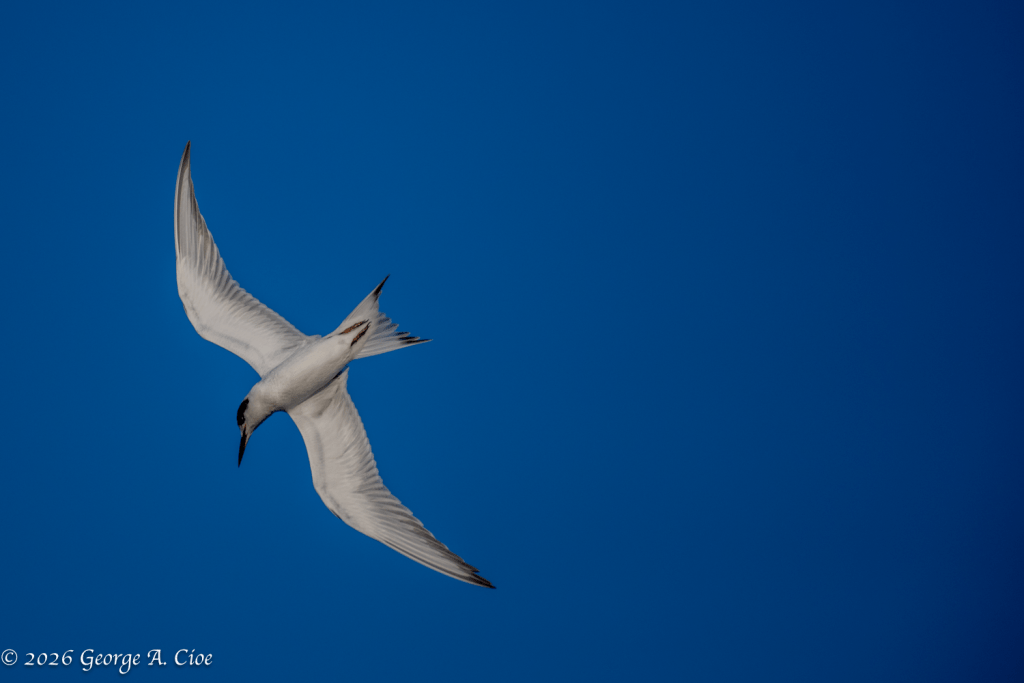
Terns are the acrobats of the avian world.
I’m convinced of it.
They can turn on a dime.
And give you five cents change.
While flying 30 miles an hour.
Backward.
Okay, maybe not backward.
But after photographing these little lunatics, I’m not ruling anything out.
I had been watching them working the Narrow River, and from a distance their technique looked rather graceful.
Fly.
Look down.
Turn.
Dive.
Catch fish.
Repeat.
Simple enough.
Then I looked at the photographs.
Good Lord.
Apparently, I had been watching the Blue Angels with feathers.
Because what looks smooth to the naked eye becomes something entirely different when you freeze one tiny fraction of a second.
Terns don’t merely turn.
They fold.
They twist.
They bank.
They brake.
They hover.
They drop.
They accelerate.
They throw one wing up, the other one down, point their head toward the water and somehow make a 90-degree course correction without losing their lunch.
And sometimes they appear to violate several laws of aerodynamics while simultaneously obeying every one of them.
There were Common Terns.
Least Terns.
And Forster’s Terns.
All taking advantage of an abundance of baitfish.
Which meant the river had temporarily become an all-you-can-eat seafood buffet.
And the terns had apparently arrived with coupons.
The remarkable thing about a tern is its ability to hunt while flying.
Those eyes are constantly scanning the water below.
Find the fish.
Track the fish.
Calculate the fish’s movement.
Adjust for wind.
Adjust for water.
Adjust for speed.
Then—
TURN!
And that is where things get ridiculous.
A tern can suddenly roll into a steep bank, change direction almost instantly, pull its wings into a completely different configuration and drop toward the water with the determination of a bird that has just realized somebody else is about to eat its fish.
I have photographic evidence.
One image in particular didn’t make sense until I enlarged it.
The tern had already passed the fish.
Or so I thought.
Its body was going one way.
Its head was going another.
Its wings appeared to be negotiating among themselves.
And somehow the bird was reaching back toward the water to grab the fish it had just flown past.
Think about that.
I occasionally have difficulty retrieving something from my back pocket while standing still.
This bird was correcting a high-speed aerial miscalculation while flying over water.
And eating.
That is talent.
Then there is the fishing technique itself.
Terns can hover briefly while assessing prey, plunge toward the surface, snatch something from the water, and immediately convert downward momentum back into forward flight.
Sometimes they barely touch the water.
Sometimes they hit it.
Sometimes there is a splash large enough to suggest that something has gone terribly wrong.
Then—
Up comes the tern.
Fish in beak.
Nothing to see here.
Apparently that was the plan.
Of course, even fighter pilots need a break.
And that brings us to the morning’s unexpected subplot.
The buoys.
There was a white float and a big green ball marker out on the river.
To me, navigational equipment.
To the terns?
Interstate rest areas.
They would fish.
Turn.
Dive.
Twist.
Catch.
Circle.
Then land on a buoy for a little rest.
Perfectly sensible.
Except there was apparently limited seating.
And no reservation system.
One tern would land.
Another would arrive.
Then came the squawking.
Lots of squawking.
From what I could determine, the conversation went something like this:
“I was here first!”
“You’ve been there six minutes!”
“I caught three fish!”
“Nobody cares, Harold!”
“GET OFF THE BALL!”
It was delightfully confrontational.
And then, inevitably, somebody would surrender the perch and head back into the air.
Where the transformation was immediate.
The little bird that had just been screaming at its neighbor over possession of a faded green buoy suddenly became an airborne masterpiece.
Wings swept back.
Body streamlined.
Eyes down.
Searching.
Always searching.
And then—
Turn.
Tern.
Turn.
That may be what fascinated me most.
These birds aren’t merely fast.
They are precise.
Every feather becomes part of the aircraft.
The long pointed wings provide speed and lift. The tail helps steer and brake. Subtle changes in wing angle allow them to bank sharply, hover into the wind and make those breathtaking last-second corrections as they track prey beneath a moving surface.
Their flight looks spontaneous.
It isn’t.
It is millions of years of evolution expressed in fractions of a second.
And my camera let me see something my eyes couldn’t.
That’s one of the great gifts of photography.
Sometimes the photograph doesn’t merely preserve what you saw.
It reveals what you missed.
A wing twisting.
A tail spreading.
A head reaching backward.
A fish suspended for an instant between water and beak.
A body contorted into a position that looks completely impossible until you remember—
Nobody told the tern it was impossible.
So the next time you see one of these little birds flying over the water, don’t just watch where it goes.
Watch how it gets there.
If you can.
Because just about the time you think you have figured out where a tern is headed…
It turns.
Naturally.
I’d love to share my posts with you. If you subscribe, they’ll come straight to your inbox—most days, like a little note from me to you. It means a lot to know you’re reading along.
Browse my complete art portfolio and shop for prints at imagesbygacioe.shop


Leave a Reply