

There are some photographs you take.
And others that reach out, grab you by the collar, and demand to be taken.
This was one of those.
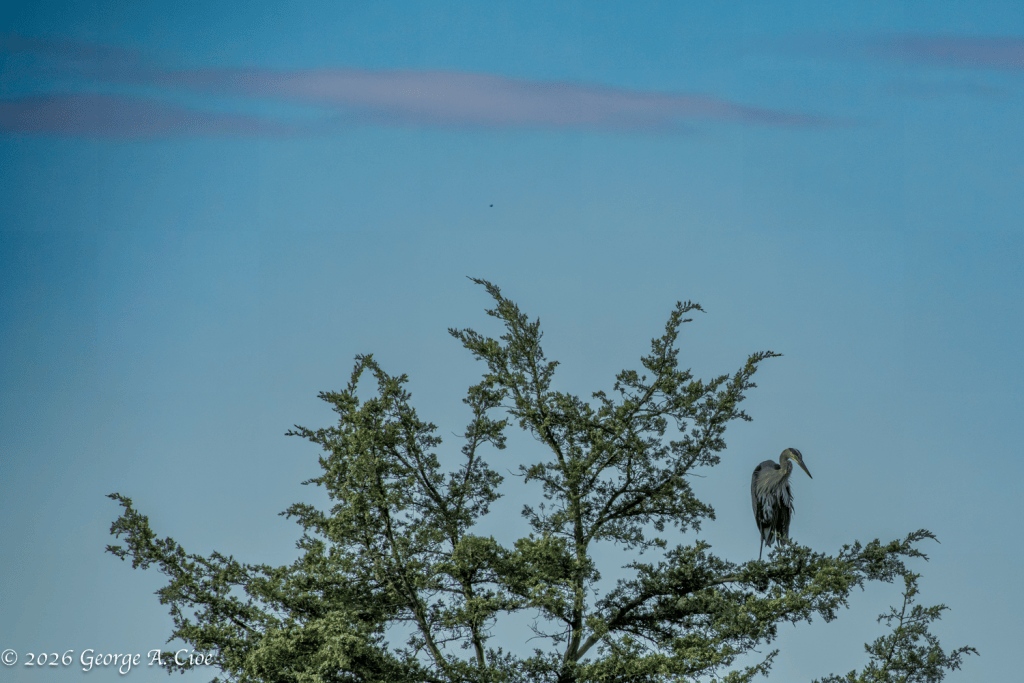
I was driving when I spotted something large perched near the top of a tree.
Very large.
At first, my brain tried to make it an eagle.
Because that is what photographers do.
Every large bird in a distant tree is a Bald Eagle until proven otherwise.
But then I saw the long neck.
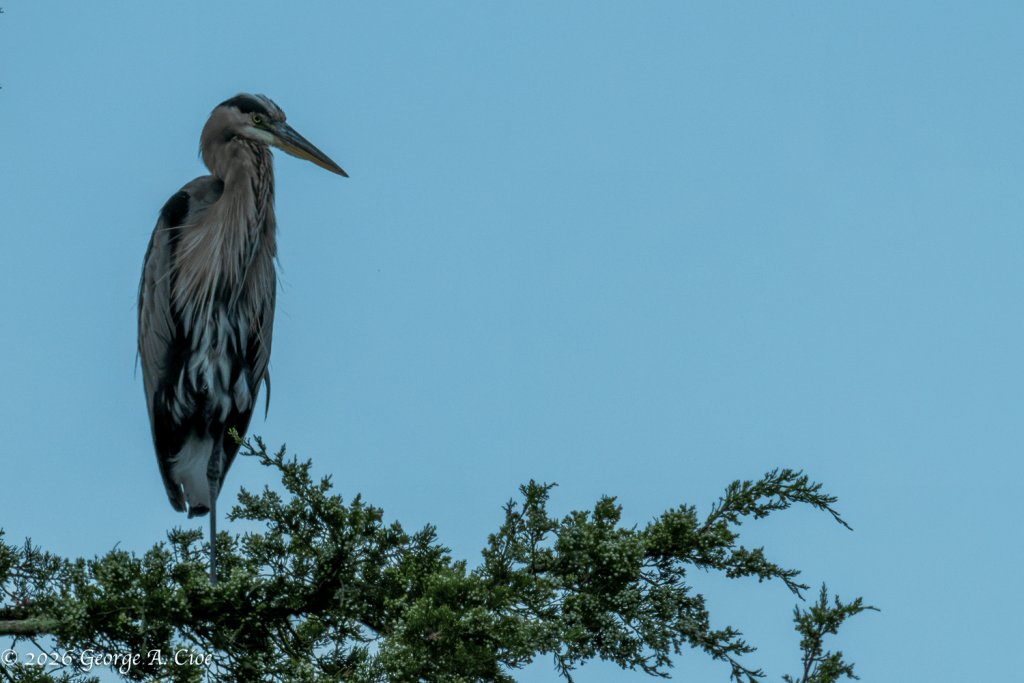
The dagger-like bill.
And that unmistakable silhouette.
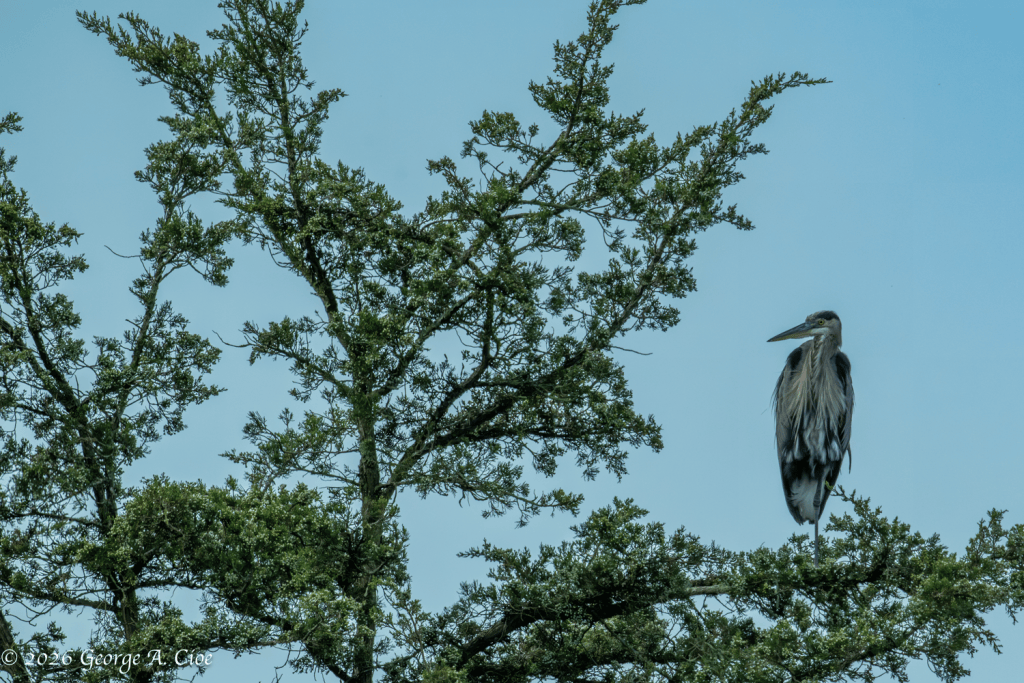
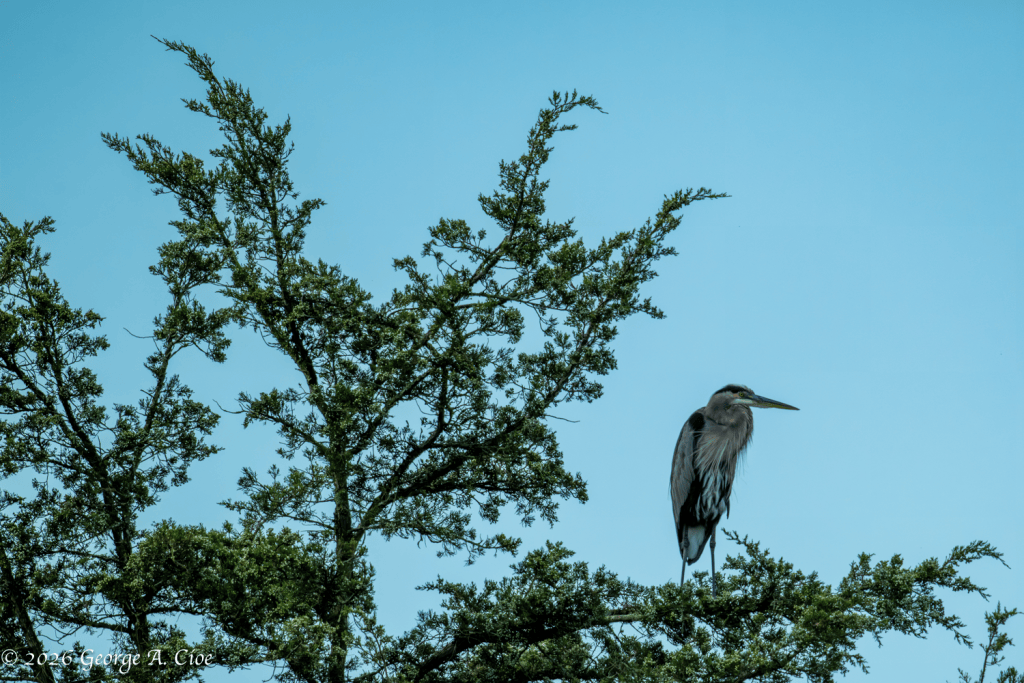
A Great Blue Heron.
In a treetop.
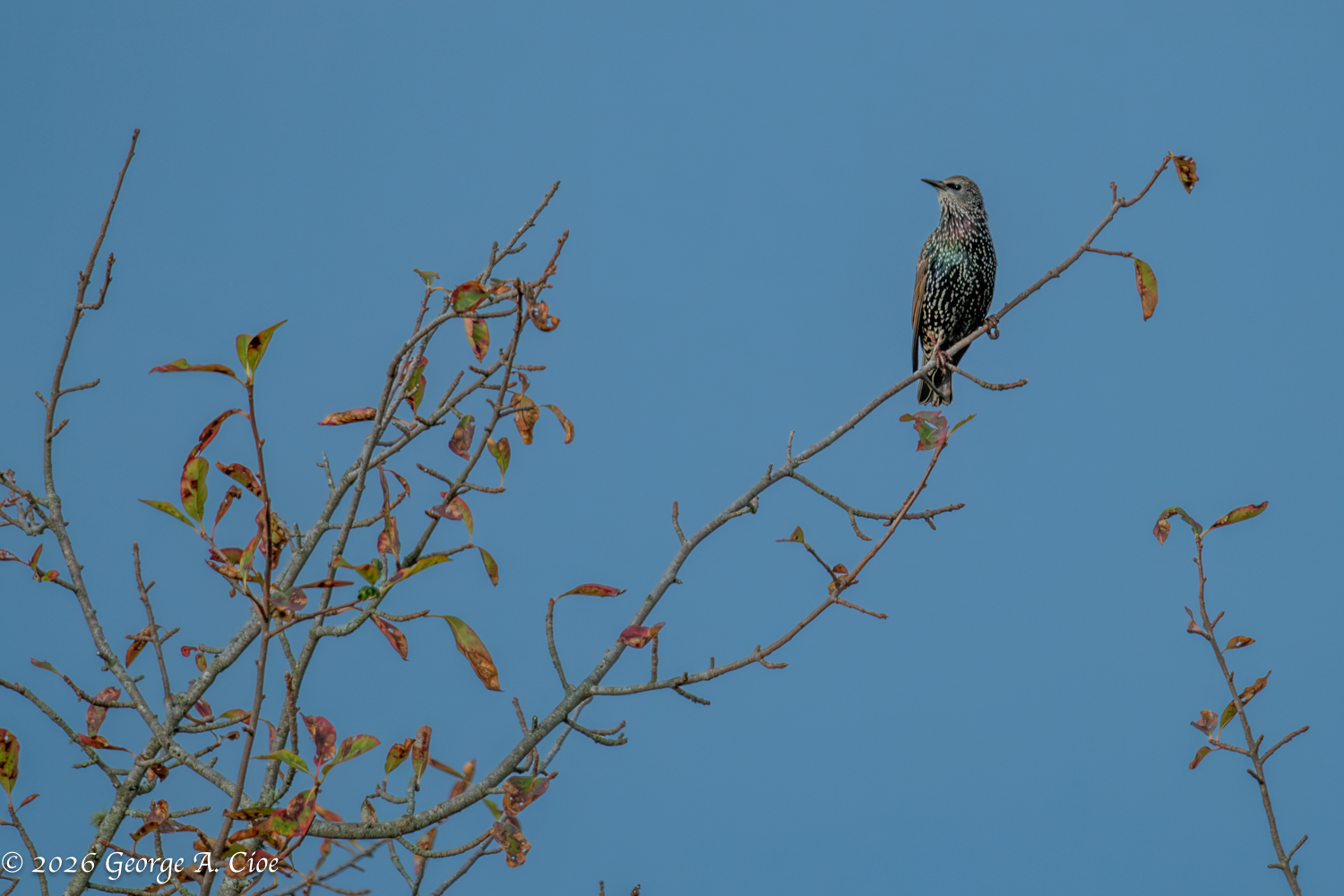
Against a brilliant blue sky.
Blue on blue.
There was only one problem.
I didn’t have my camera.
Now, a sensible person might have admired the bird, enjoyed the moment, and continued with his day.
I am a wildlife photographer.
Sensible had already left the building.
I hurried home, grabbed my camera, and returned with the vigor of a man on a mission.
Please still be there.
Please still be there.
Please still be there.
There are few things more humbling than racing back with thousands of dollars’ worth of camera equipment only to discover that your subject has moved on without leaving a forwarding address.
But there he was.
Still perched high above the neighborhood.
Waiting.
Or at least tolerating my return.
We usually associate Great Blue Herons with water. We picture them standing motionless along a riverbank, wading through a marsh, or stalking fish with the concentration of a surgeon.
Seeing one in a treetop looks almost wrong.
Like finding a giraffe on a telephone pole.
But Great Blue Herons are surprisingly comfortable above the ground. They nest primarily in trees, sometimes more than 100 feet high, and may gather in large breeding colonies known as heronries. Away from a nesting colony, a heron may also use an elevated perch to rest, preen, watch for danger, survey the surrounding habitat, or simply enjoy an unobstructed view.
In other words, he may have been doing exactly what I was doing.
Looking around for something interesting.
Their long toes can wrap around substantial branches, although their landings do not always convey complete confidence in the process. A Great Blue Heron arriving in a treetop can resemble a flying coat rack attempting to negotiate with gravity.
Wings spread.
Legs dangling.
Neck unfolding.
Branches reconsidering their career choices.
And then, somehow, all those oversized parts come together.
Majestically.
More or less.
This bird appeared completely at ease, its slate-blue plumage set against the deeper blue of the open sky. The bare branches created a delicate frame around it, transforming a familiar neighborhood tree into a throne.
I raised the camera.
Focused.
And pressed the shutter.
Click.
That was the image.
The one I had seen in my mind from the moment I first spotted him.
Blue feathers.
Blue sky.
A Great Blue Heron occupying a place where most people would never expect to find one.
That is one of nature’s great gifts.
Just when we think we understand where something belongs, it changes the setting.
It rises above the marsh.
Leaves the river behind.
And waits for us in the treetops.
Sometimes the photograph is worth going home for.
And sometimes, if you are lucky, nature waits for you to return.
I’d love to share my posts with you. If you subscribe, they’ll come straight to your inbox—most days, like a little note from me to you. It means a lot to know you’re reading along.
Browse my complete art portfolio and shop for prints at imagesbygacioe.shop


Leave a Reply