

Green means healthy.
Doesn’t it?
Green is spring.
Renewal.
Growth.
Life.
It is the color we look for after a long winter.
The color that tells us everything is waking up and carrying on.
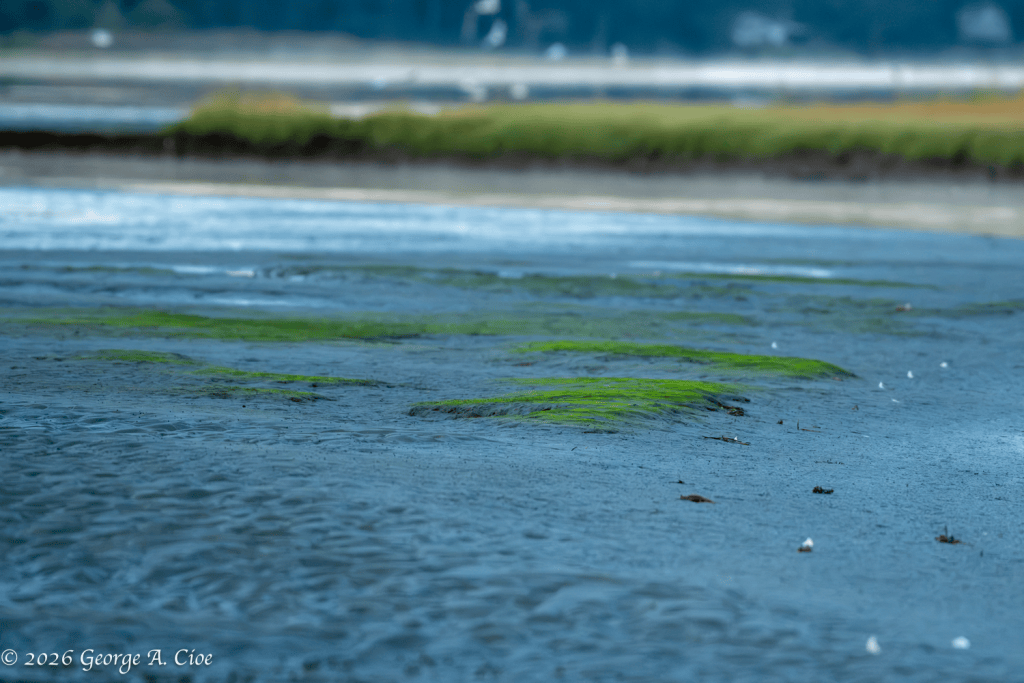
So, when I noticed brilliant green growth spreading across the exposed mudflats of the Narrow River, my first reaction was simple.
This is wonderful.
The marsh is growing.
Click.
But then I began to wonder.
What exactly was I looking at?
Because nature is complicated.
And sometimes the same color that appears to celebrate life can also be warning us that something is out of balance.
The low-growing green carpet in these photographs appears to be a form of green macroalgae—possibly sea lettuce, known scientifically as Ulva, or a related species.
Some of it is perfectly natural.
Algae are part of a healthy estuary. They capture sunlight, absorb nutrients and help support the food web. Small marine creatures use them for food and shelter.
Nothing in nature exists without a purpose.
At least, nothing I have discovered.
Mosquitoes remain under investigation.
But when green algae spread rapidly and form thick mats across large areas of exposed mud, the story can change.
That kind of vigorous growth may be fueled by too many nutrients—particularly nitrogen and phosphorus—entering the water from stormwater runoff, fertilizers, septic systems and other sources throughout the watershed.
The algae flourish.
They spread.
They look incredibly alive.
And then they die.
As they decay, bacteria consume oxygen. Dense mats can cover the mud, trap heat and interfere with the small organisms living beneath them. In extreme cases, decomposition can create oxygen-starved sediment and that unmistakable rotten-egg odor associated with hydrogen sulfide.
Beautiful on the surface.
Potentially troubling underneath.
Then I noticed something else.
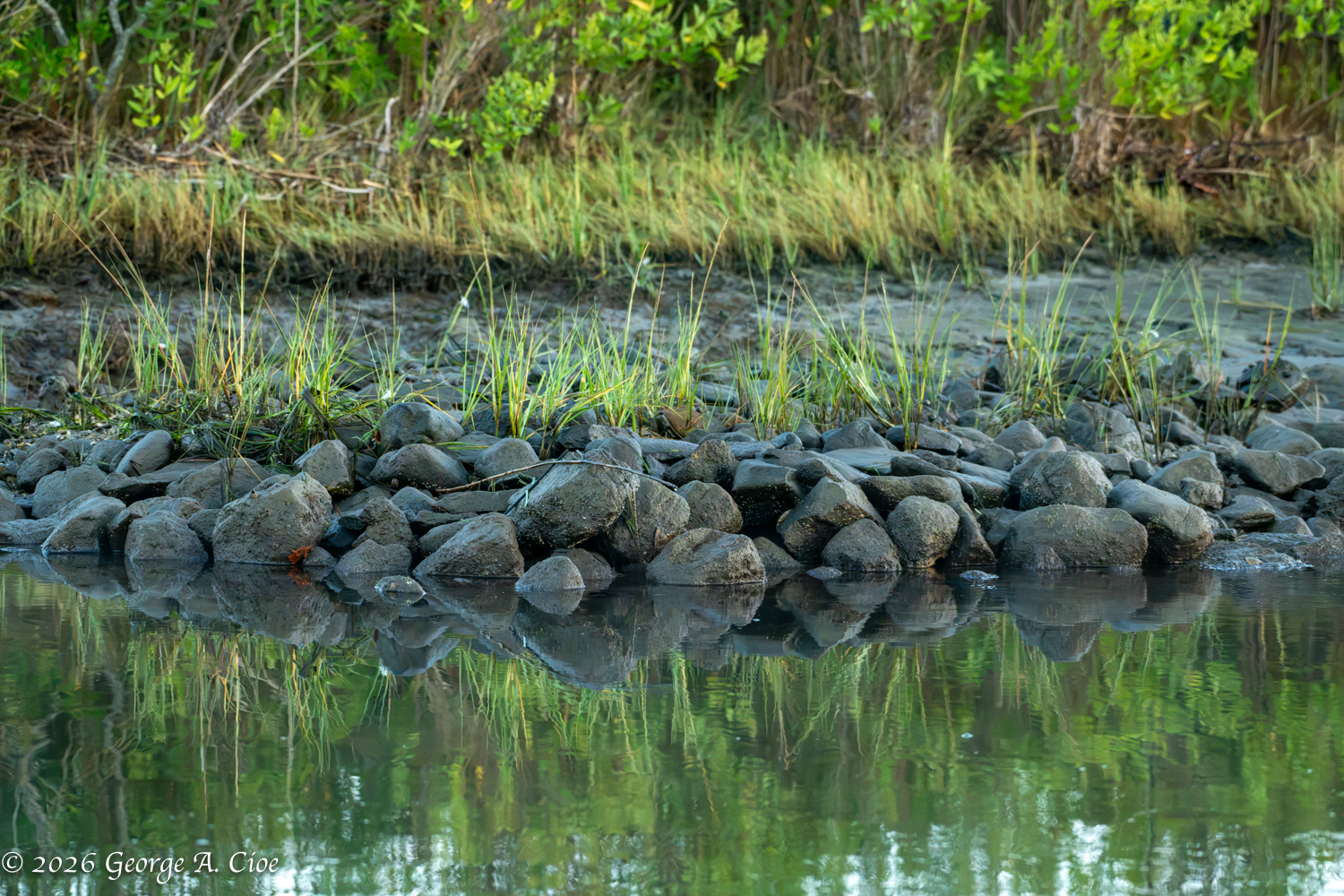
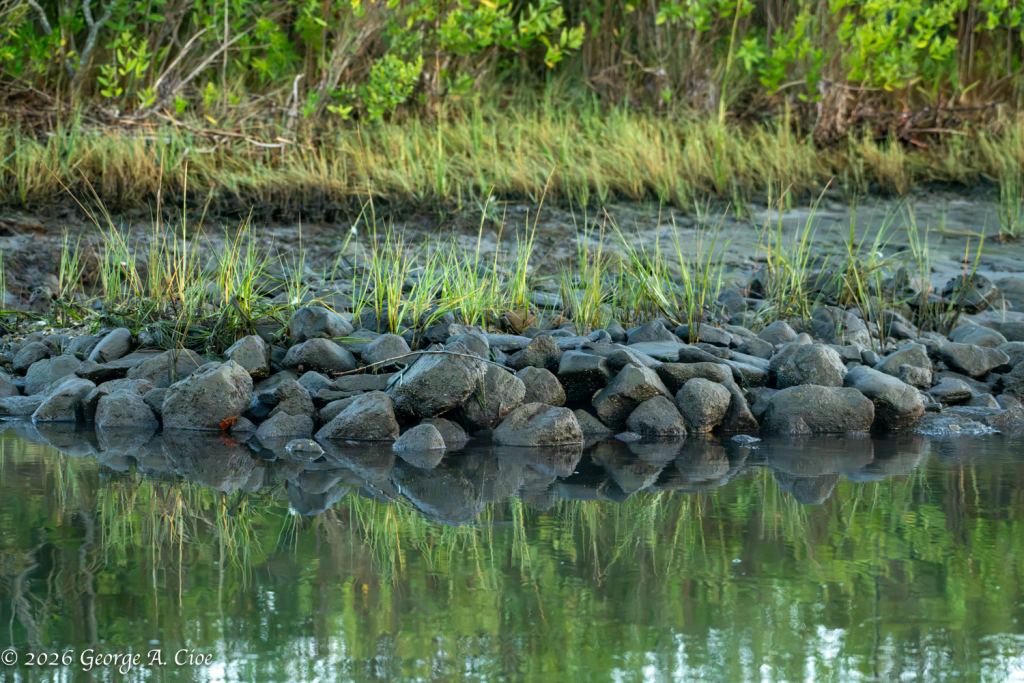
Along the rocky shoreline, young cordgrass appeared to be taking hold.
Now, that is an encouraging sight.
Unlike the algae spreading across the surface, cordgrass sends roots and underground stems into the sediment. It helps hold the shoreline together, traps additional sediment and creates habitat for fish, crabs, insects and countless other creatures.
One spreads.
The other takes root.
One may be a temporary visitor.
The other may help build the future marsh.
And there they were—two shades of green, possibly telling two very different stories in the same small stretch of river.
Hope and concern.
Resilience and vulnerability.
A marsh adapting to change while also showing us where the pressure may be building.
Of course, three photographs cannot diagnose the health of an estuary.
Neither can one morning.
The algae may simply be part of a normal late-summer cycle. Warm water, abundant sunlight and low tide may have made it especially visible on the morning I photographed it.
Or it may be something worth watching.
That is the point.
A marsh does not issue press releases.
It does not hold public meetings.
It does not send us laboratory reports.
It communicates through changing colors, exposed roots, eroding banks, unusual growth and the wildlife that either returns—
Or quietly disappears.
To understand what these changes mean, we must first notice them.
Then we must document them.
Study them.
Compare one season with another.
And ask questions—even when we do not yet know the answers.
I don’t know whether I photographed an ordinary seasonal bloom, an early indication of nutrient enrichment, or nature’s resilience and vulnerability sharing the same frame.
But I do know this:
The marsh is talking.
And when nature begins to whisper, we should listen.
Because by the time it starts shouting, we may have ignored it for far too long.
Love the River. Slow the Wake. Leave No Trace.
I’d love to share my posts with you. If you subscribe, they’ll come straight to your inbox—most days, like a little note from me to you. It means a lot to know you’re reading along.
Browse my complete art portfolio and shop for prints at imagesbygacioe.shop


Leave a Reply