






Movie stars, misplaced cowboys, and a volcano with an impressive résumé.
I’m beginning to think Sicily needs an agent.
Beaches. Mountains. Ancient ruins. Grand palaces. Cities overflowing with character.
Then there are the volcanic slopes.
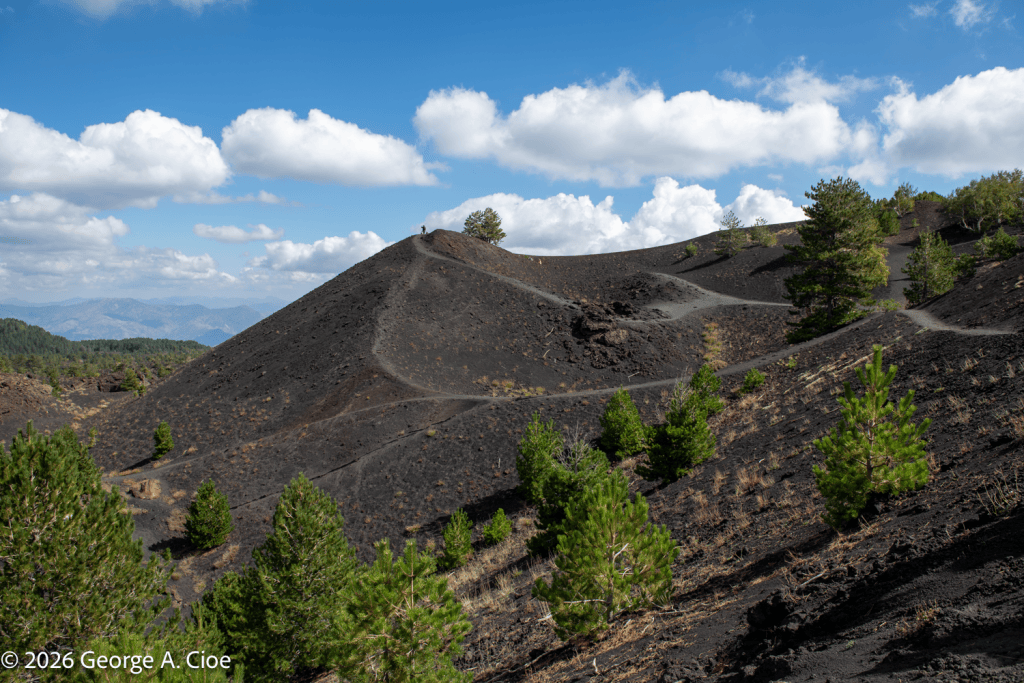
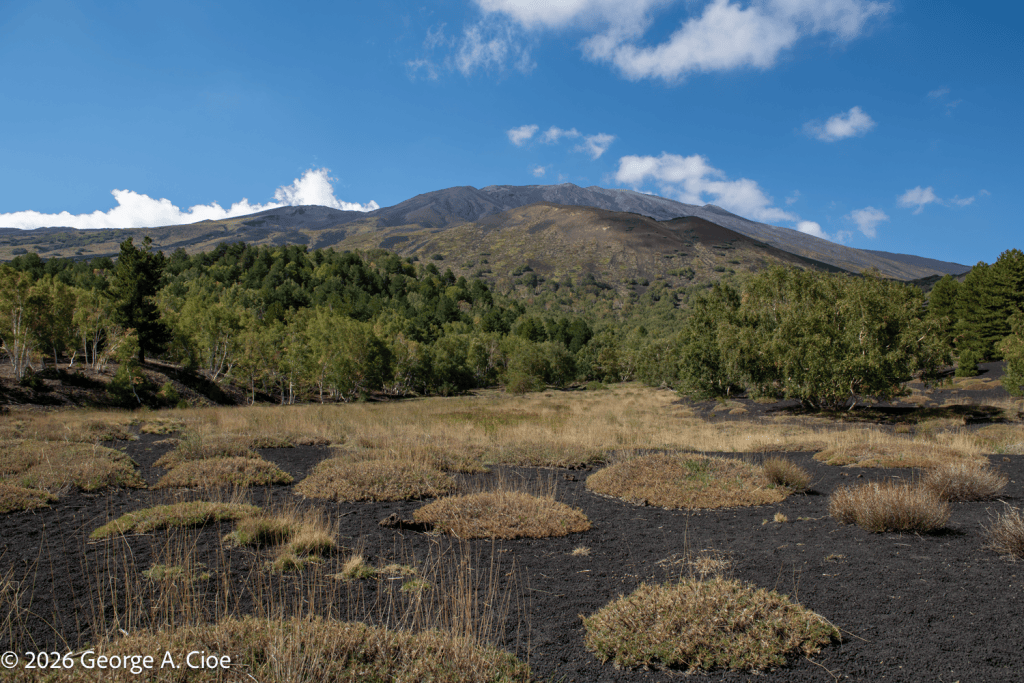
Black earth. Twisting trails. Vast stretches of scenery that look as though the planet hasn’t quite finished assembling itself.
Need romance?
Pick a balcony.
Adventure?
Pick a cave.
The end of civilization?
Ask Etna what she’s doing Thursday.
For a photographer, this is almost unfair.
You arrive thinking you’ll take a few pictures and return home with a memory card that needs its own seat on the plane.
Hollywood apparently understands.
Sicily has been appearing in movies for decades, and looking through my photographs, I can understand why.
A magnificent church practically supplies its own opening scene.
An old doorway invites a mystery.
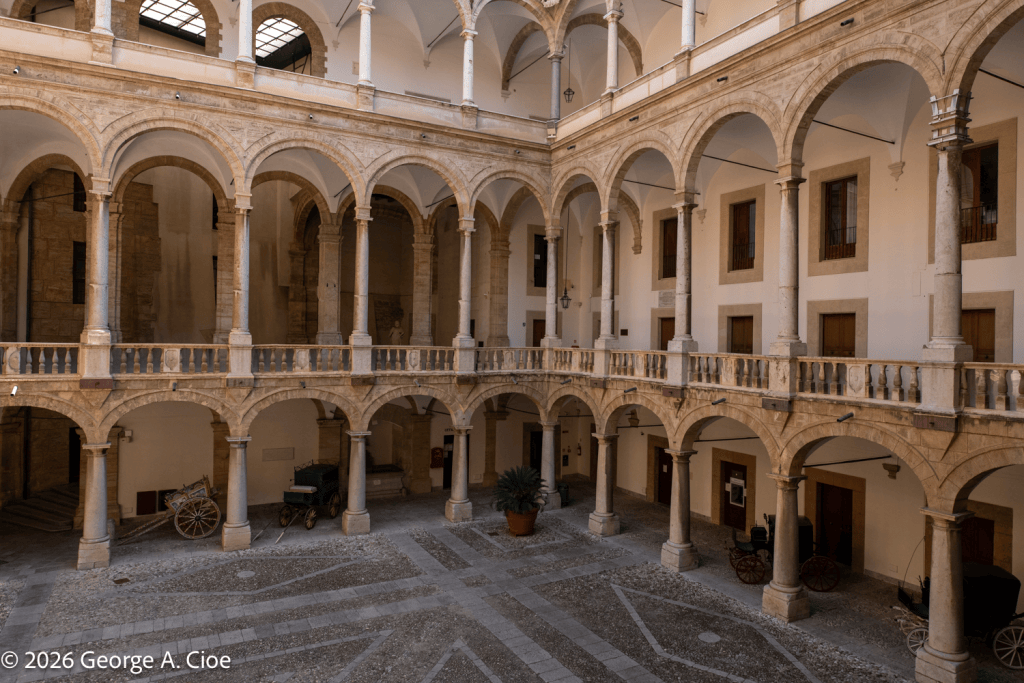
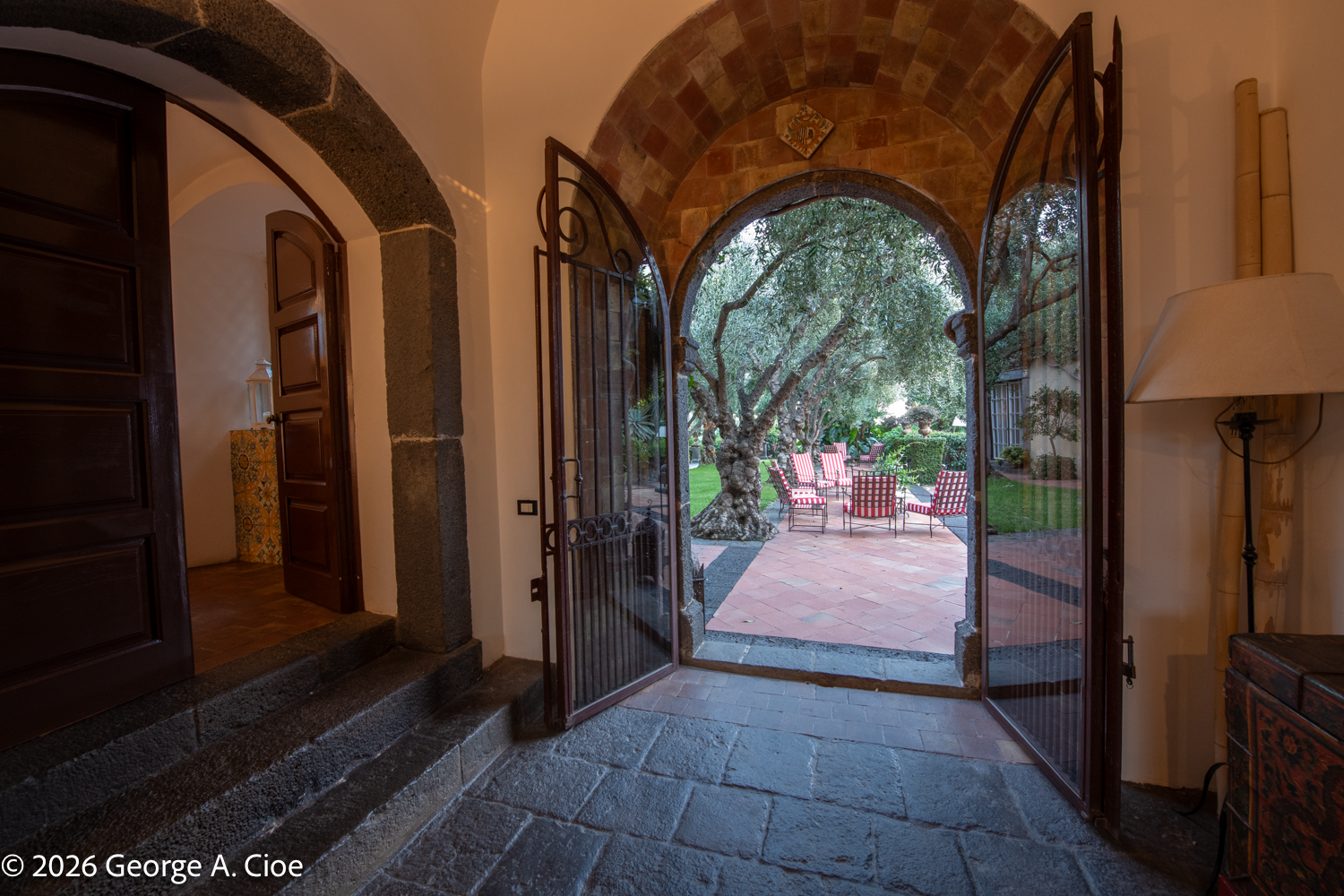
A courtyard full of arches needs only a beautiful woman, a handwritten letter, and someone making a terrible romantic decision.
Preferably accompanied by violins.
Even the café tables seem ready for their next scene.
Although I would appreciate it if the director waited until after lunch.
An Offer With a View
In The Godfather, Savoca and Forza d’Agrò supplied locations for Michael Corleone’s Sicilian world.
Savoca’s Bar Vitelli became one of the movie’s most recognizable stops.
In Italy, the film is called Il padrino.
“The Godfather.”
Excellent.
Same movie. Recognizable title.
We’re all following along.
Then things get interesting.
Lost in the Translation Department
The Sound of Music becomes Tutti insieme appassionatamente.
Roughly, “All Together Passionately.”
Same Julie Andrews.
Same children.
Same singing.
A title that could also describe our traveling group after a particularly good dinner.
That movie wasn’t filmed in Sicily, but its Italian name sent me down a rabbit hole.
Home Alone?
Mamma, ho perso l’aereo.
“Mom, I missed the plane.”
Well, that clears things up.
Trading Places?
Una poltrona per due.
“One Armchair for Two.”
Sounds less like financial manipulation and more like a furniture shortage.
And the original Mel Brooks film The Producers became Per favore, non toccate le vecchiette.
“Please, Don’t Touch the Little Old Ladies.”
I have questions.
Quite a few, actually.
Imagine suggesting a movie to a friend and spending twenty minutes establishing that you’ve both already seen it.
The Cowboy Took a Wrong Turn
And surely we have to talk about spaghetti westerns.
Clint Eastwood.
The poncho.
The cigar.
The squint.
A man who could communicate profound displeasure without using enough words to order lunch.
A Fistful of Dollars.
For a Few Dollars More.
The Good, the Bad and the Ugly.
Italian director Sergio Leone helped turn an American cowboy into an international legend.
So where did they film those dusty Western landscapes?
Spain.
Of course.
At this point, geography needs a supporting-actor credit.
The Almería region, including the Tabernas Desert, supplied Western scenery. The famous cemetery showdown in The Good, the Bad and the Ugly was filmed at Sad Hill, near Santo Domingo de Silos in Spain’s Burgos province.
American West.
Italian filmmaking.
Spanish scenery.
Spaghetti apparently travels well.
And the Italian title is Il buono, il brutto, il cattivo.
“The Good, the Ugly, the Bad.”
They even changed the order.
Same three men.
Different seating arrangement.
Sicily didn’t get that particular starring role.
But looking at her scenery, I doubt she’s losing sleep over it.
Indiana, Meet Sicily
Meanwhile, back on the island, Indiana Jones was putting the scenery to work.
Indiana Jones and the Dial of Destiny used Sicilian locations including Cefalù, Segesta, and Syracuse.
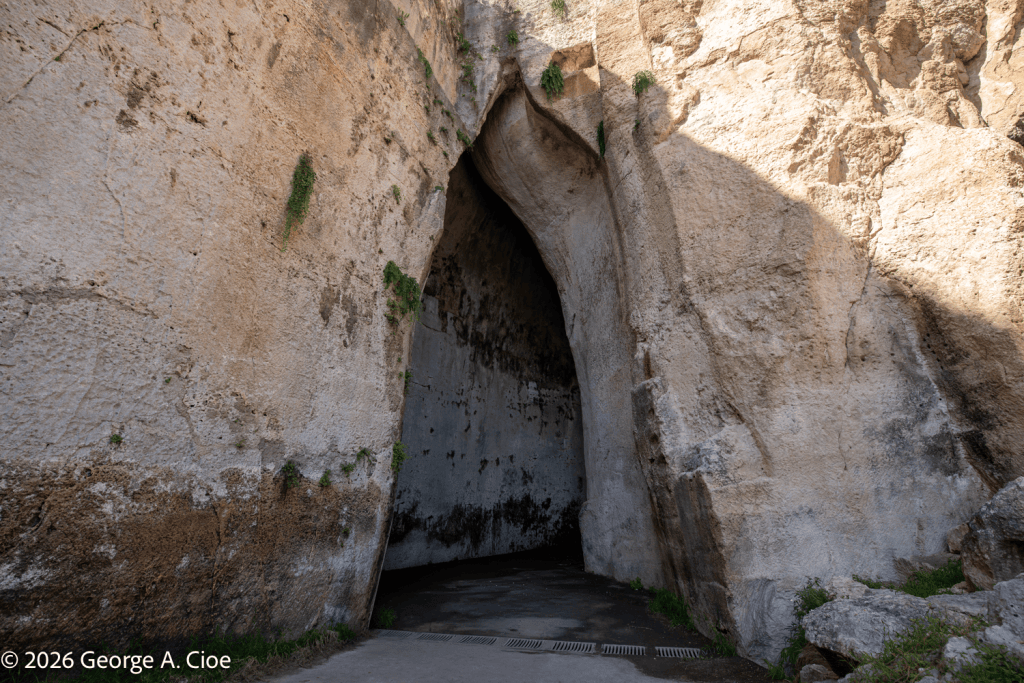
The Ear of Dionysius—that extraordinary opening carved into the limestone in Syracuse—became part of the film’s underground adventure.
Looking at my photograph of its entrance, I understand the attraction.
It practically says, “Something important is in here.”
Possibly an ancient secret.
Possibly Harrison Ford.
Either way, bring a flashlight.
In Italy, the film is Indiana Jones e il quadrante del destino.
Fortunately, they kept Indiana’s name.
“Man With Hat Loses Track of Retirement” might have been a little too revealing.
Then there’s Cyrano, which used Noto’s magnificent Baroque architecture and other Sicilian locations to create its romantic world.
That’s the wonderful thing about this island.
A street can be someone’s route to the bakery and a filmmaker’s answer to a multimillion-dollar question.
Etna Goes Intergalactic
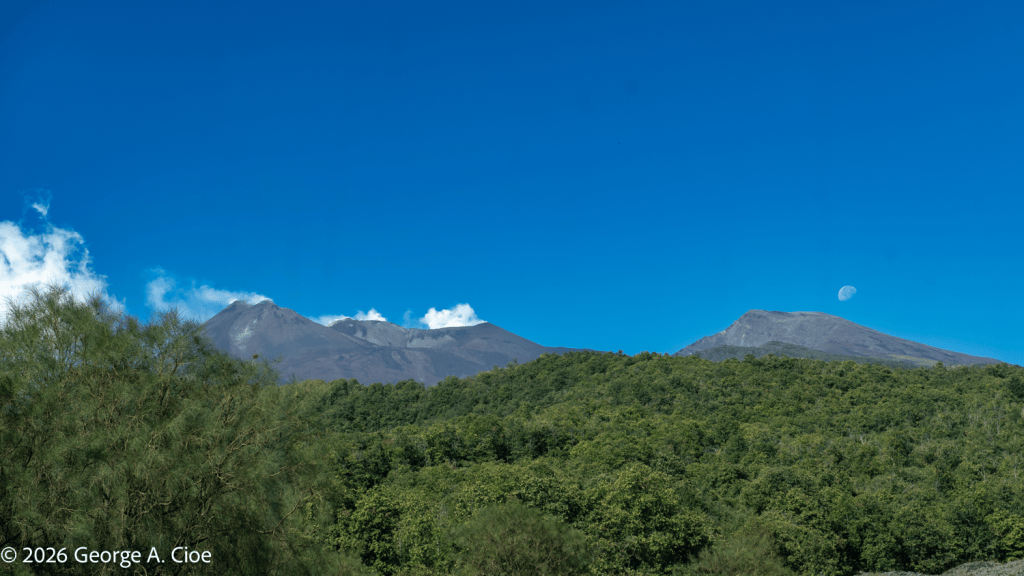
And then there’s Etna.
Of course there’s Etna.
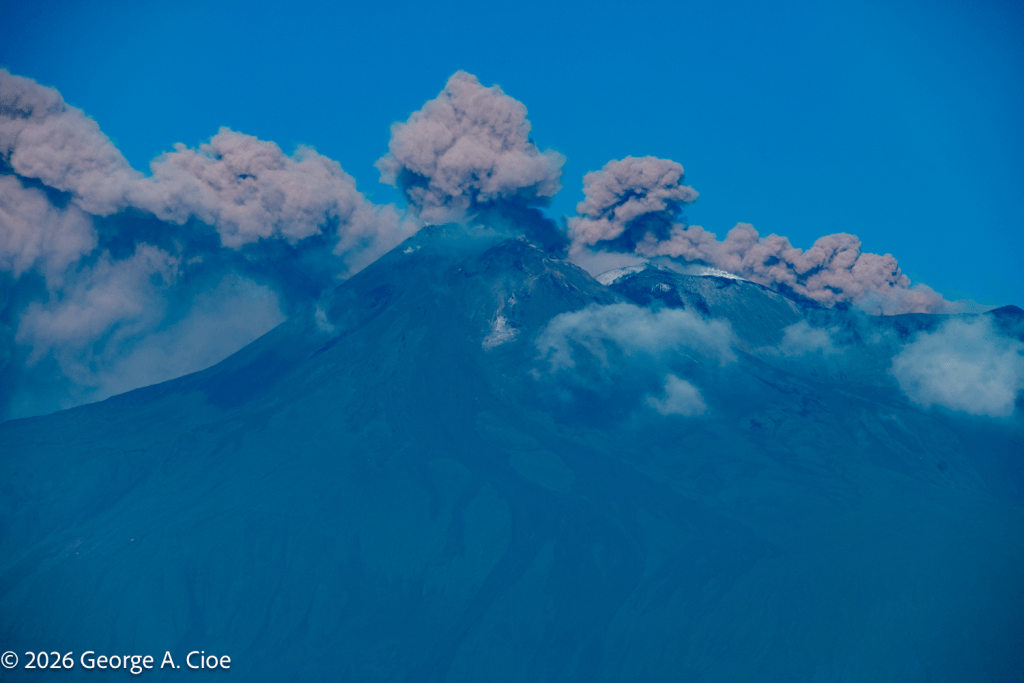
Footage of her eruptions helped create Mustafar, the volcanic planet in Star Wars: Episode III—Revenge of the Sith.
Let that settle in.
Sicily’s acting range extends from Mediterranean village to another planet.
Looking at those dark volcanic slopes, I can see it.
Add a little cinematic lighting, a dramatic soundtrack, and a man with a glowing sword, and we’re suddenly very far from the café.
Etna supplied real eruption footage for Hollywood.
For Trish and me, she supplied a revised arrival plan.
Clearly, we booked different packages.
Somewhere, a filmmaker sees an eruption and thinks, “Perfect.”
An airline sees it and thinks, “We’ll be landing somewhere else.”
I see it and think, “Where’s my camera?”
Trish knows precisely how the next twenty minutes are going to unfold.
She knows her leading man.
After the Credits
What fascinates me most, though, is what happens after the cameras leave.
The villages remain villages.
People buy bread.
Meet friends.
Open shutters.
Carry groceries past buildings the rest of us might recognize from a movie.
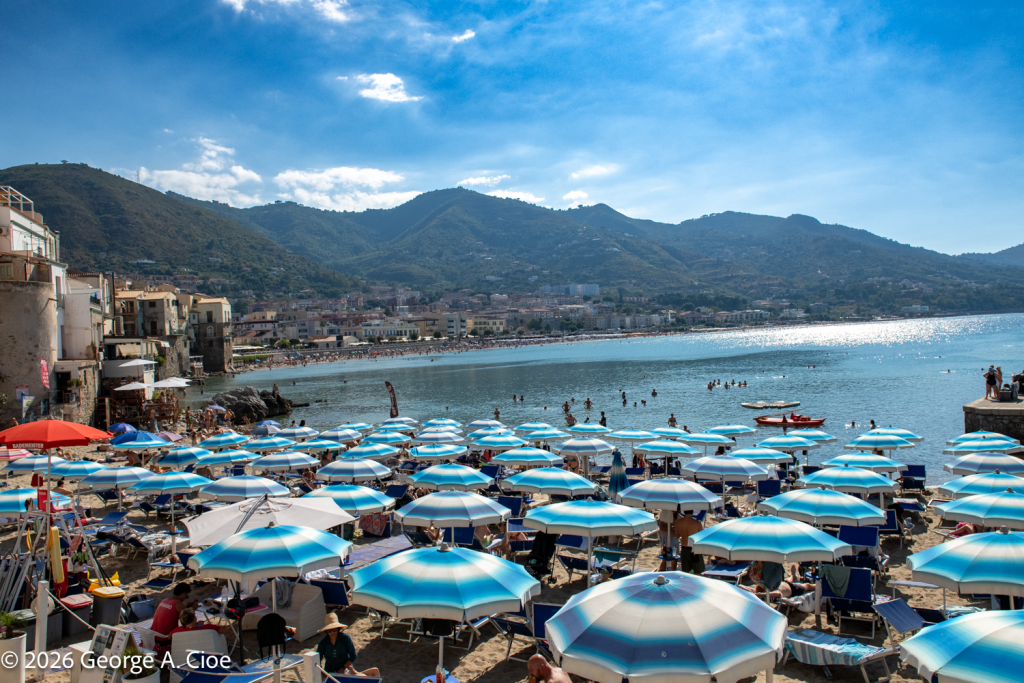
Under those colorful umbrellas, someone is simply deciding what to have for lunch.
Along that sparkling coastline, someone is enjoying an ordinary afternoon.
And in those old courtyards, centuries of life continue to feel close enough to touch.
Perhaps that explains why Sicily is so convincing on screen.
Its beauty comes with history.
Its buildings have weathered generations.
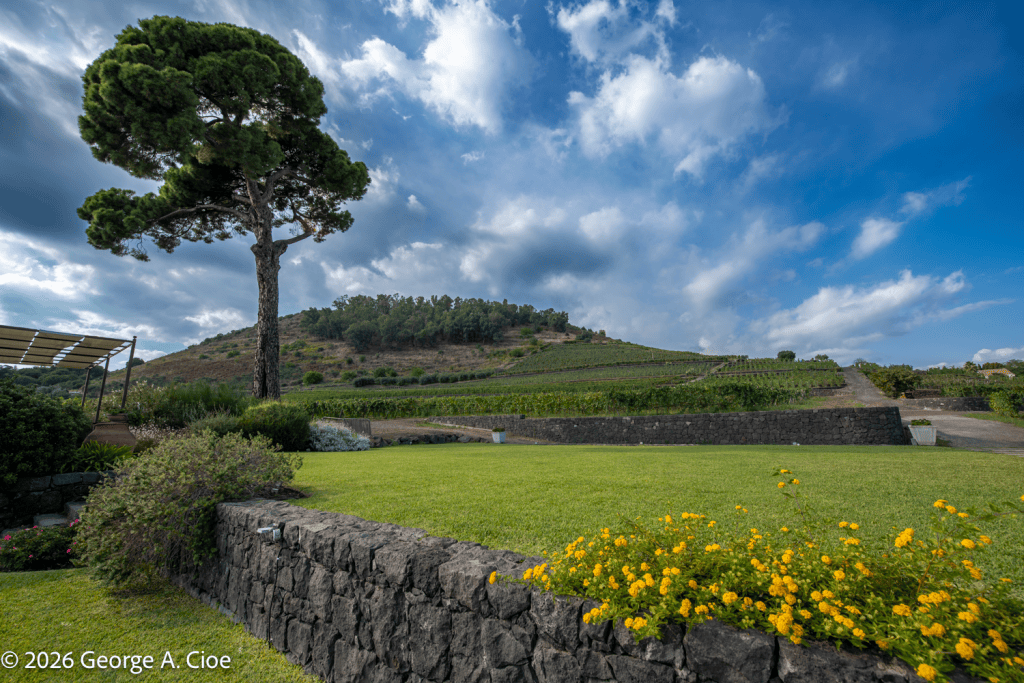
Its landscapes carry the marks of wind, water, cultivation, and fire.
You can invent the characters.
Sicily has already written much of the setting.
Trish and I came home with photographs, new friendships, and enough stories to keep me happily occupied for quite a while.
Romance.
Adventure.
Comedy.
Even a little volcanic interference.
I’m still working on the Italian title.
George, metti giù la macchina fotografica.
“George, put down the camera.”
Production has been delayed.
The photographer wants one more shot.
I’d love to share my posts with you. If you subscribe, they’ll come straight to your inbox—most days, like a little note from me to you. It means a lot to know you’re reading along.
Browse my complete art portfolio and shop for prints at imagesbygacioe.shop



Leave a Reply