



The Fine Art of Slowing Down at Sachuest Point
“Slow down, you move too fast…”
Remember that song?
Well, whoever wrote it must have been a birder.
Because if there’s one thing I’ve learned about photographing songbirds, it’s that the slower you go, the more you see.
And sometimes, the more you see, the more you realize how much you’ve been missing.
Welcome to Sachuest Point National Wildlife Refuge.
Where the scenery is spectacular, the air is invigorating, and the birds have apparently signed a collective agreement never to sit still long enough for a decent photograph.
I’m serious.
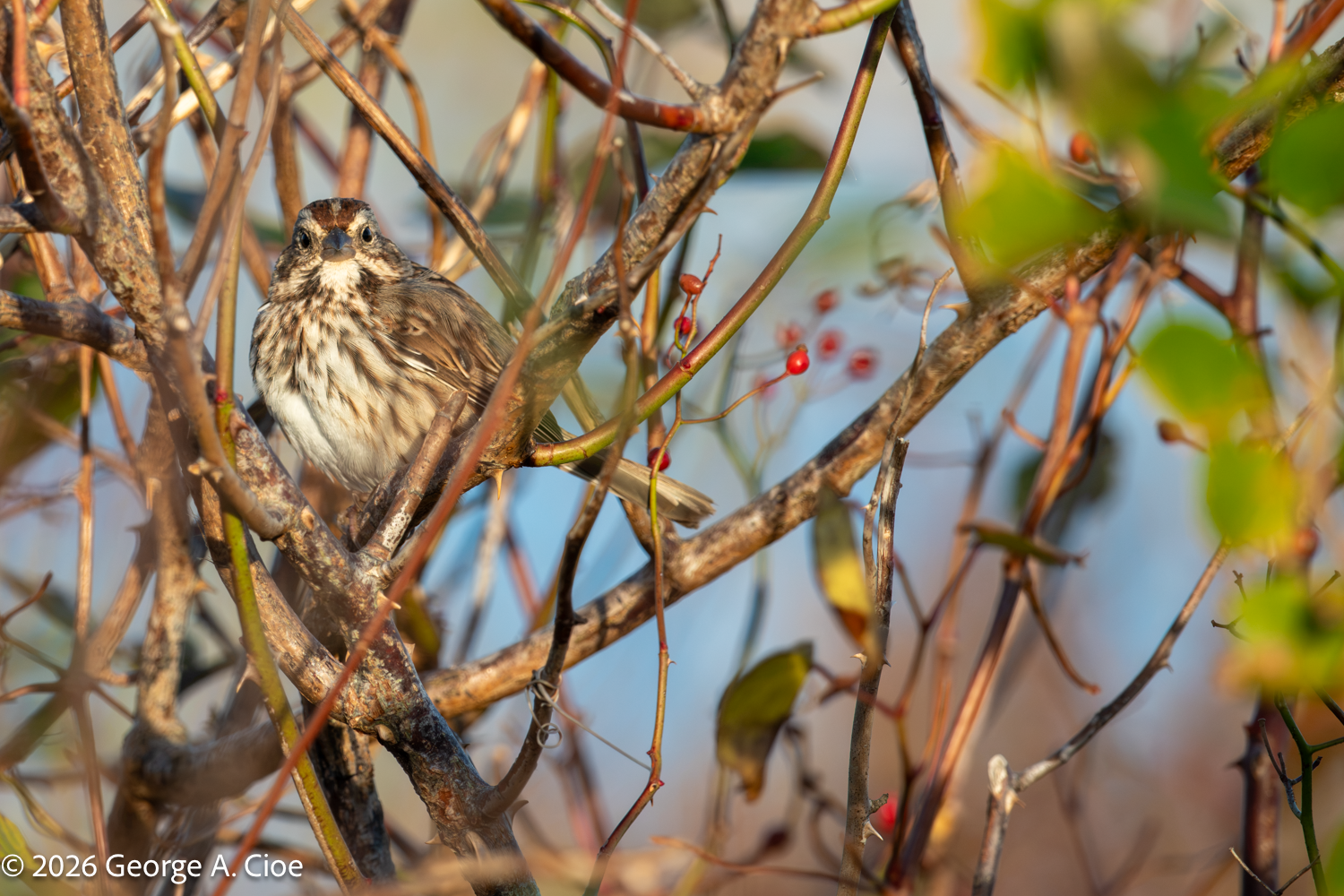
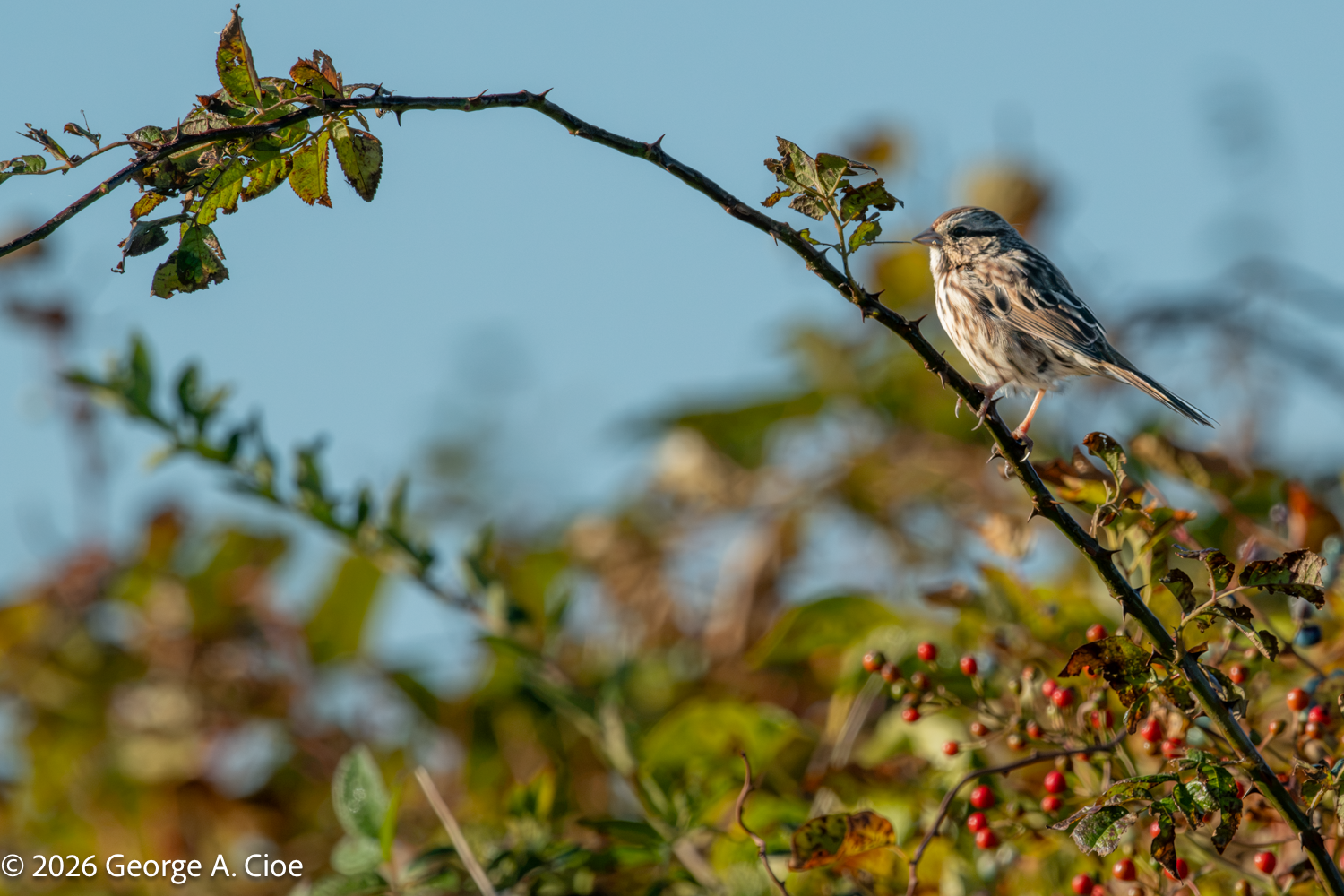
One moment, there’s a beautiful Song Sparrow perched on a branch, illuminated by the morning sun.
I raise my camera.
Focus.
And…
Gone.
Just like that.
Apparently, the bird had another appointment.
Probably with a berry.
Or perhaps it spotted me.
Either way, the performance was over.
No curtain call.
No encore.
And certainly no consideration for the fellow carrying forty pounds of photographic equipment.
But here’s the wonderful thing about birding.
You learn.
And one of the most valuable lessons I’ve learned is to slow down.
Take a few steps.
Stop.
Watch.
Listen.
And wait.
It’s amazing what happens when you stop trying to find birds and give them an opportunity to reveal themselves.
A little movement in the brambles.
A faint chirp.
A branch that seems to move without the assistance of the wind.
Suddenly, there they are.
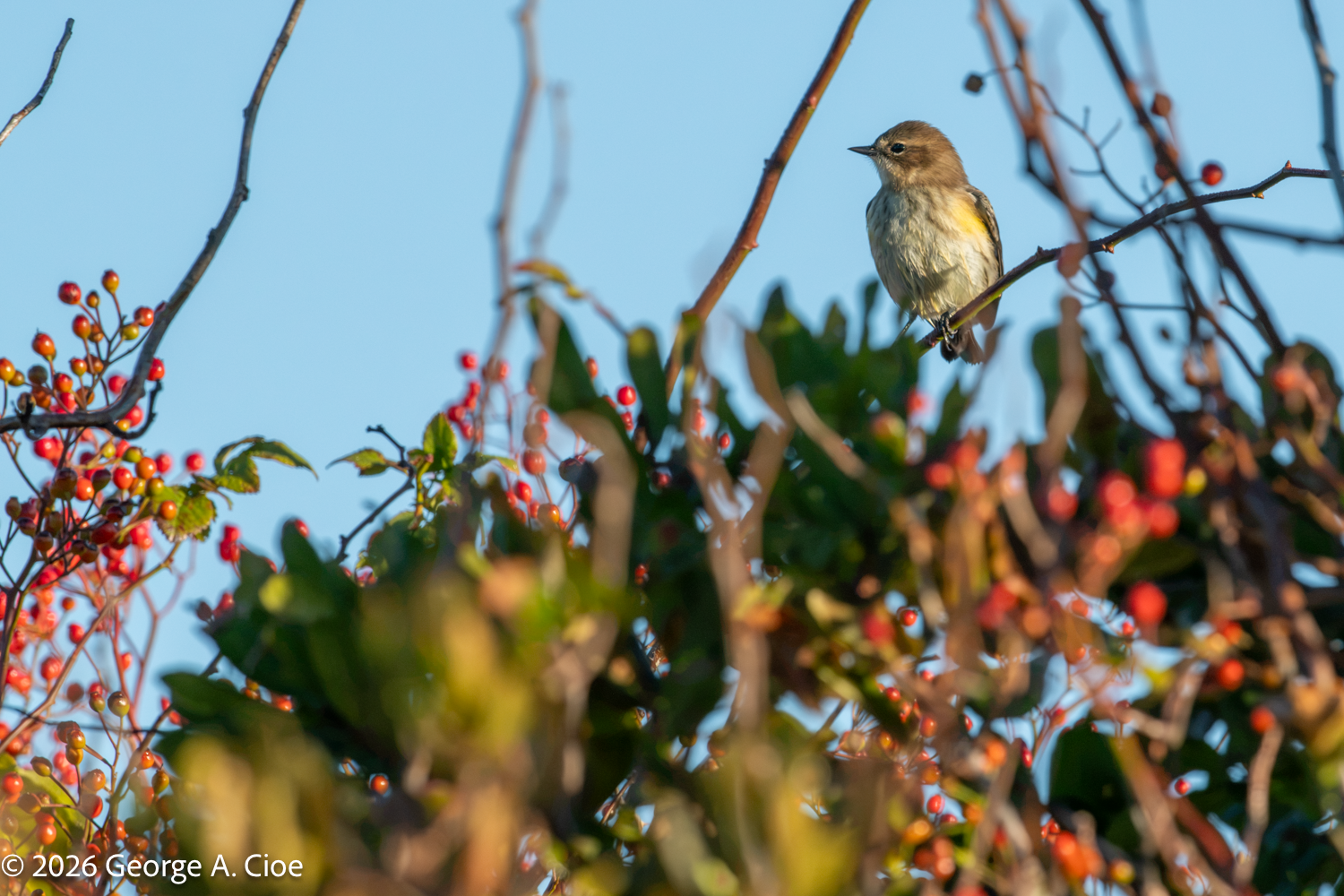
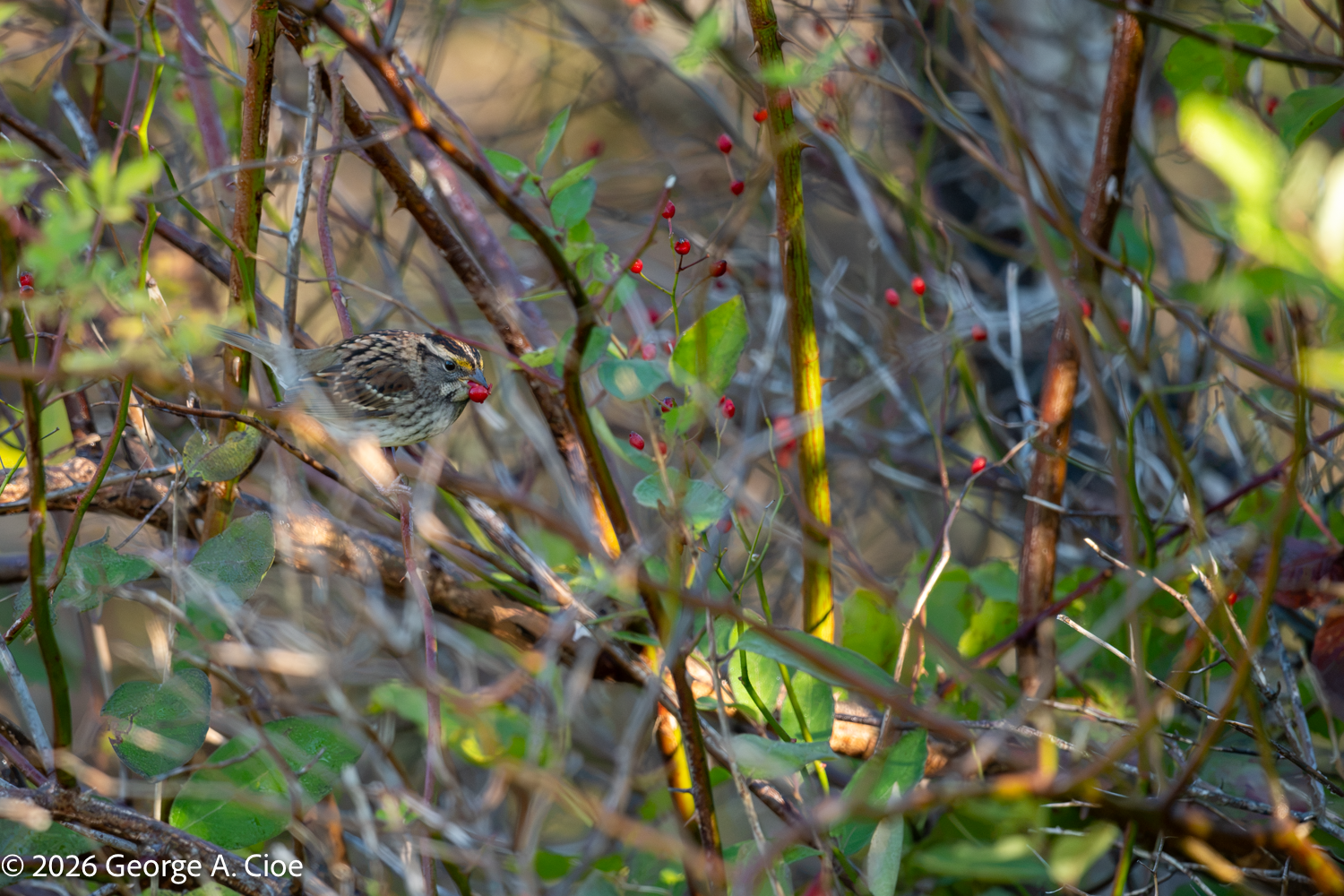
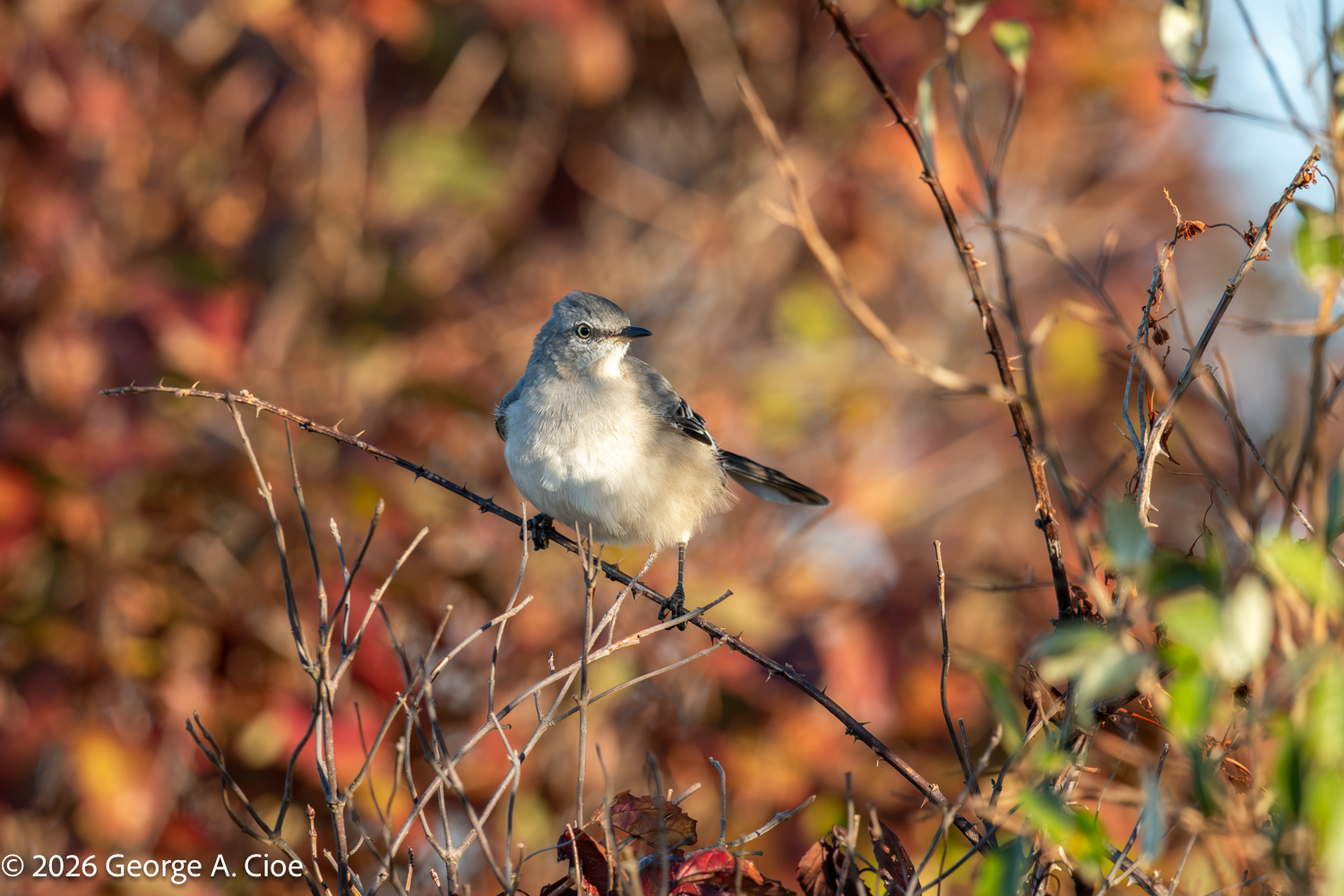
Dark-eyed Juncos, Song Sparrows, White-throated Sparrows, Yellow-rumped Warblers, and Northern Mockingbirds.
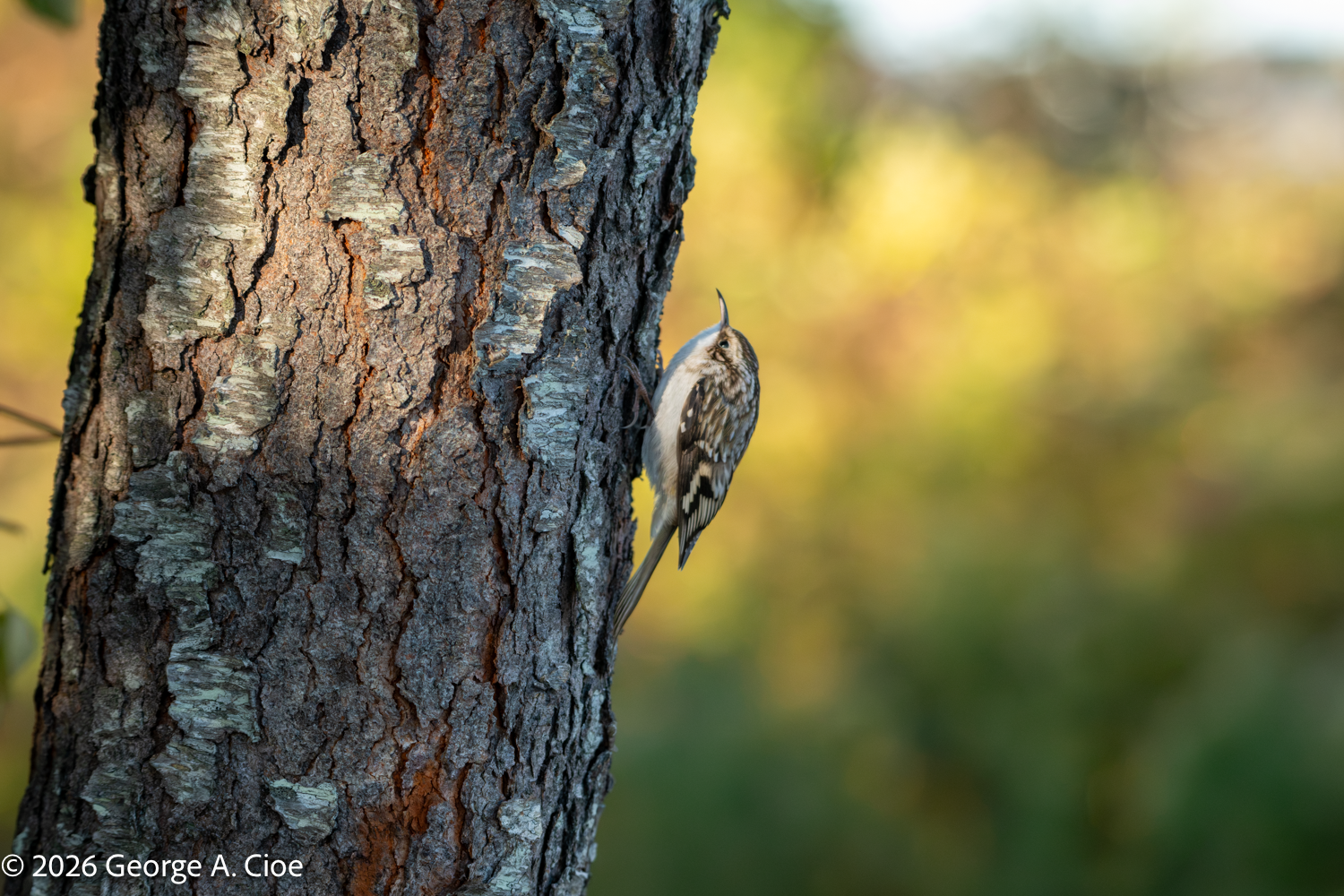
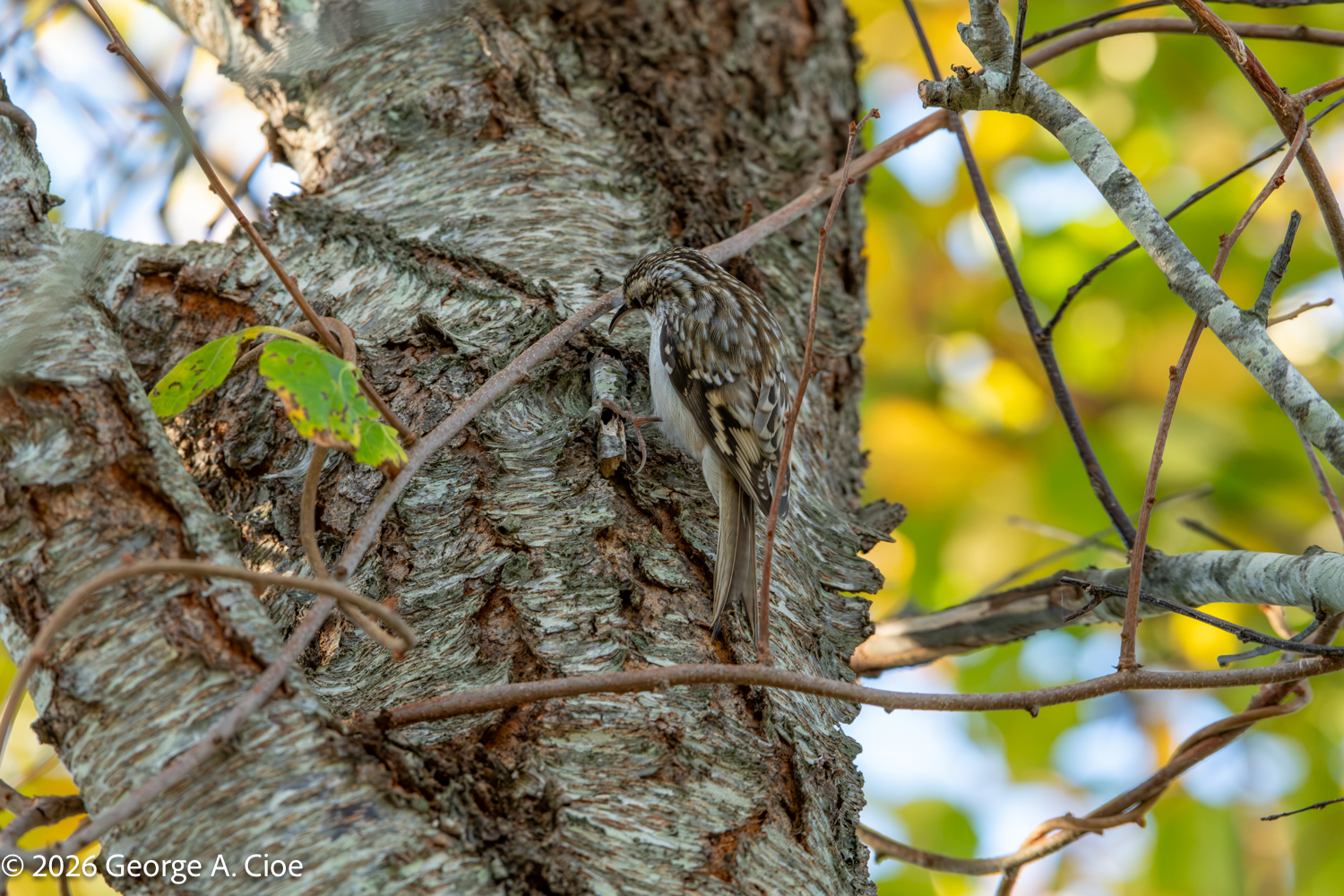
And if you’re particularly observant, you might discover a Brown Creeper making its way up a tree trunk, so perfectly camouflaged against the bark that it’s almost invisible.
An entire neighborhood of feathered residents and seasonal visitors going about their morning business.
And what a neighborhood it is!
The Song Sparrows are beautifully streaked little characters, often announcing their presence with a surprisingly elaborate song.
White-throated Sparrows are distinguished by their striped crowns and bright white throats. Many have a little yellow spot between the eye and bill.
Dark-eyed Juncos are delightful little birds, often flashing white outer tail feathers as they dart away.
Yellow-rumped Warblers are energetic insect hunters, although in the colder months they also take advantage of berries, including those of bayberry and wax myrtle.
And Northern Mockingbirds?
Well, they’re the neighborhood entertainers.
They can imitate other birds, repeat phrases, and produce an astonishing repertoire of sounds.
They’re also quite capable of making their displeasure known when someone gets too close.
I have no idea who that someone might be.
But there’s another reason these little birds are so quick to disappear.
They’re on the menu.
Cooper’s Hawks and Merlins patrol these habitats, and small songbirds are well aware that an exposed perch can become a very dangerous place.
Those tangled thickets that frustrate photographers provide essential shelter from predators.
So when a sparrow suddenly vanishes into a thorny bush, it isn’t necessarily being uncooperative.
It may be practicing a very effective survival strategy.
And I suppose that’s a perfectly reasonable excuse for ruining my photograph.
Although I wish someone would explain that to the sparrows.
I’ve also discovered that birding is as much about listening as looking.
Sometimes the first indication that a bird is nearby isn’t movement at all.
It’s a call.
A little chip.
A whistle.
A song drifting out of a bush that appears to contain absolutely nothing.
Until it does.
That’s the magic.
And the more time I spend at Sachuest, the more I appreciate how much life is unfolding in places we ordinarily overlook.
A tiny bird navigating a maze of branches.
Another delicately selecting a berry.
A Brown Creeper investigating the crevices of a tree trunk for insects and spiders.
Every one of them has a story.
Every one has evolved remarkable ways of surviving.
And every one is worth stopping to appreciate.
Which brings me to something I’ve been thinking about lately.
We spend so much of our lives moving.
Hurrying.
Planning.
Thinking about what comes next.
And somewhere along the way, we can forget to appreciate what’s happening right now.
That’s one of the reasons I love these mornings so much.
The sun slowly rising over the Atlantic.
The sound of waves crashing against the rocky shoreline.
The crisp autumn air.
The birdsong.
And the extraordinary privilege of being there to witness it.
No appointments.
No deadlines.
No demands.
Just the natural world carrying on as it has for thousands of years.
And me, trying desperately to convince a five-inch bird to remain motionless for one more second.
I recently came across something written by the great naturalist John Muir more than a century ago.
He observed:
“In every walk with Nature one receives far more than he seeks.”
I smiled when I read that.
Because that’s exactly what happens to me at Sachuest Point.
I go looking for birds.
I come home with photographs, a little more knowledge, a few unanswered questions, and an overwhelming appreciation for the natural world.
But I also come home with something I wasn’t necessarily looking for.
Peace.
Perspective.
And a reminder of just how wonderful it is to be alive.
Funny, isn’t it?
Sometimes we spend so much time looking for the extraordinary that we overlook the extraordinary things right in front of us.
And perhaps that’s the greatest lesson these little birds have taught me.
You don’t have to travel halfway around the world to experience wonder.
Sometimes it’s waiting in a berry bush.
Or clinging to the bark of a tree.
Or singing from a branch just a few feet away.
All you have to do is give it your attention.
So, if you find yourself at Sachuest Point one morning, do yourself a favor.
Slow down.
Take a few steps.
Stop.
Listen.
Look carefully into those tangled branches.
And wait.
You might be surprised by what you discover.
And even if you don’t see a single bird, you’ll still have the ocean, the sunrise, and some of the freshest air in Rhode Island.
Not a bad consolation prize.
After all, there’s a lot more to life than getting somewhere.
Sometimes the greatest reward comes from simply being there.
And if a Song Sparrow happens to pose for you along the way?
Consider yourself exceptionally fortunate.
I certainly do.
Now you see me…
And perhaps, just perhaps, you’ll begin to see a whole lot more.
I’d love to share my posts with you. If you subscribe, they’ll come straight to your inbox—most days, like a little note from me to you. It means a lot to know you’re reading along.
Browse my complete art portfolio and shop for prints at imagesbygacioe.shop
Leave a Reply