



Our journey through the breathtaking Southwest National Parks with Orbridge was nothing short of magical—one of those rare adventures where everything aligns: the light, the laughter, the landscape, and the sheer wonder of being alive. Trish and I found ourselves immersed in a world where red-rock canyons kissed the sky and each day felt like a new chapter unfolding in a living storybook.
We hiked through sun-drenched cliffs, shared countless moments of joy with newfound friends, and marveled at the wild beauty that surrounded us. But one moment soared above the rest—quite literally.
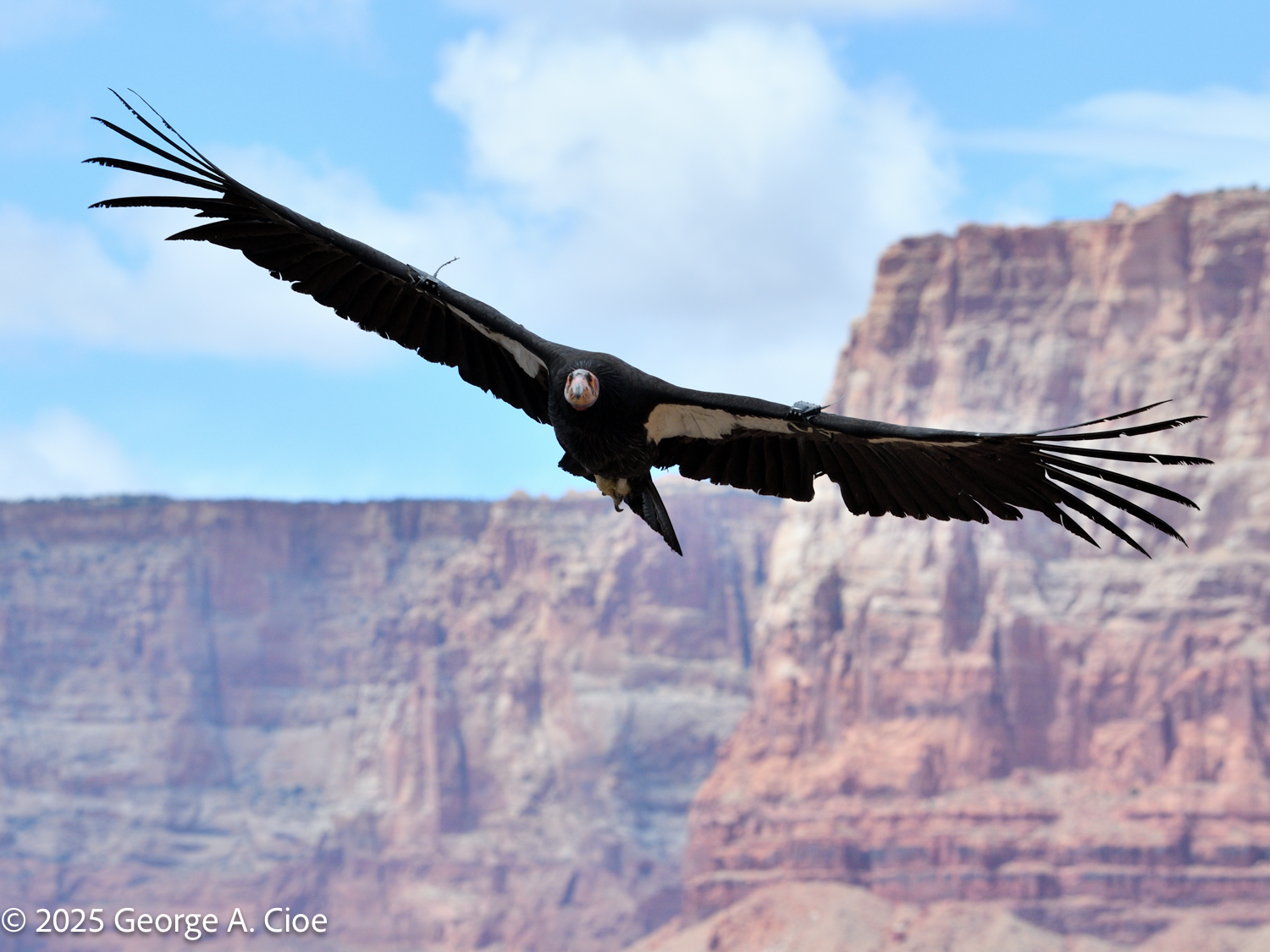
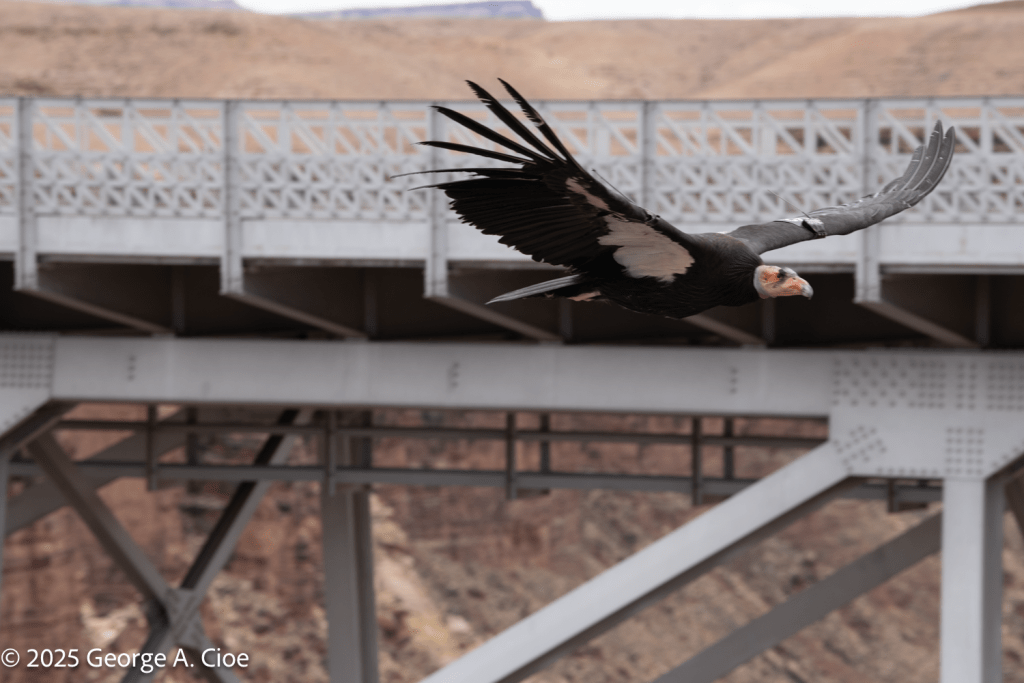
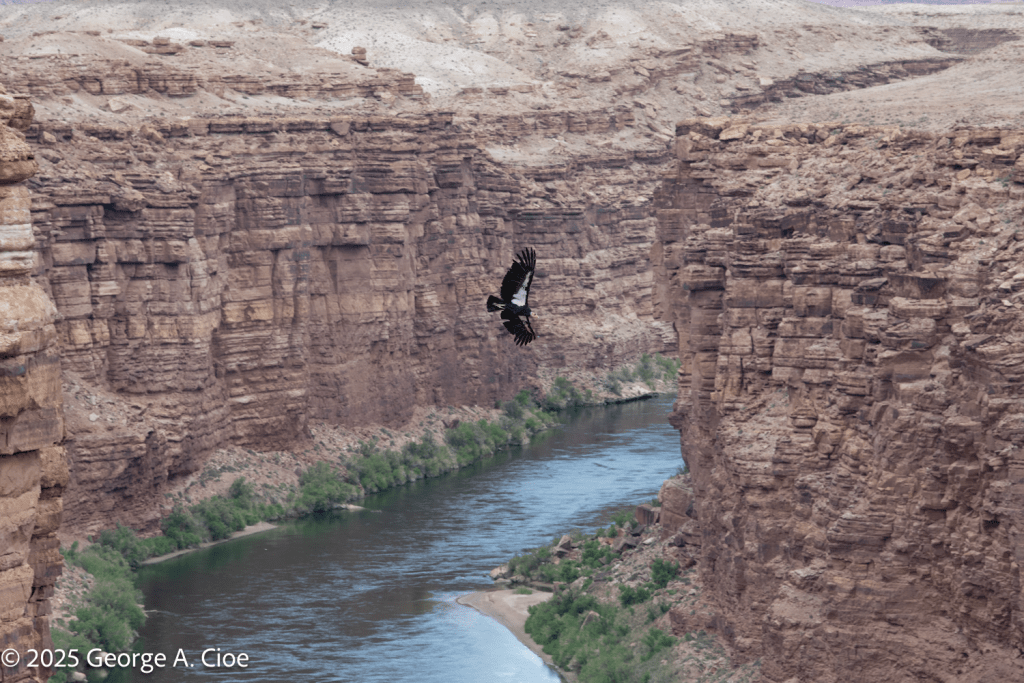
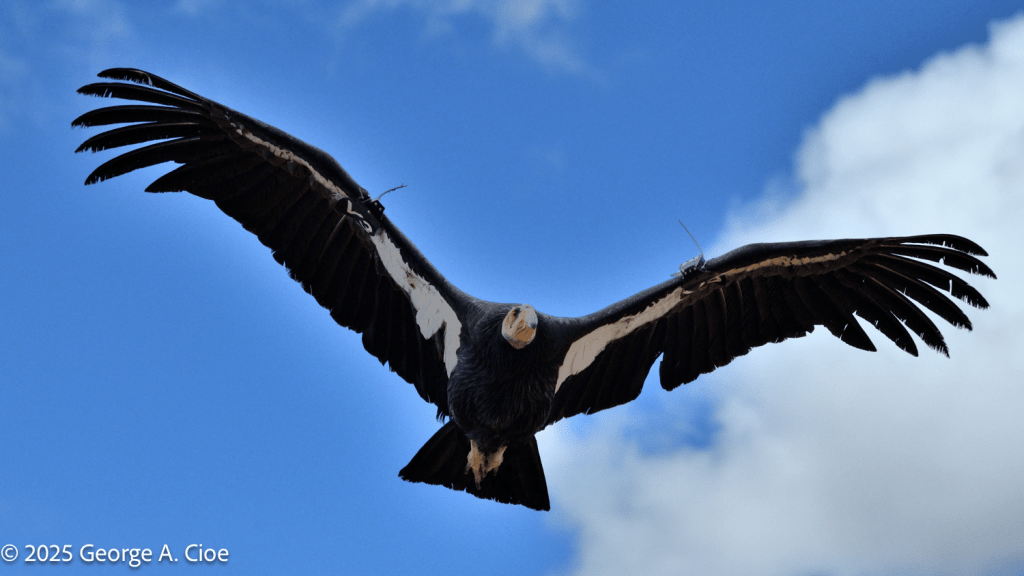
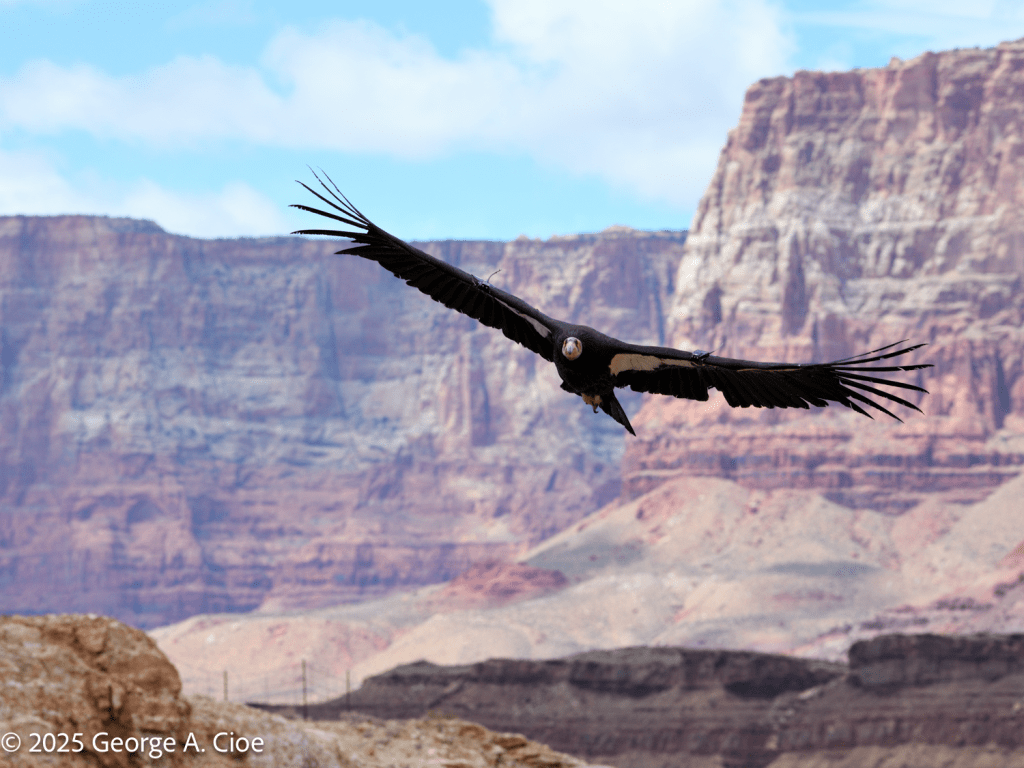
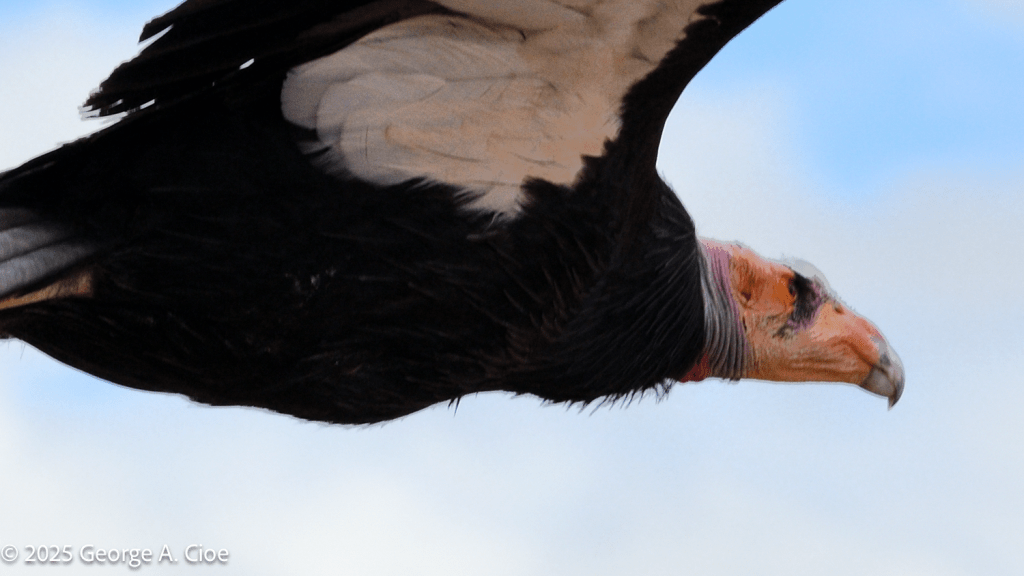
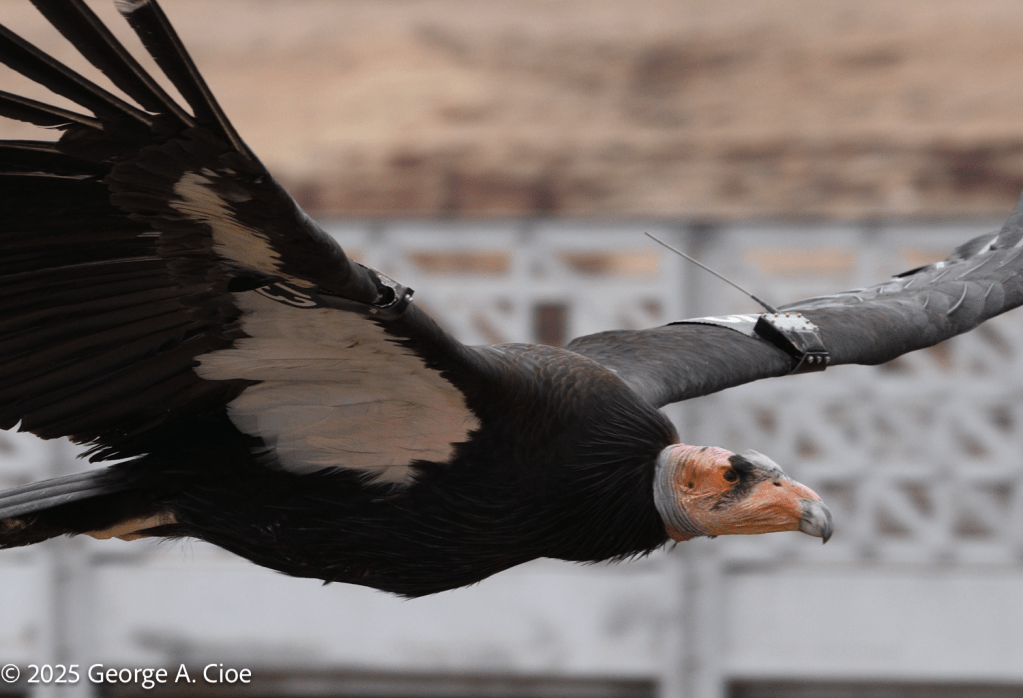
We were standing beneath the vast Arizona sky when it happened: a shadow passed overhead, and we looked up to witness the majestic flight of a California Condor. Massive, graceful, and ancient-looking, it traced a wide arc above the Vermilion Cliffs, its wings catching the wind like a living relic from another age. It felt like time paused.
The California Condor is one of the rarest birds on Earth—a creature almost lost to us forever. In the 1980s, their numbers had fallen to just 27 individuals. Habitat destruction, lead poisoning from spent bullets, and human interference nearly silenced them. But conservationists refused to let the condor’s story end there.
In a bold and controversial move, every remaining condor was brought into captivity in 1987. With immense care, dedication, and patience, a remarkable recovery effort began—led by zoos, wildlife biologists, Indigenous communities, and policy makers. Over time, they nurtured this species back to life. Today, more than 500 condors exist, with many flying free across the skies of California, Arizona, Utah, and Baja California.
Seeing one in the wild wasn’t just a thrill—it was witnessing a miracle of modern conservation.
As a photographer, I hadn’t come prepared to shoot wildlife. I had packed my landscape lenses, expecting canyons and wide horizons. But fate had other plans. To my astonishment, I was able to capture the condor in flight—with just a 70-200mm Nikkor lens. Normally, you’d need a 500-800mm lens for a shot like that. It felt like nature had leaned in a little closer just for me.
I remembered something my friend and photo mentor, Don Toothaker, once told me: how a mountain backdrop can instantly place a bird image in its true home. With that wisdom in mind, I waited, breath held, until I could frame the Vermilion Cliffs and the Colorado River behind the soaring condor. The result wasn’t just a photograph—it was a memory etched in light and sky.
The California Condor is more than a bird. It’s a symbol of hope, resilience, and what we can accomplish when we honor and protect the natural world. Its wings carry the legacy of science, collaboration, and sheer will—and for one unforgettable moment, we were lucky enough to see them stretch across the sky.
Subscribe below and get my daily (okay, most days—let’s not get crazy) post delivered straight to your inbox. Like magic. But with fewer rabbits. 🐇✉️
Browse my complete art portfolio and shop prints at imagesbygacioe.shop



Leave a Reply