
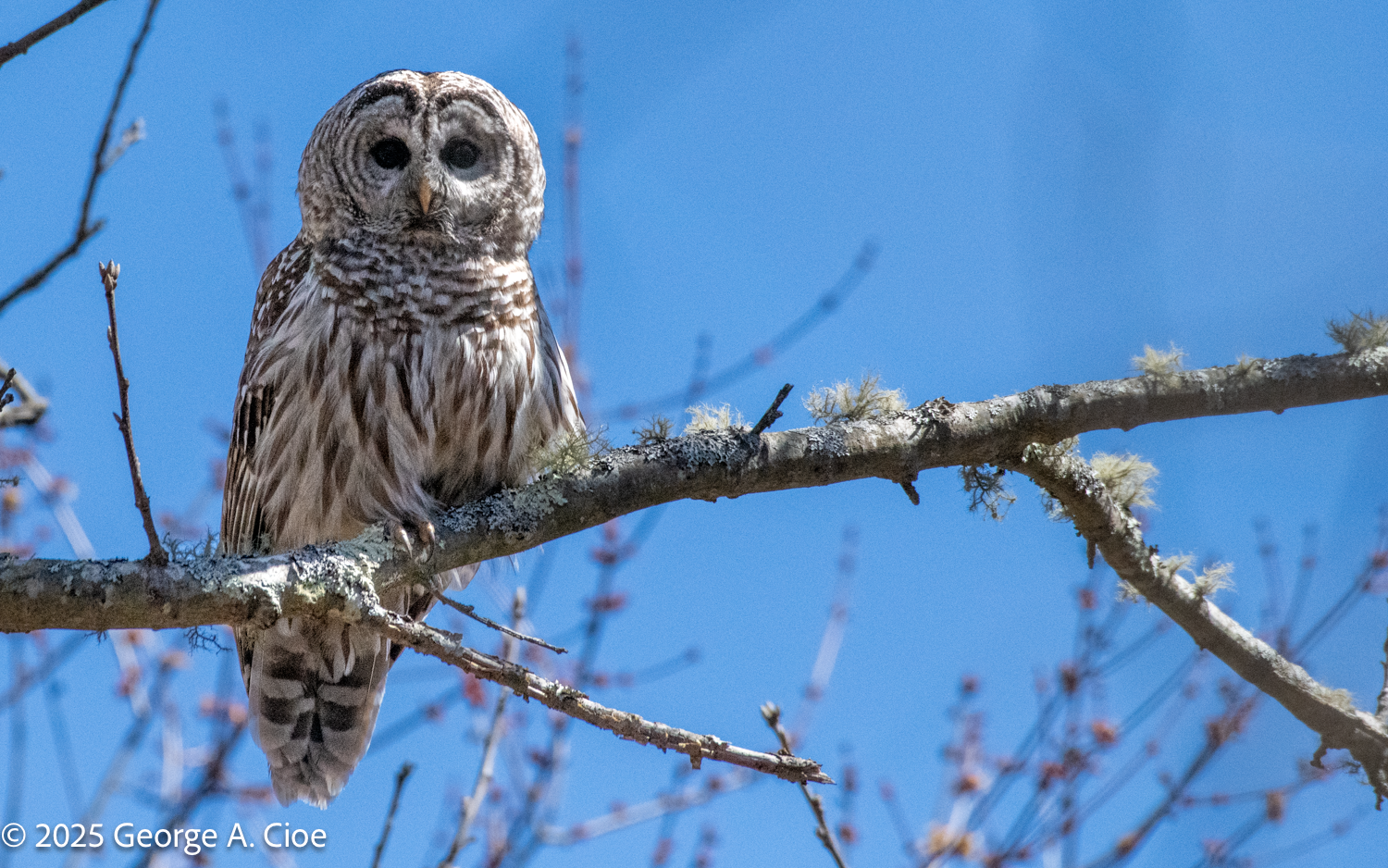

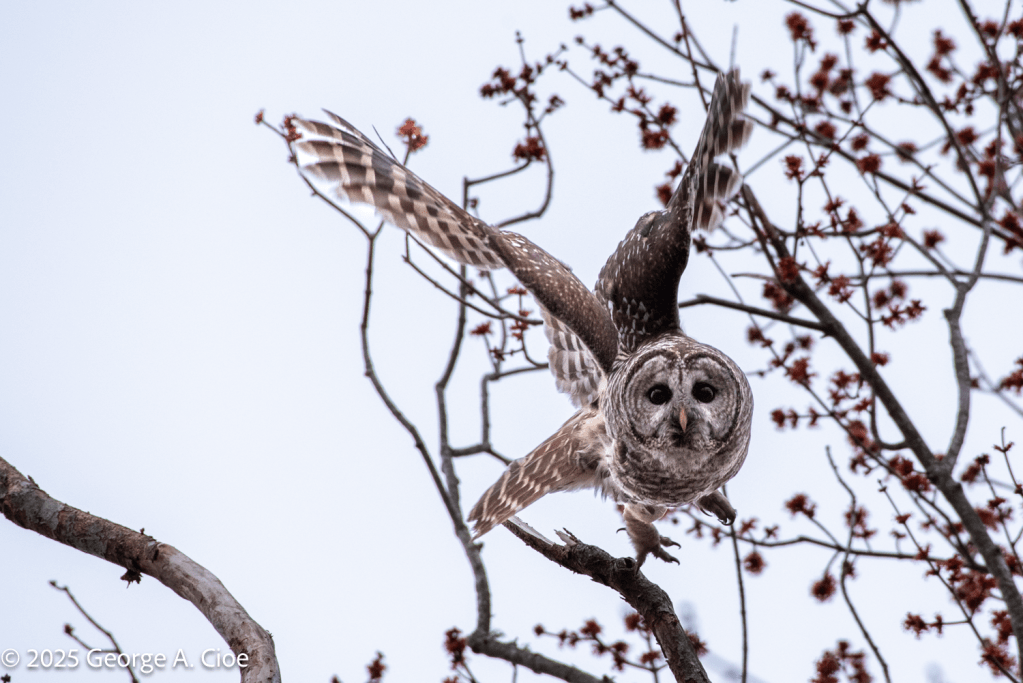
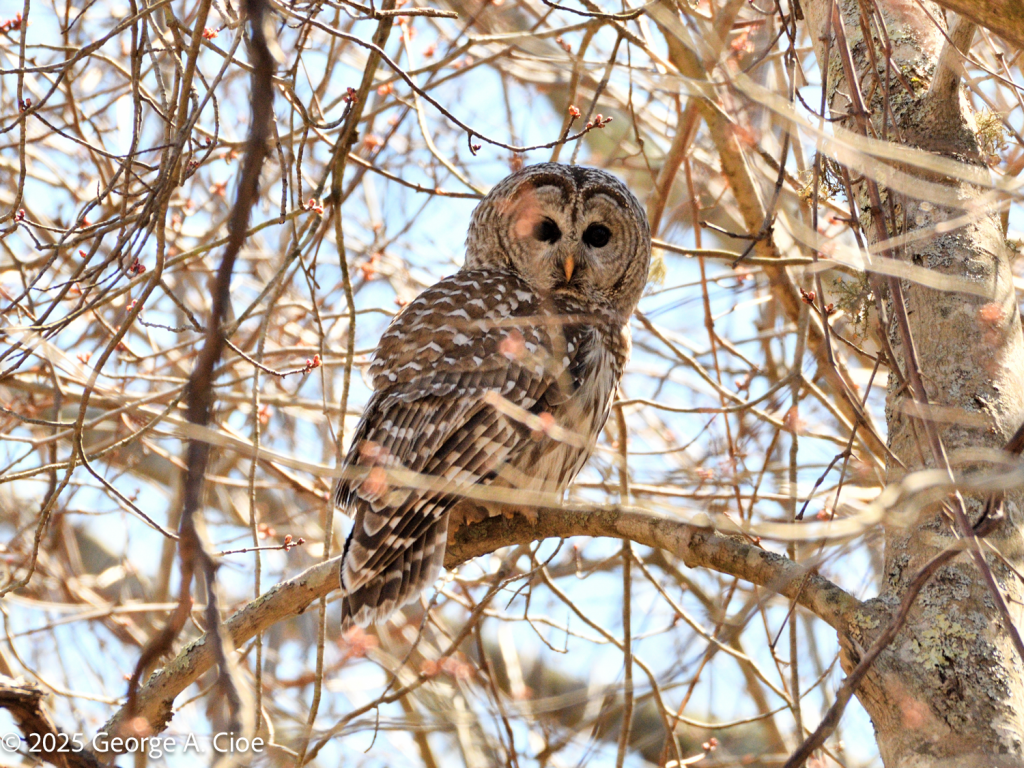

There are moments in life when nature stops you in your tracks—and for me, one of those moments came the day I first saw our neighborhood barred owl. I was immediately struck by two things: its gaze—deep, dark brown eyes that seemed almost human in their intensity—and the absolute silence of its flight. It moved through the air like a shadow untethered, weightless and soundless. It was both mesmerizing and slightly eerie. Watching something move so quickly and silently felt like witnessing a creature from a different realm.
That single moment changed how I saw our surroundings. I became curious—not just about owls in general, but about this one in particular. Who was this feathered ghost patrolling the trees around our home?
When I first started learning about birds, I’ll admit (somewhat sheepishly now) that I mistook the call of a mourning dove for an owl’s. I can laugh about it now, but back then, I genuinely thought I’d made a discovery. The truth is, birding is both an art and a science. Identifying species by their calls, their habitat, and even by the way they perch or flick their tails—there’s a steep learning curve. And just when you think you’ve got it down, a more experienced birder will kindly (or not-so-kindly) correct you. In fact, disagreements over subtle features are a regular part of birding culture.
Thankfully, the barred owl is one of the easier birds to identify. It’s a large, vocal owl known for its unmistakable call that sounds like someone asking, “Who cooks for you?”—a sound that, once heard, never leaves you. These owls are generalists when it comes to food: they’ll hunt rodents, birds, frogs, and even fish if the opportunity presents itself. And with their silent wings, the prey rarely knows they’re coming.
Here are a few things I’ve learned about these quiet guardians of the forest:
- They fly like ghosts. Specialized feathers allow them to glide without a sound. I’ve had one fly right over my head on a quiet trail—and I only noticed when I looked up. If I were a mole, I wouldn’t stand a chance.
- They’re patient hunters. Barred owls perch motionless in mature forests, watching and listening. When the time is right, they dive in silence, making them a dream subject for wildlife photographers.
- Their ears are incredible. Positioned at different heights on their heads, the asymmetry helps them triangulate sound with amazing accuracy—particularly useful in darkness.
- They live on the edge of day and night. Though primarily nocturnal, they’re also active during twilight, giving lucky observers a better chance of spotting them.
- Their eyes are unique. Unlike most owls with piercing yellow eyes, barred owls have soulful brown ones that seem to hold the wisdom of the woods.
- They live long and fiercely. In the wild, they can survive for a decade or more—and over 30 years in captivity. They’re territorial, fiercely defending 200 to 400 acres, some up to 1,000 acres, year-round.
- They’re romantics. Barred owls are believed to mate for life, raising one brood each year with surprising devotion.
Knowing all this only deepens my awe when I catch sight of one. There’s something profoundly grounding about realizing we share our neighborhoods with such extraordinary creatures. They don’t ask for much—just a little space, a few quiet trees, and the chance to carry out their ancient rituals under the cover of dusk.
Every time I hear that unmistakable call echoing from the woods—“Who cooks for you?”—I pause. It’s more than just a sound. It’s a reminder that we live beside wildness, wisdom, and wonder. And if we’re lucky, we get to see it glide silently above us now and then.
Subscribe below and get my daily (okay, most days—let’s not get crazy) post delivered straight to your inbox. Like magic. But with fewer rabbits. 🐇✉️
Browse my complete art portfolio and shop prints at imagesbygacioe.shop

Leave a Reply