


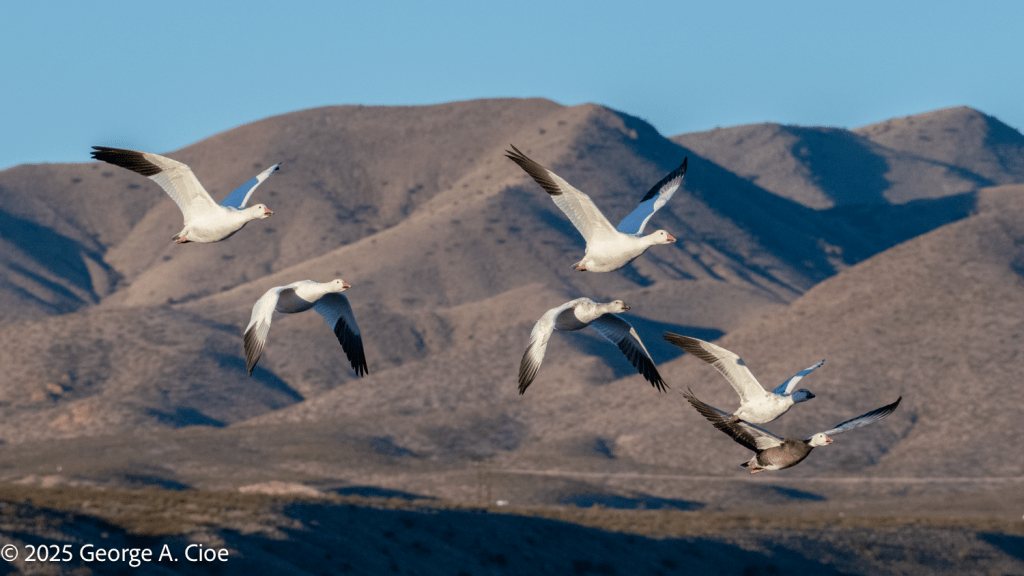
The radio crackled with the imaginary voice of an air traffic controller, as I looked skyward. It was early January at the Bosque del Apache National Wildlife Refuge in New Mexico, and while I wasn’t flying a plane, I might as well have been — the skies were that busy.
We had been stationed at the Wetland Roost since sunrise, photographing the elegant takeoffs of Sandhill Cranes, their silhouettes slicing through the golden morning haze. Then, just as I was adjusting my 200-500mm lens, Don Toothaker, our fearless leader from Hunt’s Photo Adventures, turned slowly toward us. He paused for dramatic effect and said, with a glint in his eye and the gravitas of Doc Brown from Back to the Future:
“There are Snow Geese in the pond.”
Now, you have to understand—this wasn’t just a birding update. This was a bonus round. An avian jackpot.
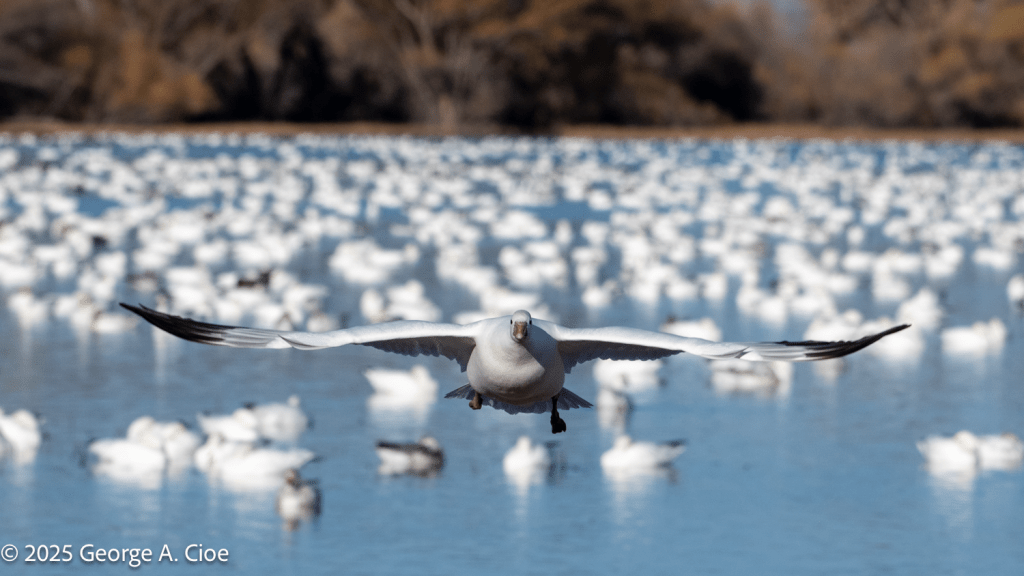
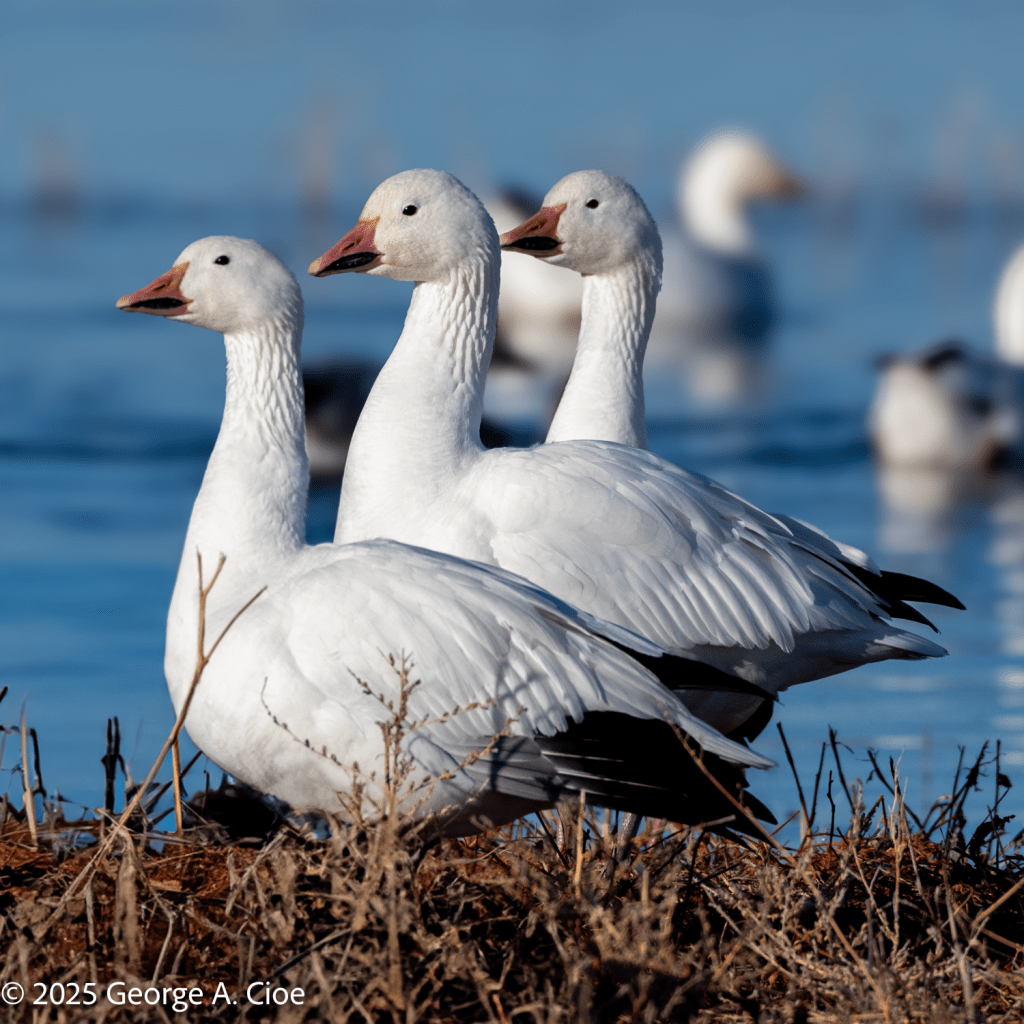
As we rounded the corner, the sight took my breath away. The pond wasn’t just hosting snow geese; it was hosting an invasion. Thousands of birds blanketed the water like a living, squawking duvet. I could hear their nasal honks echoing across the refuge—snow geese don’t whisper, they announce themselves.
This wasn’t just beautiful. This was special. You see, these birds are long-distance champions. Snow geese breed in the Arctic and subarctic, then migrate thousands of miles each year to wintering areas as far south as Mexico. And they don’t just migrate—they soar. Some flocks have been recorded flying at altitudes of 20,000 feet, rivaling private jets.
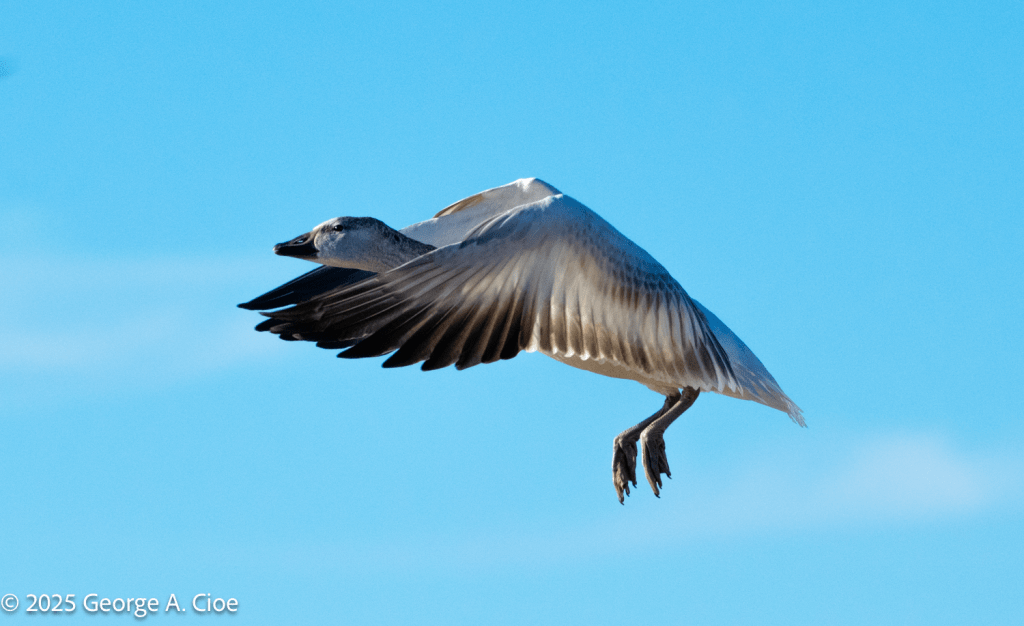
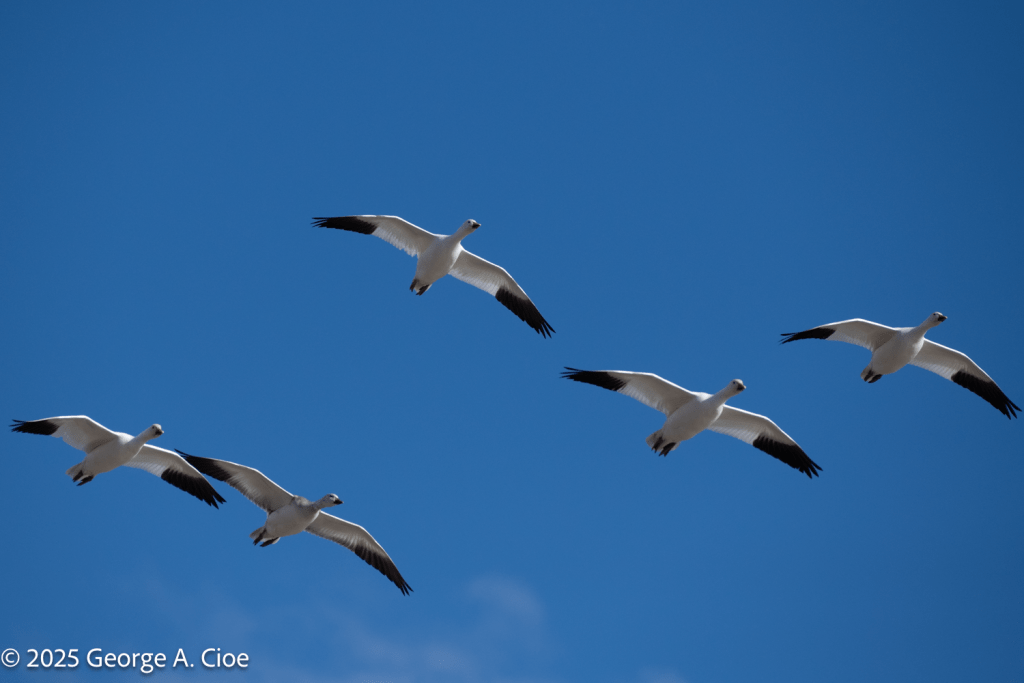
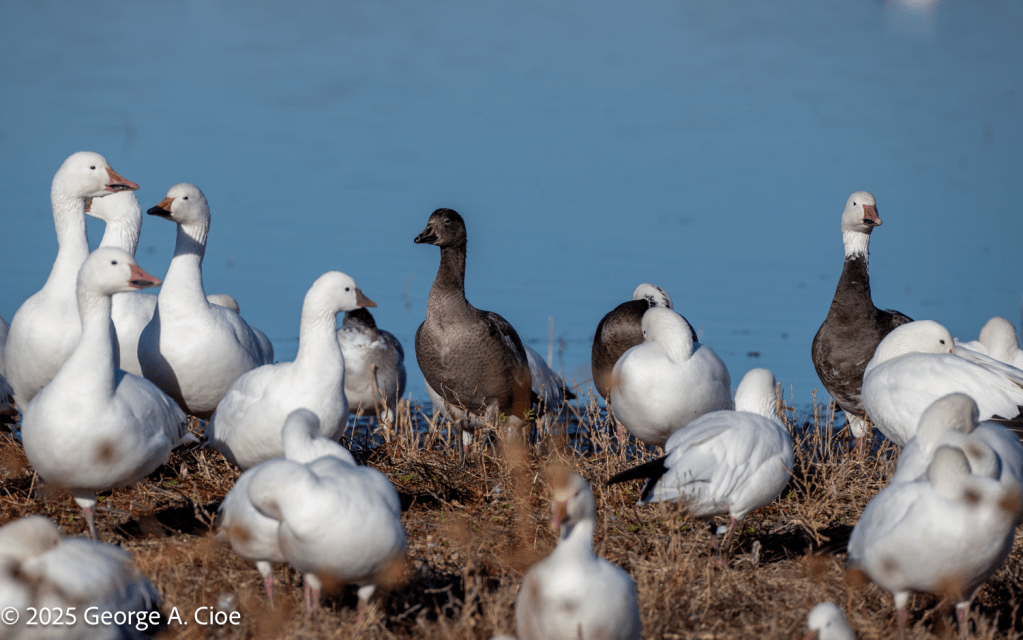
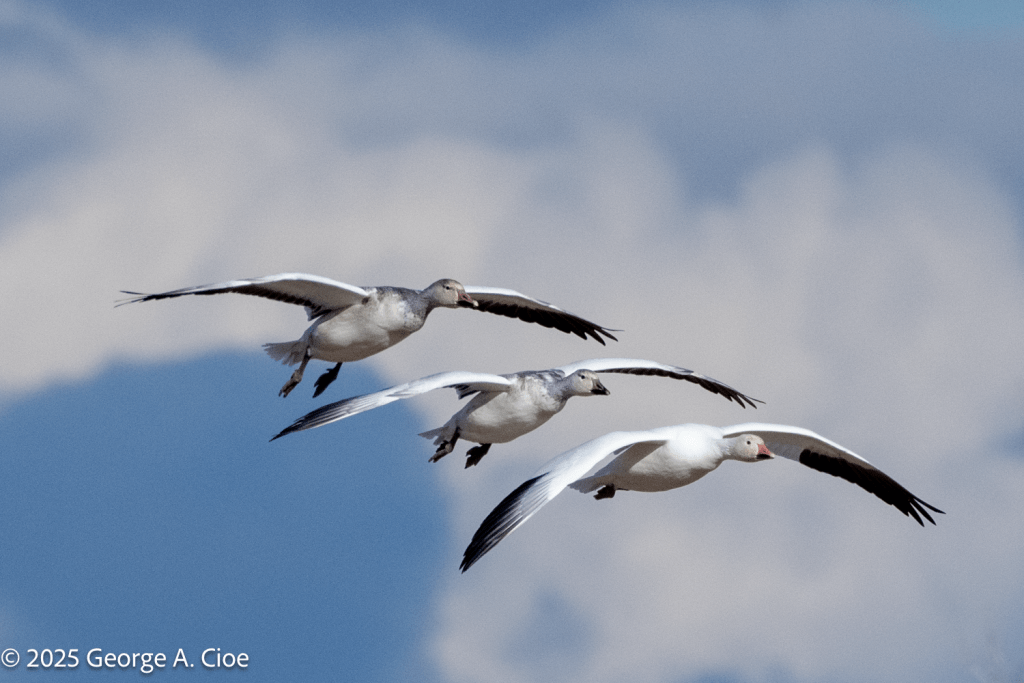
As I trained my lens on the churning cloud of feathers, I noticed two distinct color patterns. Snow geese come in two morphs: the more common white morph with striking black wingtips, and the blue morph, sporting a bluish-gray body with a white face—like they got halfway through molting and decided to try something new.
The flock was restless. Honking, flapping, shuffling. Then, as if on cue, the water exploded. A thousand wings beat the surface in a synchronized lift-off. It was like a feathered flash mob had suddenly decided to flee the scene.
“Tower, we have multiple departures. No flight plan filed.”
I tracked one with my lens—white morph, black-tipped wings, distinctive pink bill with that unmistakable “grin patch” (a fancy term for their curved black cutting edges). Their bills are built for foraging, especially in marshes, meadows, and farm fields where they dig up roots and rhizomes like little herbivore archaeologists.
Snow geese are strict vegetarians, but their digestion is, well… efficient. Their metabolism churns through food in about an hour, which means they poop. A lot. Let’s just say the ground crew at Bosque del Apache has its work cut out.
Despite their mess, snow geese are deeply social, loyal to their flocks, and surprisingly long-lived. Most only make it about six years, but one overachiever made it to 27.5 years—probably the goose equivalent of a wise elder with stories about dodging hunters and flying over the Rockies in a snowstorm.
What struck me most was their sheer unity—how hundreds could lift, bank, and circle without crashing into each other like feathery bumper cars. It was chaotic and harmonious at the same time, the sky pulsing with organized pandemonium.
And I was there for it. Every flap. Every honk. Every snowflake feather caught in golden light. Some people go to airports to see planes. I go to ponds to watch nature’s own aerial ballet.
Subscribe below and get my daily (okay, most days—let’s not get crazy) post delivered straight to your inbox. Like magic. But with fewer rabbits. 🐇✉️
Browse my complete art portfolio and shop prints at imagesbygacioe.shop



Leave a Reply