


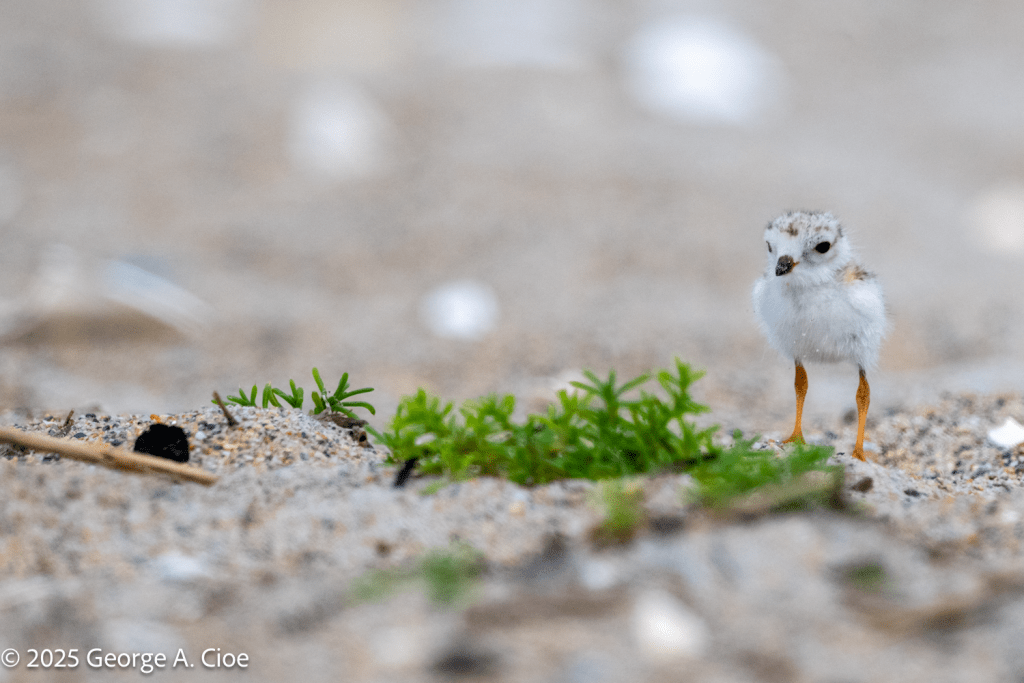
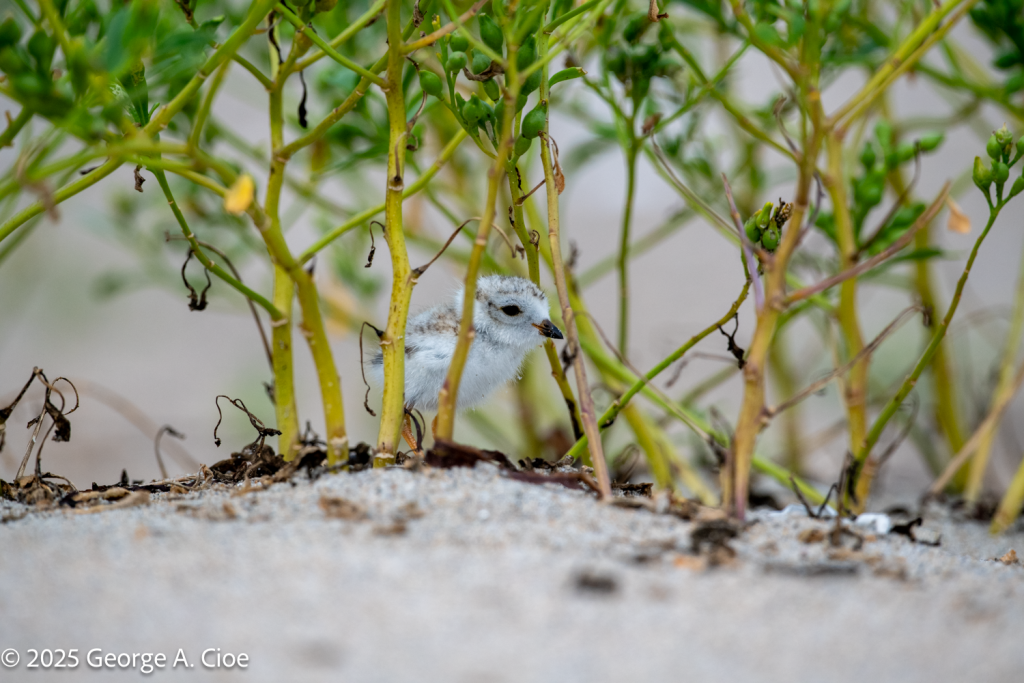
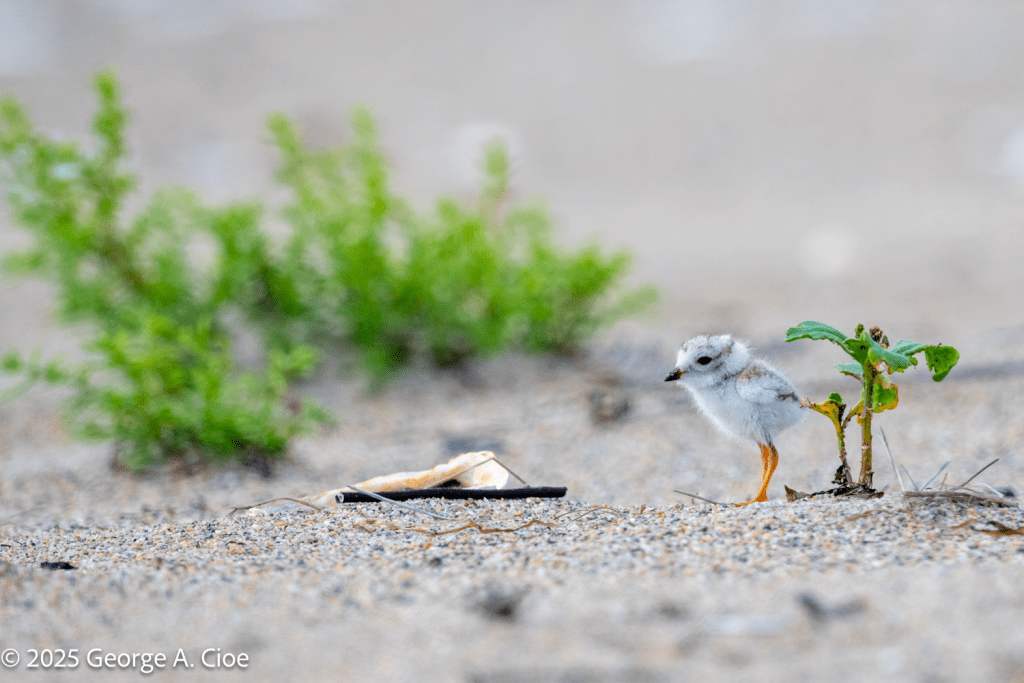
Sunday morning, I set out to the mouth of the Narrow River in Narragansett, Rhode Island, with one goal in mind: to photograph Piping Plovers. Not the easiest assignment, considering these birds are about the size of a tennis ball with legs, and move twice as fast.
The sky was heavy with clouds, the kind that make fair-weather photographers groan. But for me, this was a gift. Overcast skies are nature’s soft filter. No harsh shadows, no blown-out highlights—just gentle, even light. The kind of light that wraps a tiny bird in softness, bringing out every feathered detail, from the sandy speckles on the adults to the barely-there fuzz on their chicks.
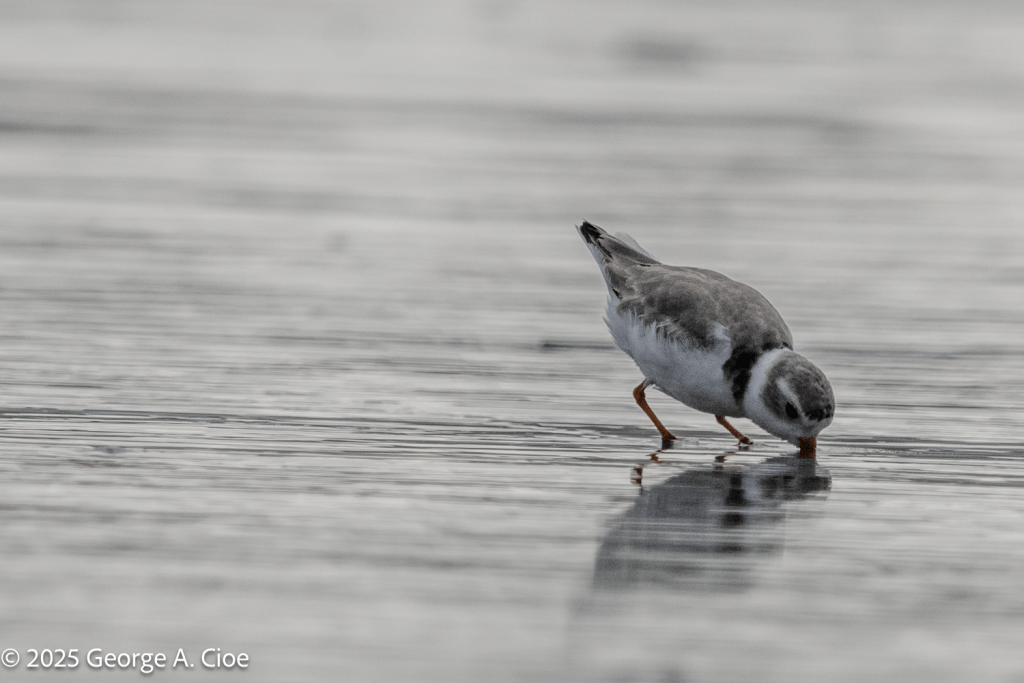
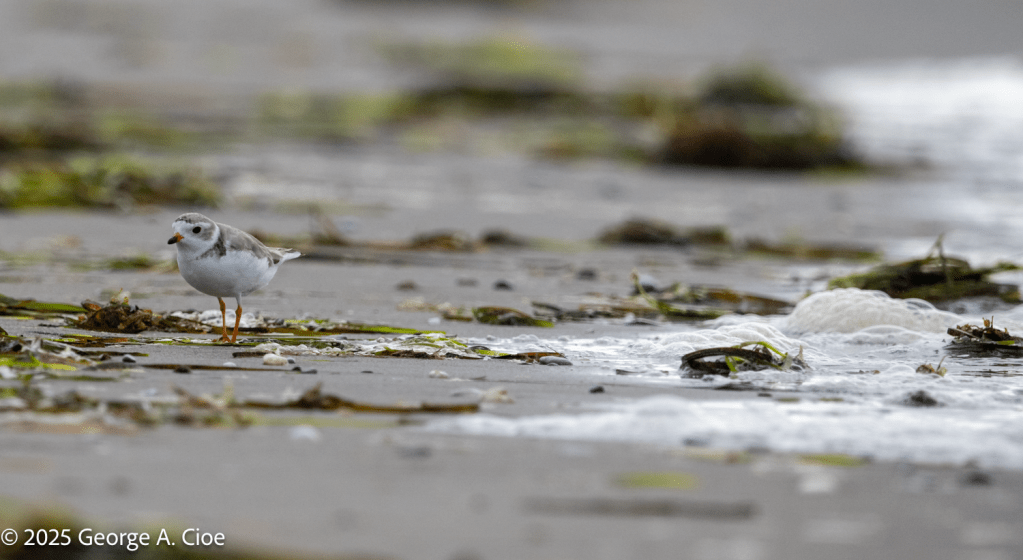
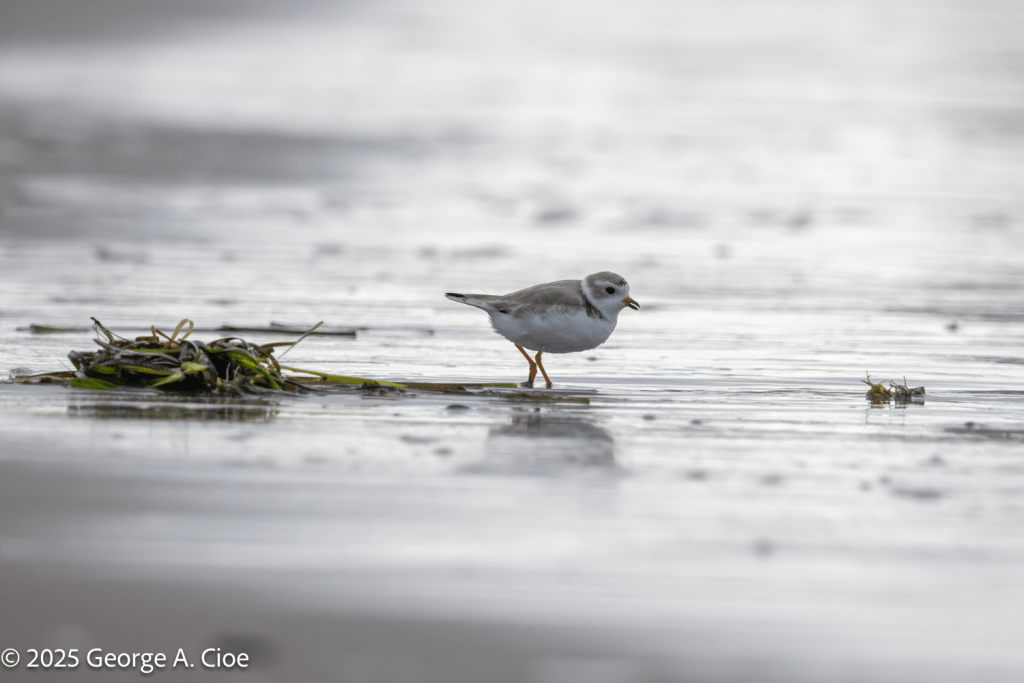
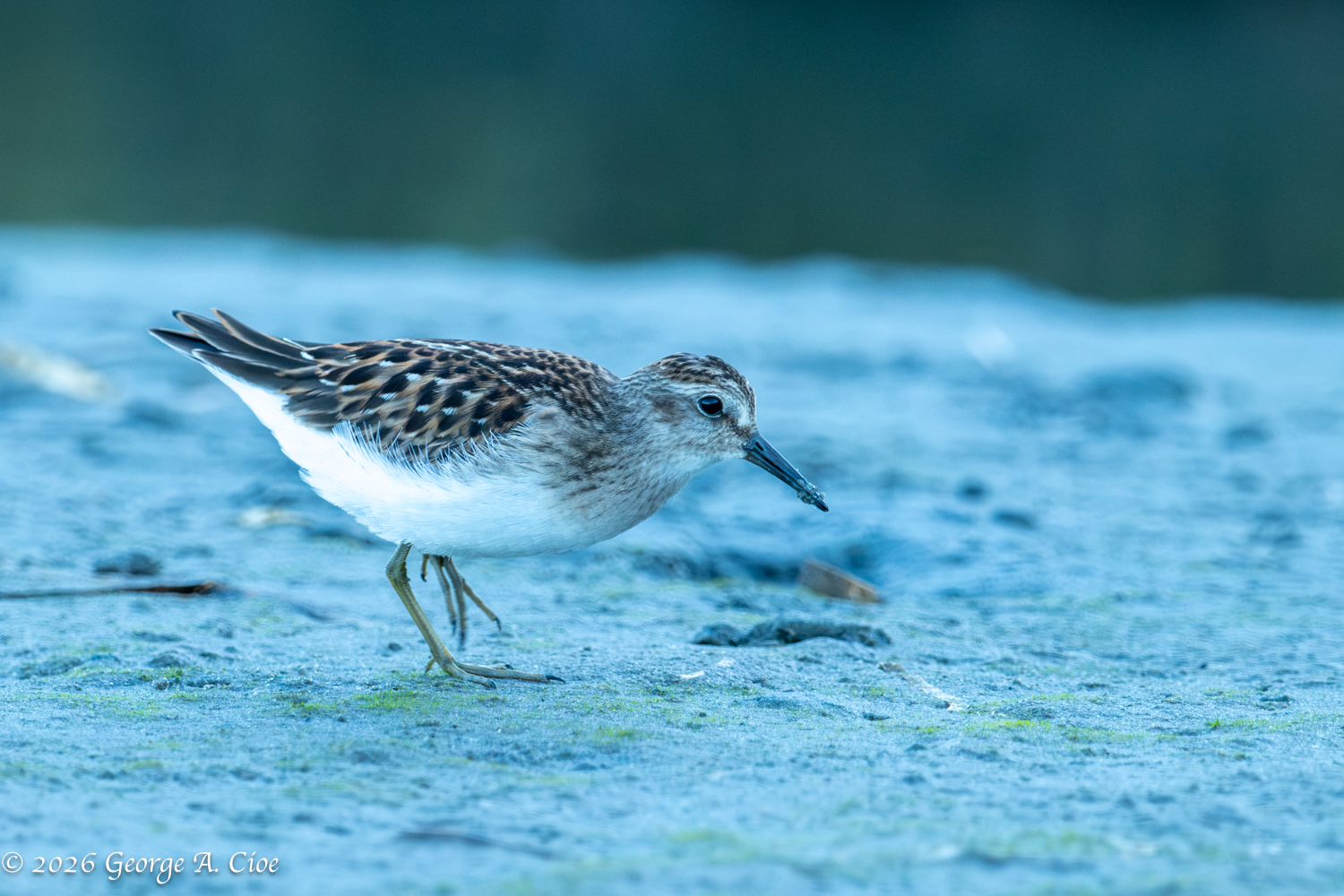
It didn’t take long before I spotted them—first the adults, delicate and determined, patrolling the edge where surf meets sand. One waded confidently into the shallows, looking for breakfast with all the seriousness of a five-star chef sourcing ingredients. Another paused mid-stride, staring at me like it was posing for a magazine cover. Maybe Plovers Illustrated?
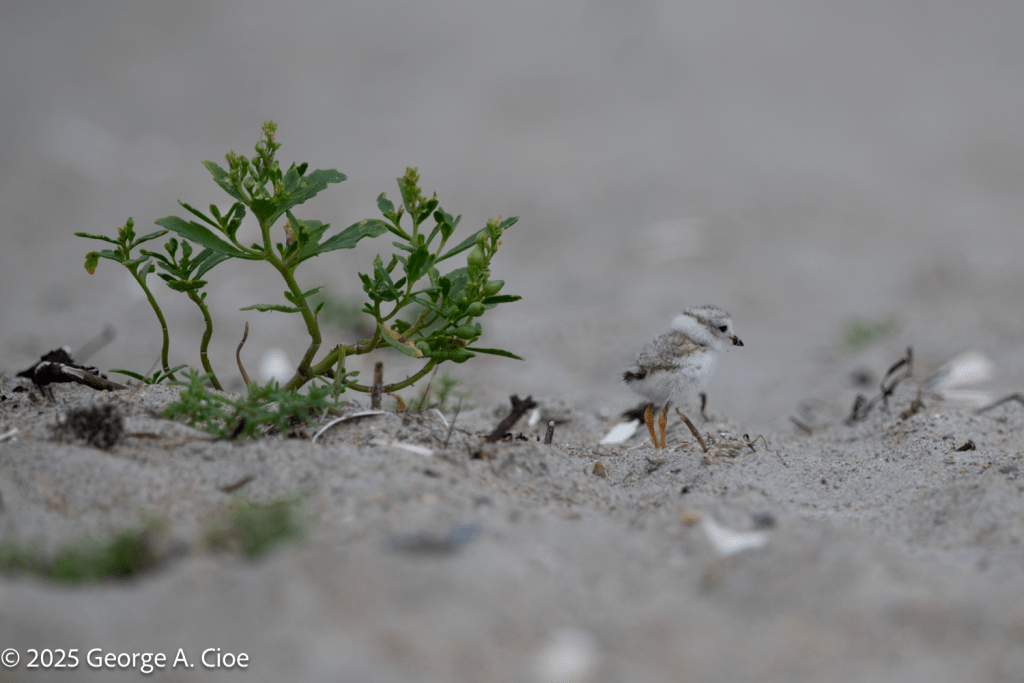
Then I shifted focus to the nesting area, carefully keeping my distance. And there they were—tiny, ridiculous miracles on legs. The chicks, just days old by the look of them, scurried around like wind-up toys programmed by chaos. You don’t watch a Piping Plover chick. You try to keep up, and you fail. Every time I thought I had one in focus, it would vanish behind a dune blade or disappear into its own shadow.
But the most remarkable part? Knowing just how rare these sightings are. Piping Plovers are federally listed as threatened on the Atlantic Coast and endangered in some areas of the Great Lakes. Their survival is an ongoing tug-of-war between nature and our love of sandy beaches. We’ve taken over most of their real estate, forcing these tiny families to raise their young in increasingly narrow margins—both figuratively and literally.
That’s why seeing them here—thriving, nesting, darting about—is more than just a good photo op. It’s a hopeful sign. And it’s a reminder. Every signpost, every roped-off patch of beach, every rule about keeping dogs off the beach—those aren’t just formalities. They’re lifelines.
So yes, I got my photos.
I left the shore with sand in my shoes, a full memory card, and a heart lifted by the tiniest birds doing the bravest things.
And to the chick that ran straight toward my lens, stared me down for a full second, then pooped and ran away—you’re a star.
Subscribe below and get my daily (okay, most days—let’s not get crazy) post delivered straight to your inbox. Like magic. But with fewer rabbits. 🐇✉️
Browse my complete art portfolio and shop prints at imagesbygacioe.shop



Leave a Reply