
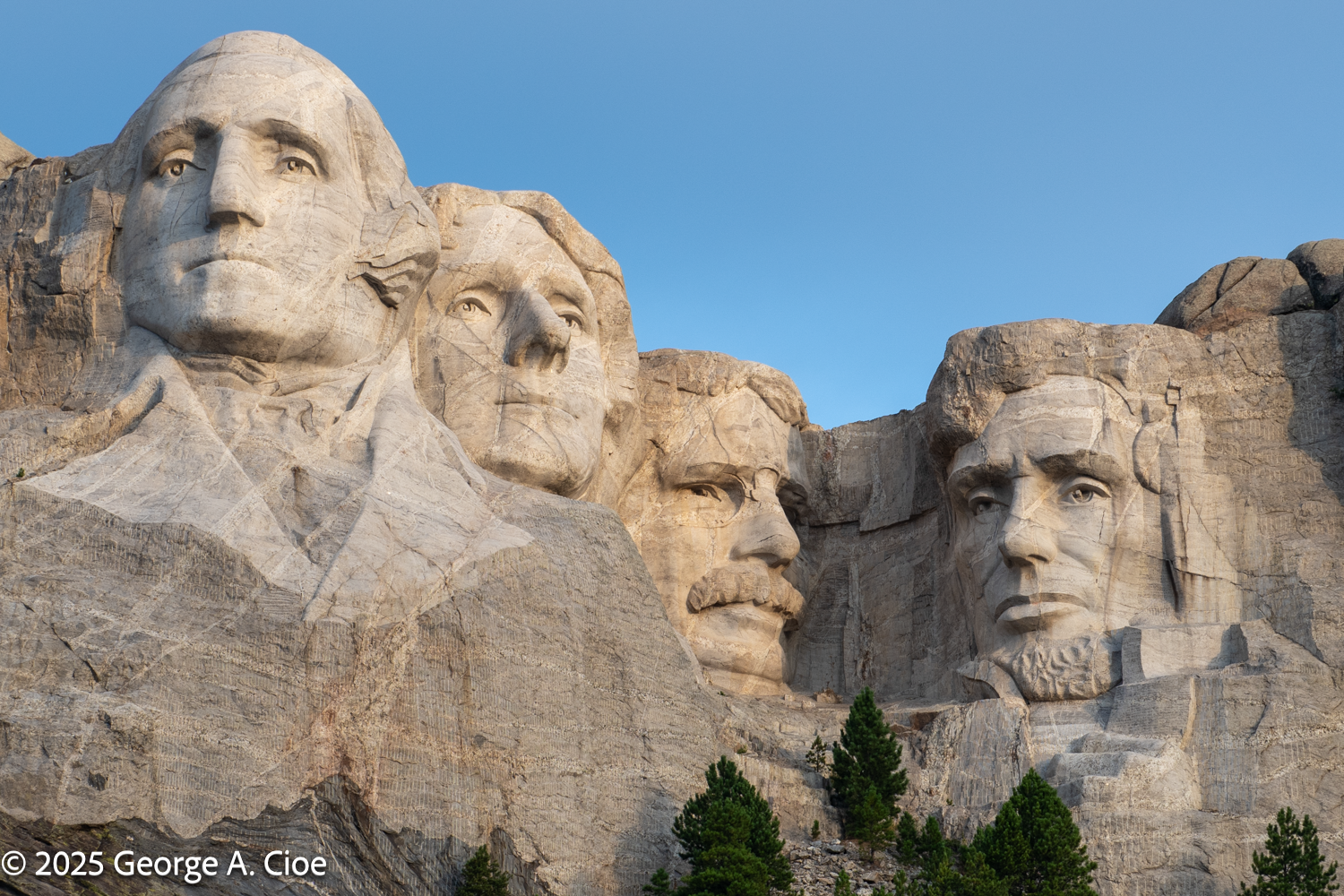
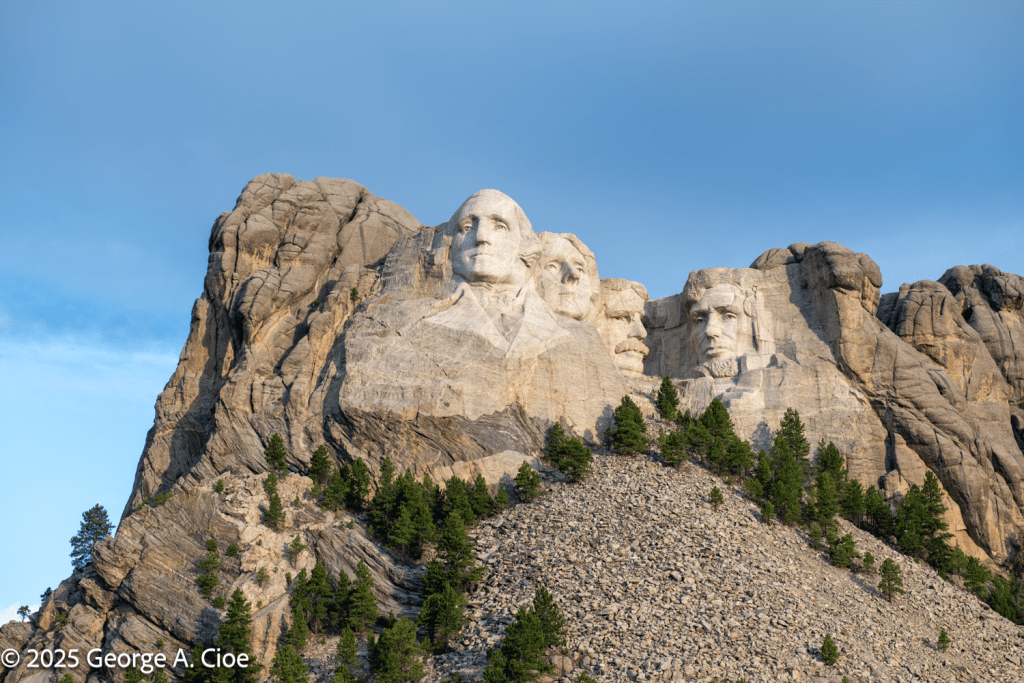
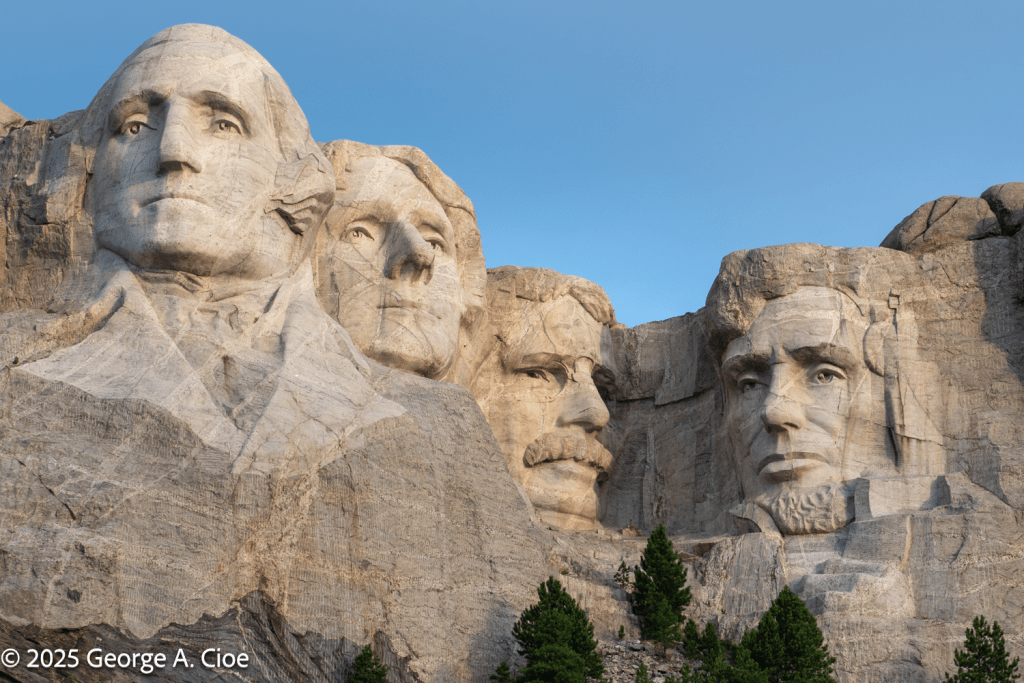
Ever since I was a child, I’ve had a fascination with Mt. Rushmore. I really couldn’t explain it for a long time. But the last few years have sharpened my view of our country, so here goes.
There’s something about that granite mountainside in the Black Hills of South Dakota that stops time. Four colossal faces—Washington, Jefferson, Lincoln, and Roosevelt—etched forever into stone. As a boy, I thought it was just cool: the sheer scale, the rugged setting, the stark faces that will mark a time for centuries. But now, I see it as more than just a monument. Mt. Rushmore is a cathedral of American ideals—an altar to leadership, sacrifice, and the belief that this grand experiment of a republic was worth every ounce of sweat and struggle it took to build.
The monument itself took fourteen long years—1927 to 1941—to complete. Sculptor Gutzon Borglum and his crew of nearly 400 workers, many of them miners and carvers, endured blazing summers, biting cold, dangerous blasting, and the financial hardships of the Great Depression. They carved with purpose and pride, knowing they were chiseling not just stone, but a legacy. No one died during construction—a miracle in itself, given the risks they faced daily, dangling on ropes and working with dynamite. It was devotion—not just to art, but to country—that kept them going.
Washington stands first, and rightly so. He was the indispensable man—the general who won a revolution, the statesman who refused the crown, the first president who defined the office with humility and wisdom. His strength was unity. He turned thirteen colonies into a nation.
Then Jefferson, the idealist and intellectual, who gave us the Declaration of Independence and the Louisiana Purchase—doubling the size of the country and setting the stage for westward expansion. He believed fiercely in the rights of the individual and the power of ideas.
Lincoln, of course, preserved the nation when it was breaking apart. He ended slavery and reminded us, through word and deed, what a government “of the people, by the people, for the people” should be. His leadership was forged in fire, but his legacy is one of healing.
And finally, Theodore Roosevelt—the progressive warrior who broke up monopolies, protected the working man, and made conservation a national priority. He ensured America would not just grow in size and wealth, but in character and responsibility.
Mt. Rushmore is not perfect, just as the country it represents is not perfect. But it is enduring. It is honest in its ambition and unapologetic in its reverence for those who helped shape a nation. To students of history, it is a reminder that greatness does not happen by accident—it is built, earned, and defended.
Today, in times of division or doubt, I look to that mountain and remember what we are capable of when we are united in purpose. The devotion it took to sculpt those faces into stone mirrors the devotion it takes to preserve liberty, justice, and opportunity for all. It reminds me that America is at its best not when it tears itself down, but when it lifts up the very ideals those four men stood for.
So, maybe that’s why I was always drawn to it. Maybe I somehow sensed that those stone faces are more than just images—they are principles, immortalized. And they still have something to teach us.
Subscribe below and get my daily (okay, most days—let’s not get crazy) post delivered straight to your inbox. Like magic. But with fewer rabbits. 🐇✉️
Browse my complete art portfolio and shop prints at imagesbygacioe.shop




Leave a Reply