

Dawn at Sachuest Point National Wildlife Refuge has a way of making you feel both alive and slightly frostbitten at the same time. At 31 degrees, with saltwater pushing crisp Atlantic air across the shoreline, it was the kind of cold that makes your camera feel like a block of ice and your fingers wonder if they’re still on speaking terms with the rest of your body.
But then again, this is the hour when magic happens—when the horizon blinks awake, the gulls reconsider their life choices, and the refuge glows like it remembers it’s one of Rhode Island’s crown jewels.
That’s when I saw them.
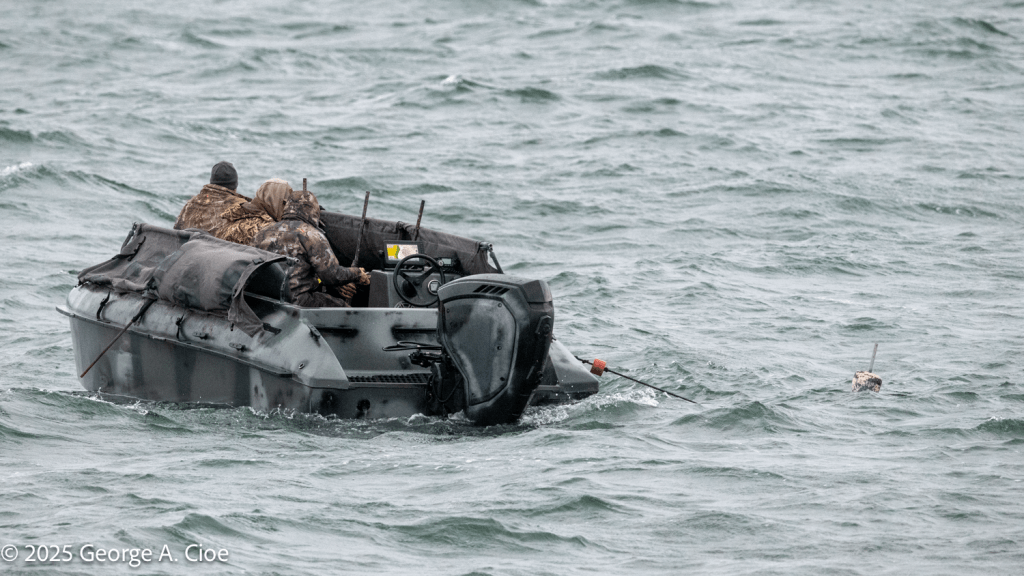
A camouflaged boat just offshore, riding the tide quietly.
Not one or two, but three duck hunters, bundled, focused, working like a well-rehearsed morning crew. Their boat blended so completely into the coastal brush and rock tones that if I hadn’t been paying attention (and you know I always am), I might’ve walked right past the scene.
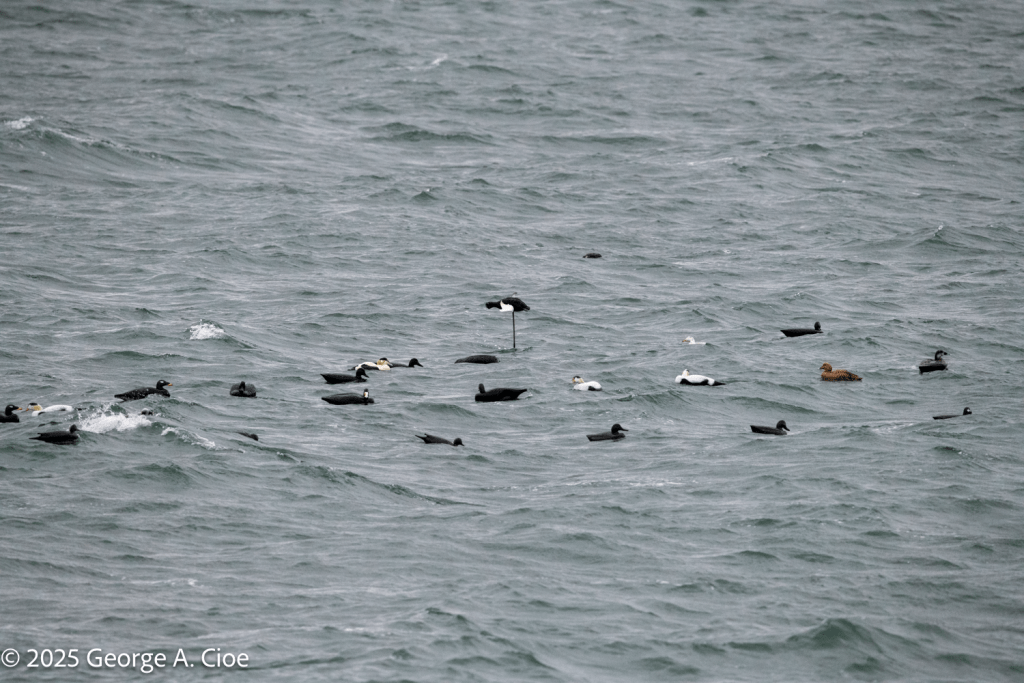
A cluster of decoys bobbed nearby—little wooden diplomats doing their best impression of casual waterfowl. And spinning above them was a single flying decoy, its wings flickering rhythmically in the early light, like a tiny windmill running an invitation-only airshow. No wonder real ducks were circling with great suspicion, probably thinking:
“That fellow looks energetic for 31 degrees… something’s not right.”
From the trail, the whole tableau looked like a painting. But the more I watched, the more I remembered the deeper truth hiding beneath all that camouflage and patience:
Duck hunters are some of the most important conservationists we have.
It sounds strange until you know the history:
• Their license fees
• Their federal duck stamps
• Their taxes on gear
• Their memberships in conservation groups
• Their relentless push to preserve wetlands
All of it funnels straight into protecting the habitats that ducks—and hundreds of other species—depend on. Without hunters, many of America’s most important refuges, including places like Sachuest Point, would never have survived the waves of development that threatened to swallow them decades ago.
I steadied the camera and framed the moment: three hunters, poised in their camo boat, breath visible in the cold, hands steady despite the chill. The flying decoy spins above the water. The real ducks easing nearer to the spread, considering their options. Wild and artificial dancing in the same frame—instinct meeting ingenuity.
And there I was on the shoreline, toes going numb, heartwarming anyway, because it hit me once again:
The beauty I come to photograph exists in part because these folks help protect it.
Duck hunters don’t just harvest ducks—they invest in their future.
They don’t just show up for sport—they show up for stewardship.
They don’t just take—they also give back, acre by acre, marsh by marsh.
So if you love seeing ducks streak across a Sachuest sunrise,
if you love photographing them as they glide into the saltwater shallows,
if you love knowing this refuge will still be here for the next generation—
thank a duck hunter.
They’re out there at dawn,
31 degrees, salt spray in their faces,
with a single flying decoy spinning above the water,
helping keep conservation alive—quietly, purposefully, just off the shoreline.
I’d love to share my posts with you. If you subscribe, they’ll come straight to your inbox—most days, like a little note from me to you. It means a lot to know you’re reading along.
Browse my complete art portfolio and shop for prints at imagesbygacioe.shop

Leave a Reply