
Sometimes a photograph asks a question.
Not of the subject.
Of the photographer.
And of everyone who looks at it.
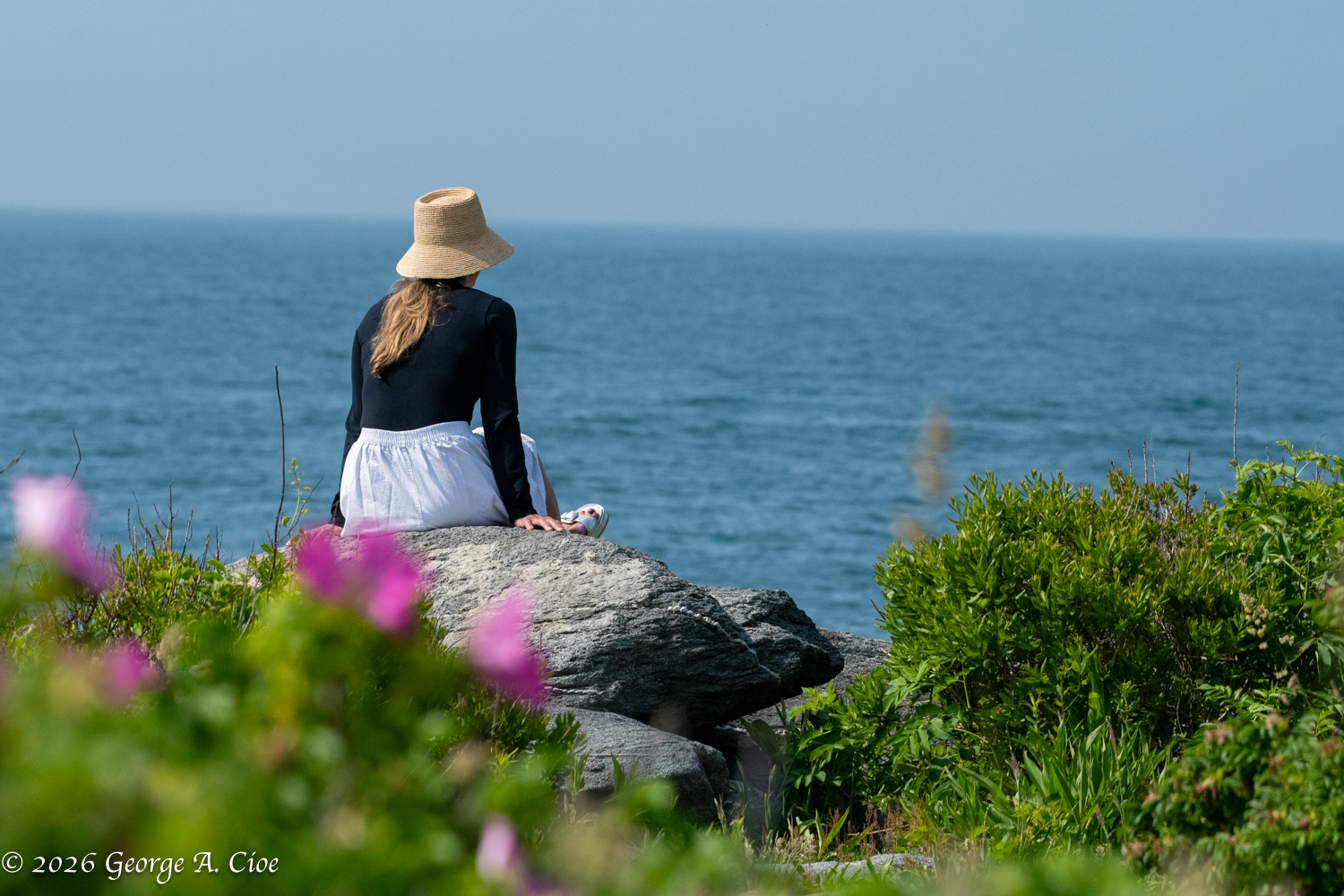
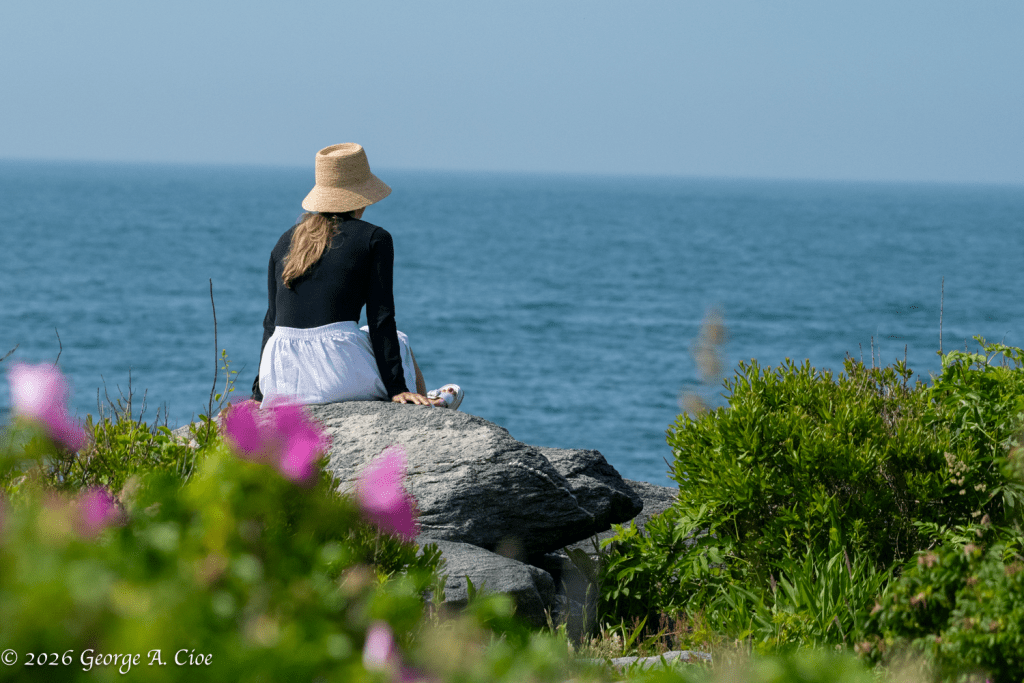
I saw a woman sitting quietly on a rock overlooking the ocean at Sachuest Point. A wide-brimmed hat. A gentle tilt of her head. Relaxed shoulders. The vast Atlantic stretched endlessly before her.
Immediately, I wondered:
What is she thinking?
It’s an impulse we all have when we encounter a pause.
Our minds rush to fill the silence.
If she were holding a book, the mystery would disappear. She’s reading.
A camera? She’s photographing the seascape.
Binoculars? A birder scanning for scoters or loons.
But she was simply sitting.
Alone with her thoughts.
And so my imagination got to work.
Maybe something difficult had happened. Maybe she was searching for answers. Maybe she was grieving. Maybe she had come here to let the rhythm of the waves untangle something the rest of the world could not.
She seemed thoughtful.
Maybe even a little sad.
Or perhaps she was simply enjoying one of Rhode Island’s perfect summer mornings.
The truth is, I had no idea.
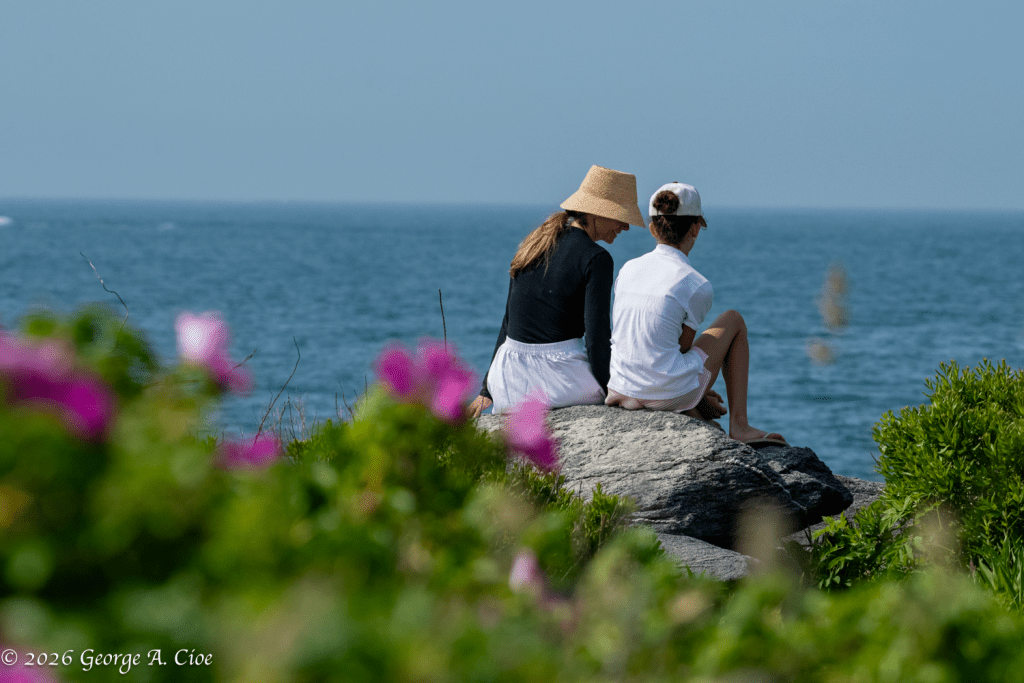
Then, a few moments later, another figure appeared.
A young girl climbed onto the rock beside her and settled in at her side.
Suddenly, the story I had written in my head began to dissolve.
Perhaps this wasn’t solitude at all.
Perhaps it was motherhood.
Perhaps she had been watching her daughter explore the rocky shoreline below, giving her just enough freedom to wander while never taking her eyes off her.
Maybe she wasn’t wrestling with loss.
Maybe she was savoring one of those fleeting moments parents know all too well—the realization that the little hand they once held is gradually becoming independent.
Maybe what I was witnessing wasn’t sadness.
Maybe it was love.
Maybe it was pride.
Maybe it was both.
And that’s when it struck me.
How often do we do this in everyday life?
We observe someone for a moment and convince ourselves we understand the whole story.
The coworker who seems distant.
The friend who doesn’t return a call.
The stranger who appears impatient.
The neighbor who seems withdrawn.
We see a single chapter and assume we’ve read the entire book.
Then new information arrives.
A hidden struggle.
A family crisis.
A health concern.
A difficult decision.
Or sometimes something beautiful we never considered.
And suddenly everything looks different.
The facts didn’t change.
Only our understanding did.
Standing there at Sachuest Point, I realized something important.
I couldn’t see what was beyond that rock.
She could.
She knew exactly why she was sitting there.
I did not.
And that’s true of every person we meet.
Each of us carries experiences, worries, hopes, disappointments, and dreams that are invisible to everyone else.
Which is why patience is such an extraordinary gift.
Patience allows room for stories we haven’t heard yet.
Compassion allows space for truths we cannot see.
And understanding begins the moment we admit we don’t know as much as we think we do.
So perhaps the lesson from the lady by the sea is a simple one.
Be a little slower to judge.
A little quicker to listen.
A little more patience with the people you meet, the people you work with, and especially the people you love.
Because things are not always what they seem.
And sometimes the most important part of the story is happening just beyond the edge of our view.
Whoever you are, thank you for the photograph.
But even more, thank you for the reminder.
I’d love to share my posts with you. If you subscribe, they’ll come straight to your inbox—most days, like a little note from me to you. It means a lot to know you’re reading along.
Browse my complete art portfolio and shop for prints at imagesbygacioe.shop



Leave a Reply