
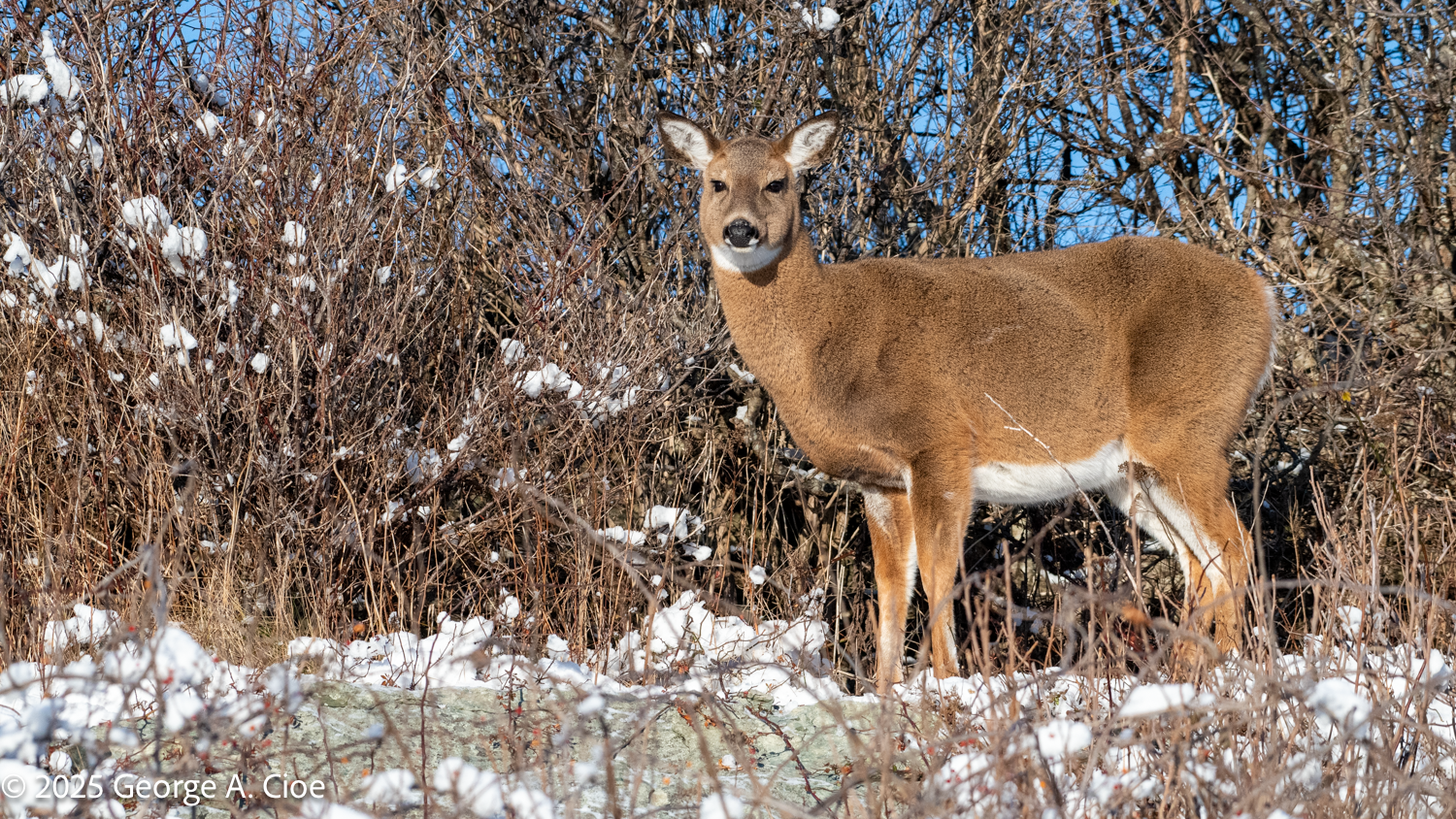
My morning walk at Sachuest Point National Wildlife Refuge is usually a quiet negotiation between caffeine levels and wind chill. The rules are simple: walk, breathe, look, don’t trip over your own boots.
Then she appeared.
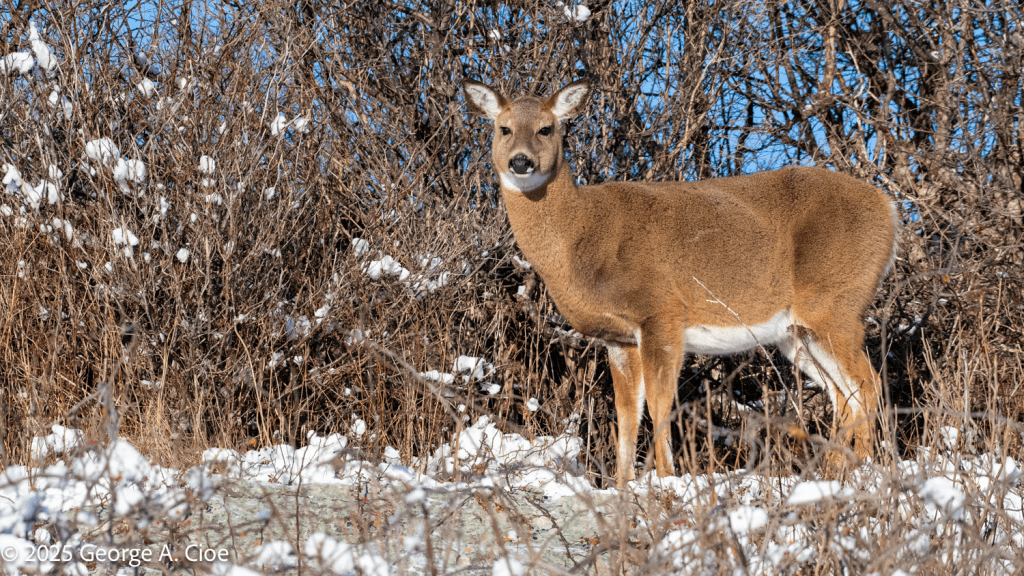
Front and center. A doe. And not just any doe—a very pregnant doe. The kind of pregnant that makes you instinctively do the math, even though wildlife biology before coffee is a dangerous game.
Judging by the size of her, I’m calling it early: twins for sure. Possibly triplets. Maybe she’s just hedging her bets. This was not a “delicate woodland nymph” situation. This was more along the lines of “I have committed fully to this project.”
Now, there are only a couple of explanations here. Either she became pregnant before the rut and is about to deliver off-cycle—bold move, very avant-garde—or she’s carrying some substantial offspring. The kind of fawns that arrive already knowing where the salt licks are and asking about college.
For the record—and because I couldn’t help myself—the rut in New England typically peaks in November, that brief window when bucks temporarily abandon all common sense and the woods are full of chasing, posturing, and truly questionable decision-making. Whitetail deer have a gestation period of about 200 days, which conveniently places most fawn births in late May through June, right when the landscape turns into a green buffet and life gets a little easier for nursing moms.
First-time mothers usually deliver a single fawn, but seasoned does—especially healthy ones with good nutrition—often have twins, and occasionally triplets. Overachievers exist in every species. If this doe was any indication, she’s been eating well and taking her prenatal planning seriously.
She stood there calmly, chewing with purpose, looking at me the way expectant mothers do when they’ve already heard all the advice and are no longer interested in more. I half expected her to say, “Yes, I know. I’m huge. Let’s all move on.”
Sachuest deer, after all, are unimpressed by humans with cameras. They’ve seen us before—tripods, long lenses, people whispering like it matters. She wasn’t alarmed. She wasn’t hurried. She was simply busy. Growing a small herd takes focus.
Eventually, she turned and lumbered off with the confidence of someone who knows snacks are nearby, disappearing into the landscape without drama, without rush, and without apology.
Which is how I continued my walk—smiling, slightly humbled, and very grateful that my morning responsibilities did not include producing two or three fully functional deer.
Nature, as always, putting things in perspective.
I’d love to share my posts with you. If you subscribe, they’ll come straight to your inbox—most days, like a little note from me to you. It means a lot to know you’re reading along.
Browse my complete art portfolio and shop for prints at imagesbygacioe.shop


Leave a Reply