
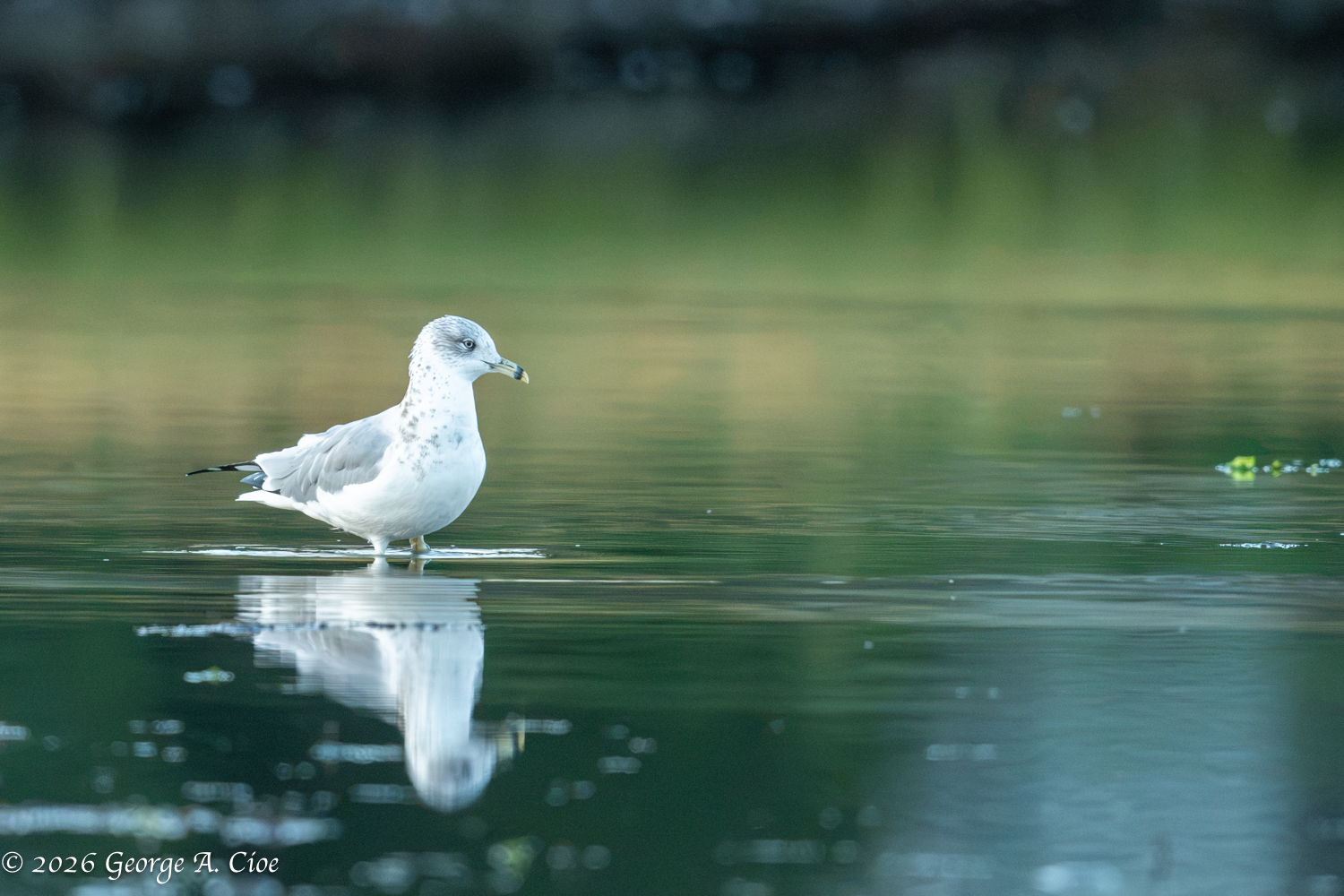

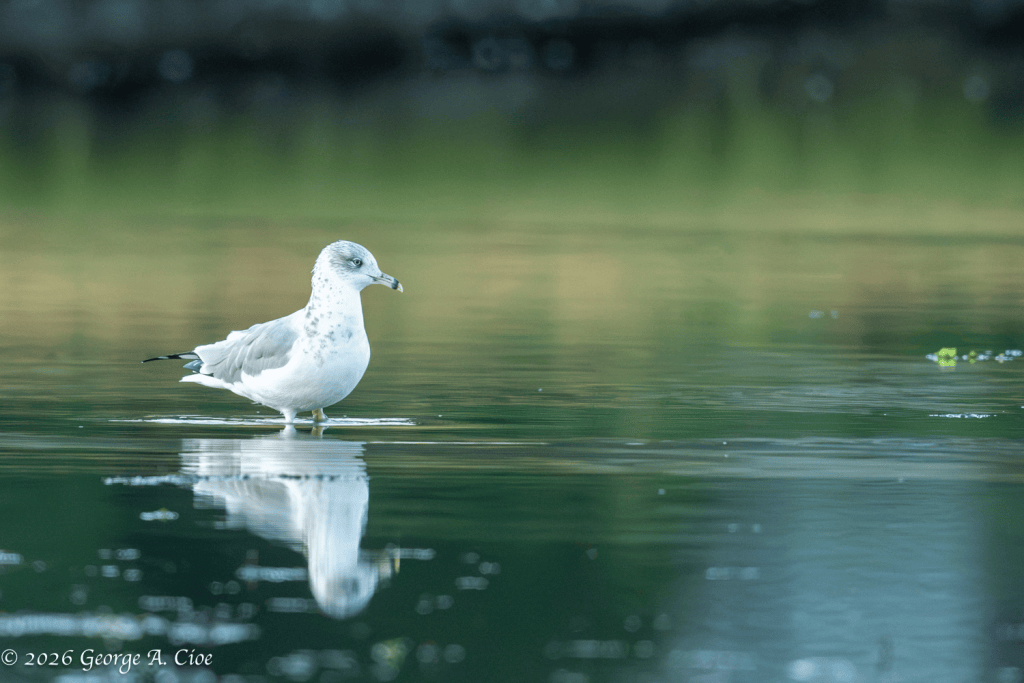
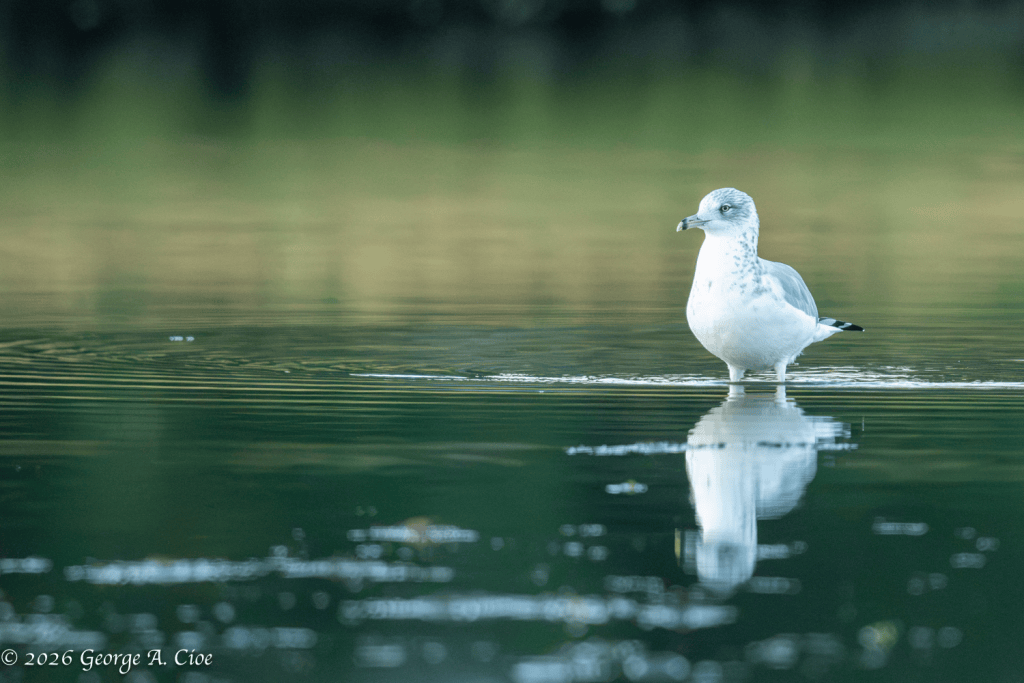
He was alone.
That was what first caught my attention.
Ring-billed Gulls are familiar with company. They gather by the dozens—sometimes by the hundreds—along beaches, in fields, around parking lots, and anywhere else an easy meal might appear.
But this one had stepped away from the crowd.
While other birds spent the night gathered in groups, this solitary gull stood quietly in the shallows. There is safety in numbers, especially after dark. A communal roost provides many eyes and ears to detect an approaching predator. If one bird senses danger, the entire gathering can respond.
Yet this gull appeared perfectly content with his own company.
The sky was just beginning to lighten. The water remained almost perfectly still, holding soft layers of green, blue, and gold gathered from the shoreline and the awakening sky. The gull’s reflection stretched beneath him, disturbed only by the gentle ripples forming around his legs.
At first, I was simply photographing a bird.
Then I began to see the setting.
Click.
Ring-billed Gulls are so common that we rarely give them the attention they deserve. We see them patrolling parking lots, hovering above picnic tables, or performing aerial acrobatics for a single tossed morsel. Their comfort around people can make them seem ordinary.
They are anything but.
Despite their abundance along the coast, many Ring-billed Gulls breed far inland near freshwater lakes and rivers. Adults can be identified by the distinctive black band encircling the yellow bill, although young birds require a closer look as their plumage and bill colors change while they mature.
Their remarkable lives extend far beyond their talent for locating an unattended french fry.
Many return to the colony where they hatched and, once they begin breeding, may occupy nearly the same nesting territory year after year. They often show similar fidelity to their wintering grounds, returning season after season to places that have provided the food, shelter, and security they need.
Even more extraordinary, their sense of direction appears to begin before they have ever taken flight. Experiments with chicks only days old have found preferences for magnetic directions consistent with their future migration. As adults, they supplement that internal compass with familiar landmarks and favorable winds.
One Ring-billed Gull was documented living at least 27 years and six months—a reminder that the seemingly anonymous gull beside us may have traveled thousands of miles and witnessed decades of changing seasons.
And that is why common birds matter.
Their presence can cause us to overlook their complexity, but abundance should never be mistaken for insignificance. Every Ring-billed Gull depends upon healthy breeding colonies, safe resting areas, productive wetlands, and clean coastal and freshwater habitats.
Conservation is not only about saving the rarest creature.
It is also about protecting the ordinary places that allow familiar creatures to remain familiar.
That morning, this gull did not fly, hunt, or perform any dramatic aerial maneuver. He simply stood in the quiet water as dawn slowly revealed him.
Just one bird.
Just one reflection.
And, for a few peaceful moments, an entire world unto himself.
Naturally.
I’d love to share my posts with you. If you subscribe, they’ll come straight to your inbox—most days, like a little note from me to you. It means a lot to know you’re reading along.
Browse my complete art portfolio and shop for prints at imagesbygacioe.shop


Leave a Reply