
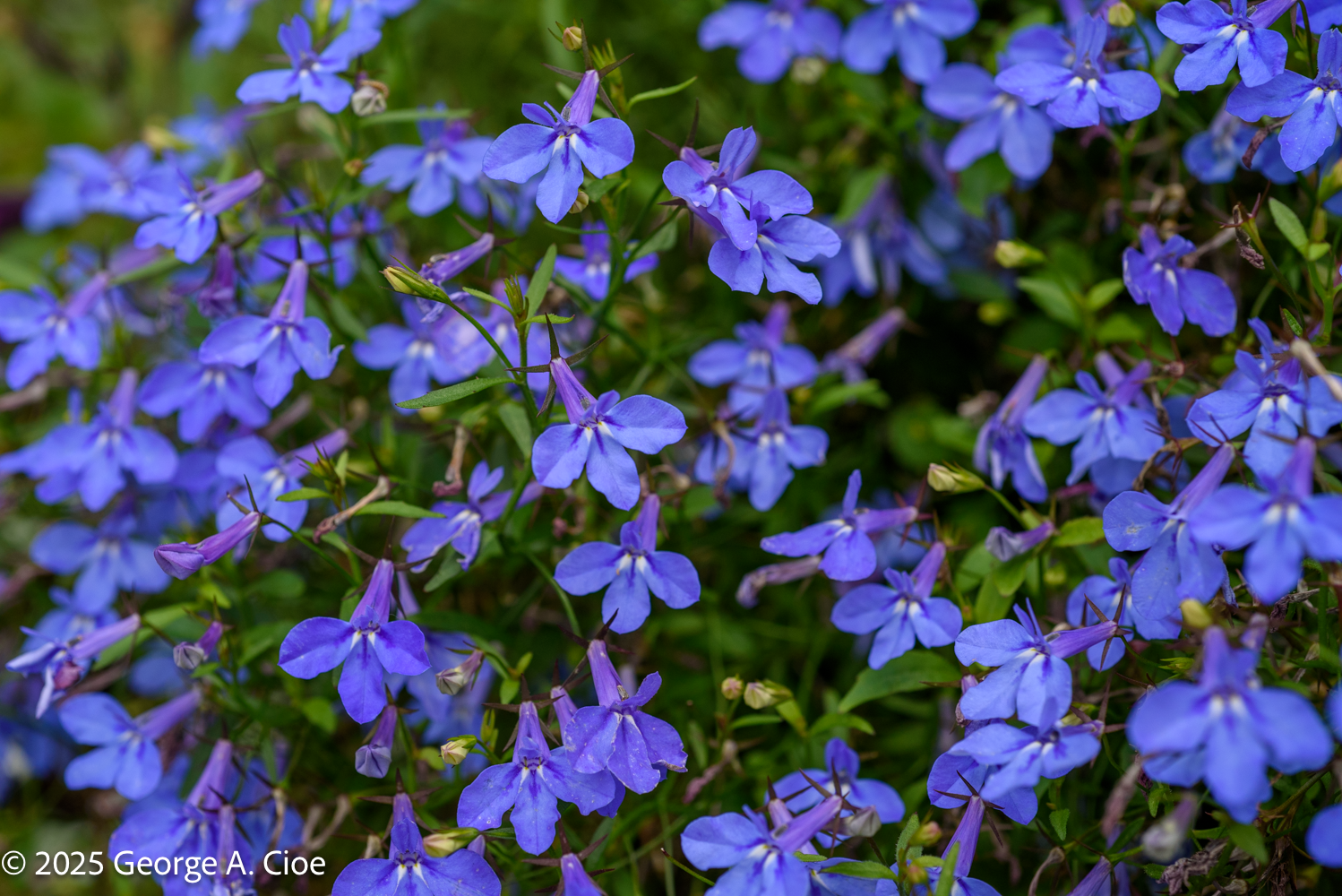
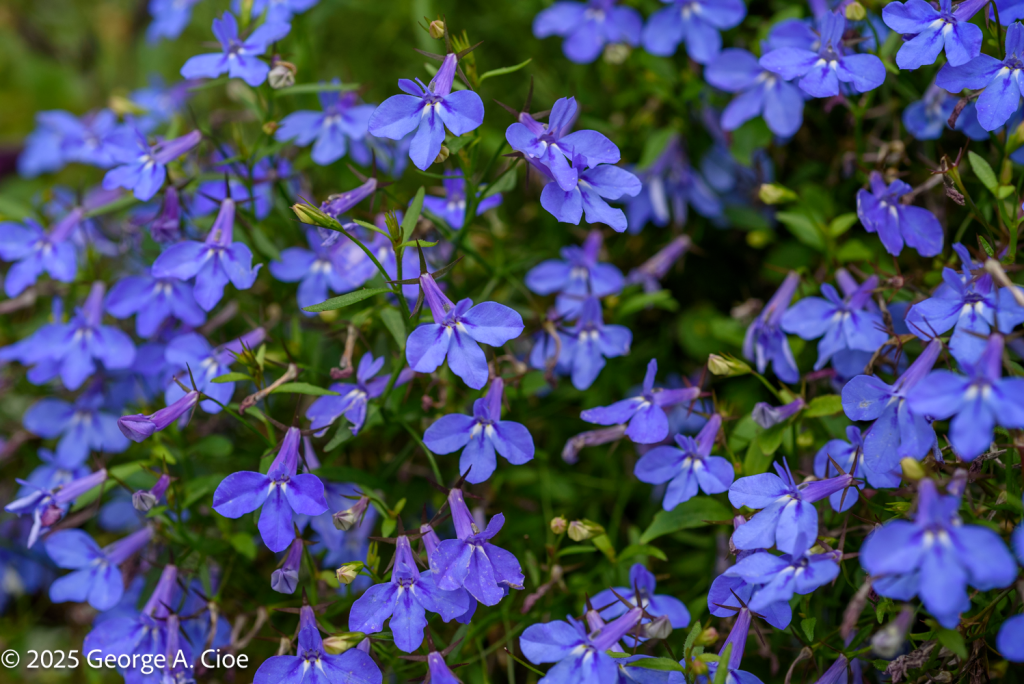
The abundance of floral color was transformative. Delightful even. And appropriately extravagant. At some point on the walk, I stopped noticing individual flowers. And it seemed obvious that flowers are the essence of Oslo’s beauty.
That wasn’t intentional.
It just… happened.
The path was edged in blue—layer upon layer of it—so consistent, so present, that it no longer felt like something placed along the walkway. It felt like something I was moving through. Lobelia, planted densely and allowed to do what it does best: spread, repeat, soften everything it touched.
There was no single bloom asking for attention. No star of the show. Up close, each flower was delicate, almost fragile. Step back a pace or two, and they became something else entirely—a field, a current, a quiet tide of color flowing at ankle height.
This was different from what I’d seen earlier.
The dahlias introduced themselves.
The fuchsias danced.
The salvia and petunias waited patiently to be understood.
This did none of that.
It simply was.
Oslo seems very comfortable with this idea—that beauty doesn’t always need a focal point. That repetition can be calming rather than boring. That abundance, when handled with restraint, doesn’t overwhelm but instead reassures.
Walking alongside these flowers felt less like observing and more like participating. The blue softened the edges of the path, blurred the boundary between where the city ended and where nature began. It slowed my pace without asking. Invited a longer breath.
I didn’t raise the camera right away.
There are moments when photographing feels intrusive, like interrupting a thought mid-sentence. This was one of those moments. The scene didn’t want to be captured quickly. It wanted to be experienced slowly.
And that, I think, is the point.
In many places, landscaping exists to impress. To frame. To show effort. Here, it seemed designed to support something quieter—to create an atmosphere rather than a spectacle. To let people pass through beauty instead of stopping dead in front of it.
This wasn’t about flowers anymore.
It was about rhythm.
About how a city understands pacing.
About how repetition can soothe instead of numb.
About how immersion can feel more intimate than attention.
Eventually, I moved on. The path changed. The blue receded behind me. But the sensation lingered—that sense of being held gently within something intentional and calm.
Oslo didn’t just show me flowers that day.
It showed me how a place can feel when beauty isn’t isolated, but allowed to accumulate.
And somehow, quietly, that made all the difference.
I’d love to share my posts with you. If you subscribe, they’ll come straight to your inbox—most days, like a little note from me to you. It means a lot to know you’re reading along.
Browse my complete art portfolio and shop for prints at imagesbygacioe.shop




Leave a Reply