
There are moments in nature that don’t politely introduce themselves.
They arrive unannounced, tap you on the shoulder, and whisper, “Pay attention.”
Seeing my first Great Horned Owl in the wild was one of those moments.
It began innocently enough—in my office, of all places. No dramatic forest hike. No cinematic moonrise. Just me, paperwork, and a sound drifting through the walls that instantly rearranged my priorities.
Who-who… who-who-who…
That sound.
I reached for my phone, opened the Merlin Bird ID app, and confirmed what my gut already knew: Great Horned Owl.
Game over. Workday canceled.
I spent the remaining daylight doing what all rational adults do when an apex nocturnal predator announces itself nearby—wandering the property with binoculars, scanning trees, and questioning my depth perception. Two hours passed. Light drained away. Doubt crept in.
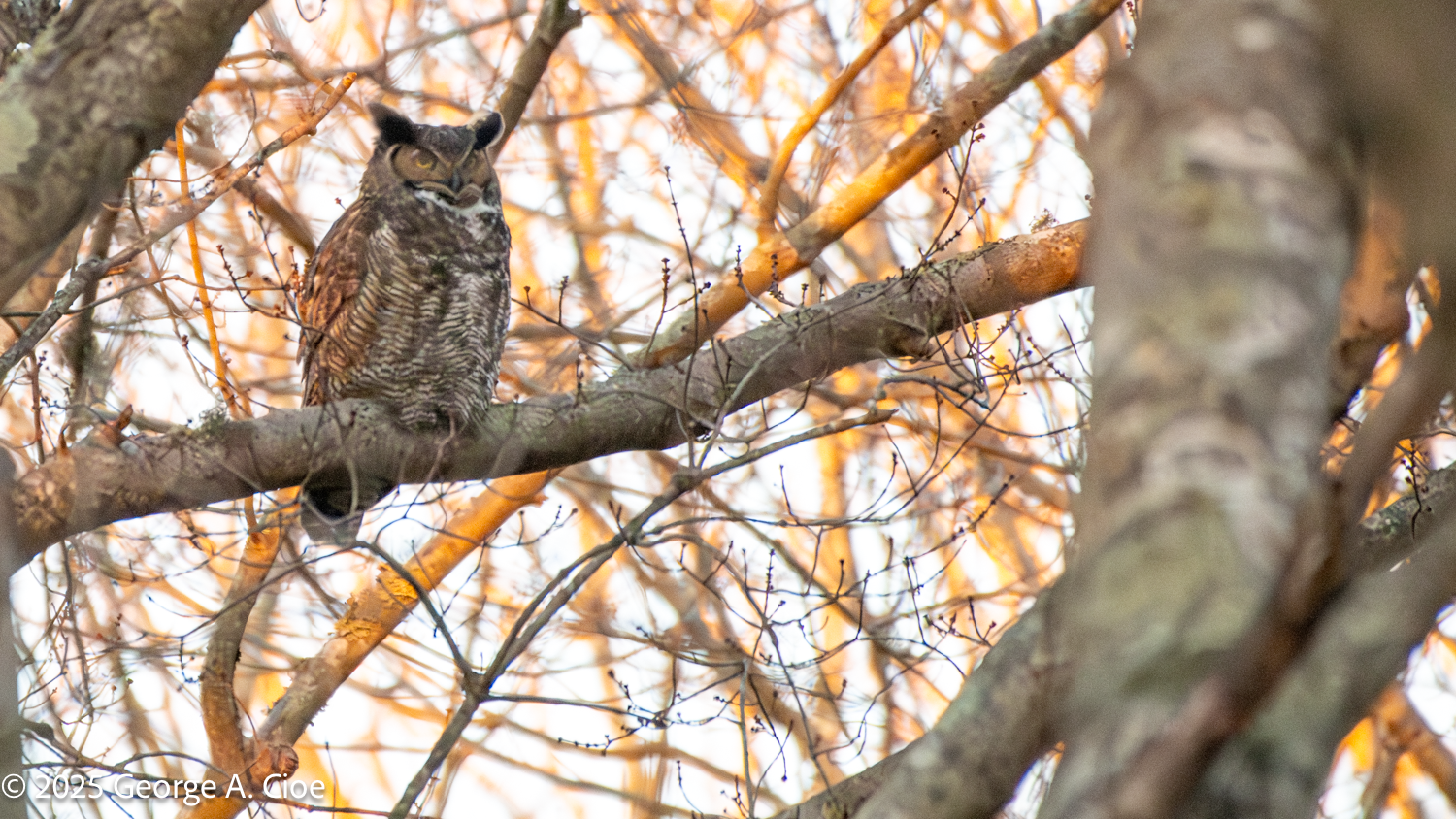
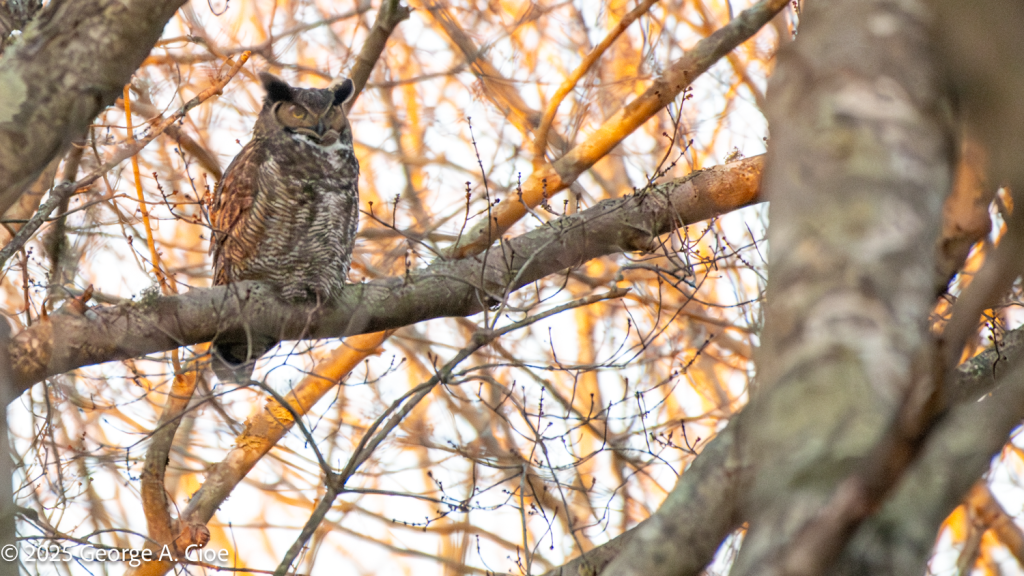
Then… there he was.
Perched much higher than expected, like a sentry posted above the world, silently judging my search technique. He wasn’t hunting yet. Great Horned Owls don’t rush things. They own the night. They clock in when everyone else clocks out.
And what a bird.
Massive. Regal. Impossibly calm. Those feathered “horns” (which are not horns at all but ear tufts, because owls enjoy misleading humans) gave him a perpetually alert, mildly offended expression—as if I’d interrupted something important. Which, to be fair, I probably had.
I’ll be shutting off all our automatic outdoor lights from now on. If you’re going to host a Great Horned Owl, the least you can do is dim the house and let him work.
Fun Facts from the Owl Who Runs the Night
• Nickname: “Tiger of the Sky.”
Yes, that’s a real nickname. And yes, he earns it.
• Grip strength: Around 300 pounds per square inch—stronger than a human hand and enough to end negotiations immediately.
• Diet: Equal-opportunity carnivore. Rabbits, skunks, squirrels, rats, snakes, other birds… even other owls.
(They have no owl code of ethics.)
• Silent flight: Specialized feathers break up airflow, allowing them to fly almost completely silently—nature’s stealth technology.
• Eyes: Fixed in their sockets. That’s why they can rotate their heads up to 270 degrees. Not spinning—just excellent design.
• Early nesters: They often lay eggs in the dead of winter, sometimes when snow is still on the ground.
Because waiting for spring is for amateurs.
• Longevity: They can live over 25 years in the wild. Longer in captivity. Long memories. Probably keeps score.
• Symbolism: Wisdom, mystery, guardianship—and occasionally the reason small animals rethink their life choices.
As the light faded and he remained motionless above me, I felt that familiar Narragraphy® moment—the intersection of luck, patience, and awe. A reminder that wildness doesn’t require a national park. Sometimes it shows up outside your window and announces itself with a voice older than language.
What an incredibly beautiful bird.
And I suspect this won’t be our last encounter.
I’d love to share my posts with you. If you subscribe, they’ll come straight to your inbox—most days, like a little note from me to you. It means a lot to know you’re reading along.
Browse my complete art portfolio and shop for prints at imagesbygacioe.shop




Leave a Reply