

A Masterclass on the Narrow River





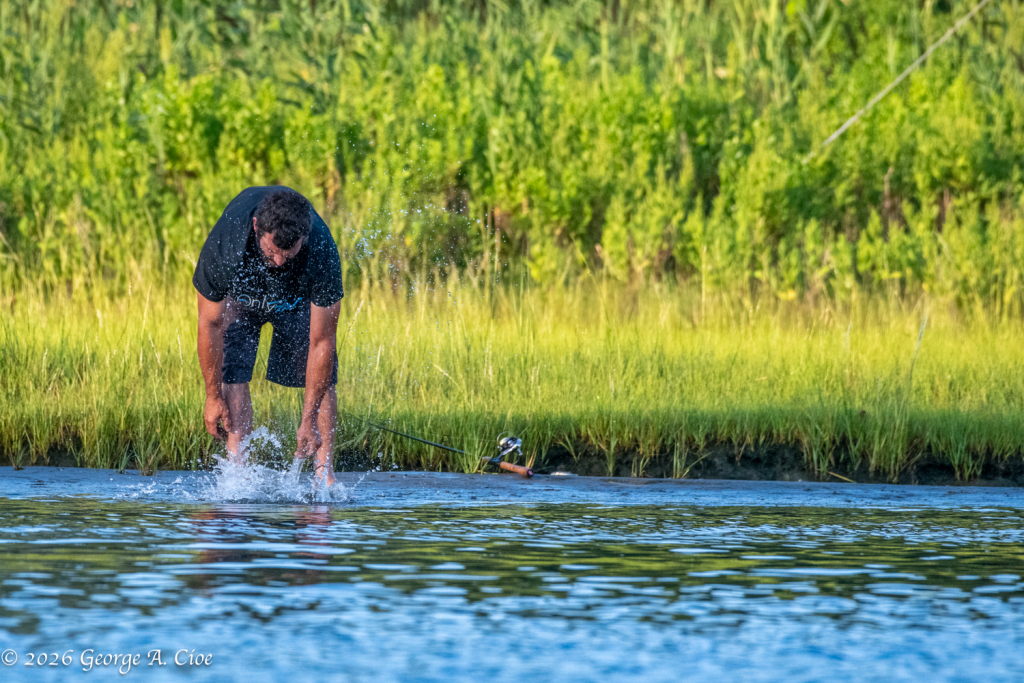
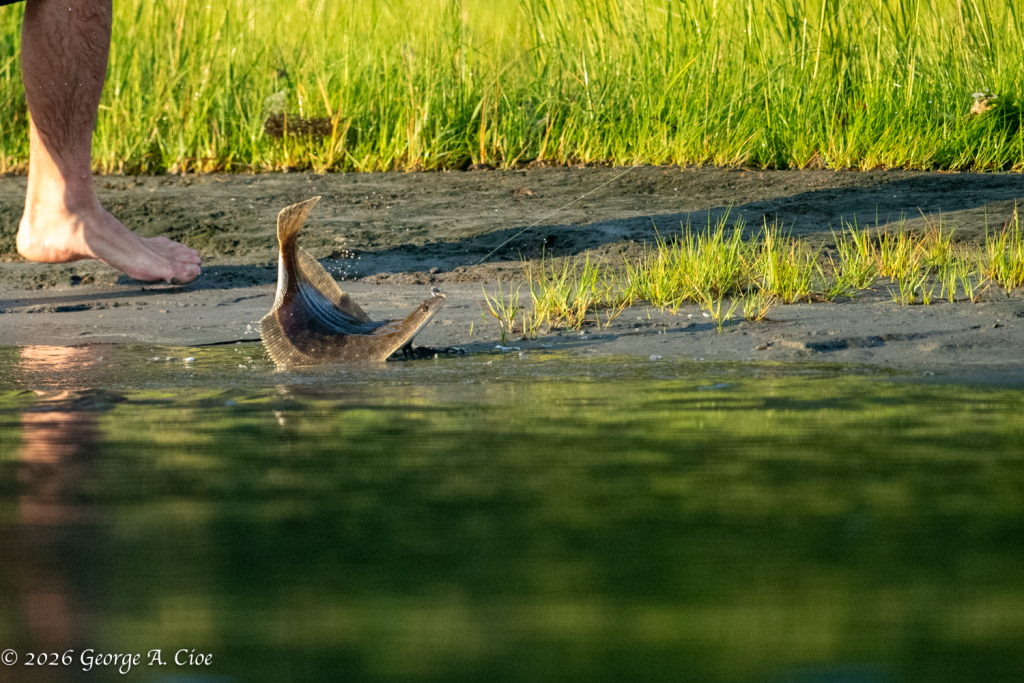
The river was already teaching when I arrived. I just didn’t know there was going to be a second instructor.
Little did I know when I set up along the Narrow River at 5:30 this morning that the most interesting creature I would photograph would be walking on two legs.
I was there for wildlife.
At that hour, the river still belongs mostly to the things that live there. The light is soft. The marsh is quiet. Canada Geese patrol the sandbars. Fish move beneath the surface. And those of us crazy enough to be awake are rewarded with a few precious minutes before the rest of the world discovers morning.
I had already photographed Mr. Chin fishing around the bend. I loved the way the tree line framed him as he worked his fly rod.
Then, about fifteen minutes later, another fisherman came down the steep path near Sprague Bridge.
And immediately, I noticed something.
No wasted motion.
Shoes off.
Socks off.
Gear out.
Cooler positioned.
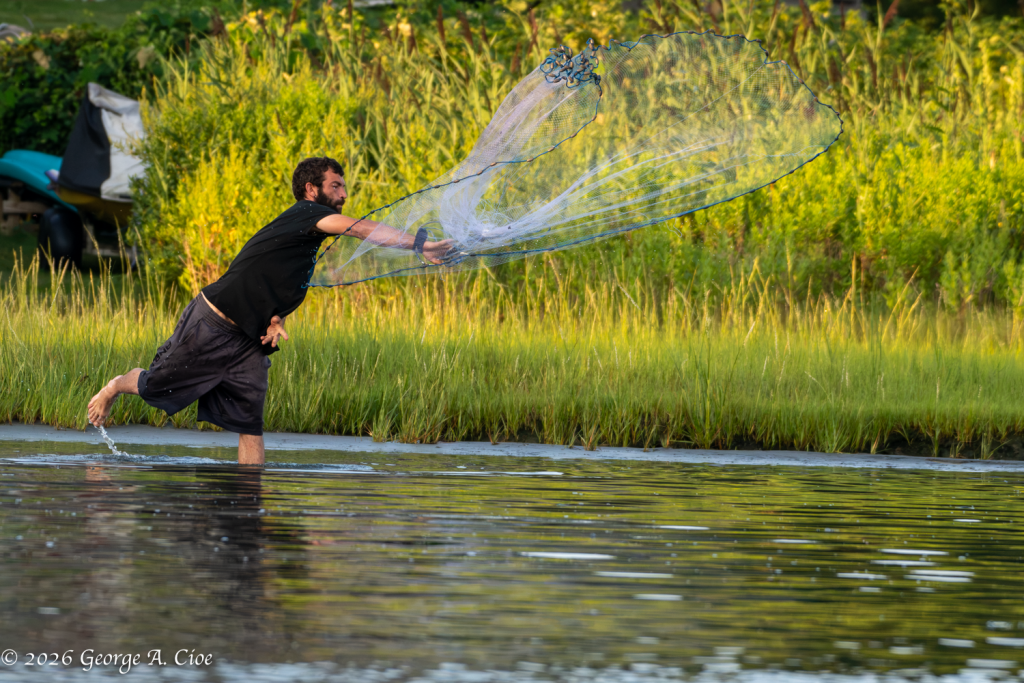
Casting net ready.
No waders for this guy.
Apparently, his preferred brand of wader was Legs.
Mr. Chin had wandered over to say hello.
I nodded toward our new arrival.
“This is going to be interesting. Let’s see how good he is.”
Because if you’ve ever tried throwing a cast net, you know there is a substantial difference between owning one and knowing what the hell to do with it.
There is technique involved. Timing. Balance. Hand placement. Weight distribution. Rotation.
And, in my case, probably an excellent chance of accidentally capturing myself.
This guy?
Textbook.
The net opened in the morning light like a giant translucent flower.
Perfect circle.
Perfect placement.
WHOOOOSH.
I looked at Mr. Chin.
He raised his eyebrows.
That was all that needed to be said.
My morning wildlife photography assignment had officially changed.
Forget the birds.
I was photographing the Wild Man of Narrow River.
He retrieved the net and, barefoot, hurried back to his cooler with fresh, live bait.
Even the local wildlife seemed impressed.
On the nearby sandbar, a Canada Goose stood with its wings spread wide.
I chose to interpret this as a standing ovation.
And frankly, it was deserved.
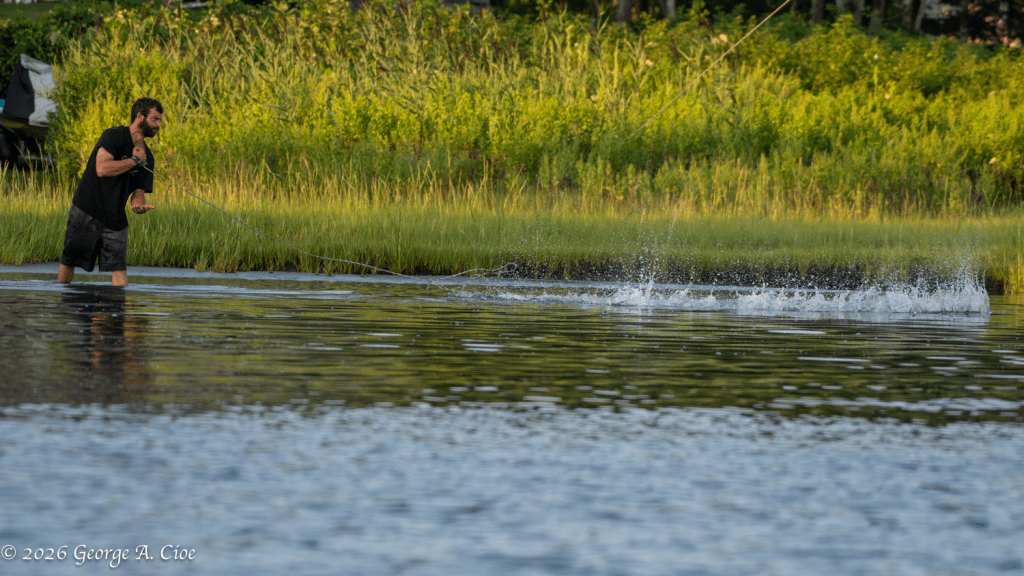
Within minutes, our fisherman had bait on a hook and was back in the water. He cast, then began working the bait with a deliberate rhythm—lifting and pumping the rod to give it movement.
Then—
BAM!
The rod bent.
The line tightened.
Fish on.
At this point, Mr. Chin and I weren’t watching some guy fish anymore.
We were auditing a Masterclass.
But the best lesson hadn’t happened yet.
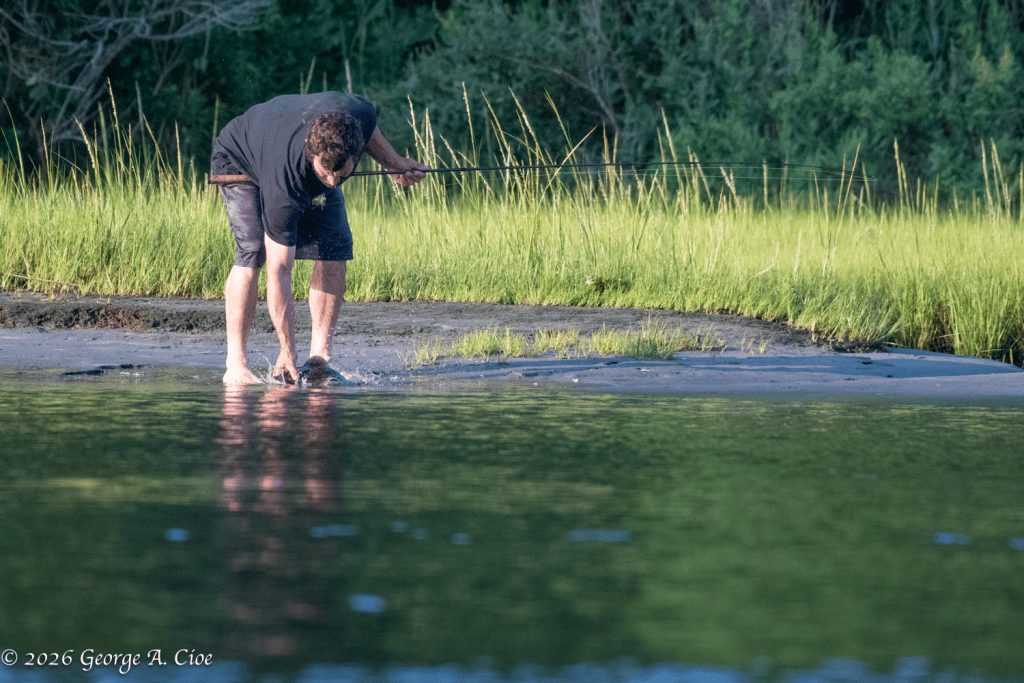
The fisherman brought his catch into the shallows.
Before removing it from the water any longer than necessary, out came a measuring device.
Measure.
Check.
Short.
And this is where the morning changed for me.
Because catching a fish tells you something about a person’s skill.
What he does with the fish afterward tells you something about the person.
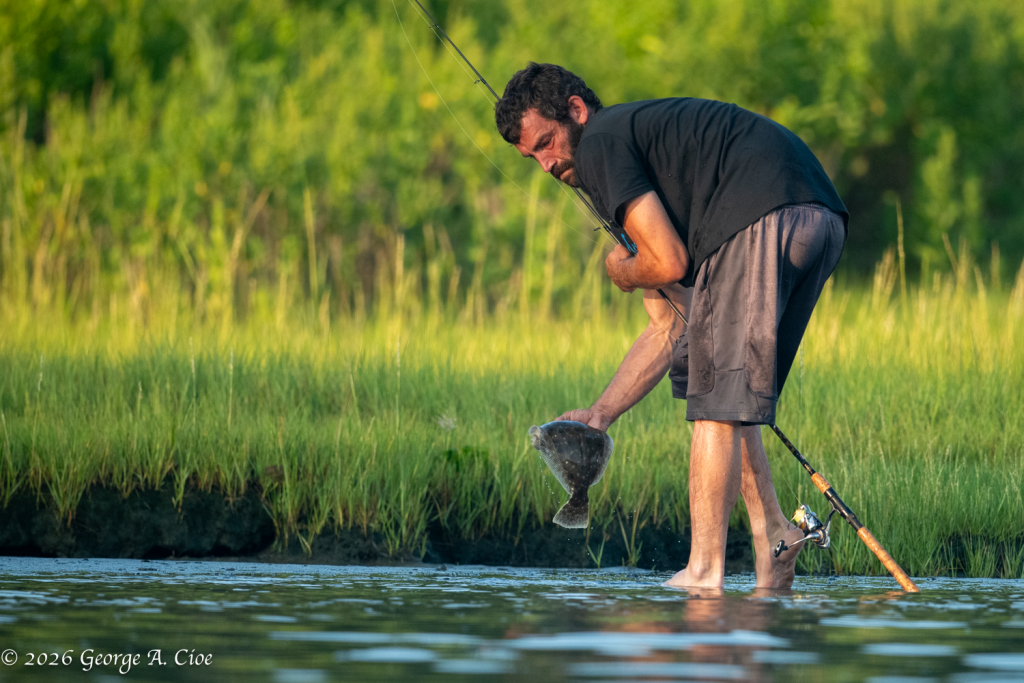
He quickly removed the hook and brought the fish back into the water.
But he didn’t simply toss it in.
He cradled it.
Gently.
Carefully.
He moved water across its gills, giving it time to recover from the fight. He supported it rather than forcing it. He waited.
There was no impatience.
No indifference.
No “good enough.”
He had taken responsibility for the animal he had caught, and that responsibility didn’t end when he discovered it wasn’t going into the cooler.
For those few moments, the fish mattered more than the fisherman.
And then…
The fish exploded from his hands.
Gone.
Back into the Narrow River.
I smiled.
And then he did it again.
And again.
And again.
I watched four fish go through essentially the same routine.
Catch.
Measure.
Short.
Release.
But most importantly:
Care.
Every single time.
That’s when I realized I hadn’t been photographing fishing at all.
I had been photographing character.
There is something wonderful about watching someone who has mastered a craft.
Masters make difficult things look simple because we don’t see the thousands of repetitions that came before. We see the perfect cast, but not the bad ones. We see the effortless knot, not the ones that slipped. We see instinct without realizing that instinct is often experience that has been practiced so many times it no longer requires thought.
But mastery alone doesn’t make someone admirable.
What we do with our mastery does.
This stranger could fish.
Boy, could he fish.
But what impressed me most was that he understood something even more important:
The river wasn’t his.
The fish weren’t his.
He was simply participating in something much larger than himself.
And isn’t there a lesson in that for the rest of us?
At work, mastery means knowing your craft well enough that people can depend upon you. It means preparation. Efficiency. Doing something correctly even when nobody is checking.
But character is what happens next.
It’s how we treat the person who can’t help us.
It’s whether we teach someone what took us years to learn.
It’s whether we leave a place, a company, a friendship—or a river—better than we found it.
At play, it’s much the same.
Enjoy the resource.
Use it.
Celebrate it.
But respect it.
Take what you’re entitled to take.
Return what should be returned.
And when something living has been temporarily placed in your care, treat it as though its life matters.
Because it does.
I don’t know this man’s name.
He didn’t know I was watching from across the river through a long lens.
And perhaps that’s the best part of the story.
There was no audience as far as he knew.
No applause.
No social-media camera.
No conservation officer standing beside him.
Just a fisherman, a fish, and a decision about how one should treat the other.
That’s character.
If anyone reading this recognizes him, please tell him something for me.
Tell him there was a photographer across the Narrow River that morning who started his day looking for wildlife…
…and instead found a gentleman.
Tell him I admired his skill.
Tell him I admired his respect for the river even more.
And tell him I hope there are children, friends, young fishermen—or perhaps complete strangers—watching him.
Because people like this should pass what they know along.
Not just how to throw the perfect cast net.
Not just how to catch a fish.
But how to understand that being a good sportsman isn’t measured by what you bring home.
Sometimes it’s measured by what you put back.
And this morning on the Narrow River, one perfect stranger gave a masterclass in both.
I’d love to share my posts with you. If you subscribe, they’ll come straight to your inbox—most days, like a little note from me to you. It means a lot to know you’re reading along.
Browse my complete art portfolio and shop for prints at imagesbygacioe.shop


Leave a Reply