
I love walking with my camera. There’s a quiet optimism that comes with it—the belief that something extraordinary might reveal itself. Sometimes it’s rare. Sometimes it’s common. And sometimes it’s something so everyday that it lulls you into complacency… right up until it detonates.
This was one of those detonations.
I was strolling along the beach at Napatree Point, hugging the dunes, doing what I do best: looking intently at absolutely everything and finding nothing particularly cooperative. The wind was blowing. The sand was shifting. The birds were being birds. All very normal.
And then…
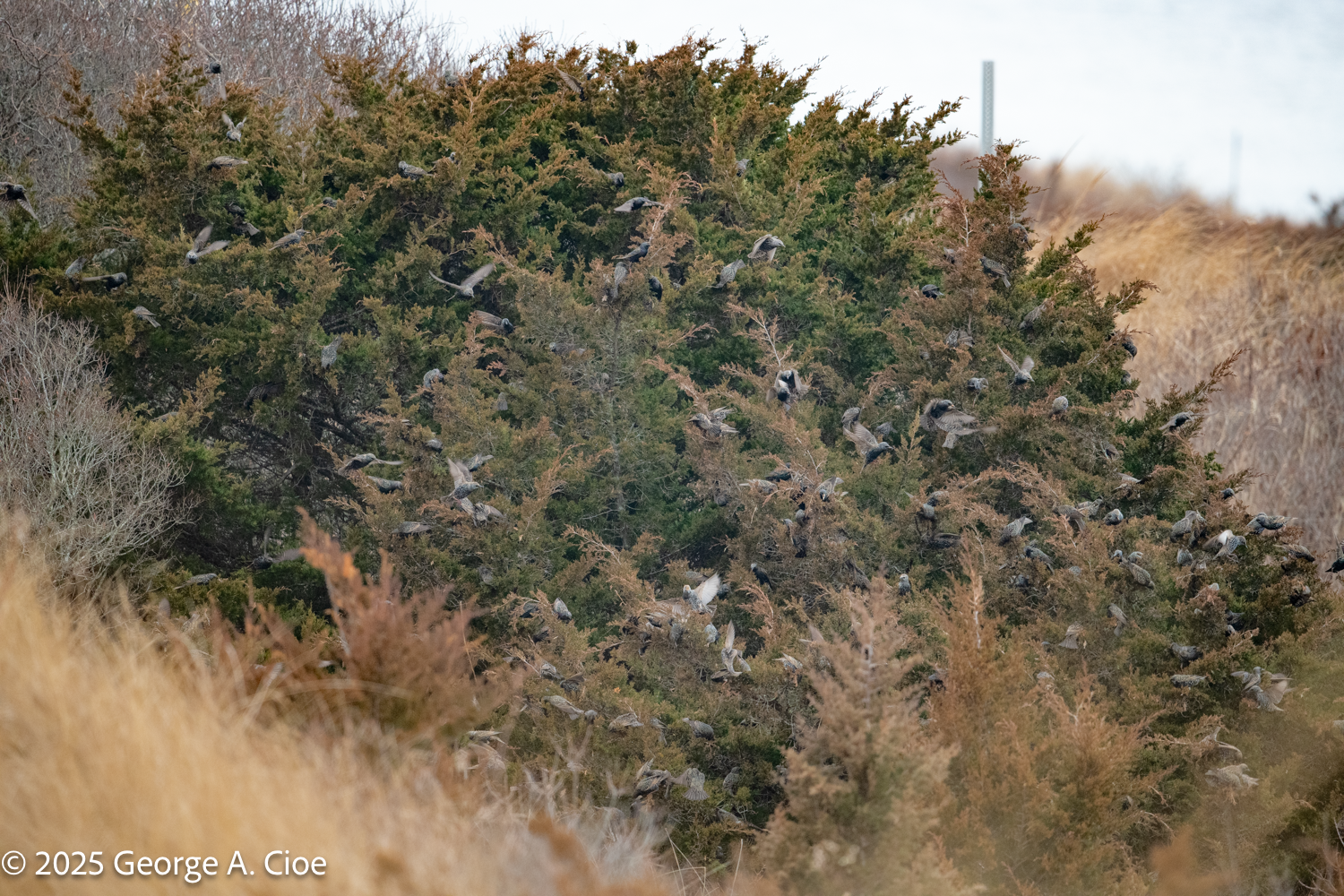
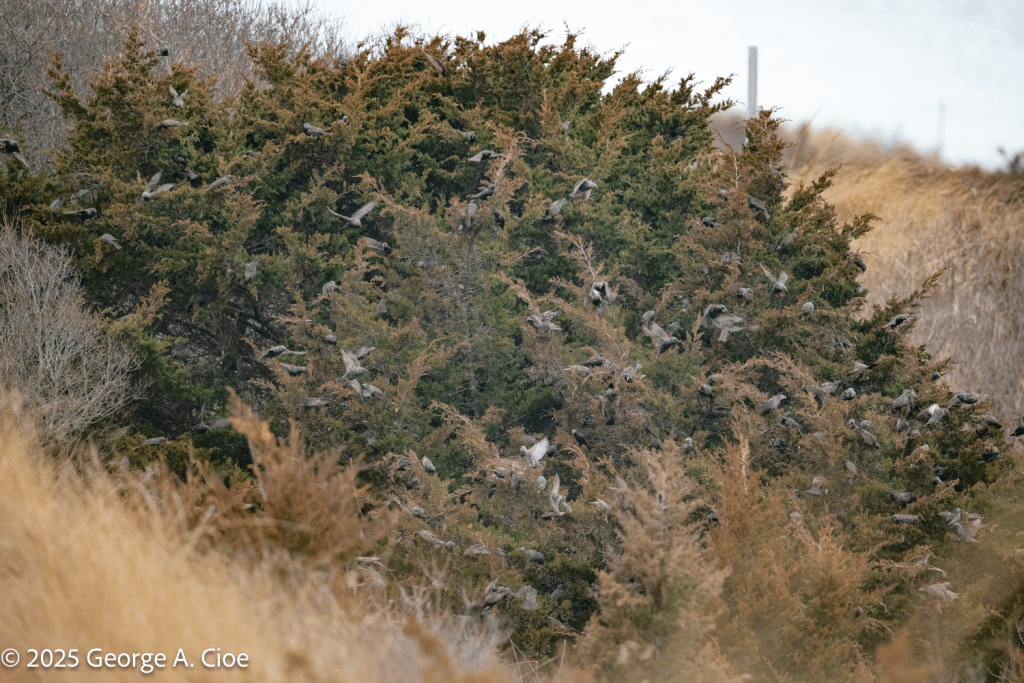
a bush moved.
Not wind-moved.
Not gentle coastal sway.
This bush moved like it had a nervous system.
Branches twitched. Leaves shuddered. The motion had no rhythm, no logic, no respect for meteorology. It was less “nature” and more “low-budget horror movie.” I stopped. Squinted. Tilted my head like a confused golden retriever.
Naturally, I did what any rational person would do.
I walked toward it.
As I closed the distance, the truth revealed itself.
Wings.
Not a wing.
Not some wings.
All. The. Wings.
The bush was absolutely loaded with European Starlings—layered, stacked, shoulder-to-shoulder like commuters on the Green Line during a snowstorm. This wasn’t a shrub anymore. This was a covert avian condominium complex.
For context—and because starlings deserve both respect and mild suspicion—here’s what I know about these birds:
• European Starlings were introduced to North America in the late 1800s (because, historically, humans have never thought, “Maybe let’s not do that”). A few releases didn’t work… until they did. Big time. Today, roughly 93 million starlings roam from Alaska to Mexico, likely laughing at us.
• They are vocal impressionists of the highest order. A single starling can mimic up to 20 different bird species, plus assorted mechanical noises and, I suspect, car alarms and smoke detectors. If you hear something weird in the woods, assume starling.
• They perform a wardrobe change every year without shedding feathers. Their fall feathers have white tips (polka dots!), which wear off by spring, revealing glossy, iridescent dark plumage underneath. Scientists call this “wear molt.” I call it magic.
• These birds can fly up to 48 miles per hour, which explains why what happened next felt personal.
• They can taste salt, sugar, bitterness, and acidity—but can’t digest sucrose. So yes, they know what sugar tastes like, and yes, life is cruel.
• The oldest recorded wild starling lived more than 15 years, which tells me they’re doing something right.
Armed with none of this information at the time, I took one more step.
And then the bush exploded.
Not metaphorically.
Not poetically.
It exploded.
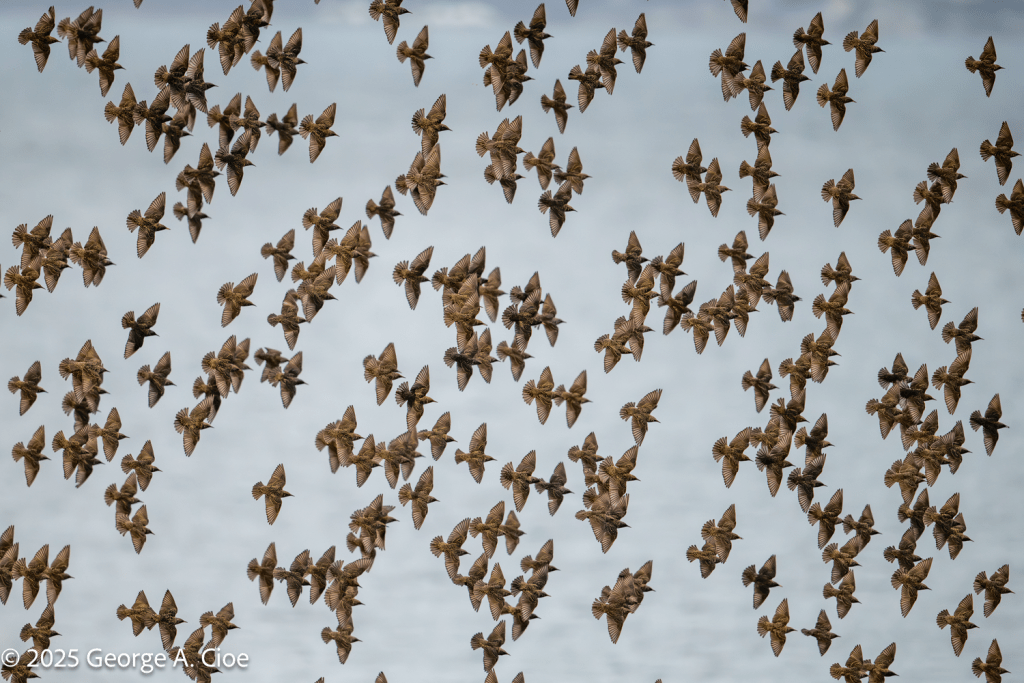
Birds erupted in every direction—up, sideways, backward, possibly through a tear in the space-time continuum. Wings snapped open. Air rushed past my ears. I stood frozen as the Napatree Point Airshow commenced at point-blank range.
They buzzed me. Twice.
I would not have believed that many birds could fit inside one bush. I still don’t believe it. But I saw it. With my own eyes. And fortunately, I have photographic evidence—because otherwise this would sound like the kind of story you tell that ends with, “…and then everyone clapped.”
What’s that saying?
A bird in the bush is worth—
No.
A bird in the hand is—
Still no.
Forget it.
All I know is this:
I had a front-row seat.
I survived.
I got the shot.
Not bad for a Wednesday.
Not bad at all.
I’d love to share my posts with you. If you subscribe, they’ll come straight to your inbox—most days, like a little note from me to you. It means a lot to know you’re reading along.
Browse my complete art portfolio and shop for prints at imagesbygacioe.shop




Leave a Reply