

On certain winter days, the sky feels heavy — gray, silent, almost undecided — and then suddenly it isn’t. Wings appear. Long white brushstrokes sliding out of nowhere.
The Tundra Swan, once called the “whistling swan” after Meriwether Lewis heard their musical calls echo across the western skies, arrives like a memory you didn’t know you were waiting for. They come down onto lakes and estuaries as if the clouds themselves decided to land.
These are Arctic birds — forged in cold, nested in the far northern tundra where survival is less a choice and more a daily negotiation. Foxes. Ravens. Jaegers. Eagles. Even wolves and bears. Parenthood there isn’t sentimental; it’s tactical. When danger comes too close, the adults slip away quickly, not out of fear but strategy — making the nest harder to find, trusting distance to be its own form of protection.
And yet, despite all that toughness, they move with elegance.
Slightly smaller than the towering Trumpeter Swan, Tundra Swans carry themselves like winter royalty — mostly white, many with that subtle smudge of yellow near the bill, a little signature only nature bothers to notice.
The Encounter
That day, I wasn’t looking for swans.
I was hunting for the ghost of winter — a Snowy Owl — which meant slogging across crusted snow that pretends to support you until it suddenly doesn’t. Every step was a negotiation: crunch… hold… collapse. The kind of walking that makes you question every life decision that brought you outdoors.
Just delightful.
Then something moved.
Not walked.
Not fluttered.
Moved with intent.
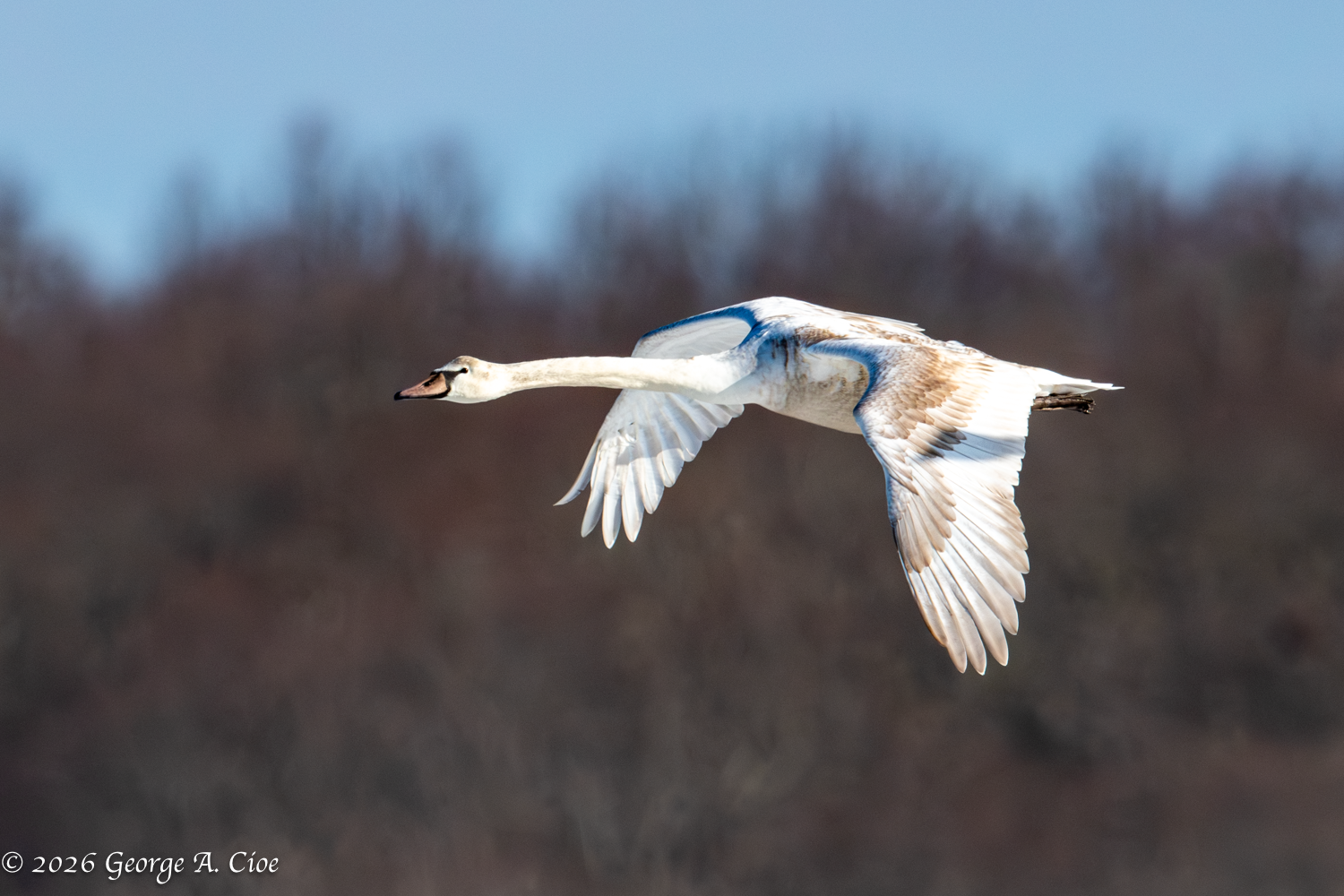
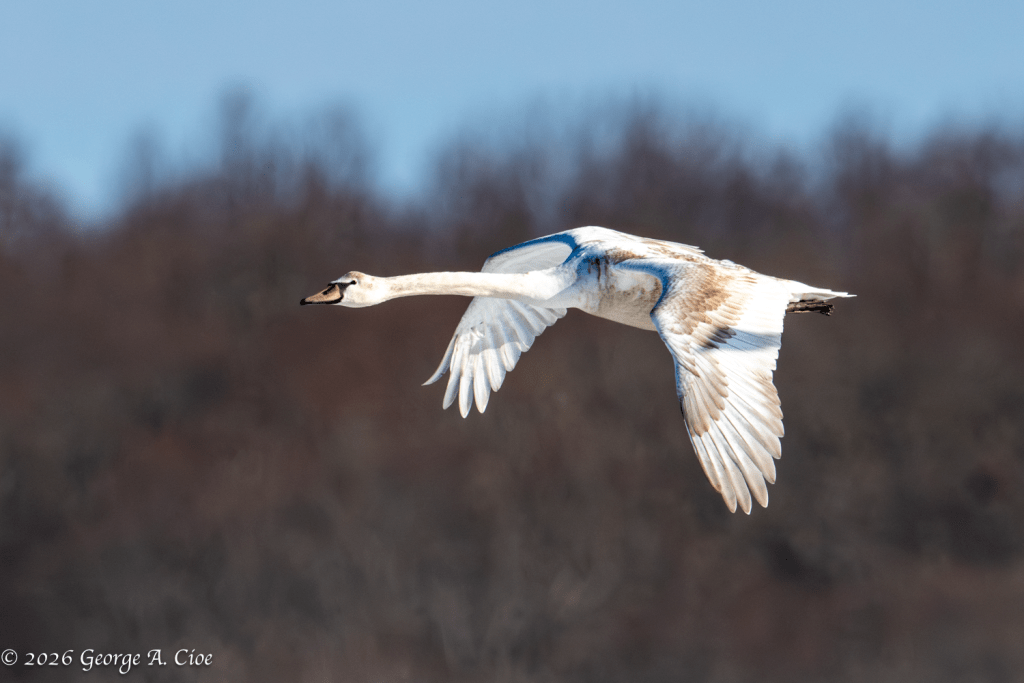
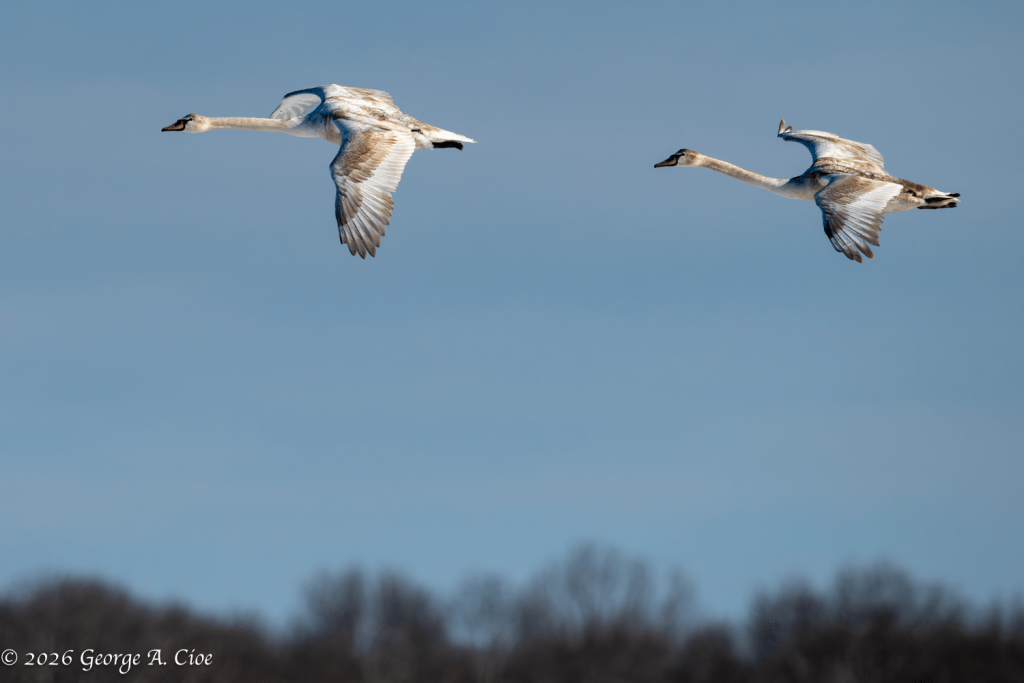
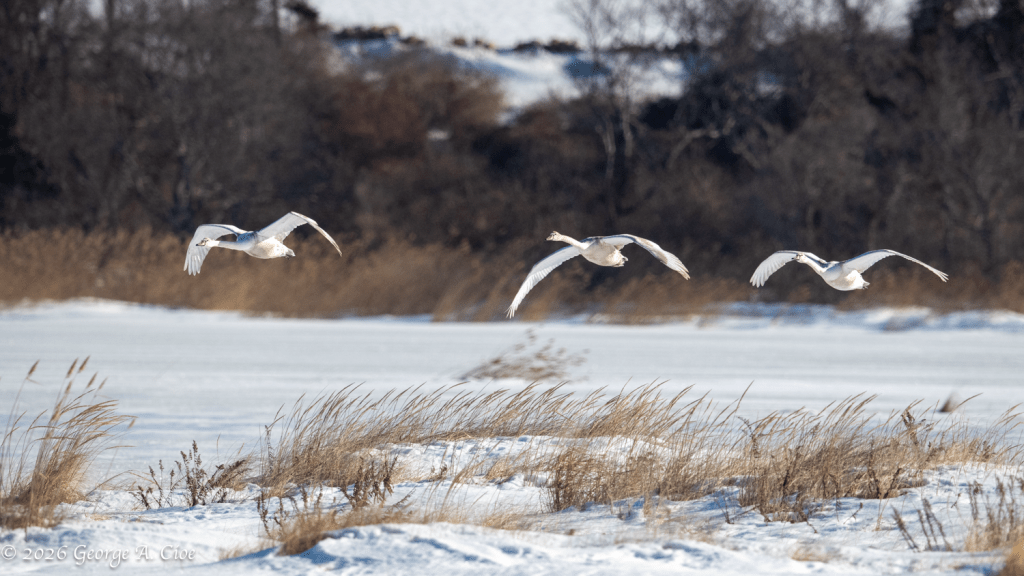
Three shapes appeared — low, fast, and impossibly large — coming at me like they were late for an appointment and I was standing in the runway. Four feet off the ground. Straight line. No hesitation.
You know that moment when your brain says bird but your body says incoming aircraft?
That.
They were older juveniles — not yet the pure white icons — dressed instead in muted dusky browns with soft white highlights, pink bills tipped in black. Subtle. Understated. Beautiful in the way a winter landscape is beautiful when you stop expecting bright colors and start appreciating tone.
They reminded me of Sandhill Cranes — quiet elegance, painted in whispers.
A Field-Side Airshow
I’d photographed huge swans in Yellowstone — magnificent Yellowstone National Park moments with Trumpeters that filled the frame. But this was different.
This was close.
Close enough that I’m fairly sure I heard them breathing.
There I was — boots half buried, camera hanging, completely still — while three Arctic travelers blasted past at eye level. No stage. No soundtrack. Just the rush of air and the wild awareness that you are sharing space with something perfectly designed for it.
For a few seconds, I wasn’t a photographer.
I was just a spectator at a private airshow in a snowy field.
And it was awesome.
Narragraphy™ Reflection
That’s the thing about winter photography — you go looking for one story and another finds you instead.
The Snowy Owl stayed hidden that day.
But the Whistling Swans wrote their own chapter.
And honestly… I think they knew exactly what they were doing.
I’d love to share my posts with you. If you subscribe, they’ll come straight to your inbox—most days, like a little note from me to you. It means a lot to know you’re reading along.
Browse my complete art portfolio and shop for prints at imagesbygacioe.shop


Leave a Reply