
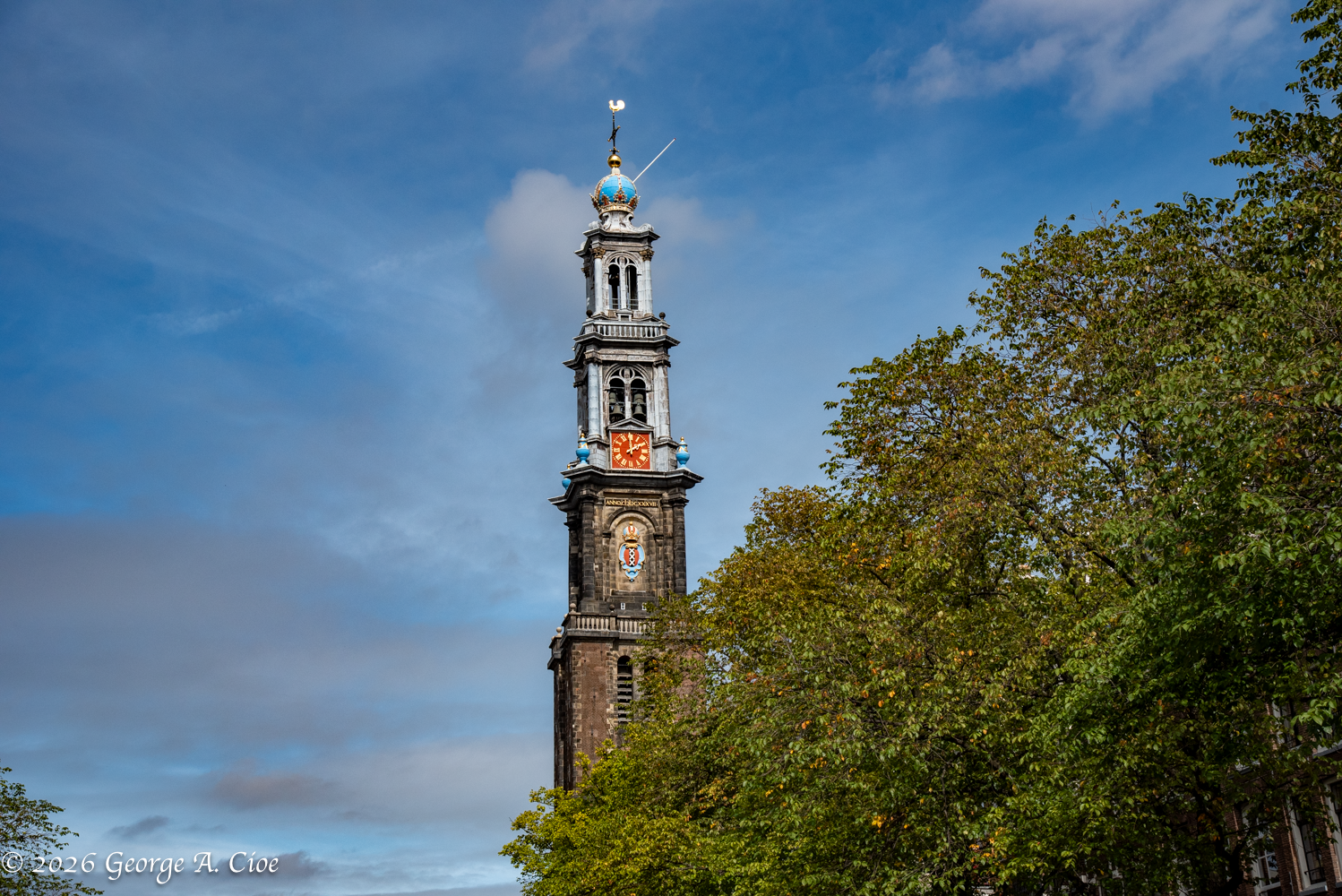


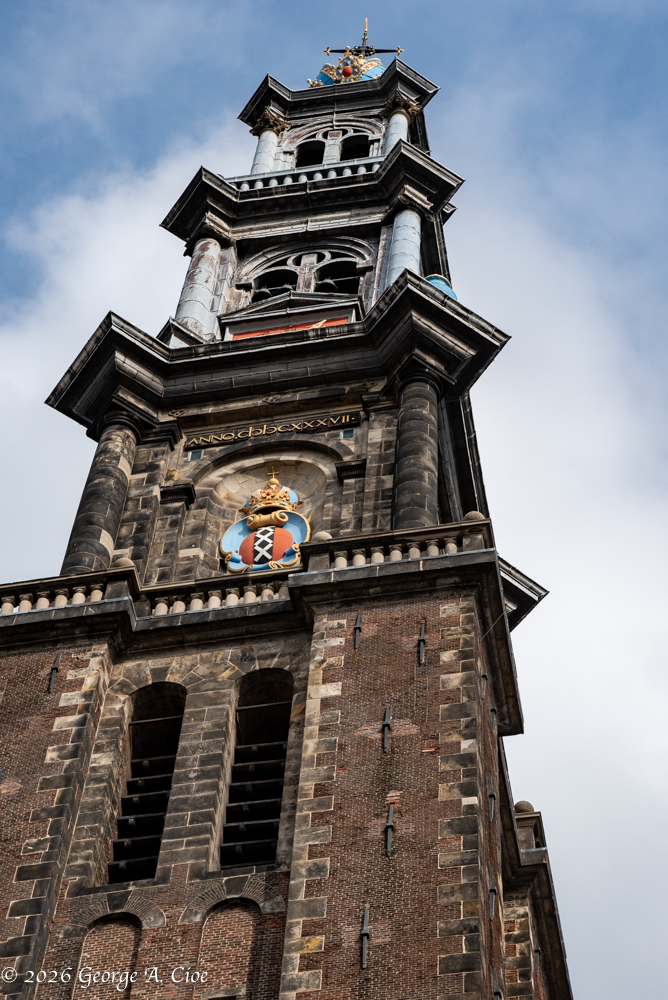
Across a narrow canal in Amsterdam stands the Westerkerk — steady, unmoving, older than the fear that once gripped the city.
Its tower rises above the rooftops like a sentry.
And inside that tower hang bells.
Not ordinary bells.
Carillon bells — tuned, deliberate, measured. Bells that don’t just ring… they speak.
I photographed them from a small boat as we drifted along the Prinsengracht canal, the water folding softly against the hull. I remember tilting my lens upward, thinking about light and composition, about symmetry and shadow. What I did not expect was the weight of what those bells carried.
Just beyond that canal, behind brick and blackout curtains, a young girl once sat at a desk no bigger than a schoolchild’s dream. The world outside had turned cruel and unrecognizable. Footsteps were rationed. Voices reduced to whispers. Freedom compressed into square footage.
But every quarter hour, the bells rang.
Anne Frank heard them.
She wrote about them.
In the suffocating stillness of hiding, those chimes slipped through mortar and timber, through dread and uncertainty. They did not announce rescue. They did not promise safety. They simply marked time — steady and unafraid.
Life was still unfolding beyond the walls.
The canal still flowed.
Morning still followed night.
I cannot stand in that house — now the Anne Frank House — without feeling something shift inside me. The rooms are small. Smaller than photographs suggest. The hidden bookcase feels less like a clever secret and more like a fragile hope.
I remember thinking about her parents. About her sister. About the family who hid them — ordinary people who chose courage over comfort. Their goodness stands in sharp contrast to the machinery of tyranny that forced children into silence.
Unchecked power does not arrive with horns and thunder.
It arrives gradually.
With permission.
With indifference.
With fear.
And yet — the bells rang anyway.
That is what stays with me.
Bells are born in fire. Melted. Shaped. Tempered. And when struck, they do not scream — they resonate. There is something deeply human about that. Suffering does not have to harden us. It can refine us. It can give us voice.
For Anne, those bells were proof that evil had not silenced everything.
Proof that the world was larger than the annex.
Proof that time, relentless and impartial, continued forward.
And there is something profoundly instructive about that even now.
Because when tyrants seize the reins of history, they attempt to control the narrative. They attempt to compress truth into whisper and shadow. They attempt to convince us that fear is normal and silence is safe.
But somewhere, a bell still rings.
In my world, I wait by rivers for movement. I stand in winter wind for a single frame. I understand the discipline of patience. The humility of bearing witness. The power of simply showing up.
Anne could not step outside to photograph the sky.
But she listened.
And sometimes listening is its own form of resistance. Its own form of testimony.
The bells of the Westerkerk still ring today. Tourists pass. Cameras click. Conversations hum. Life continues.
The sound carries the same way it did in 1942.
Through brick.
Through fear.
Through time.
I will never forget standing in that hidden space. The sadness was not theatrical. It was quiet. Dense. Personal.
It was a testament to the goodness of those who sheltered them.
And a warning of how quickly civilization can fracture when power is left unchecked.
I will never forget the feeling.
And somewhere between the chime and the echo is a conviction I carry home with me:
Even in darkness, something steady is still marking the hour.
And it is up to us to decide whether we will listen —
and whether we will ring.
I’d love to share my posts with you. If you subscribe, they’ll come straight to your inbox—most days, like a little note from me to you. It means a lot to know you’re reading along.
Browse my complete art portfolio and shop for prints at imagesbygacioe.shop





Leave a Reply