



There are buildings.
And then there are survivors.
On the edge of the Atlantic in Narragansett stands The Towers — not merely a structure of stone and arch, but a stubborn fragment of time that refused to disappear.
Once, this was only the grand entrance.
In the late 1800s, the coastline here shimmered with ambition. The original Narragansett Pier Casino — designed by the legendary firm of McKim, Mead & White — was not a gambling hall as modern ears might assume. It was a social cathedral. A summer sanctuary for New York and Boston society. Carriages rolled in. Linen suits stepped out. Music drifted across manicured lawns. The Atlantic served as backdrop and applause.
The Towers were the gateway.
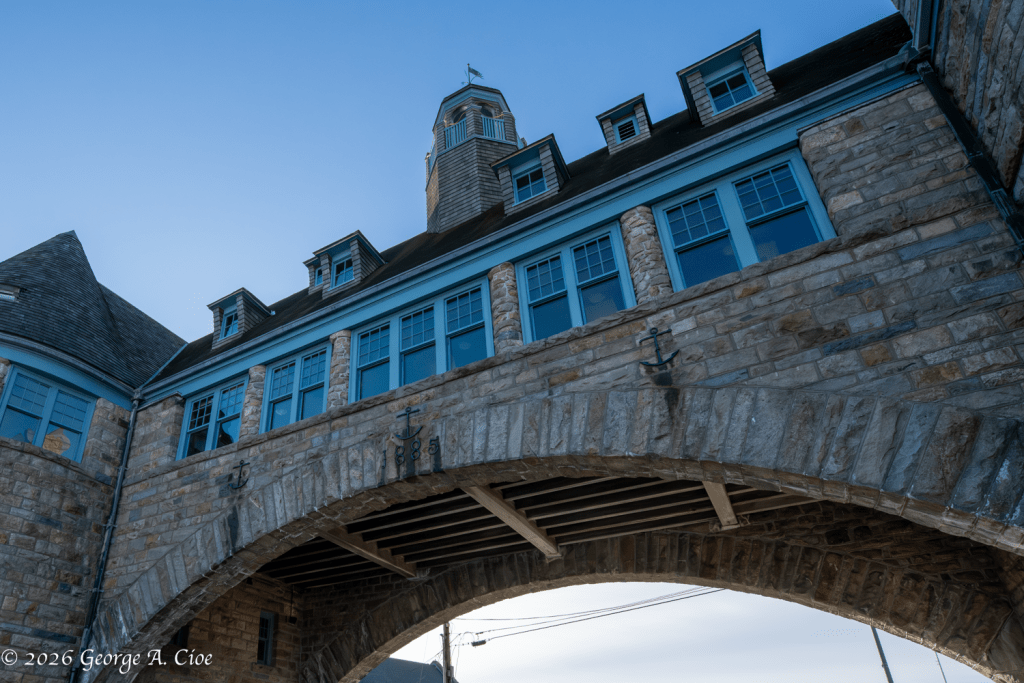
Massive stone arches, Romanesque curves, and thick granite blocks set with the confidence of permanence. They were meant to impress before a single dance was danced. Before a single champagne cork surrendered to celebration.
And then — fire.
In 1900, the Casino burned to the ground. Flames devoured ballrooms, verandas, laughter, and privilege. By morning, almost everything was gone.
Almost.
The Towers remained.
Stone does not panic. Stone does not flee. Stone endures.
What stands today is the lone architectural remnant of that Gilded Age dream. Not the ballroom. Not the sweeping seaside galleries. Just the entrance — as if history decided that thresholds matter most. The place where you step from one world into another.
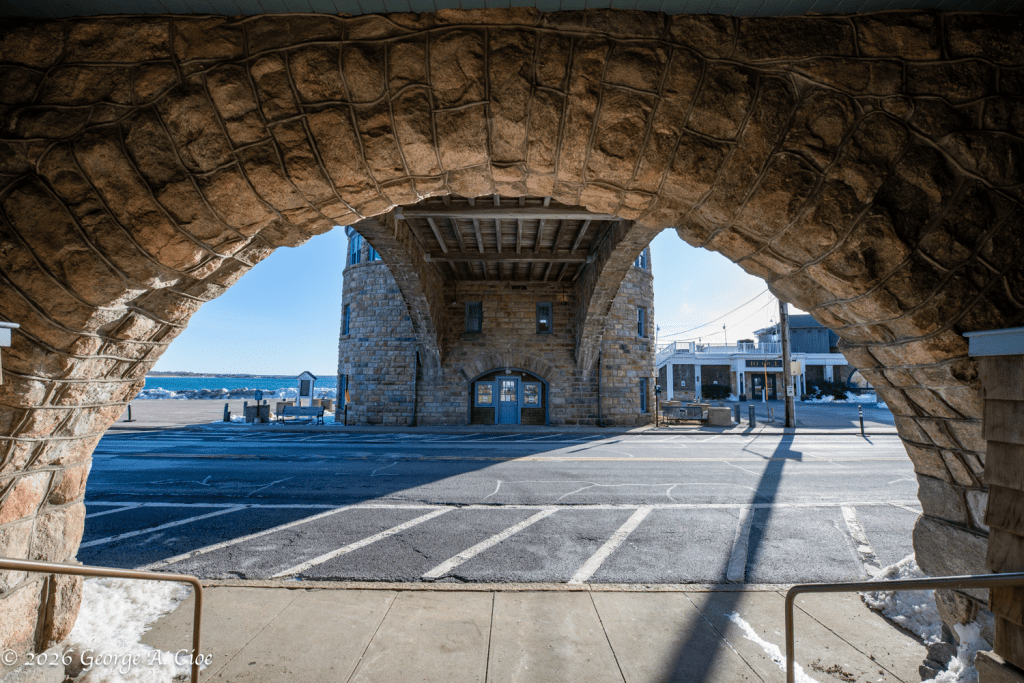
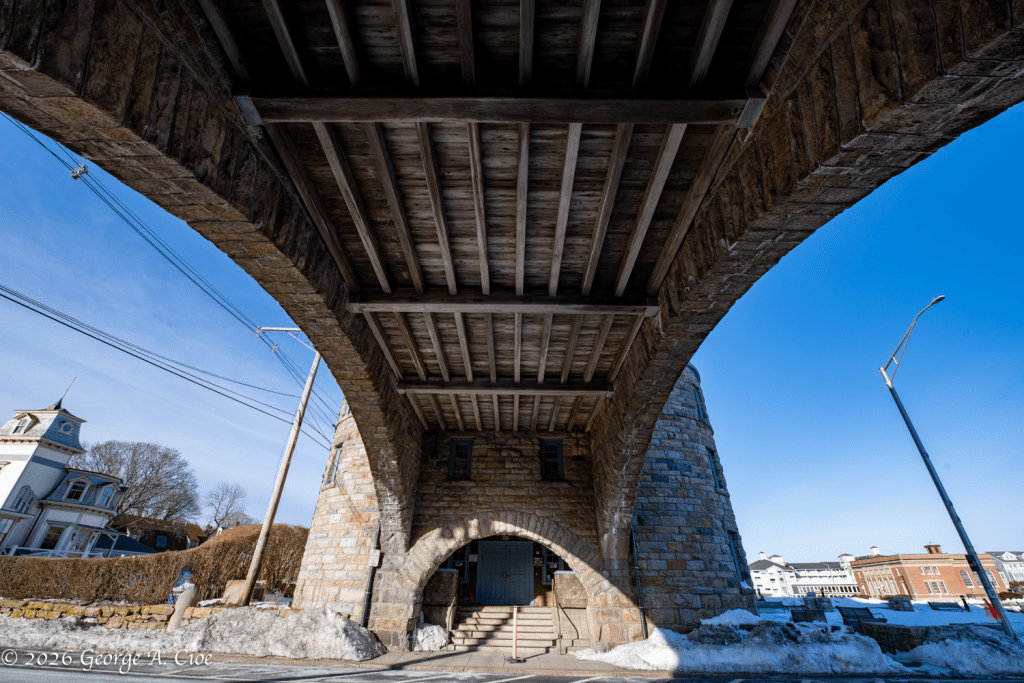
From your exterior vantage point — the angles, the weight, the texture — you can see the craftsmanship that modern construction rarely attempts. Granite blocks stacked with intention. Mortar lines that have tasted 130 years of salt air. Arches that soften mass into grace. The stone glows differently depending on the hour — honeyed at sunrise, resolute gray at noon, burnished bronze at dusk.
Photographing it from outside feels right.
Because this structure has always been about presence.
Stand beneath it and you feel scale. Stand back and you see symmetry. Move along the perimeter and the ocean sneaks into the composition — a reminder that beauty here has always been collaborative: architecture and Atlantic, human ambition and elemental force.
It has hosted weddings. Concerts. Quiet winter winds. Blizzard after blizzard. Summer crowds and solitary walkers. Teenagers posing for prom. Veterans staring at horizons. Photographers chasing shadow and line.
It has seen us.
And in many ways, it defines us.
Narragansett is layered — fishing village, summer colony, storm-tested shoreline, community stitched together by tides and memory. The Towers stand at the intersection of those identities. A reminder that grandeur can fade, but character remains.
There’s something poetic about an entrance surviving when the palace did not.
Perhaps that’s the lesson.
We may lose the ballroom.
We may lose the glitter.
But if the foundation was true — something will endure.
The Towers don’t shout their history. They simply stand.
Solid. Weathered. Unapologetic.
A stone sentinel by the sea — guarding the past, framing the present, and welcoming whatever walks beneath its arch next.
I’d love to share my posts with you. If you subscribe, they’ll come straight to your inbox—most days, like a little note from me to you. It means a lot to know you’re reading along.
Browse my complete art portfolio and shop for prints at imagesbygacioe.shop



Leave a Reply