



The Scene of the “Crime”
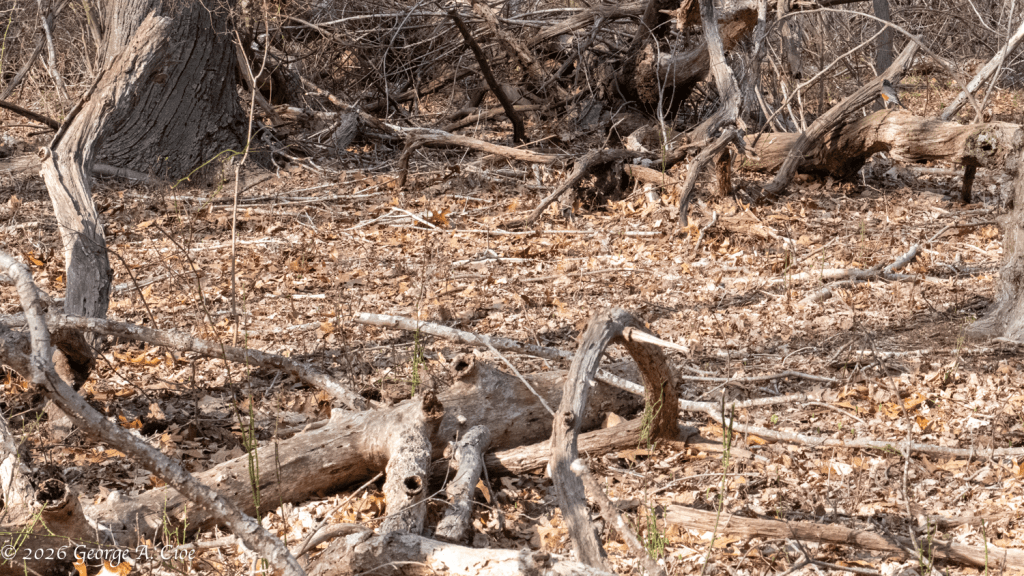
I know… it looks like a mess.
The kind of mess that makes a homeowner reach for a rake, a chainsaw, and maybe a strongly worded complaint to Mother Nature’s customer service department.
A blizzard rolls through Narragansett, and suddenly the woods look like they lost a bar fight. Limbs snapped. Trees toppled. Branches tangled like a pile of pick-up sticks after a bad decision.
To the untrained eye?
Chaos.
To me?
A grand opening.
Welcome… to the Dead Trees Society.
Not Dead. Reassigned.
Here’s the secret most people miss:
In a healthy forest, nothing is wasted.
Nothing is “dead.”
It’s just… reassigned.
A standing oak becomes a fallen giant.
A fallen giant becomes a buffet.
A buffet becomes life.
Take that decaying log sprawled across the forest floor. Looks like yesterday’s news, right?
Not if you’re:
- Eastern Bluebirds and American Robins hunting exposed insects
- Northern Flickers and Downy Woodpeckers chiseling into bark for larvae
- Black-capped Chickadees picking through crevices like tiny surgeons
Under that bark lives a five-star protein menu:
- Beetle larvae
- Carpenter ants
- Termites
- Fungal growth that attracts even more insects
That log isn’t debris.
It’s a dining room.
The Architecture of Shelter
Now look at the pile of branches—the kind that makes you think, “Someone should clean that up.”
Please don’t.
Because to wildlife, that “mess” is a fortress.
Those interlocking limbs create:
- Predator protection for species like Eastern Cottontail rabbits and White-footed mice
- Thermal cover—windbreaks that conserve heat in winter
- Escape routes—a labyrinth that slows foxes, coyotes, and hawks
And the birds?
They love it.
- Song Sparrows
- Gray Catbirds
- Towhees
They tuck themselves deep into that chaos where wings alone won’t save them—but structure will.
Those upper branches, once part of a proud canopy, now huddle close to the ground… forming what I like to call:
Nature’s emergency bunker system.
Root Balls, Cavities, and Real Estate Opportunities
And then… there’s the luxury housing market.
When a tree uproots, it pulls up a root ball—a tangled mass of soil and roots that leaves behind a hollow.
To you? A hole.
To a Red Fox?
A starter home with expansion potential.
To a Raccoon?
A weekend getaway.
To a Skunk?
A place with… excellent ventilation.
And let’s not forget the standing dead trees—what foresters call snags.
These are gold.
- Woodpeckers excavate nesting cavities
- Those cavities are later used by:
- Eastern Screech Owls
- Tree Swallows
- House Wrens
- Even flying squirrels
Each hole is a future home.
Each trunk is a vertical apartment complex.
The Long Game
And if you’re patient—really patient—you’ll see the final act.
That tree… the one that once scraped the sky?
It slowly becomes:
- Soil
- Nutrients
- Moisture retention for seedlings
It feeds the next forest.
Literally.
Fungi break it down.
Microbes finish the job.
New life rises from what looks like ruin.
A Different Way to See It
So the next time you walk through the woods in Narragansett and think:
“What a mess…”
Pause.
Look closer.
That “mess” is:
- A restaurant
- A shelter system
- A nursery
- A neighborhood
- A legacy
Nature doesn’t clean up after herself.
She builds with everything she leaves behind.
And maybe—just maybe—
the most important life in the forest…
Is happening in the things we almost didn’t notice.
Naturally.
I’d love to share my posts with you. If you subscribe, they’ll come straight to your inbox—most days, like a little note from me to you. It means a lot to know you’re reading along.
Browse my complete art portfolio and shop for prints at this link: imagesbygacioe.shop



Leave a Reply