
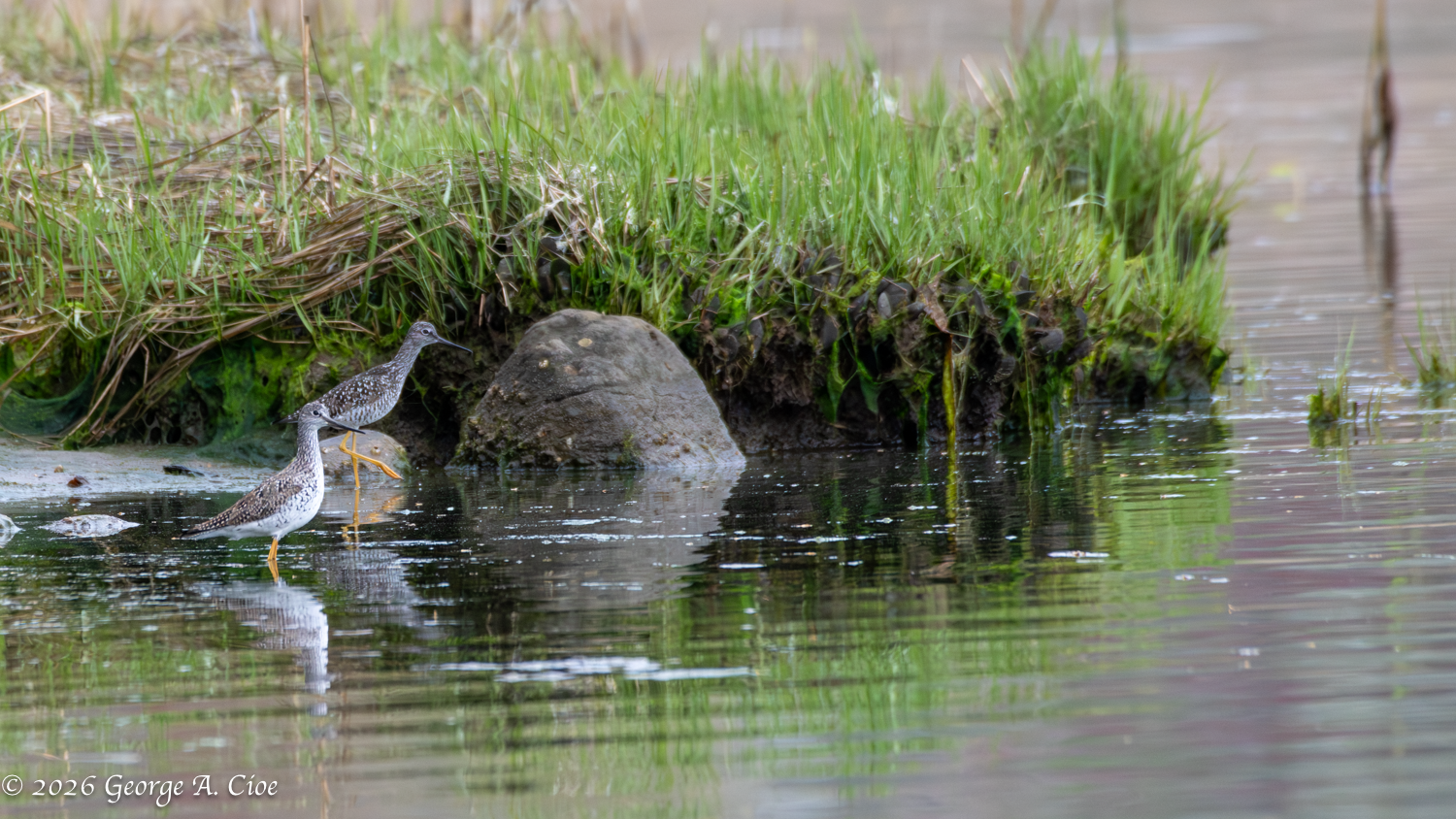
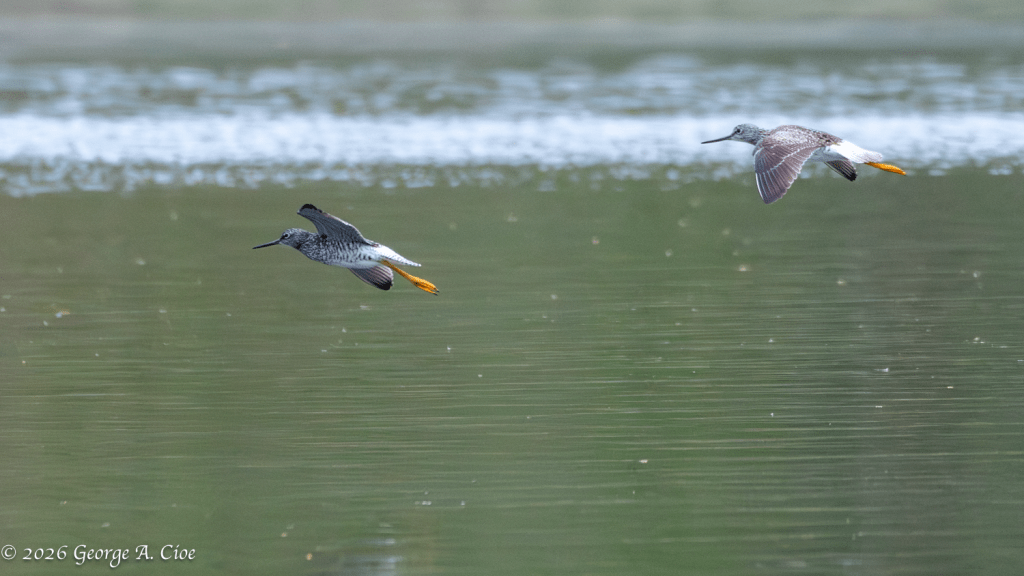

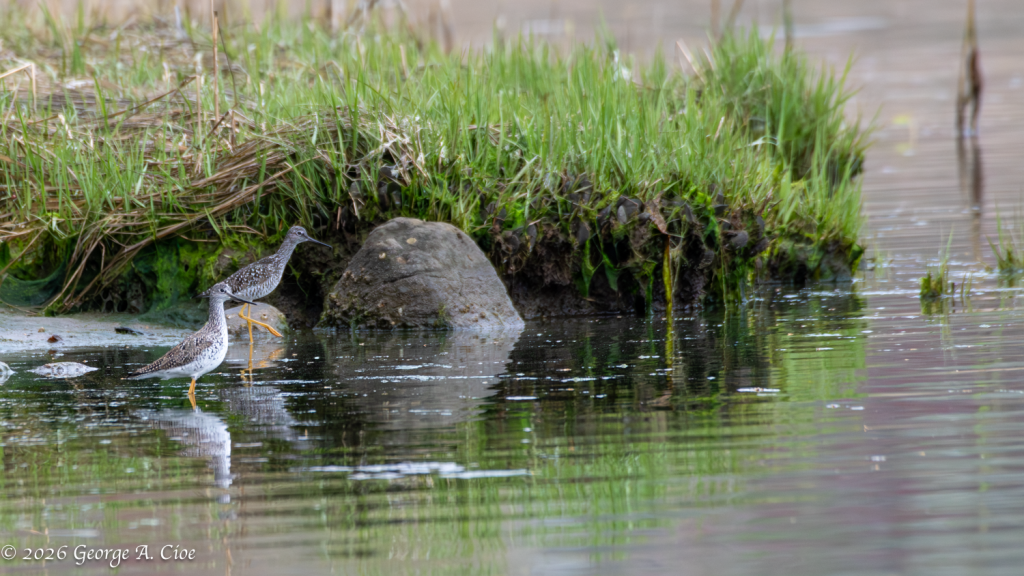

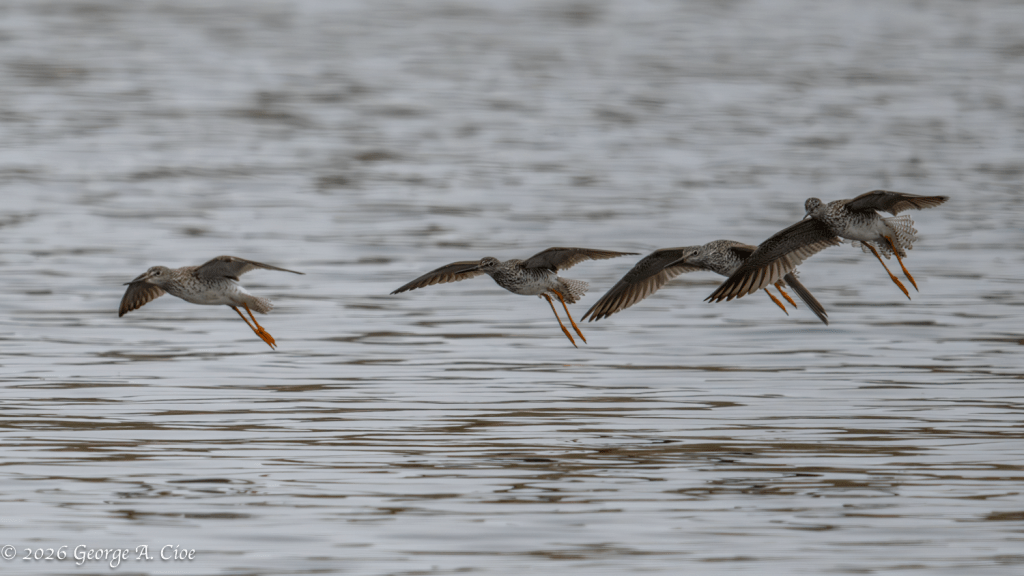
There I was.
Chest out.
Camera in hand.
Feeling like the David Attenborough of Narragansett.
“I have found a Solitary Sandpiper,” I whispered to absolutely nobody.
And not just found one.
Photographed one.
Tracked one.
Observed one.
At this point I was maybe three minutes away from applying for honorary ornithologist status and demanding a khaki vest with many unnecessary pockets.
But then…
Something bothered me.
The neck looked a little long.
The posture seemed… suspiciously confident.
And the legs?
Well, let’s just say they weren’t exactly subtle.
They looked like the bird had borrowed fluorescent yellow ski poles.
So I checked the field guide.
Then another field guide.
Then an app.
Then another app.
Then I entered what birders call “careful verification,” and what normal people call “spiraling.”
Ladies and gentlemen…
I was wrong.
This was not a Solitary Sandpiper.
This was a Greater Yellowlegs.
Which, once you know the differences, are apparently “easy to distinguish.”
Birders LOVE saying that.
“Oh, once you know what to look for…”
Really?
That’s comforting.
That’s like saying:
“Once you understand quantum physics, particle acceleration is pretty straightforward.”
Here’s the breakdown.
A Solitary Sandpiper is smaller, compact, refined, quiet, cautious, and tends to sneak around marshes like it owes money.
A Greater Yellowlegs, meanwhile, looks like:
- it had three espressos,
- owns the wetland,
- manages middle management at a regional accounting firm,
- and is late for a conference call.
The Solitary Sandpiper has subdued greenish legs.
The Greater Yellowlegs has bright yellow legs so vivid they should require FAA clearance lighting.
And apparently this should have been obvious to me.
Now in fairness, bird identification is not easy.
Because birders casually throw around phrases like:
- “note the subtle eye-ring,”
- “observe the primary projection,”
- “pay attention to the supercilium,”
- and my personal favorite:
“the jizz is different.”
The WHAT is different?
Meanwhile I’m over there going:
“Sir… I’m just trying to determine whether this bird is a sandpiper or escaped poultry.”
And the worst part?
Birds refuse to cooperate.
They never stand next to a sign.
You never hear:
“Hello. I’m Greg. Greater Yellowlegs. Nice to meet you.”
No.
Instead, they stand 147 yards away in heat shimmer at dawn while partially concealed behind marsh grass, turning slightly every time you raise the camera.
And then they fly.
Which somehow makes things worse.
Because now you’re trying to identify:
- wing bars,
- tail patterns,
- leg extension,
- flight style,
- vocalizations,
- and emotional intent…
…all while handholding a 500mm lens that now weighs approximately the same as a chainsaw.
The real issue is that bird identification exists in two completely different realities.
Reality Number One:
The field guide.
Every bird is perfectly lit.
Standing broadside.
Color accurate.
Fully cooperative.
Labeled.
Reality Number Two:
Actual life.
You glimpse what appears to be a feathered potato flying behind a shrub at Mach 2 while your autofocus locks onto a reed from Connecticut.
And then some birder nearby calmly says:
“Oh nice. Nonbreeding juvenile Lesser Yellowlegs transitioning into alternate plumage.”
Meanwhile I’m still trying to determine which end contains the head.
Honestly, I have enormous respect for birders.
Because identifying birds requires:
- patience,
- observation,
- memory,
- hearing,
- experience,
- and apparently a willingness to publicly admit you were wrong several thousand times.
Which explains why I own:
- three guidebooks,
- multiple bird apps,
- online references,
- and enough bookmarked identification sites to qualify as a minor research institution.
Without them?
I’d just be another guy standing in the marsh yelling:
“THAT ONE!”
And honestly…
sometimes I still am.
I’d love to share my posts with you. If you subscribe, they’ll come straight to your inbox—most days, like a little note from me to you. It means a lot to know you’re reading along.
Browse my complete art portfolio and shop for prints at imagesbygacioe.shop


Leave a Reply