
There are mornings on Narrow River when the world feels almost suspended.
The tide slips quietly through the marsh grass. Ospreys patrol like overworked contractors carrying sticks three times too large for the job. Red-winged Blackbirds yell at everyone for no apparent reason. Somewhere in the distance, a Catbird is delivering what sounds like a one-bird Broadway performance.
And me?
I’m standing there on another Bald Eagle mission.
Which, if we are being honest, often involves long stretches of absolutely nothing happening.
Bald Eagles are magnificent creatures. Majestic. Regal. Symbols of freedom.
They are also professional sitters.
An eagle can spend hours perched in the same tree looking like a CEO reviewing quarterly earnings reports.
So while waiting for movement, I do what every wildlife photographer eventually learns to do:
I start wandering with the lens.
A Mallard pair was working the low tide buffet line.
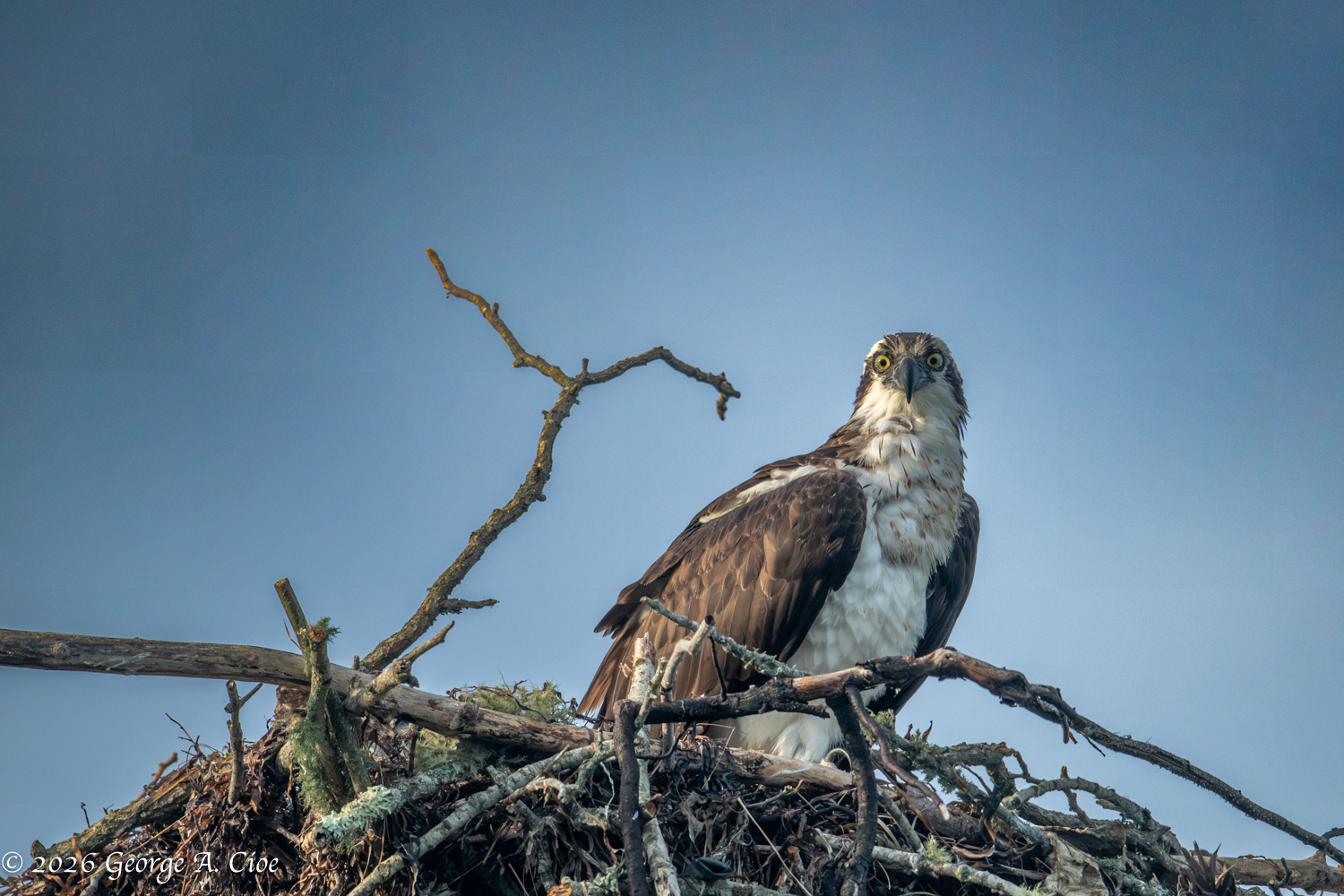
An Osprey flew by carrying enough nesting material to qualify for a building permit.
A Ruby-throated Hummingbird zipped past my head at approximately Mach 7.
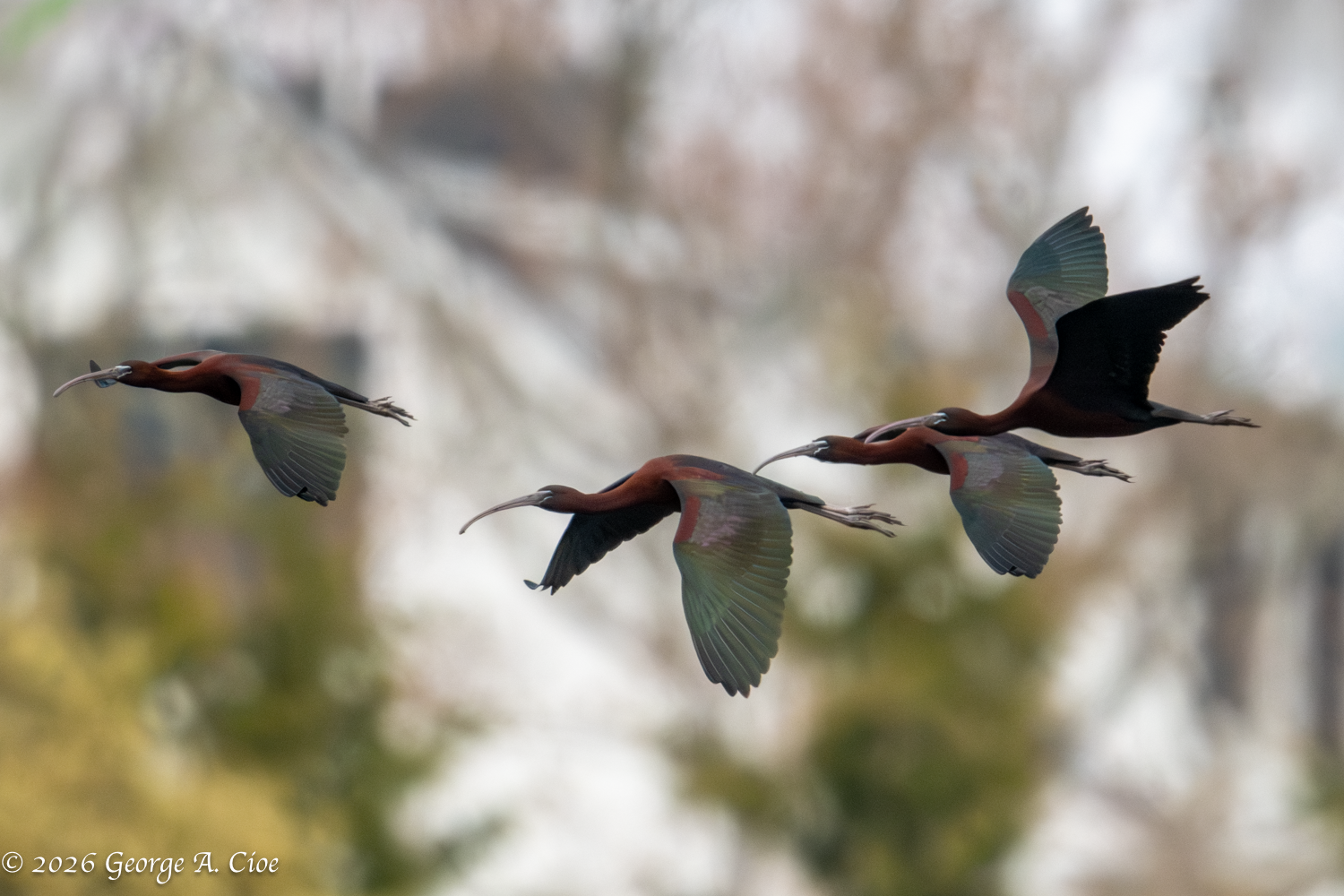
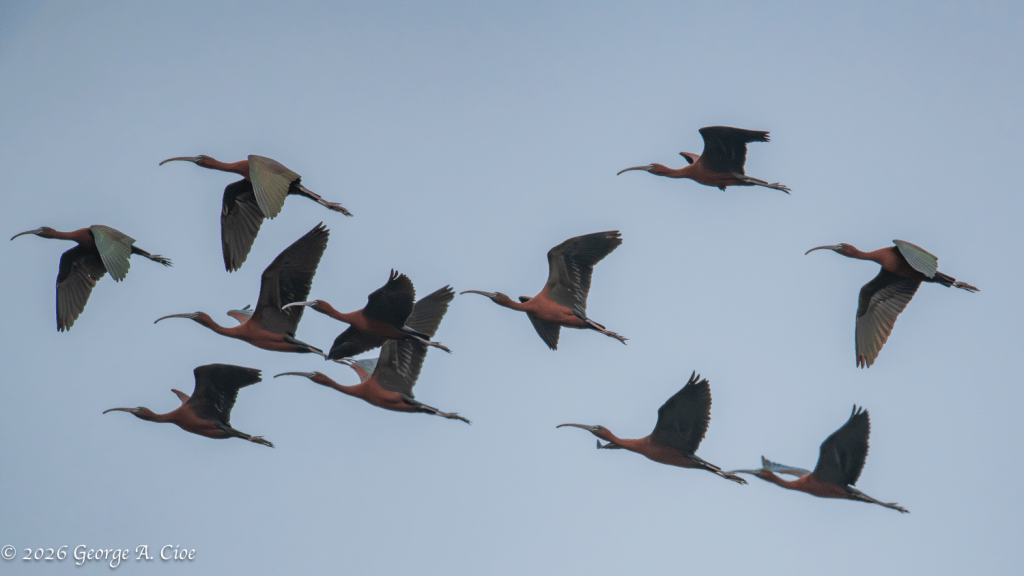
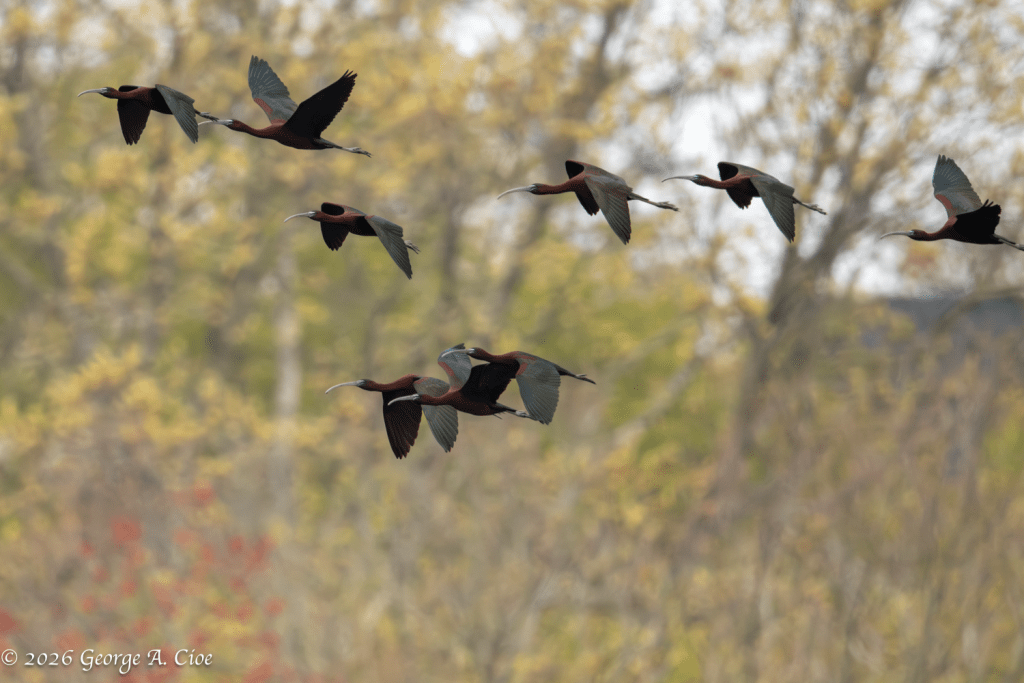
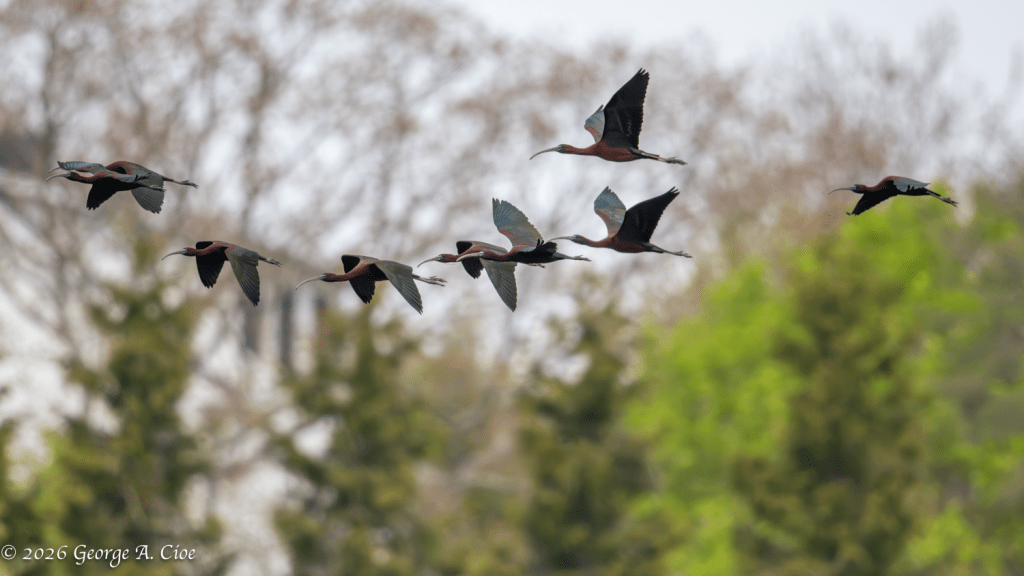
Then something lifted from the marsh.
Dark silhouettes.
Long necks.
Long bills.
Steady wingbeats.
I squinted.
“What in the world are those?”
Now fortunately, I had the Nikon 800mm mounted with the teleconverter attached, giving me roughly enough reach to photograph someone checking their email in Connecticut.
So I fired away.
And honestly?
At that moment I still had no idea what I was photographing.
That’s one of the great joys of nature.
You do not always know.
You discover.
Later, reviewing the images on the computer, I nearly fell out of my chair.
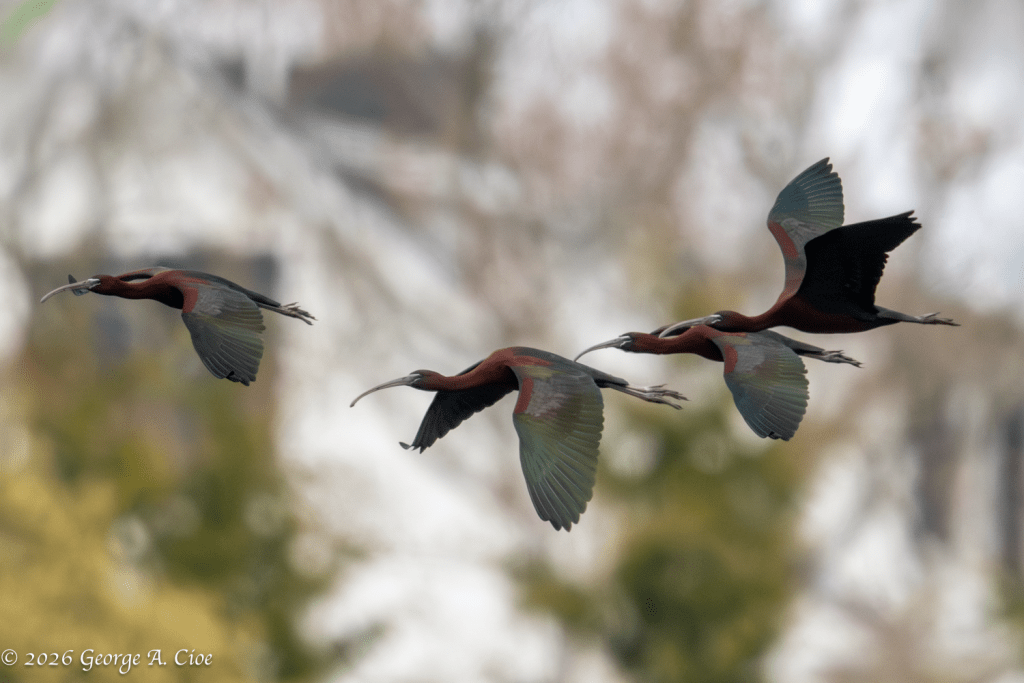
Glossy Ibis.
My first.
And suddenly those dark silhouettes transformed into something astonishing.
Because up close, the birds weren’t dark at all.
They were alive with color.
Deep chestnut.
Emerald green.
Bronze.
Hints of violet catching the light like polished metal.
They looked less like birds and more like something an artist invented after staring too long into an oil slick at sunset.
At a distance, Glossy Ibises appear understated, almost secretive. But when sunlight reaches them just right, the illusion disappears and the bird becomes something extraordinary.
Which, honestly, feels like Narrow River itself.
People see a beautiful river.
But if you slow down…
if you watch…
if you return often enough…
you begin to understand the astonishing complexity hidden inside this estuary.
This river feeds Osprey, Eagles, Herons, Egrets, Ducks, Shorebirds, Fish, Crabs, Mink, and countless unseen lives beneath the surface. It is a nursery, a migration corridor, a hunting ground, a sanctuary, and a classroom all at once.
The Glossy Ibis is just one more reminder that the river is endlessly alive.
These birds forage together in wetlands, probing mud for insects, crustaceans, minnows, and seeds. They nest in colonies with herons and egrets, relying on many eyes to watch for danger. Though once mostly southern birds, they have expanded widely across eastern North America.
And remarkably, some banded in Spain have crossed the Atlantic Ocean.
Think about that for a second.
A bird standing in the Narrow River marsh today may carry the story of another continent in its wings.
That’s what amazes me most.
Every visit teaches me something new.
Not from a textbook.
Not from a screen.
From being present.
From paying attention.
From standing quietly beside the water long enough for the river to decide you’re worthy of another introduction.
And on this particular morning, the Narrow River introduced me to the Glossy Ibis.
A bird I had never seen before.
A color palette I’ll never forget.
And another reminder that wonder is still very much alive in this world.
Especially if you know where to look.
I’d love to share my posts with you. If you subscribe, they’ll come straight to your inbox—most days, like a little note from me to you. It means a lot to know you’re reading along.
Browse my complete art portfolio and shop for prints at imagesbygacioe.shop


Leave a Reply