



Some things take time to sink in.
Bird watching is relaxing.
That much becomes obvious fairly quickly.
But then there are levels to this thing.
Some people casually enjoy birds.
Some study them with the precision of forensic investigators.
And then there are the birders who can identify a warbler at 200 yards by a single eyebrow stripe, two notes of song, and what I can only assume is sorcery.
Me?
I’m somewhere between “enthusiastic observer” and “guy squinting through binoculars saying, ‘Well… it definitely has feathers.’”
And honestly, I’m good with that.
I’ve learned that birding isn’t really about mastering a checklist. It’s about paying attention. About slowing down long enough to notice lives unfolding all around us that most people never even realize are there.
Which brings me to the Rose-breasted Grosbeaks visiting my feeder.
At first, I thought I was simply seeing two beautiful birds arriving at roughly the same time.
But then I noticed something.
They were always together.
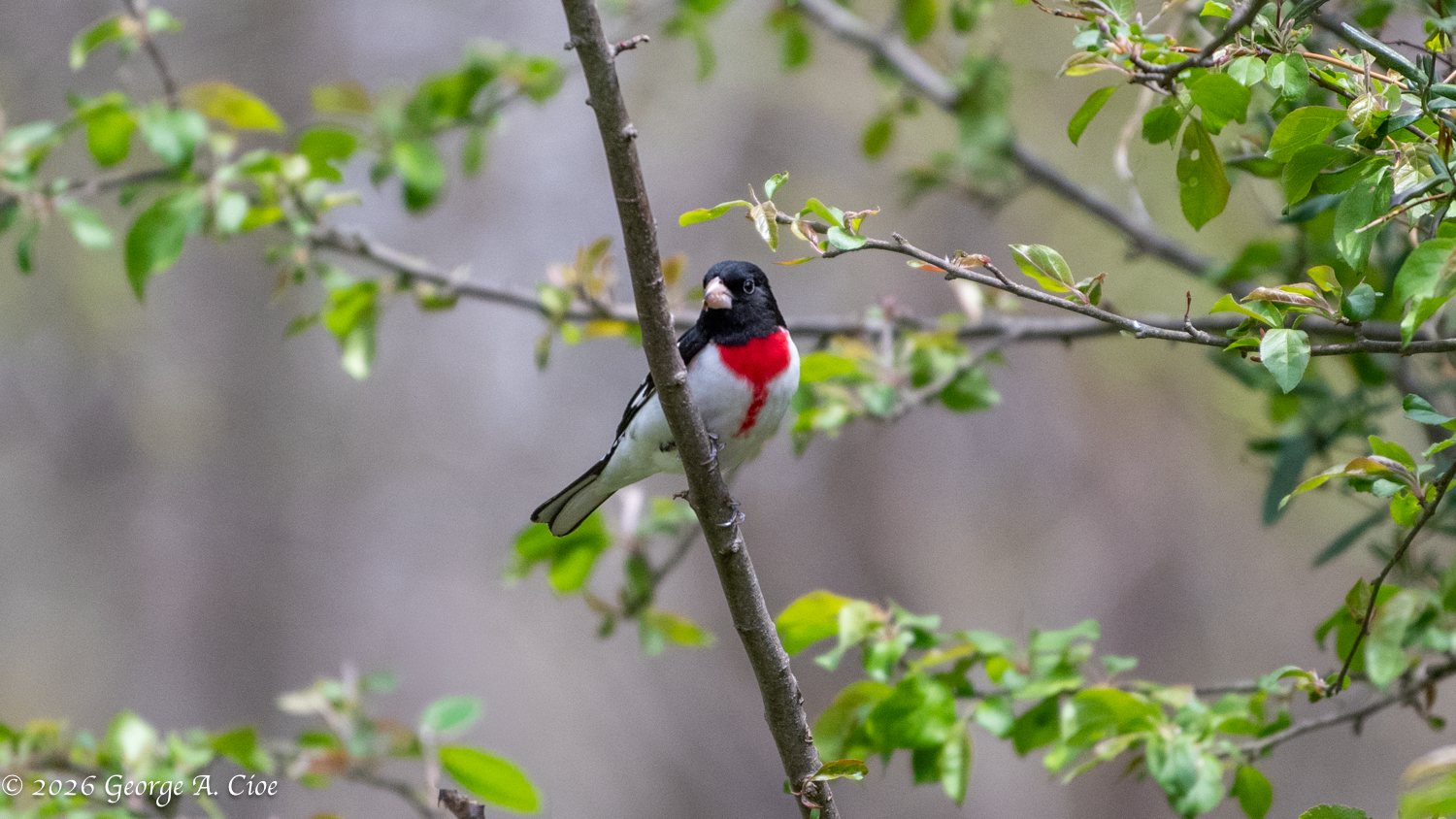
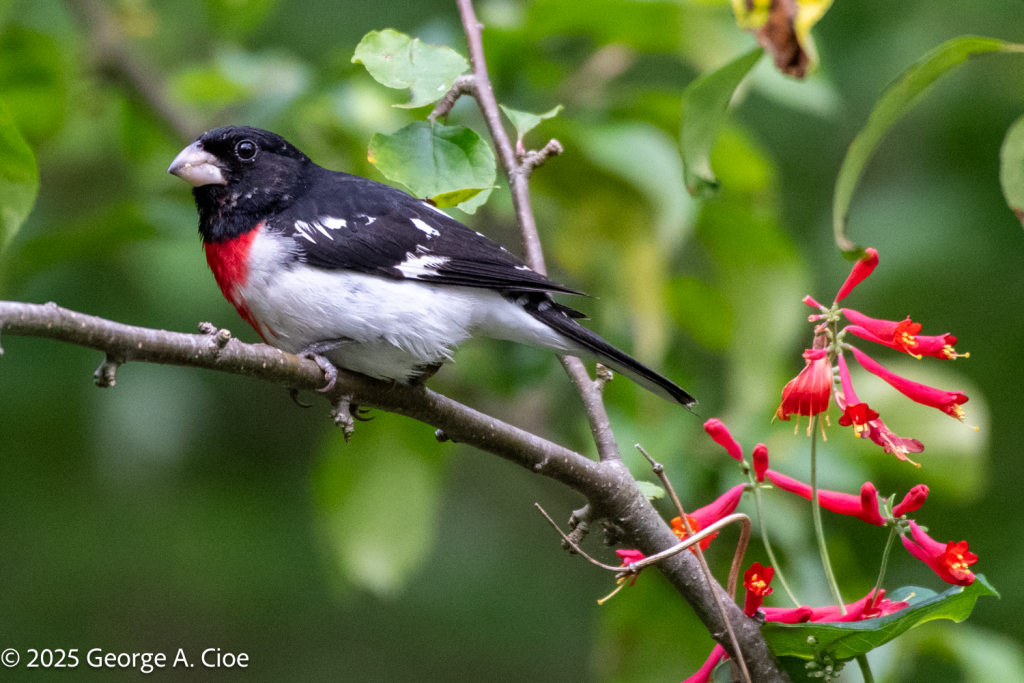
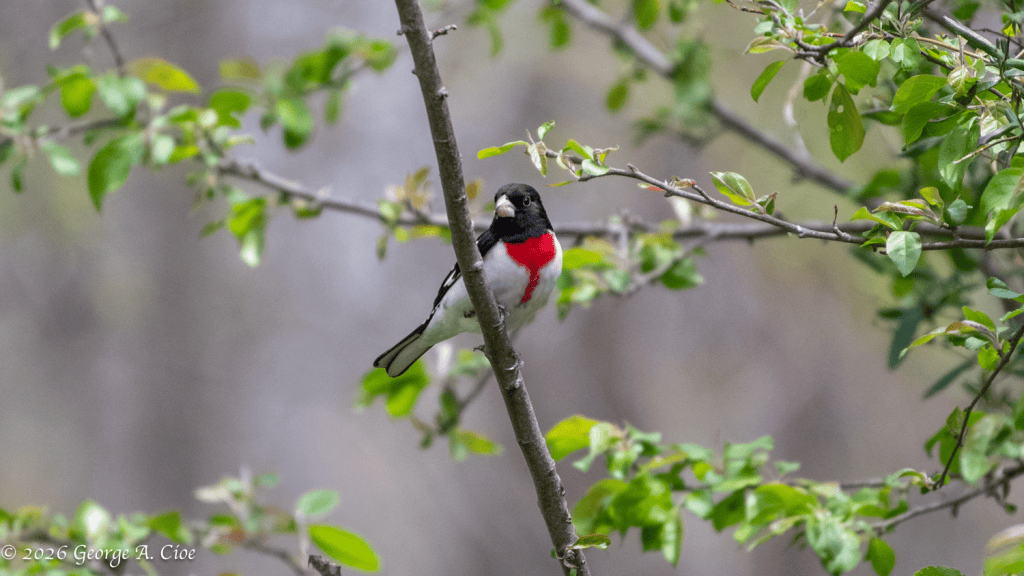
The male would arrive first sometimes, landing like a feathered celebrity in a tuxedo. Jet black head. Crisp white markings. And that outrageous raspberry-red patch on his chest that looks like he flew into a can of paint and decided to own the look.
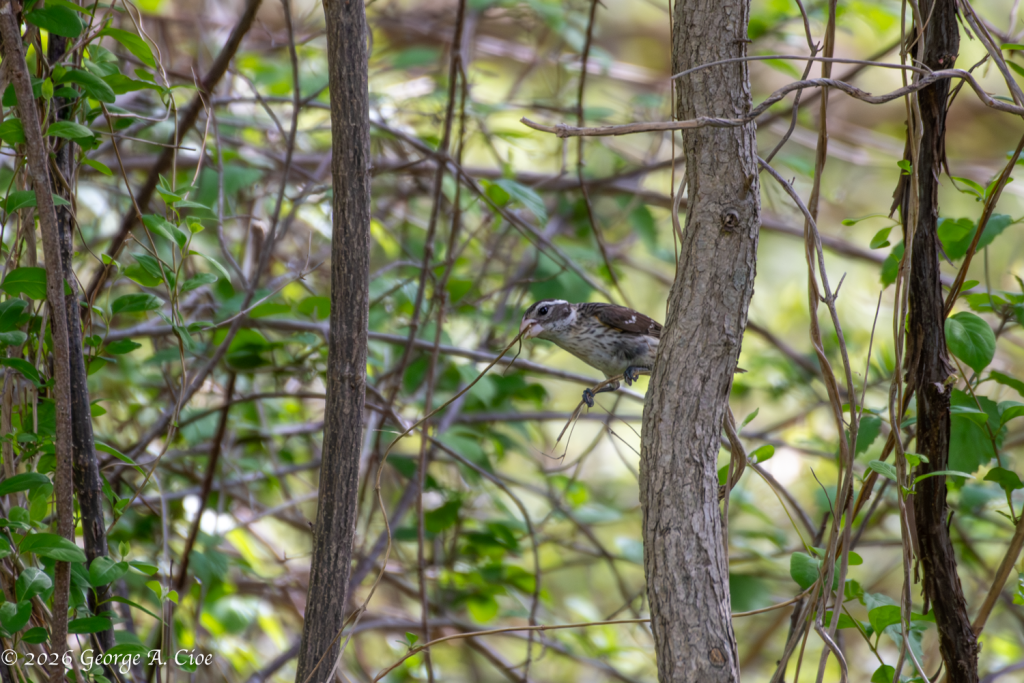
Meanwhile, the female appeared dressed for practicality rather than applause. Soft brown streaks. Camouflage. Understated elegance.
If the male is Broadway opening night, the female is intelligence operations.
And the more I watched them, the more it became obvious:
This wasn’t coincidence.
This was a couple.
During spring and early summer, Rose-breasted Grosbeaks often travel together because they are bonded breeding pairs. The male stays close while defending territory, helping establish nesting areas, feeding, and maintaining the pair bond.
And unlike some species where the male basically contributes a nice song and emotional support, grosbeak fathers actually help.
A lot.
The male may assist with nest building, feed the female, and even incubate eggs for part of the day.
That’s right.
This bird is sharing parenting responsibilities while half the internet is still debating whose turn it is to empty the dishwasher.
And once I understood what I was seeing, the entire experience changed.
The feeder stopped being just a feeding station.
It became part of a story.
A partnership.
A tiny unfolding domestic life happening quietly among the branches while the rest of us rush around pretending we’re too busy to notice wonder.
The female gathers energy for nesting and egg production while the male remains nearby, vigilant and spectacularly overdressed for the occasion.
And honestly, Nature has a terrific sense of humor.
Because from a survival standpoint, the female’s camouflage makes perfect sense.
The male, meanwhile, looks like he’s yelling:
“HELLO PREDATORS.
I WOULD LIKE EVERYONE TO NOTICE ME IMMEDIATELY.”
Fortunately, confidence counts for something.
But then something else happened.
One more tiny discovery.
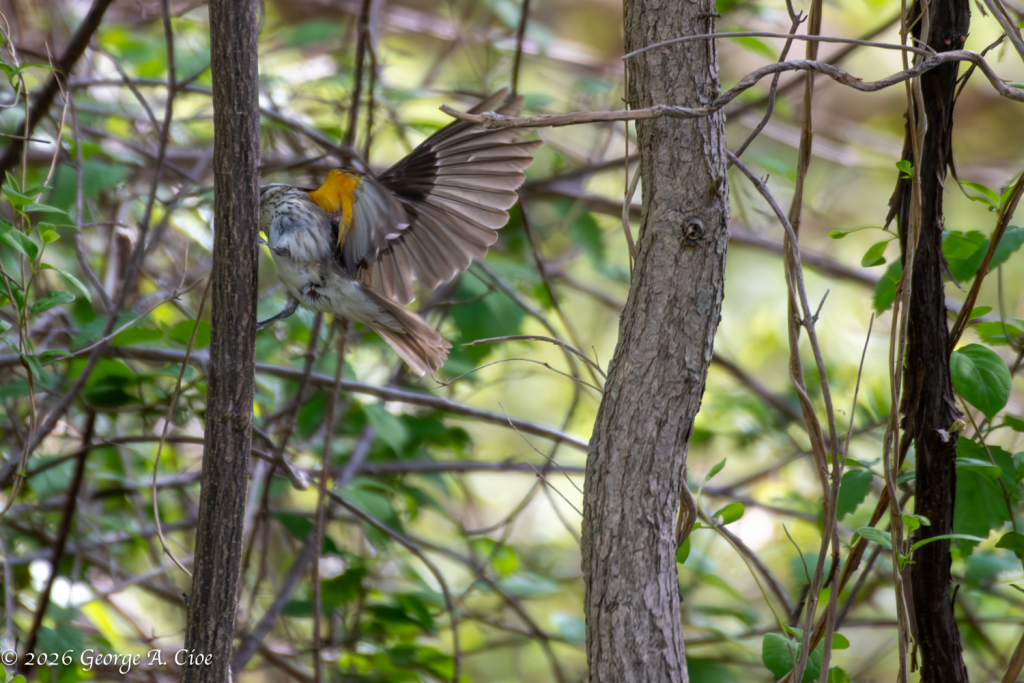
As I watched the female move through the understory, I noticed something I had never seen before.
A soft yellow wash beneath her wings.
Not bright like a goldfinch.
Not screaming for attention.
Just a warm, subtle glow revealed for an instant as she flared her wings moving through the branches.
At first, I thought maybe it was the light playing tricks on me. And to be fair, photographers know that woodland light can turn almost anything into visual fiction. But after looking into it, I learned that female and immature Rose-breasted Grosbeaks can occasionally show warm buffy-yellow coloration in the underwing area, especially in spring light or transitional plumage.
And honestly, that tiny discovery perfectly captured what has become so rewarding about paying attention to birds.
The more you look, the more you see.
Not because the birds changed.
Because you did.
That’s the part no one really tells you when you first start watching birds. It isn’t just about identifying species. It’s about training yourself to notice subtlety. Tiny details. Fleeting behaviors. Small flashes of beauty that most people miss because they happened for less than a second between two branches in the shade.
And suddenly that female grosbeak — the one I originally viewed as the “less colorful” bird — revealed another layer of quiet beauty I never knew existed.
Nature does that a lot.
The loudest beauty gets our attention first.
The softer beauty takes a little longer to sink in.
And if they remain frequent visitors, there’s a very good chance they’re nesting somewhere nearby in the neighborhood, hidden among leaves and branches while building a family one careful trip at a time.
Soon enough, if all goes well, I may start seeing awkward juveniles at the feeder.
And juvenile grosbeaks, from what I understand, behave much like teenagers everywhere:
Hungry. Loud. Confused. And fully convinced their parents should continue providing snacks indefinitely.
But for now, I’m simply enjoying this stage.
Not migration chaos.
Not territorial battles.
Just the quieter rhythm of spring.
A pair of birds moving through the world together.
And somehow, standing there with a camera in hand, watching them share a feeder in my backyard, the whole world feels a little softer than it did before.
Naturally.
I’d love to share my posts with you. If you subscribe, they’ll come straight to your inbox—most days, like a little note from me to you. It means a lot to know you’re reading along.
Browse my complete art portfolio and shop for prints at imagesbygacioe.shop
Leave a Reply