




There are photographs we plan.
And there are photographs that quietly plan us.
The first kind involves scouting locations, checking weather forecasts, studying tides, cleaning lenses, and convincing ourselves that waking up at an hour normally reserved for insomniacs and dairy farmers is somehow a recreational activity.
The second kind simply waits.
Patiently.
Somewhere beyond the next bend in the river.
Beyond the next season.
Beyond the next surprise.
This week I found myself revisiting photographs from Charleston, South Carolina.
Photographers do this all the time.
We tell ourselves we’re organizing files.
What we’re really doing is reliving moments.
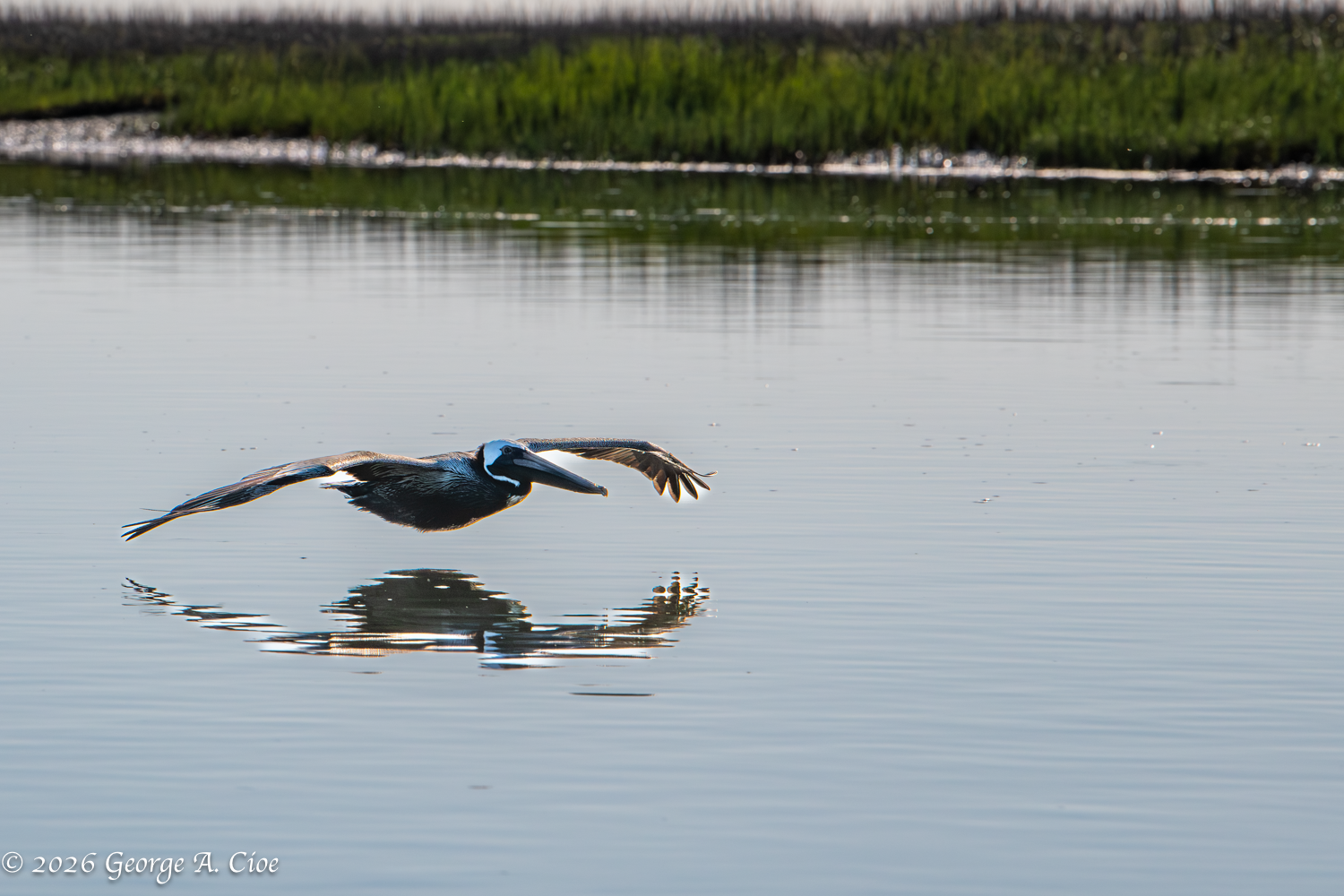
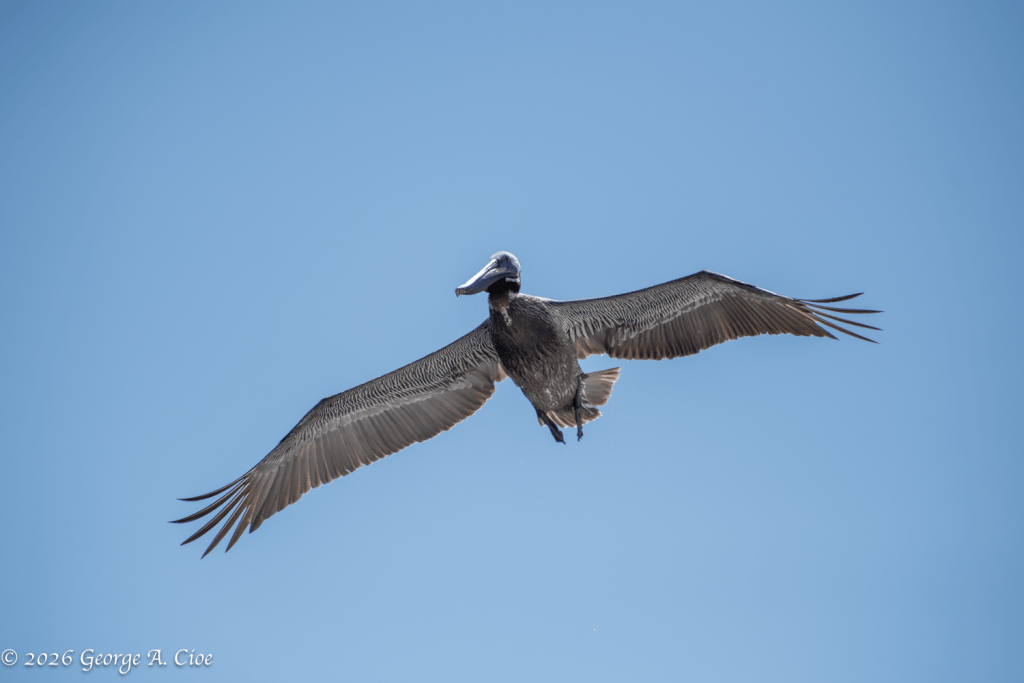
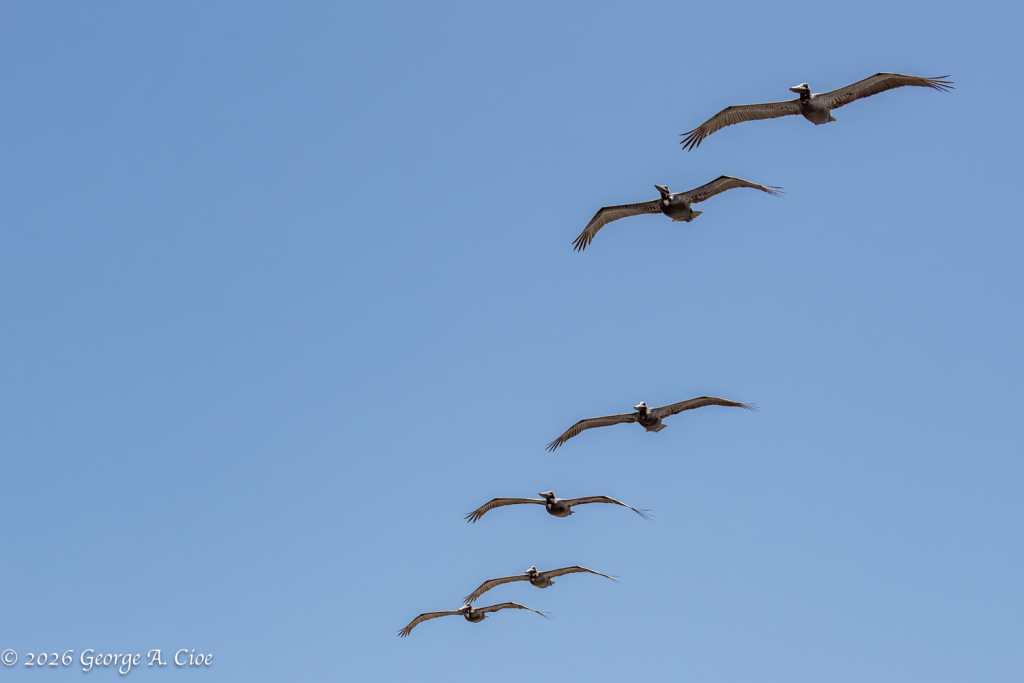
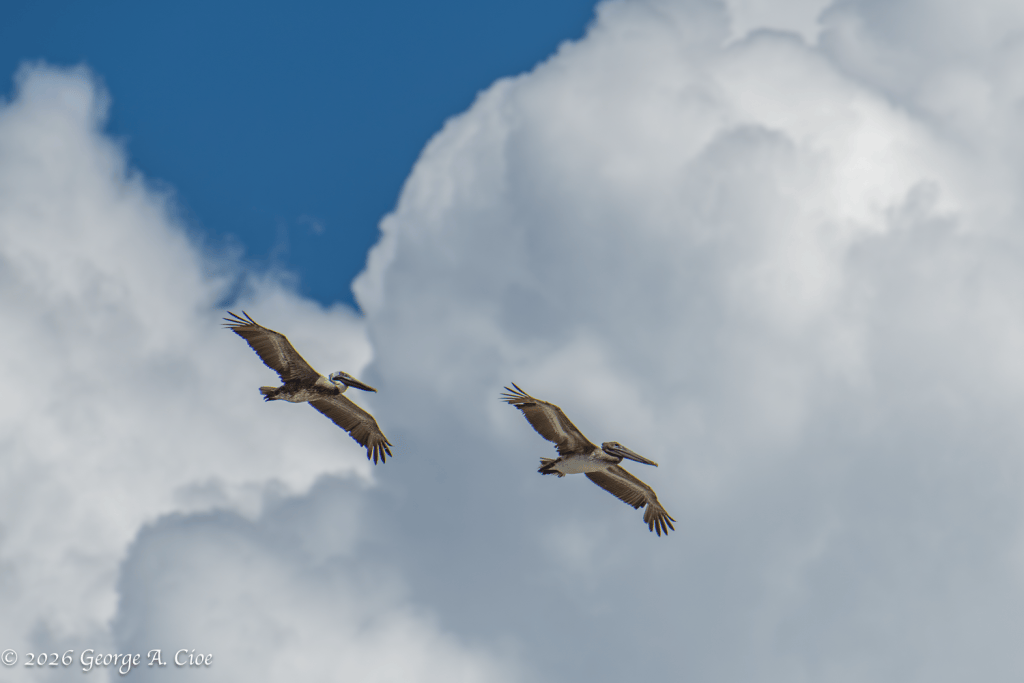
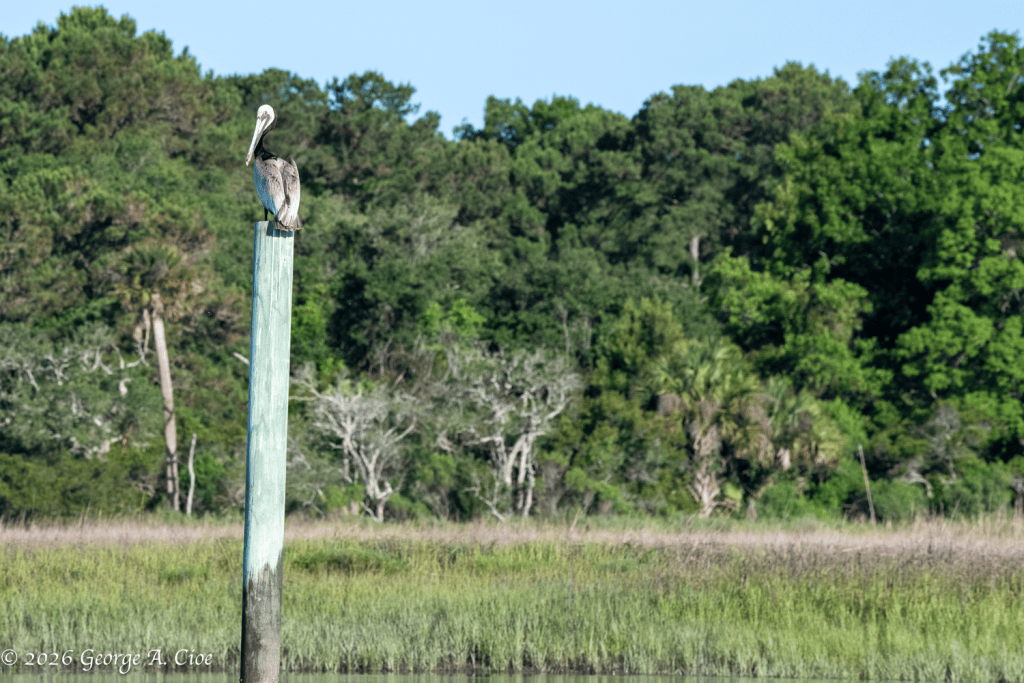
And among those moments were Brown Pelicans.
Magnificent birds that somehow manage to look both regal and ridiculous within the span of a single wingbeat.
Standing on a piling, they resemble retired sea captains contemplating life, tides, and whether anyone remembered to bring lunch.
But once airborne, everything changes.
The awkwardness disappears.
The heaviness vanishes.
And they become living sailplanes, gliding inches above the water with barely a movement of their wings.
Watching them in Charleston was mesmerizing.
Photographing them was even better.
Yet as I reviewed the images, another thought began forming.
A dangerous thought.
The kind photographers should avoid because it inevitably leads to thousands of additional shutter clicks.
What if someday I photographed one on the Narrow River?
Not in South Carolina.
Not in Florida.
Not somewhere pelicans are expected.
But here.
At home.
The more I researched, the more realistic the idea became.
Brown Pelicans have been expanding northward for decades following one of conservation’s great success stories.
After nearly disappearing from much of North America during the DDT era, populations rebounded dramatically.
Today, wandering birds occasionally appear in Rhode Island.
Rarely.
But often enough to keep hope alive.
And photographers understand hope.
Hope is what gets us out of bed before sunrise.
Hope is what convinces us to stand motionless beside a marsh while mosquitoes conduct unauthorized blood drives.
Hope is what makes us glance one more time toward the horizon before packing up our gear.
So now, every time I’m standing along the Narrow River watching an osprey hunt, a bald eagle soar, or a great egret stalk the shallows, a tiny part of my brain remains on pelican patrol.
Because I know what one looks like.
I know how it flies.
I know how impossibly graceful it appears when skimming low over calm water.
And I can already imagine the photograph.
A Brown Pelican reflected in the still waters of the Narrow River.
The marsh glowing in morning light.
A bird that once seemed impossibly southern suddenly passing through a place I know by heart.
Maybe it will happen next year.
Maybe ten years from now.
Maybe next week.
Birds have a wonderful habit of ignoring our schedules.
Until then, the photographs from Charleston serve as both memory and motivation.
Proof that I’ve met this remarkable bird before.
And a reminder that nature occasionally rewards patience in ways we never expect.
Because every photographer has a list.
Not a bucket list.
A possibility list.
And somewhere near the top of mine now sits a single image waiting to be made.
A Brown Pelican.
Over the Narrow River.
Coming home to a photographer who has been watching the horizon.
Waiting.
I’d love to share my posts with you. If you subscribe, they’ll come straight to your inbox—most days, like a little note from me to you. It means a lot to know you’re reading along.
Browse my complete art portfolio and shop for prints at this link: imagesbygacioe.shop

Leave a Reply