


Or: The Day I Discovered Waterfront Property Is Still Hard to Get
“What is that?”
It’s a question photographers ask themselves frequently.
Usually, right before spending twenty minutes stalking a shadow that turns out to be a stick.
I had just finished photographing a Great Blue Heron and was headed home for breakfast. The mission was complete. Camera full. Stomach empty.
Time to go.
But as every wildlife photographer eventually learns, Nature does not care about your breakfast plans.
I decided to make one quick stop at the Osprey nest near Sprague Bridge.
Just a quick look.
Famous last words.
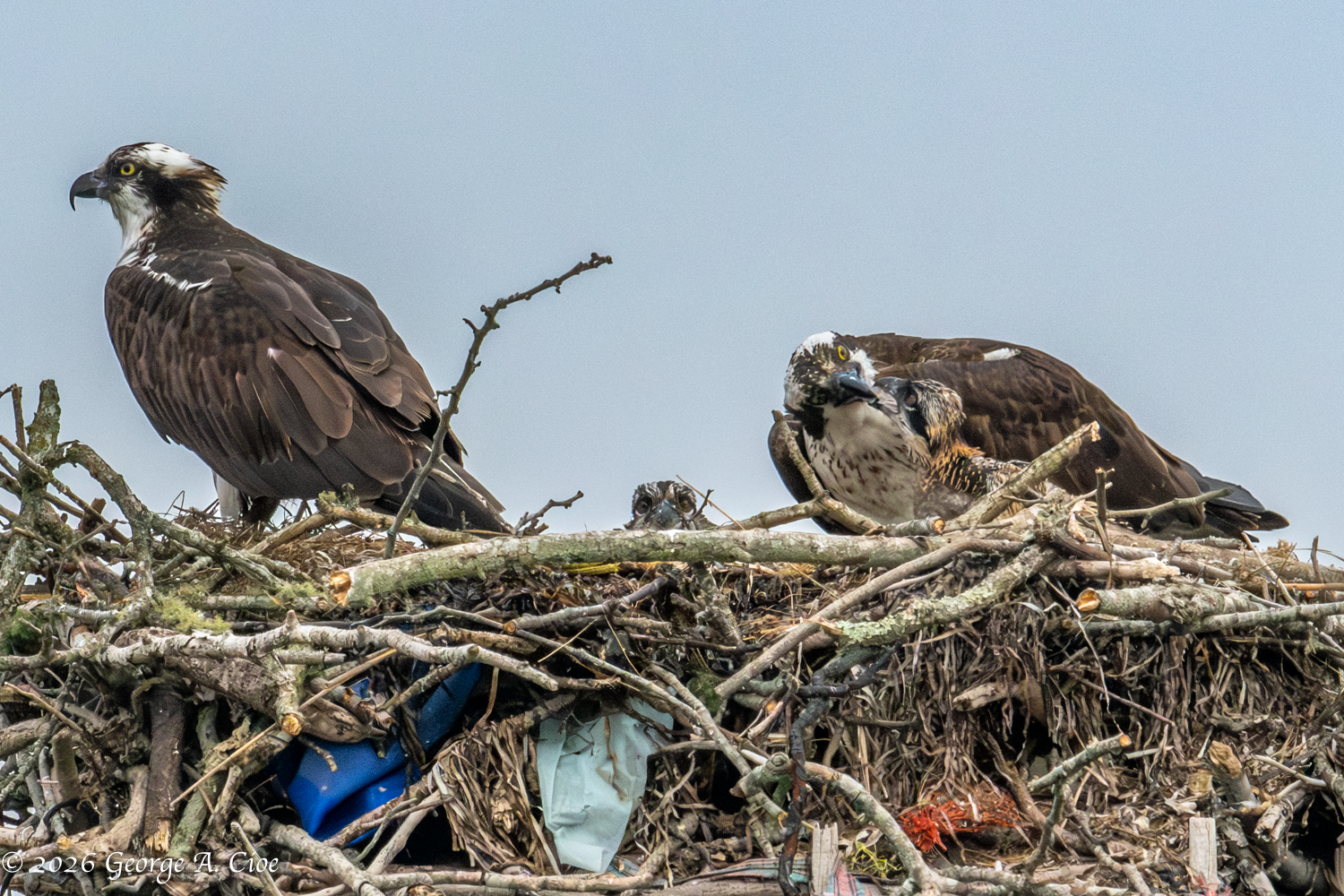
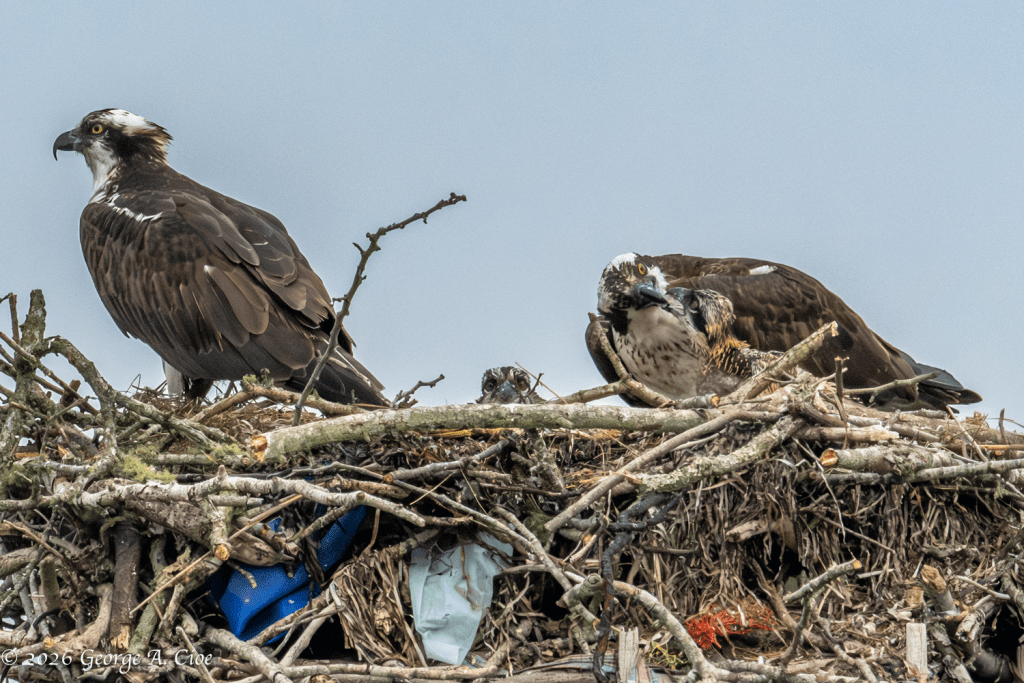
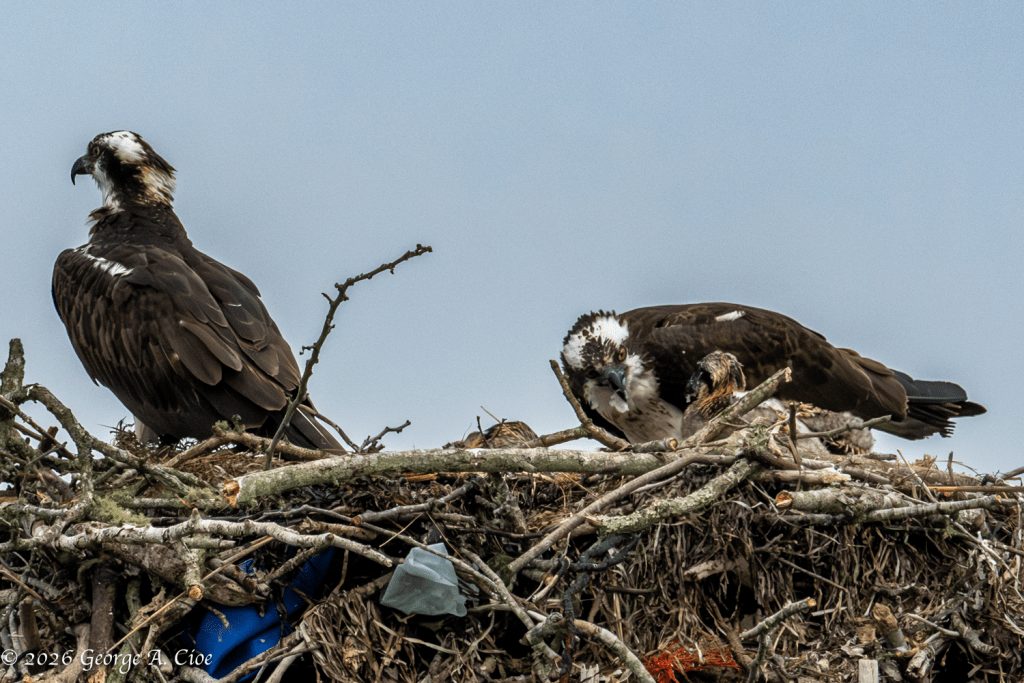
One of the adult ospreys was tearing apart a fish, which immediately informed me that I had once again missed the spectacular dive-and-catch sequence I have been pursuing for what feels like half my natural life.
Apparently, osprey maintain a schedule specifically designed around my absence.
As I watched, I noticed a strange little bump behind one of the adults.
The nest?
A stick?
A fish head?
The bump moved.
Well now.
Breakfast would have to wait.
I was standing in my waders just off Sedge Island, but I quickly relocated to the bridge sidewalk where I had a perfect eye-level view into what can only be described as Rhode Island’s most desirable waterfront condominium.
And there he was.
A chick.
Tiny.
Fluffy.
Suspicious.
Very suspicious.
In fact, he seemed completely fixated on me.
I could almost hear his thoughts.
“Mom, there’s a strange creature staring at us again.”
“The one with the giant glass eyeball.”
Then a second chick popped up.
Unlike his sibling, this youngster had a different concern.
Food.
More specifically, the shocking lack of food being delivered during the previous fifteen seconds.
Mom paused her feeding for what appeared to be a brief moment of personal reflection.
The chick responded as though she had announced a three-year famine.
Wings flapping.
Head bobbing.
Urgent protests.
Full-scale labor strike.
Had I not witnessed the fish being served moments earlier, I might have contacted wildlife authorities.
The feeding resumed.
Peace returned to the kingdom.
Meanwhile, the first chick never stopped staring at me.
Not once.
The little guy looked like he was conducting a background investigation.
I half expected him to ask for identification.
Then I noticed something else.
Down in the lower level of this sprawling stick mansion was a House Sparrow.
A tenant.
Apparently paying rent.
As it turns out, this arrangement is surprisingly common.
Osprey nests can become enormous over the years, sometimes reaching depths of ten feet or more. The lower layers create a maze of sticks and protected cavities that smaller birds find irresistible.
House Sparrows.
Tree Swallows.
Wrens.
Starlings.
Even Common Grackles.
They all move into the lower floors.
It’s brilliant, really.
The smaller birds get protection from hawks, crows, raccoons, and other predators.
The ospreys provide round-the-clock security.
And the ospreys seem largely unbothered by their tiny tenants.
It’s essentially a gated community with wings.
All things considered, this proved to be one very active osprey condo.
And it got me thinking.
Last summer I photographed a young osprey from this very nest catching a scup so large that it couldn’t lift it from the water. The determined youngster simply dragged its prize all the way to shore rather than let go.
Persistence.
Determination.
A complete lack of common sense.
The family traits were obvious.
Looking at these two youngsters, I couldn’t help but wonder which one might become the next legendary fisherman.
The intense little security guard?
Or the food critic?
Only time will tell.
I’ll be watching.
Probably while missing breakfast.
Again.
I’d love to share my posts with you. If you subscribe, they’ll come straight to your inbox—most days, like a little note from me to you. It means a lot to know you’re reading along.
Browse my complete art portfolio and shop for prints at imagesbygacioe.shop


Leave a Reply