
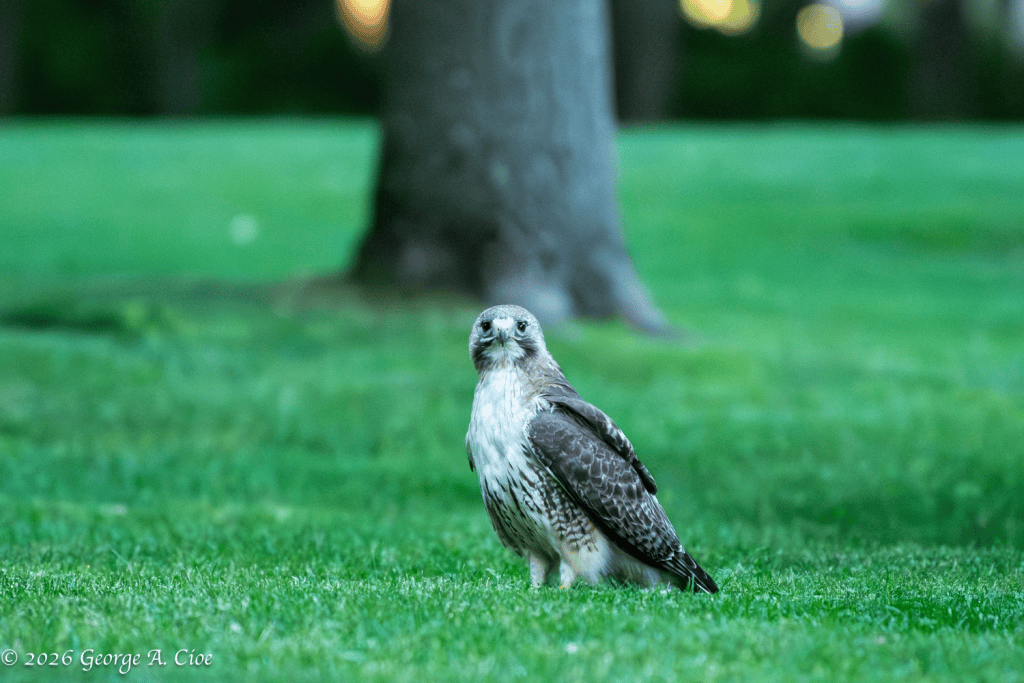

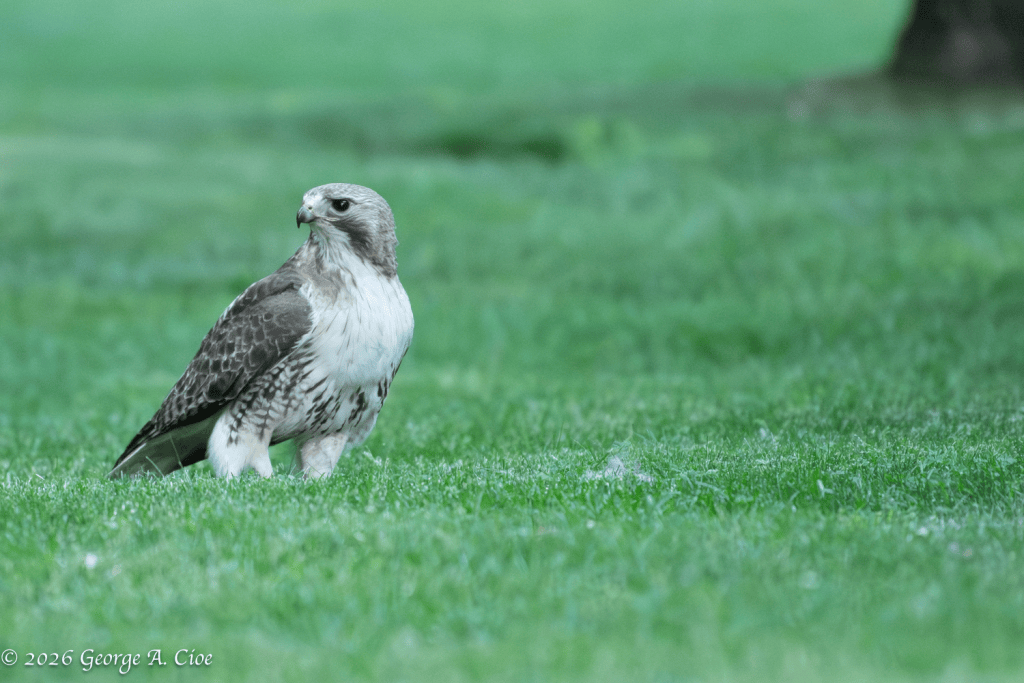
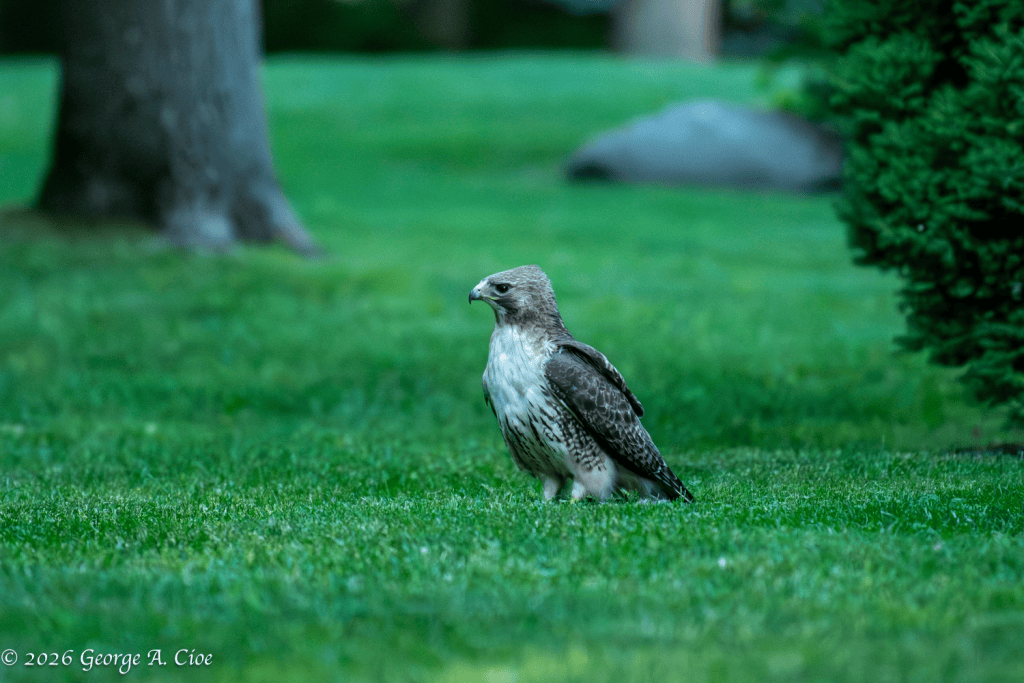
It was just standing there.
Looking straight at me.
And my dogs.
Now I’ve spent enough years around wildlife to know when something isn’t adding up.
A Red-tailed Hawk doesn’t usually allow a human and two enthusiastic dogs to wander within fifty feet.
Not unless it has a very good reason.
And there is only one reason a hawk willingly ignores that much commotion.
Dinner.
I couldn’t see the prey.
Yet.
But I knew the evening was about to become considerably more interesting.
My dogs, meanwhile, were completely unaware of the unfolding drama.
Their noses were glued to the lawn as they searched for what can only be described as canine truffles.
Rabbit droppings.
The irony would become apparent shortly.
My grandchildren had just arrived for a visit.
Emiliano.
Aurelia.
A perfect audience.
Because some lessons are best taught not from books or television screens, but from life itself.
Before you could say “Jiminy Cricket,” Trish, Adrielle, Emiliano, and Aurelia were gathered on the deck with binoculars.
I grabbed a faster lens.
Cranked the ISO to 10,000.
And waited.
The hawk never seemed concerned.
It simply stood there with the confidence of an apex predator.
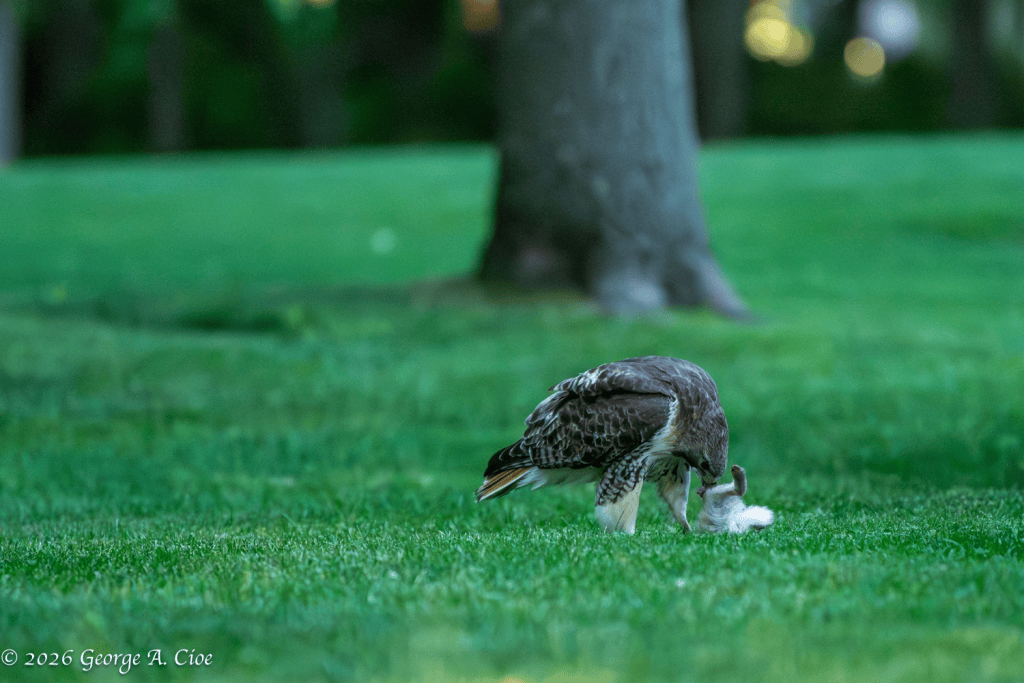
Then it lowered its head.
And the mystery was solved.
A freshly caught Eastern Cottontail rabbit.
There were audible gasps from the deck.
Questions immediately followed.
Lots of them.
Good ones.
The kind children ask when they encounter something real.
“Did the hawk catch it?”
“Why did it kill the rabbit?”
“Will it eat all of it?”
“Does it have babies?”
And suddenly the evening wasn’t about photography anymore.
It was about understanding.
Red-tailed Hawks are among North America’s most successful predators.
They can spot prey from astonishing distances while soaring hundreds of feet above the ground.
Their eyesight is estimated to be several times sharper than ours.
Imagine standing on the Sprague Bridge and being able to see a mouse moving on Sedge Island.
That’s the kind of visual advantage we’re talking about.
They hunt using a combination of patience and precision.
Sometimes they soar in circles, using rising warm air currents called thermals.
Other times they perch quietly and watch.
And watch.
And watch.
Then, in an explosive burst of speed, they strike.
Their talons—not their beaks—are the real weapons.
Powerful enough to seize rabbits, squirrels, snakes, rodents, and other prey.
A Red-tailed Hawk doesn’t waste energy.
Every movement has purpose.
Every hunt is a calculation.
And every successful meal represents skill earned through thousands of years of evolution.
As we watched, another realization settled in.
There has been an explosion of rabbits in our neighborhood this spring.
Everywhere.
Front yards.
Gardens.
Roadsides.
If you’ve noticed them, you’re not imagining it.
But nature has a way of maintaining balance.
Predators like hawks help prevent prey populations from growing beyond what the habitat can support.
Without predators, wildlife populations can outstrip available food, spread disease more easily, and ultimately suffer far greater losses.
The hawk wasn’t being cruel.
It wasn’t being vicious.
It was simply being a hawk.
Doing exactly what hawks have done for millennia.
And because of that, the ecosystem remains healthy.
The children watched in amazement.
Not horror.
Not fear.
Wonder.
The kind of wonder that appears when a child realizes nature isn’t a cartoon.
It’s real.
Beautiful.
Complicated.
And interconnected.
They weren’t just seeing a hawk.
They were witnessing relationships.
Predator and prey.
Life and death.
Survival and renewal.
The very processes that sustain every living thing.
Including us.
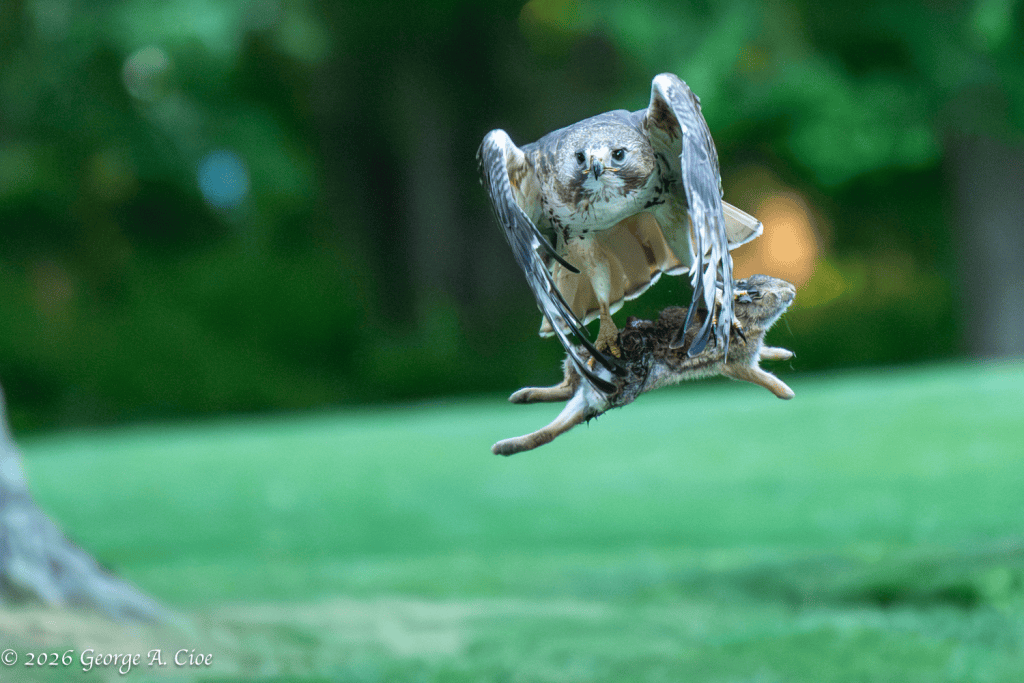
Eventually the hawk decided our little audience had become a bit too interested.
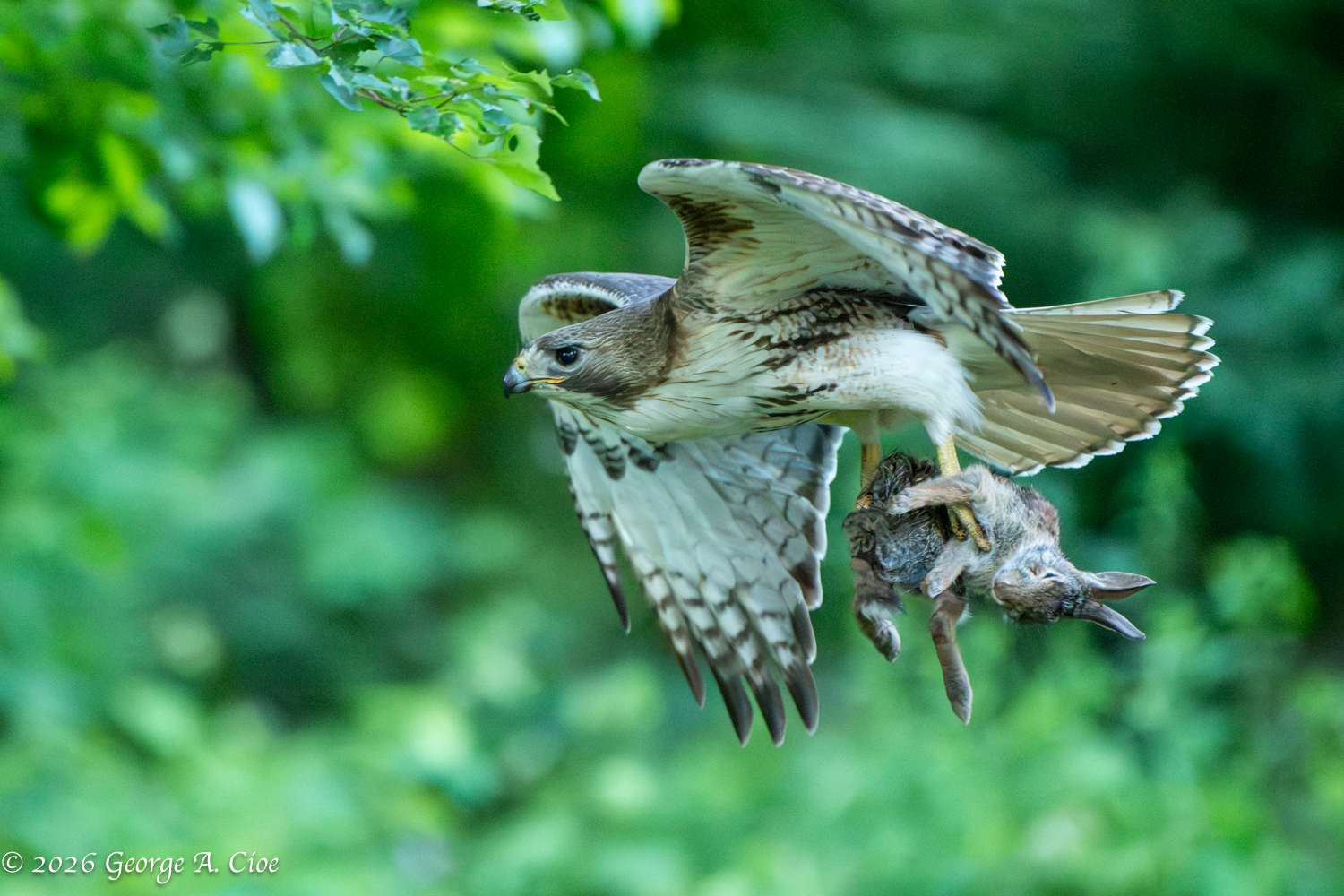
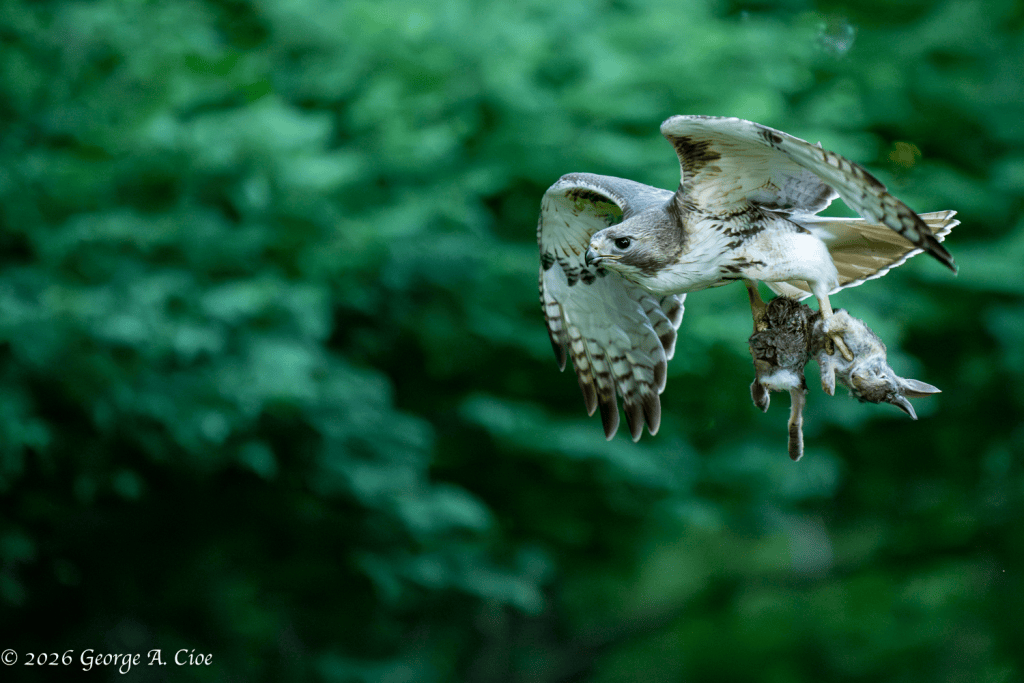
It spread those magnificent wings.
Lifted effortlessly from the lawn.
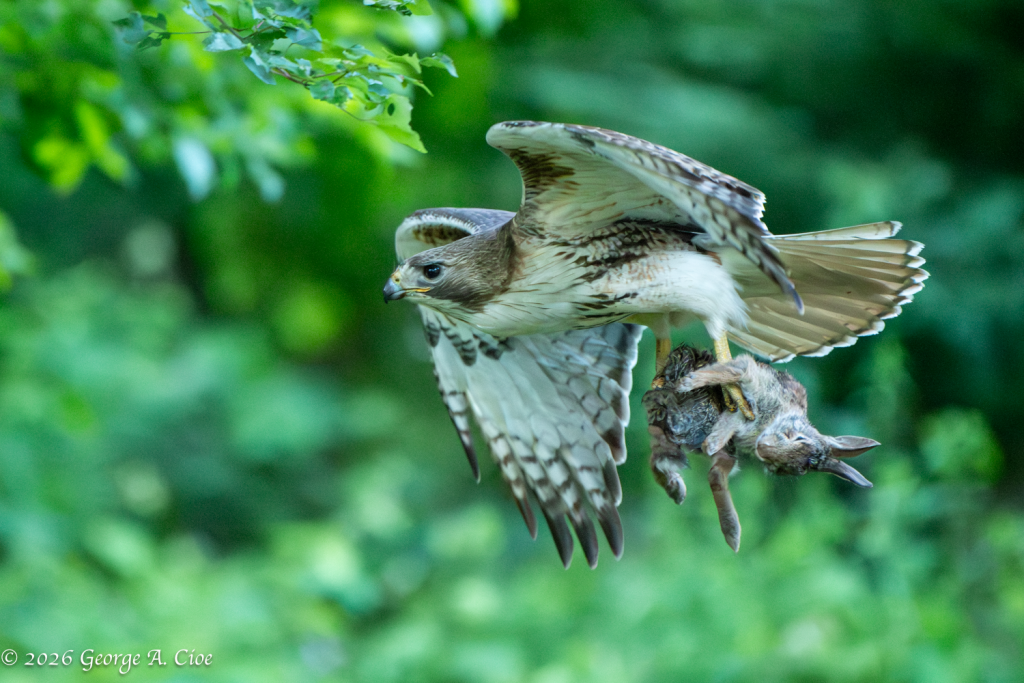
And flew directly past the deck.
Not over us.
Past us.
Close enough for everyone to appreciate just how large it really was.
The rabbit hanging beneath it.
Talons locked.
Wings glowing in the evening light.
For a moment it felt less like a bird passing by and more like a demonstration.
A final chapter in the evening’s lesson.
Then it disappeared into the trees where it could finish its meal in peace.
I don’t think any of us will soon forget that moment.
Certainly not the children.
And that matters.
Because if we want future generations to care about wildlife, they need opportunities to experience it.
Not through a screen.
Not through a textbook.
But face-to-face.
A hawk on a lawn.
An osprey over the river.
A heron stalking a shoreline.
A seal surfacing beside a fishing boat.
Moments that spark questions.
Questions that become curiosity.
Curiosity that becomes appreciation.
And appreciation that eventually becomes stewardship.
The desire to protect something because you’ve come to understand its value.
I’ve said it before, and I’ll probably say it another thousand times.
We live in an astonishingly beautiful place.
A place filled with wildlife stories unfolding every single day.
Most people simply walk past them.
The secret isn’t finding nature.
The secret is noticing it.
So go outside.
Look.
Listen.
Bring a child if you can.
Because somewhere nearby, another lesson is waiting.
Naturally.
I’d love to share my posts with you. If you subscribe, they’ll come straight to your inbox—most days, like a little note from me to you. It means a lot to know you’re reading along.
Browse my complete art portfolio and shop for prints at imagesbygacioe.shop

Leave a Reply