
One of the greatest gifts a teacher can give you is not an answer.
It’s a different way of seeing.
Wednesday night I watched Don Toothaker’s webinar, “Using Reflections in Our Compositions.” Near the end, Don encouraged us to go back through our photographs. Revisit them. Discover them again. His point was simple: as photographers grow, so do the images we’ve already captured.
That challenge stayed with me.
So I opened my Lightroom catalog and traveled back to last year’s Hunt’s Photo Adventure in Yellowstone National Park.
There it was.
A photograph I had almost forgotten.
Not of a bison.
Not of a grizzly.
Not of the Grand Canyon of the Yellowstone.
Just the Yellowstone River.
Or so I thought.
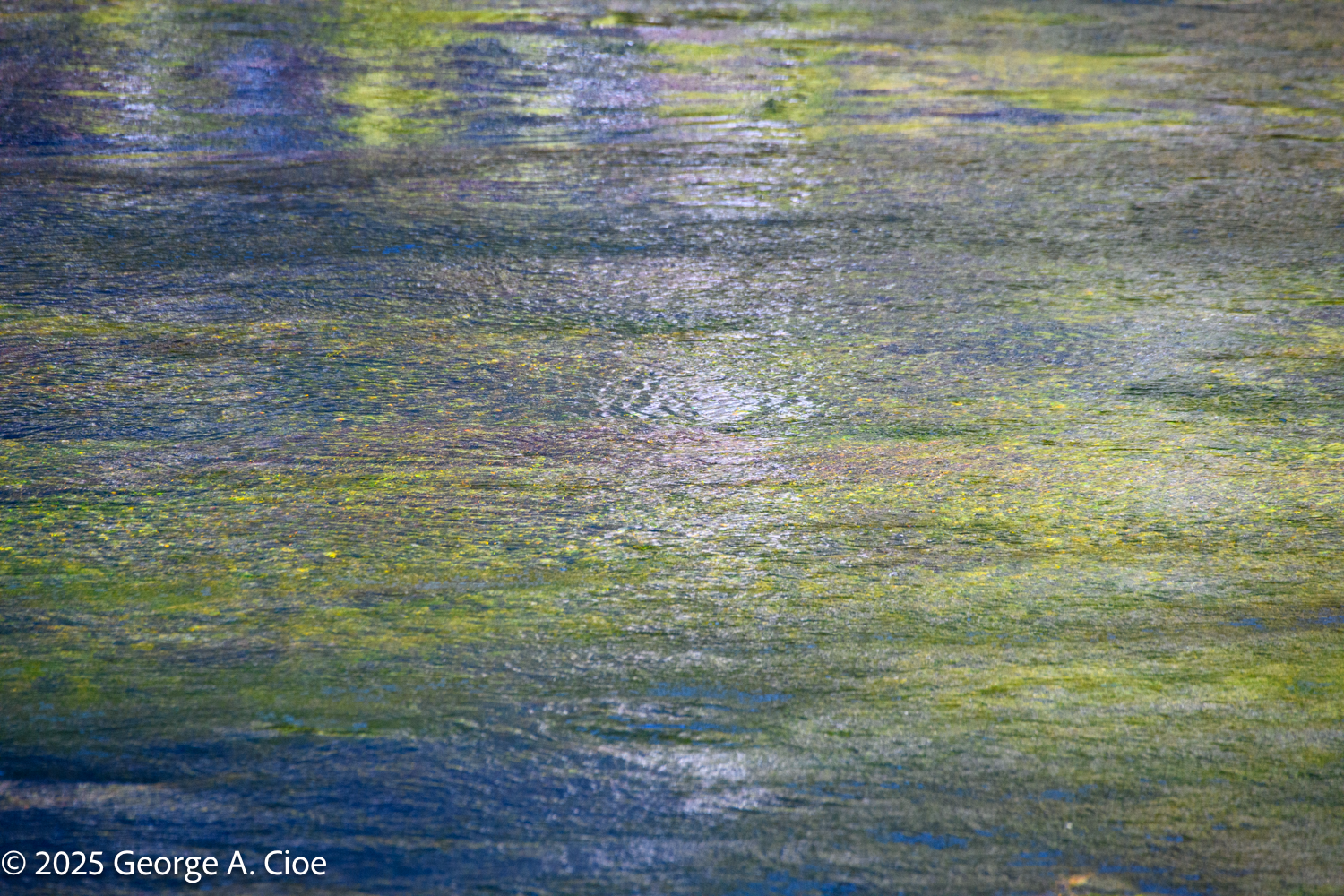
When I made the image last year, I appreciated the colors.
This week…
I saw something entirely different.
I wasn’t looking at water anymore.
I was looking at a painting.
A soft breeze skimmed across the river while the Yellowstone’s powerful current continued its endless journey downstream. Those two invisible forces collided, breaking the reflected treeline into thousands of shimmering fragments.
The greens became brushstrokes.
The blues became shadows.
The golds melted into one another like fresh oil paint still drying on a canvas.
The surface transformed into a living mosaic.
It wasn’t merely a reflection.
It was an impression.
Nature had become an Impressionist.
Photography has taught me that cameras don’t simply capture subjects.
They capture possibilities.
Sometimes we aren’t ready to see those possibilities until months—or even years—later.
The photograph hasn’t changed.
The photographer has.
That realization excites me.
It reminds me that photography is not about collecting pictures.
It’s about cultivating vision.
Every walk.
Every conversation.
Every workshop.
Every mistake.
Every teacher.
Every image.
They quietly reshape how we see the next photograph…
…and sometimes the last one.
I think that’s why reflections fascinate me.
They are faithful enough to reveal reality, yet fluid enough to reinvent it.
Every ripple tells the truth while simultaneously creating something entirely new.
The river becomes both mirror and artist.
As photographers, we spend endless hours learning aperture, shutter speed, composition, and light.
But eventually those technical skills become something more.
They become a language.
A language that allows us to recognize beauty where we once saw only scenery.
So thank you, Don.
Not just for teaching reflections.
But for reminding me that our best photographs are not always the ones we take tomorrow.
Sometimes they’re the ones waiting quietly in yesterday’s catalog, hoping we’ve grown enough to finally see them.
That’s photography.
And that’s art.
Naturally.
I’d love to share my posts with you. If you subscribe, they’ll come straight to your inbox—most days, like a little note from me to you. It means a lot to know you’re reading along.
Browse my complete art portfolio and shop for prints at imagesbygacioe.shop


Leave a Reply