

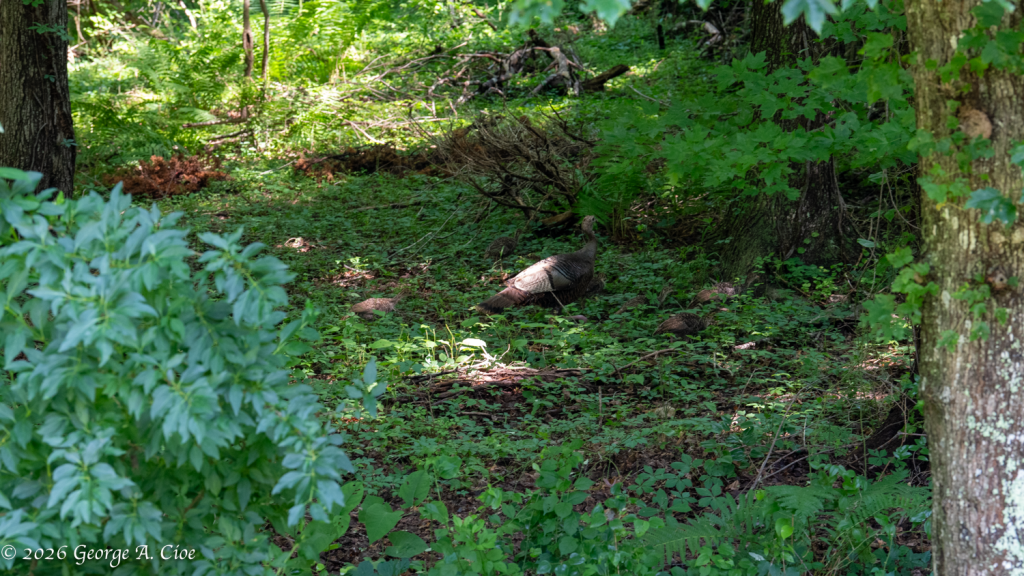
She arrived right on schedule.
Not because I had invited her.
Because motherhood doesn’t recognize calendars.
It recognizes thirst.
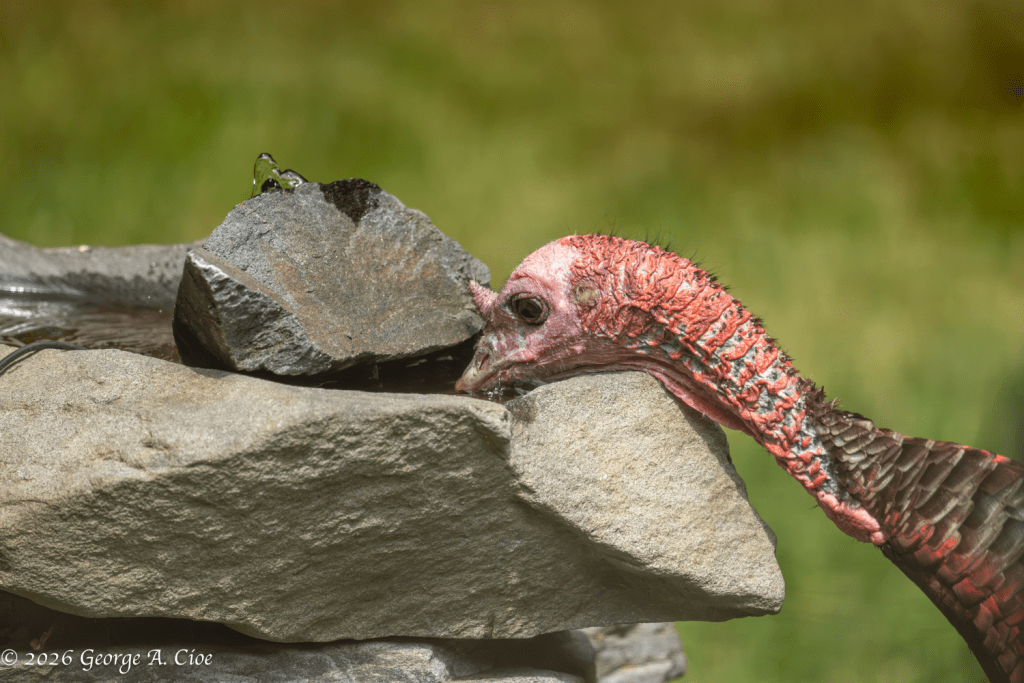
For the past several weeks, a lone Wild Turkey hen has made regular visits to the little bird bath I built from stacked granite stones and a tiny solar bubbler. The water dances in the sunlight just enough to catch the attention of every feathered traveler in the neighborhood.
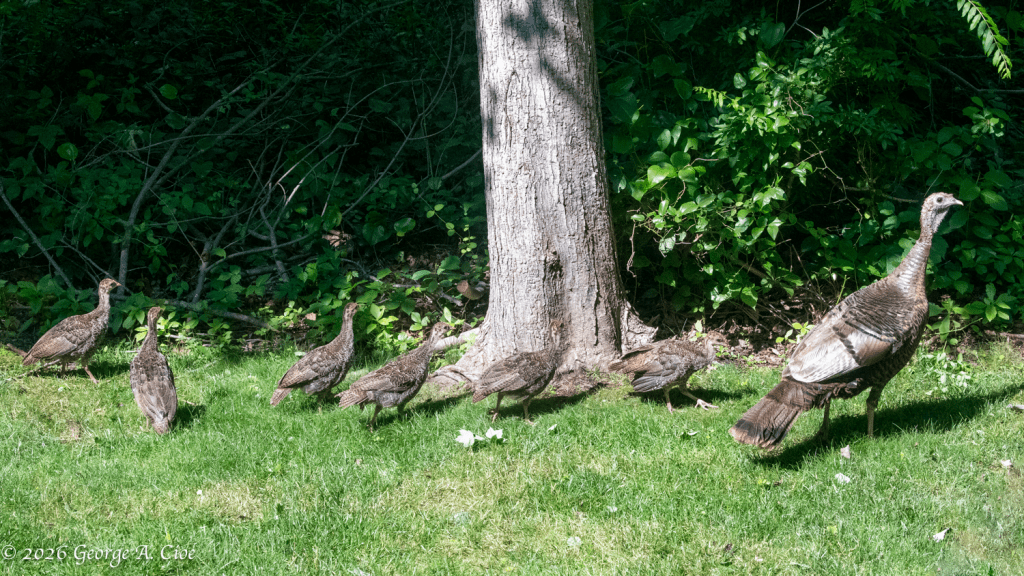
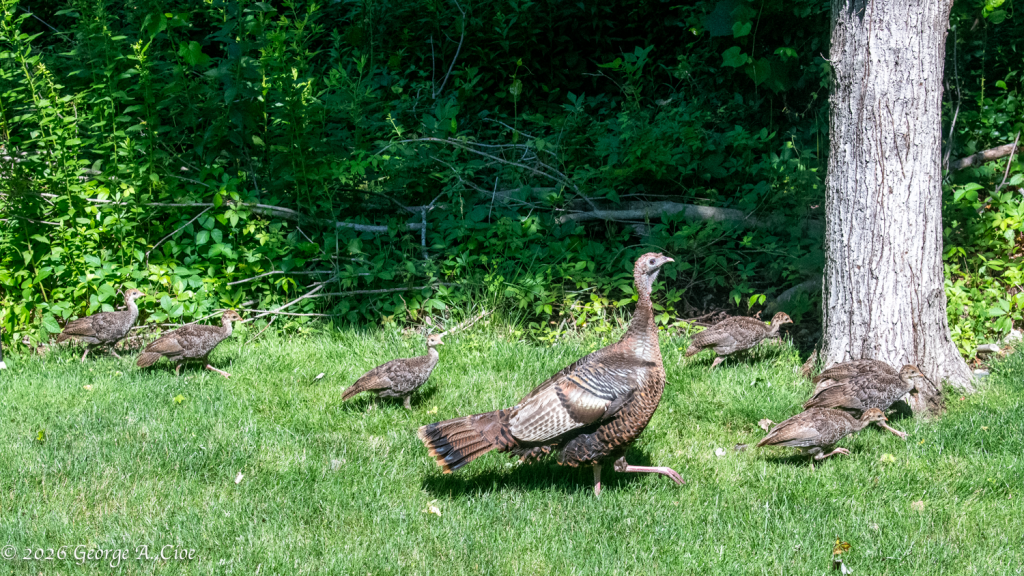
This morning she brought company.
Six little reasons why she has looked so tired lately.
Six poults.
Tiny versions of their mother with impossibly long legs, oversized feet, and expressions that suggested every blade of grass contained an unsolved mystery.
They fanned out across the lawn.
Not wandering.
Orbiting.
Like electrons circling a nucleus.
One would dart toward a bug.
Another would investigate a pebble.
A third would stop because…well…apparently a leaf deserved a thorough inspection.
Then, almost magically, they’d drift back toward Mom before setting off on another expedition.
If you’ve ever tried herding six toddlers through a supermarket, you already understand the assignment.
Only these toddlers could disappear into grass that barely reached my ankles.
Nature has equipped young wild turkeys with camouflage so effective that once they freeze, they simply vanish. Hawks, foxes, coyotes, bobcats—every predator in the woods would love turkey for breakfast. Survival depends on disappearing.
And on Mom.
She never stopped watching.
Not once.
While the poults pecked at insects, seeds, berries, and tender shoots—foods packed with the protein they need to grow—she was scanning.
Left.
Right.
Behind.
Above.
Always above.
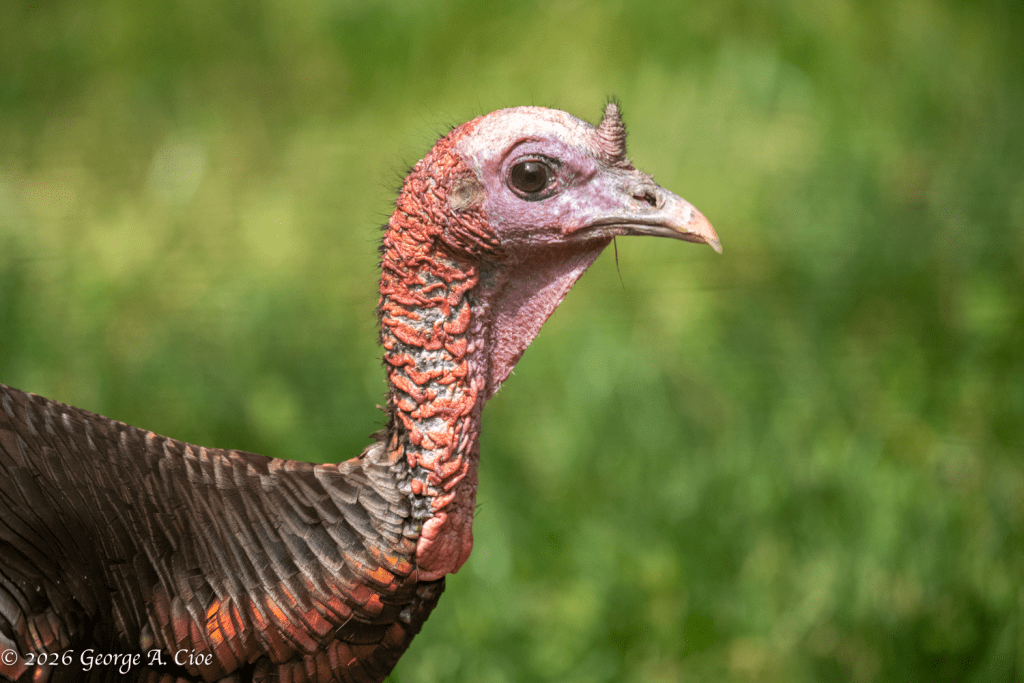
Every few seconds her head would rise high above the grass, eyes searching for movement.
Motherhood is apparently a full-time security job with no coffee breaks.
I couldn’t help noticing something else.
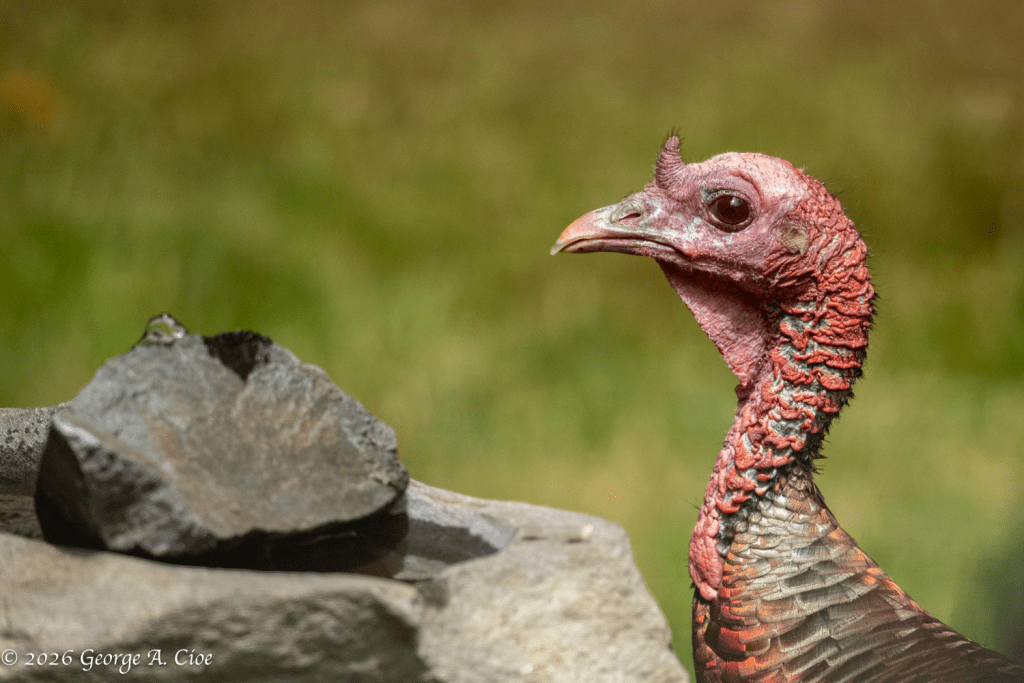
She looked…unfinished.
Her feathers were worn and uneven, with patches that seemed oddly disheveled.
Far from being unhealthy, she was simply paying the annual price of raising a family.
Wild turkeys replace every feather on their bodies each year during a complete molt, one of the most energy-demanding events in a bird’s life. Most birds begin shortly after breeding season ends.
Successful mothers are different.
They postpone the process.
Incubating eggs for nearly a month leaves a hen depleted. She eats very little during that time and loses significant body weight. Once the poults hatch, every ounce of energy belongs to them.
Molting can wait.
Only after her chicks are safely following her does she begin replacing her feathers, often completing the process faster than other birds so she’ll have a fresh insulating coat before winter arrives.
Even in the bird world…
Mothers put themselves last.
As the family crossed the yard, the poults seemed blissfully unaware of danger.
Mom was aware enough for all seven of them.
Then, without warning, she made a quiet movement I barely noticed.
No alarm call.
No panic.
Just a subtle change in posture.
Instantly, all six poults abandoned whatever earth-shattering investigation they had been conducting and flowed toward the edge of the woods.
Within seconds…
Gone.
Not hidden.
Gone.
I knew exactly where they had entered the undergrowth.
I stared right at the spot.
Nothing.
Mother Nature had pulled the camouflage blanket over every one of them.
Standing there with a camera around my neck, I realized I had witnessed something far greater than a family of wild turkeys.
I had witnessed one of life’s oldest promises.
The promise that every generation makes to the next.
“Stay close.”
“Learn from me.”
“I’ll keep watch while you discover the world.”
Maybe that’s why stories about mothers resonate so deeply.
Whether the child has feathers, fur, or fingerprints…
The language is remarkably similar.
It’s spoken with vigilance instead of words.
With sacrifice instead of recognition.
With love so instinctive…
…that even a wild turkey understands it perfectly.
Naturally.
I’d love to share my posts with you. If you subscribe, they’ll come straight to your inbox—most days, like a little note from me to you. It means a lot to know you’re reading along.
Browse my complete art portfolio and shop for prints at imagesbygacioe.shop

Leave a Reply