


A Narragraphy® About Birds, Birders, and the Fine Art of Losing Your Mind
I love birds.
I really do.
I photograph them.
Study them.
Watch them hunt.
Watch them fly.
Watch them eat.
And occasionally watch them stand in exactly the same place doing absolutely nothing for forty-five minutes.
I am fascinated by them.
But bird identification?
That is slowly driving me insane.
All right.
More insane.
Because there is apparently no such thing as:
“It’s a little shorebird.”
Good Lord.
Don’t ever say that around a serious birder.
People will gasp.
Binoculars will drop.
Somebody will reach for Sibley.
Because it isn’t a little shorebird.
It’s a…
Semipalmated Something.
Or a…
Least Something.
Or a…
Western Something.
Or possibly a…
Short-Billed Something Else.
And the difference?
Well.
Look at the feather.
Which feather?
THAT feather.
Oh.
Of course.
How could I have missed it?
One bird has a slightly darker smudge behind its eye.
Another has legs that are approximately the color of Dijon mustard instead of Grey Poupon.
One bill curves down.
Another bill curves down…
slightly less.
One has a primary projection that extends beyond something else I didn’t even know had a name.
And suddenly we’re not looking at a Muted Whatever.
We’re looking at a Lesser Dusky Eastern Whatever.
Entirely different bird.
Naturally.
So I decided it was time for me to contribute something meaningful to ornithology.
I carefully studied these three photographs.
Most people would say they show the same bird.
Those people lack training.
I have discovered…
three entirely new species.
You’re welcome.
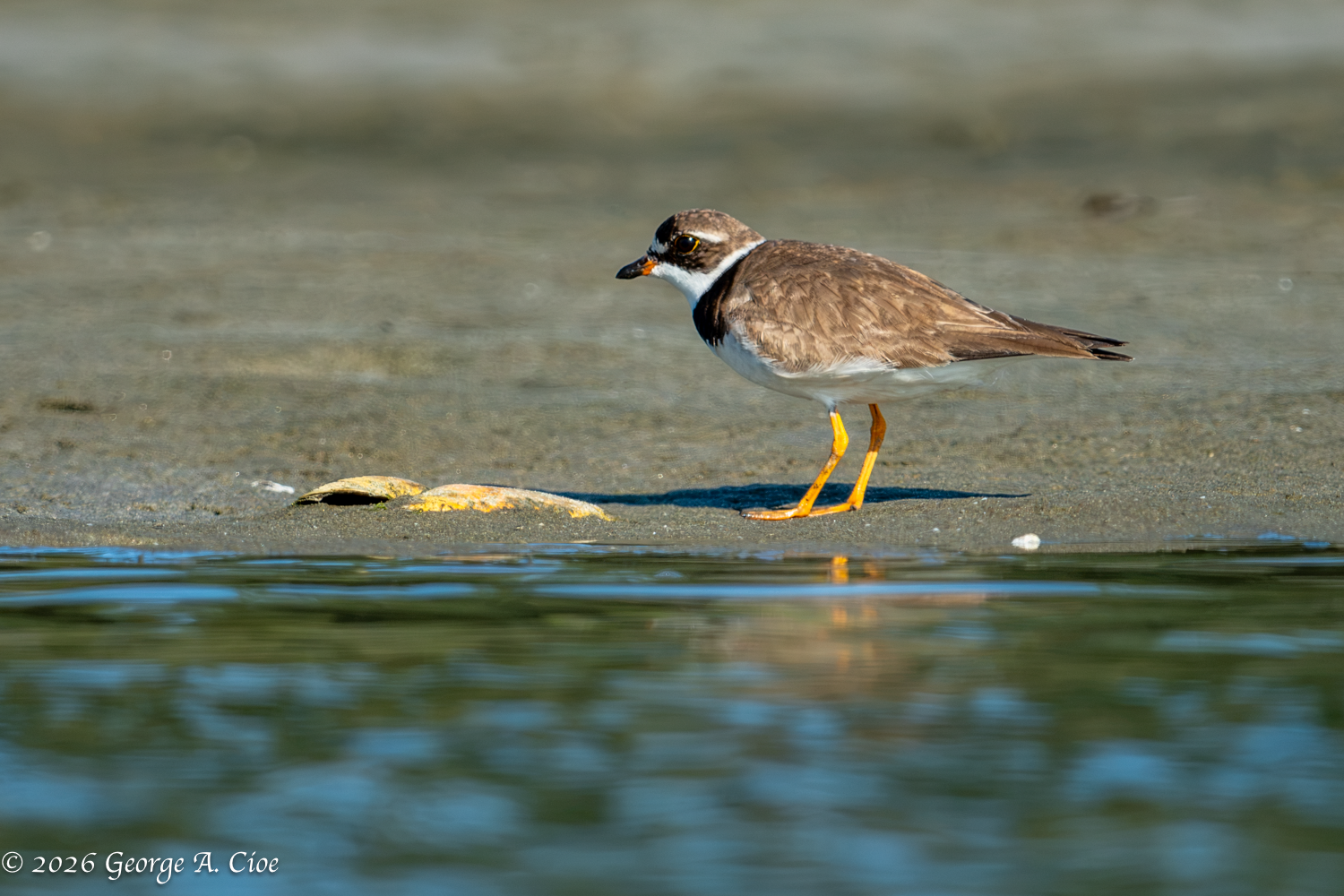
Photo One — “The Suspicious Look”
The Greater Side-Eyed Mud Inspector
Look closely.
The bird has turned its head.
That changes everything.
Notice the suspicious expression.
The Greater Side-Eyed Mud Inspector is distinguished by its ability to look directly at a photographer while conveying the unmistakable message:
“You have absolutely no idea what I am, do you?”
Correct.
But I’m learning.
Its plumage is remarkably similar to several other shorebirds because apparently evolution thought this would be hilarious.
Its preferred habitat is mudflat, marsh edge, tidal shoreline, and anywhere else where the photographer has left his field guide in the car.
Identification is relatively easy.
Unless there are other shorebirds around.
Then forget it.
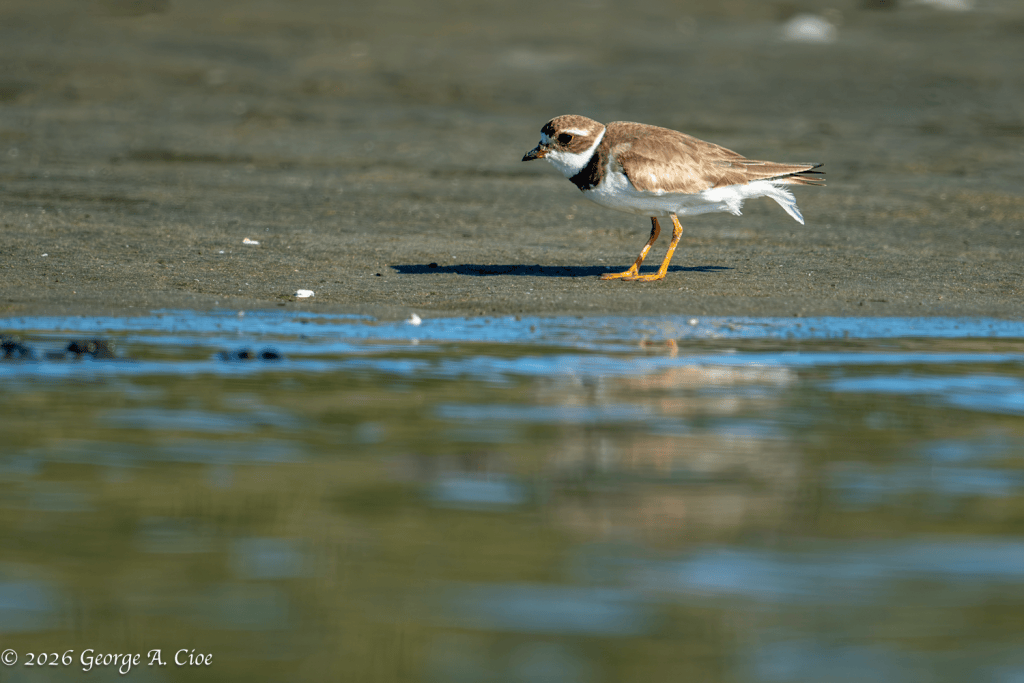
Photo Two — “Wait… Is That a Different Feather?”
The Lesser Greater Semi-Dusky Featherfluffer
Now we’re getting into advanced ornithology.
At first glance, you may think this is the Greater Side-Eyed Mud Inspector.
Amateur.
Look at the feathers.
One is…
fluffier.
I rest my case.
That single field mark clearly establishes this as the Lesser Greater Semi-Dusky Featherfluffer.
Please don’t confuse it with the Greater Lesser Semi-Dusky Featherfluffer.
Completely different bird.
The latter has a slightly more pronounced feather approximately three millimeters behind the other feather.
You know.
That one.
Experts can identify the difference instantly.
I require approximately 600 photographs, three field guides, Merlin, Google, and a friend named Don.
Photo Three — “I Give Up”
The Rhode Island Semi-Semi-Palmated Photographer Confuser
And here we have the rarest of the three.
The Rhode Island Semi-Semi-Palmated Photographer Confuser.
Notice the posture.
The body angle.
The bill.
The feathers.
And, most importantly, the bird has moved several inches.
Obviously…
new species.
The Rhode Island Semi-Semi-Palmated Photographer Confuser is particularly difficult to identify because it has developed an extraordinary defensive adaptation.
The moment you believe you know what it is…
It turns around.
Now the legs look different.
The bill looks longer.
The breast looks darker.
The wing looks shorter.
And you begin questioning every decision you’ve made since childhood.
Juveniles are worse.
Breeding plumage is worse.
Nonbreeding plumage is worse.
Molting birds?
Forget about it.
And just when you finally learn the distinguishing characteristics, some ornithologist publishes a paper announcing:
“Recent genetic evidence suggests these are actually two separate species.”
OH, COME ON!
I JUST LEARNED THIS ONE.
But that’s the funny thing about birding.
The very thing that drives me crazy is also what keeps pulling me deeper into it.
Because the details really do matter.
A feather.
A bill.
A leg color.
A tiny patch around an eye.
A behavior.
A movement.
A sound.
Things I wouldn’t have noticed years ago now stop me in my tracks.
Once upon a time, I would have looked across the river and said:
“There’s a bird.”
Now I see posture.
Plumage.
Behavior.
Light.
Habitat.
Feeding strategy.
Age.
Season.
And approximately 47 field marks that I will completely forget by tomorrow morning.
Photography has taught me to look.
Birding has taught me to look closer.
And nature keeps reminding me that the closer we look…
The more there is to see.
Which is wonderful.
Fascinating.
Extraordinary.
And completely maddening.
So tomorrow morning I’ll be back on the river.
Camera ready.
Long lens mounted.
Watching carefully.
Waiting for something I’ve never seen before.
Perhaps I’ll discover another species.
The extraordinarily rare…
Greater Rhode Island Red-Eyed, Yellow-Legged, Mud-Stomping, Side-Glancing, Feather-Fluffing, Photographer-Confounding Semi-Palmated Whatever.
I’ll know it when I see it.
Unless…
One feather is different.
Then we’re going to need a new name.
Naturally.
I’d love to share my posts with you. If you subscribe, they’ll come straight to your inbox—most days, like a little note from me to you. It means a lot to know you’re reading along.
Browse my complete art portfolio and shop for prints at imagesbygacioe.shop




Leave a Reply