
A National Wildlife Refuge Worth Slowing Down For


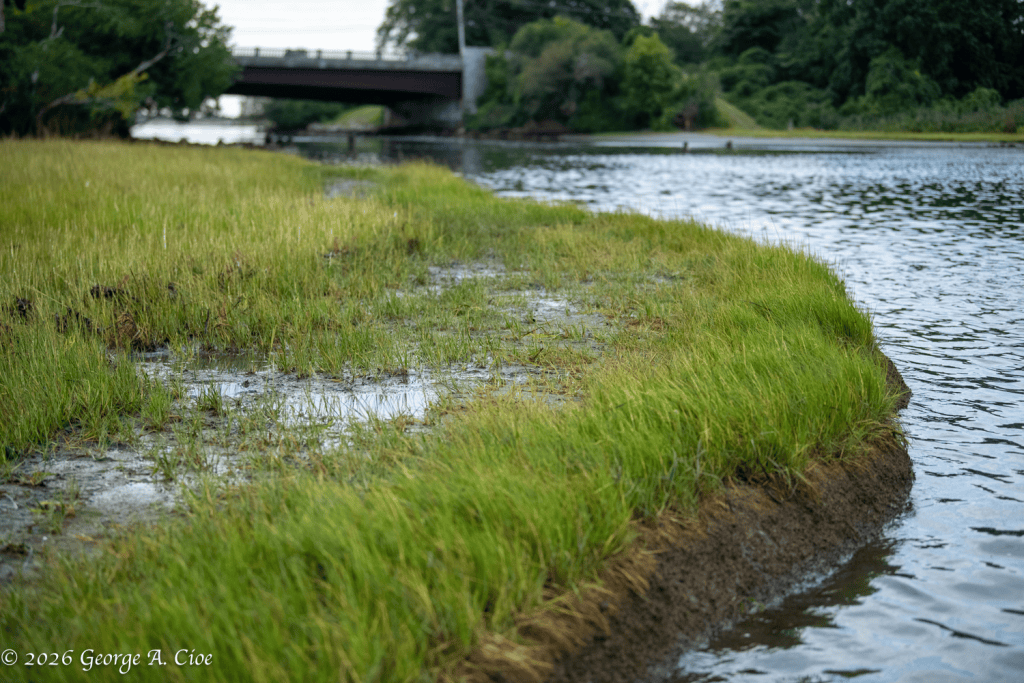







I call the Narrow River Narragansett’s Yellowstone.
Not because it has geysers.
Or mountains.
Or bison creating traffic jams.
But because, within this narrow ribbon of water, nature has gathered an astonishing amount of life, beauty, mystery, and wildness.
It is our wilderness without a distant drive.
Our Yellowstone close to home.
And part of this extraordinary place is protected as the John H. Chafee National Wildlife Refuge at Pettaquamscutt Cove.
That is not merely a nice name printed on a sign.
It is a national declaration that this place matters.
The refuge was established in 1973, originally to protect important wintering habitat for American Black Ducks. Today, its tidal salt marshes, forests, ponds, mudflats, and surrounding waters support an extraordinary variety of waterfowl, shorebirds, fish, mammals, and native plants. U.S. Fish and Wildlife Service, Narrow River Preservation Association
It is where people come to fish, boat, kayak, paddle, explore, and breathe.
It is where children discover that the world beneath the water is every bit as fascinating as the world above it.
It is where fishermen learn to read the tide, kayakers slip quietly into hidden coves, and boaters follow a channel that has carried generations of families toward the bay.
It is where birders search the marsh for movement.
And where photographers like me stand in the water before sunrise, waiting for the river to reveal something we did not know was there.
An Osprey may hover overhead.
A Great Egret may stalk the shallows.
A Great Blue Heron may stand so perfectly still that it becomes part of the landscape.
And just last week a pair of majestic Bald Eagles returned to winter on the river.
Cormorants, gulls, terns, ducks, shorebirds, deer, fish, crabs, eels, and countless smaller creatures depend upon this river and its surrounding marsh.
To us, the Narrow River is recreation.
To them, it is home.
That distinction matters.
Because a home cannot move when its shoreline disappears.
The Photographs Show What Is Happening
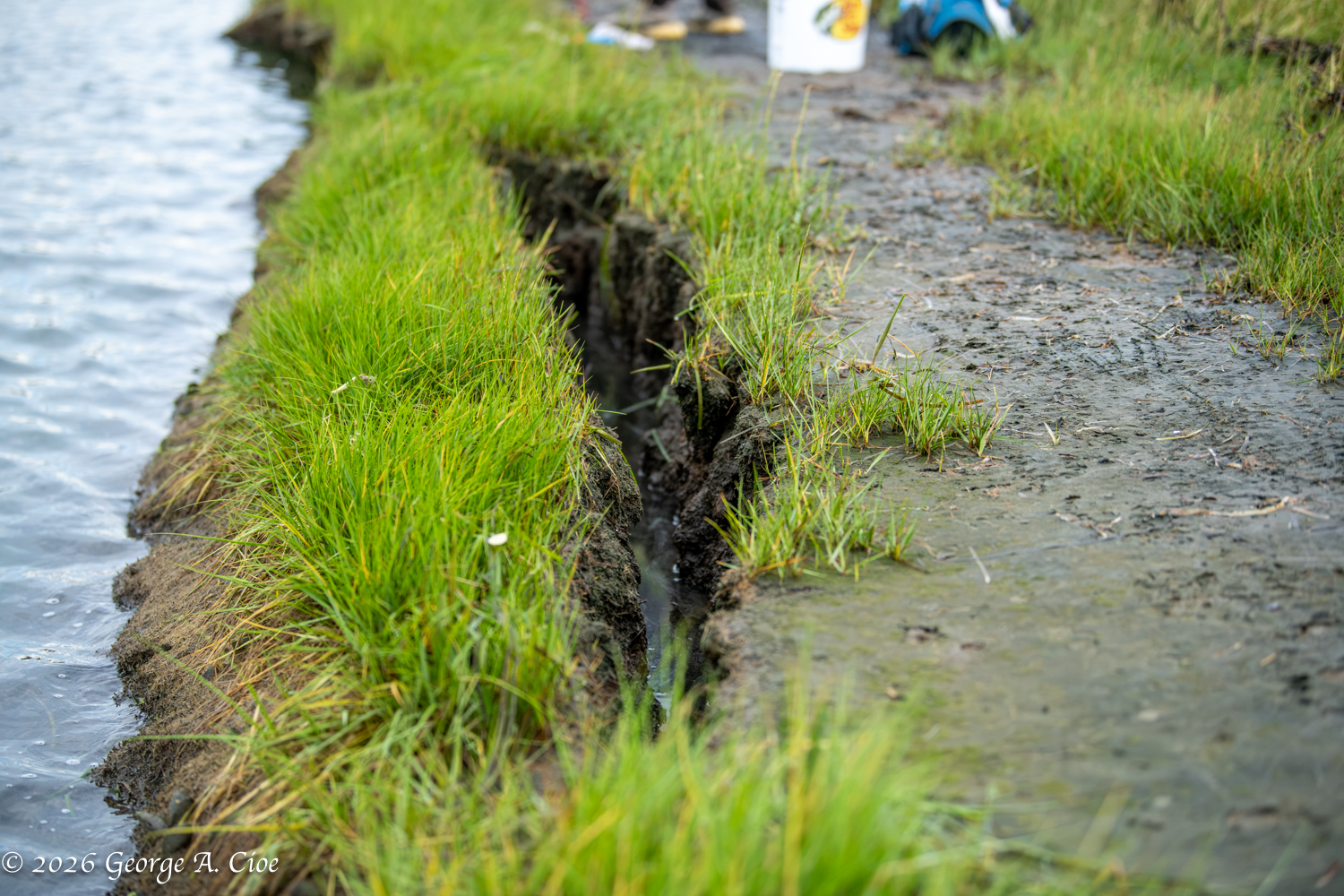
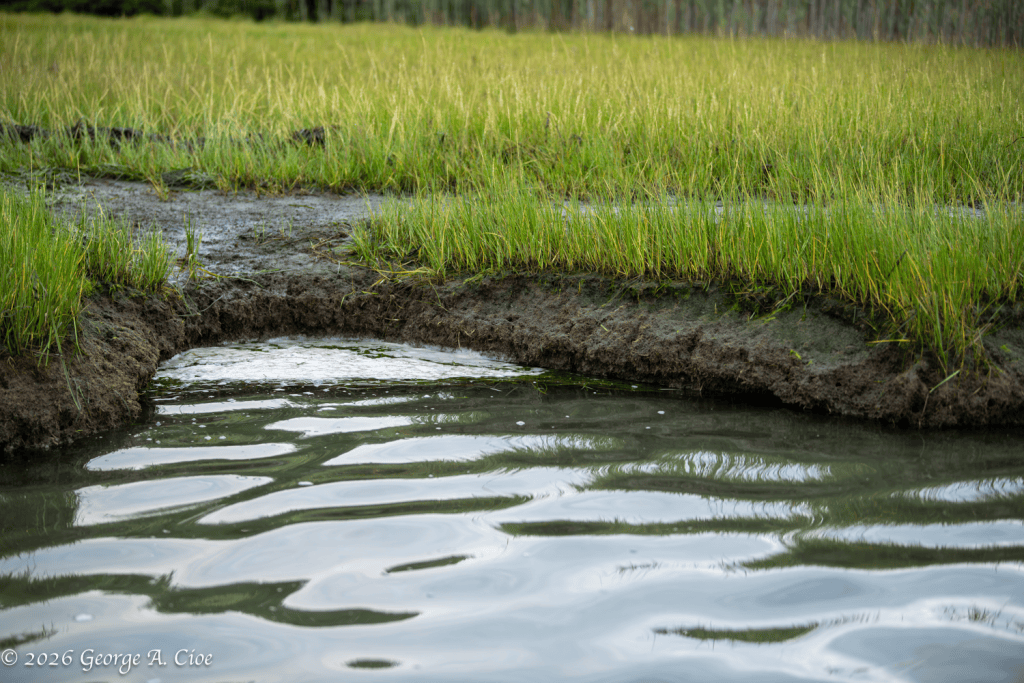
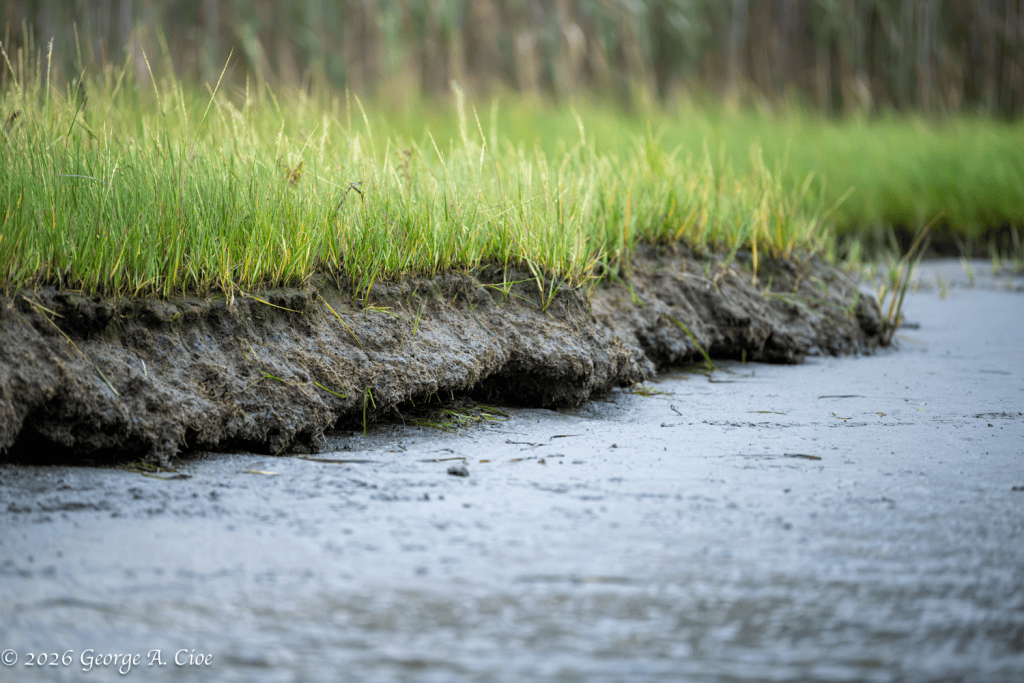
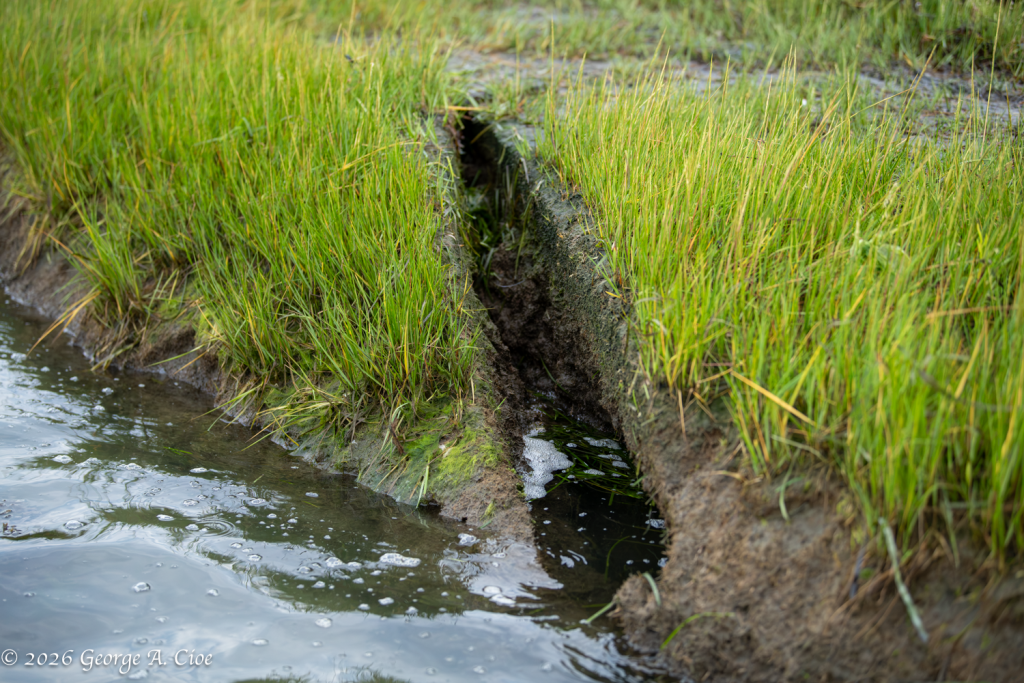
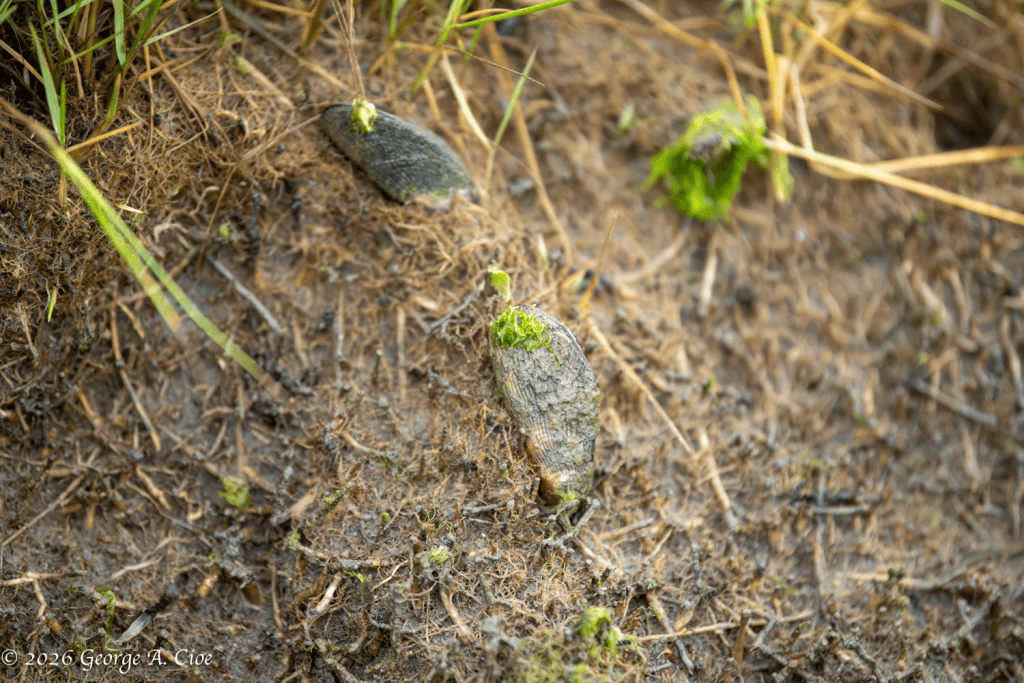
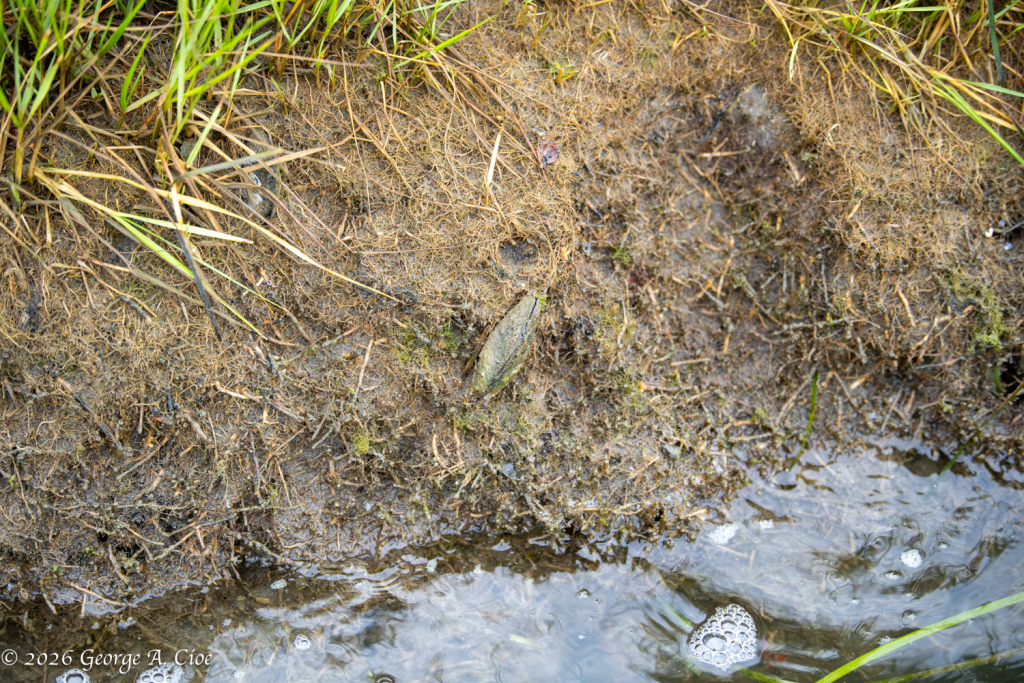
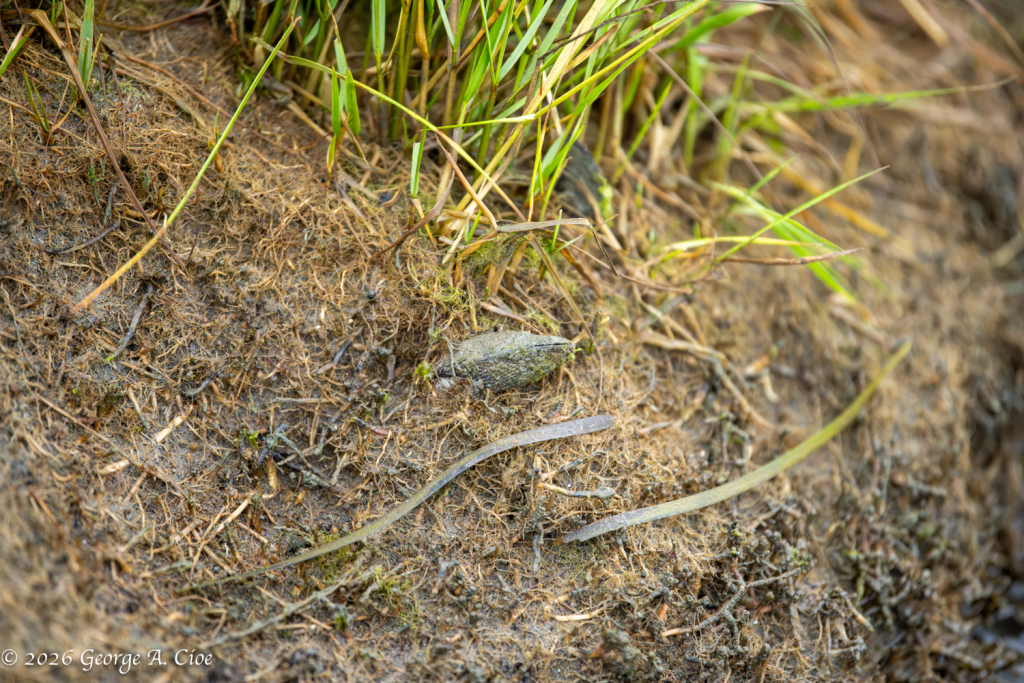
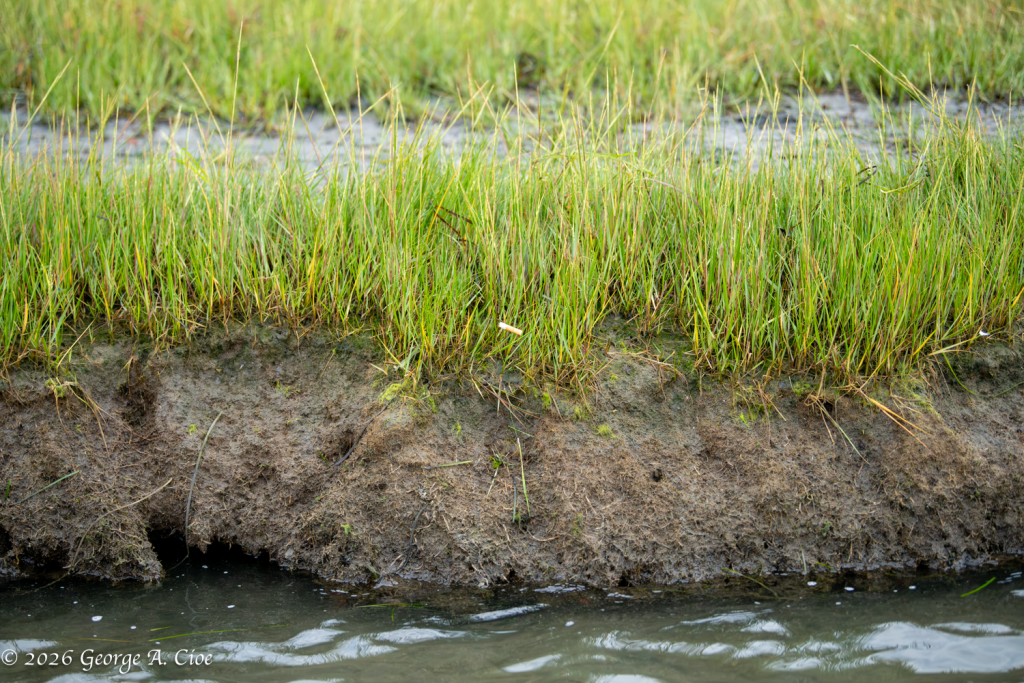
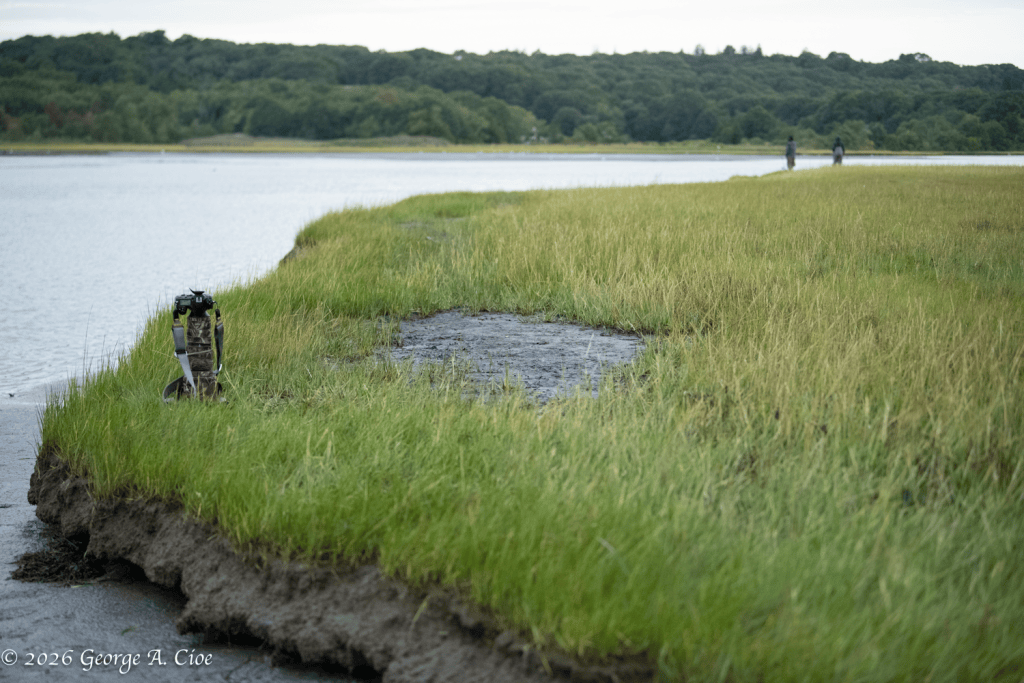
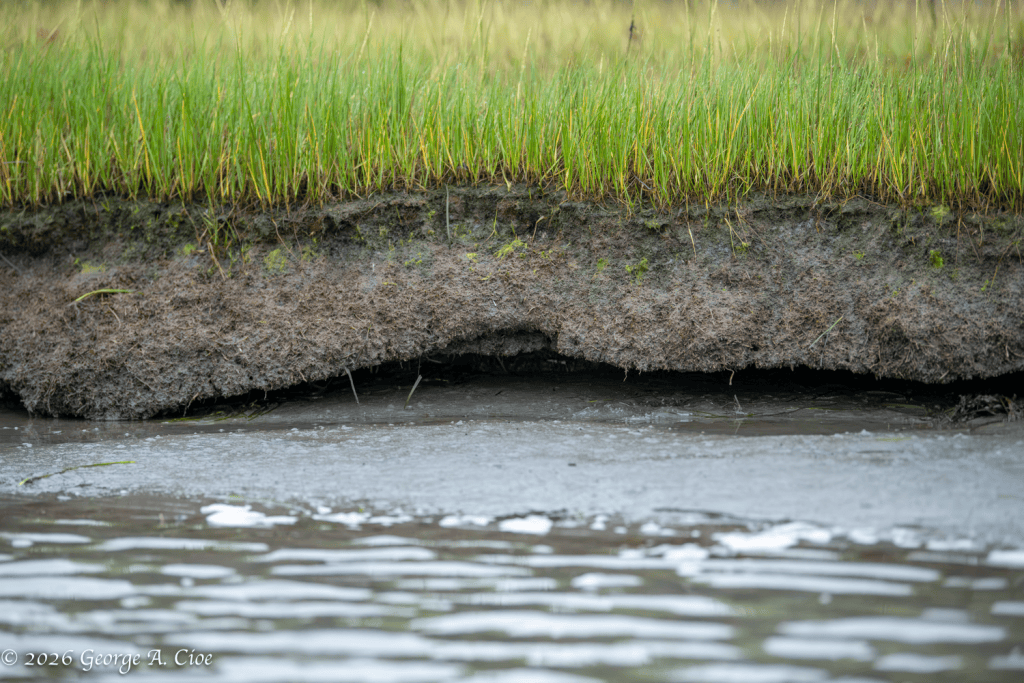
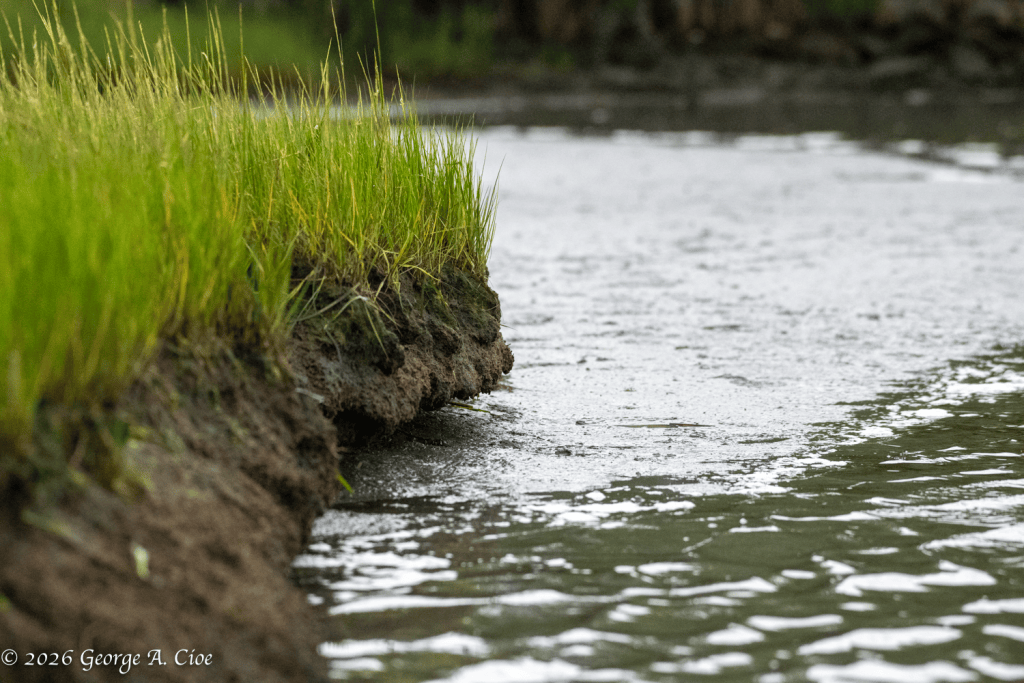
The edges of the marsh are being undercut.
Great mats of peat and vegetation hang above the water with increasingly little beneath them. Deep fractures are opening behind the bank. Eventually, entire sections will break loose, collapse, and be carried away.
What took decades to form can disappear in a moment.
Tides, currents, storms, sea-level rise, and other natural forces all shape a coastal river. But boat wakes add repeated energy to an already vulnerable shoreline.
Each wake arrives.
Strikes the bank.
Pulls material away.
Then another comes.
And another.
One wake may appear harmless.
Hundreds are not.
Thousands are certainly not.
A wake does not end when it passes the boat that created it. It continues outward until its energy is absorbed somewhere.
Too often, that somewhere is the marsh.
And this is not simply any marsh.
These photographs document erosion beside a place that our nation has formally recognized as valuable wildlife habitat.
That should change how we see the damage.
A collapsing bank inside or beside a national wildlife refuge is not merely a little less land at the river’s edge. It is a loss of feeding habitat, protective cover, native vegetation, nesting opportunity, and the living foundation upon which the marsh depends.
A Refuge We Experience from the Water
There is something unusual about the John H. Chafee National Wildlife Refuge.
It does not have an extensive public trail system. Most people experience its beauty from the Narrow River itself—by kayak, canoe, paddleboard, or boat—or from places such as Middlebridge and Sprague Bridge.
The U.S. Fish and Wildlife Service recognizes fishing, wildlife observation, photography, environmental education, interpretation, and appropriate hunting as priority wildlife-dependent uses. It also acknowledges that most wildlife observation and photography here occur from motorized and nonmotorized vessels on the Narrow River and in Pettaquamscutt Cove. U.S. Fish and Wildlife Service compatibility review
The water is our pathway into the refuge.
That is a privilege.
And it comes with responsibility.
A national wildlife refuge is not a playground with animals decorating the perimeter. It is a home for wildlife that people are permitted to experience when our activities remain compatible with the refuge’s conservation purpose.
Responsible boating belongs here.
Fishing belongs here.
Kayaking belongs here.
Birding and photography belong here.
But enjoyment must not gradually destroy the very habitat that makes those experiences possible.
Slowing Down Is Conservation
The Narrow River’s shallow water, confined channels, low marsh islands, and exposed banks make boat speed especially consequential.
Slowing down is not merely a courtesy to fishermen, kayakers, paddleboarders, birders, photographers, and shoreline residents.
It is an act of conservation.
Less speed means less wake energy.
Less wake energy means less pressure on vulnerable banks.
Less erosion means more marsh, more vegetation, healthier habitat, and a better chance for the river to endure.
This is not an argument against boating.
It is an appeal for better boating.
A person can love boating and still recognize that there are places where speed does not belong.
Surely, a narrow tidal river passing beside nationally protected wildlife habitat is one of them.
The Meadows Beneath the Water
The loss of submerged aquatic vegetation, including eelgrass and other underwater plant communities, is equally troubling.
These are not weeds beneath the surface.
They are underwater meadows.
They provide shelter for juvenile fish and invertebrates, help stabilize sediment, improve water quality, and support the food chain upon which larger fish and birds depend.
The importance of these habitats is not theoretical. In 2016, the Rhode Island Coastal Resources Management Council and its partners undertook a significant restoration project within the refuge. Material dredged between Middlebridge and Sedge Island was used to raise deteriorating marsh surfaces, while selected dredging areas were designed to create conditions suitable for eelgrass habitat.
That project was intended to help the marsh withstand sea-level rise, prolonged flooding, vegetation loss, and future storms. It represented a considerable public investment in restoring this nationally significant habitat. Rhode Island CRMC
We should not invest millions restoring a marsh while allowing avoidable human-generated wave energy to keep striking its edges.
Restoration and prevention must work together.
Strength in Lavender
Then, at the river’s edge, I found something remarkably delicate.
Tiny sprays of lavender-colored flowers rose above the marsh grass.
The plant appears to be Carolina sea lavender, also called marsh rosemary. It is a salt-tolerant native perennial adapted to the demanding boundary between land and tidal water.
Imagine that.
A flower capable of living where saltwater regularly covers the ground.
It survives because it belongs here.
But even the toughest native plant cannot bloom on a bank that has been washed away.
That little flower said something important to me.
Strength does not always look powerful.
Sometimes strength looks like tiny purple blossoms standing at the edge of an eroding national wildlife refuge.
The River Does Not Recognize Jurisdictional Lines
Here is where protection becomes complicated.
The U.S. Fish and Wildlife Service manages the refuge lands and habitats. But the Service itself notes that recreational boating generally occurs on adjacent state waters and that it does not have boating enforcement authority over those waters.
The river passes through and alongside multiple governmental jurisdictions.
But a wake does not know whether it was created in federal, state, or municipal territory.
A fish does not know where one agency’s authority ends and another begins.
An eroding bank cannot call the correct office.
This is precisely why the Narrow River needs a coordinated response involving the U.S. Fish and Wildlife Service, Rhode Island Department of Environmental Management, Coastal Resources Management Council, local harbormasters, municipal governments, law-enforcement agencies, conservation organizations, marinas, boating groups, fishermen, and residents.
No single agency controls every part of the problem.
Together, however, they can address it.
Love the River. Slow the Wake. Leave No Trace.
The National Park Service helped make Leave No Trace part of our national vocabulary.
The Narrow River needs a similarly recognizable conservation ethic:
Love the River. Slow the Wake. Leave No Trace.
We need consistent signage.
Clear speed guidance.
Responsible enforcement.
Boater education.
Shoreline monitoring.
Habitat restoration.
Public reporting of serious damage.
And a sustained campaign explaining why reduced speed matters.
Most people will do the right thing when they understand what is at stake.
They need to know that slowing down protects more than another person’s comfort. It protects marsh banks, native vegetation, fish nurseries, feeding grounds, nesting areas, water quality, and a national wildlife refuge.
Conservation is not something we do instead of enjoying the Narrow River.
Conservation is what makes enjoying it possible.
We do not have to choose between recreation and protection.
We must choose responsible recreation so there will still be something left to enjoy.
Yellowstone became precious because Americans eventually understood that some places are too extraordinary to take for granted.
The Narrow River deserves that same realization.
It is smaller.
Quieter.
Closer.
But part of it belongs to a national network of lands preserved for wildlife and for future generations of Americans.
That makes it ours in the most important sense:
Not ours to consume.
Ours to safeguard.
Slow down.
Look closely.
Respect the marsh.
Protect the vegetation.
Share the water.
Leave no trace but appreciation.
Because Narragansett’s Yellowstone does not need us to love it only when the water is calm, the birds are plentiful, and the light is beautiful.
It needs us to love it enough to act.
I’d love to share my posts with you. If you subscribe, they’ll come straight to your inbox—most days, like a little note from me to you. It means a lot to know you’re reading along.
Browse my complete art portfolio and shop for prints at imagesbygacioe.shop




Leave a Reply