


Nature is an author.
But she has an unusual way of telling stories.
Sometimes she writes something beneath your feet that reminds you of something you saw thousands of miles away, decades—or perhaps only years—before.
That happened to me this morning on the Narrow River.
The tide was out.
I was walking across the exposed sand, probably doing what I usually do.
Looking for birds.
Osprey.
Egrets.
An Eagle would certainly do.
Smiles.
Then I looked down.
And stopped.
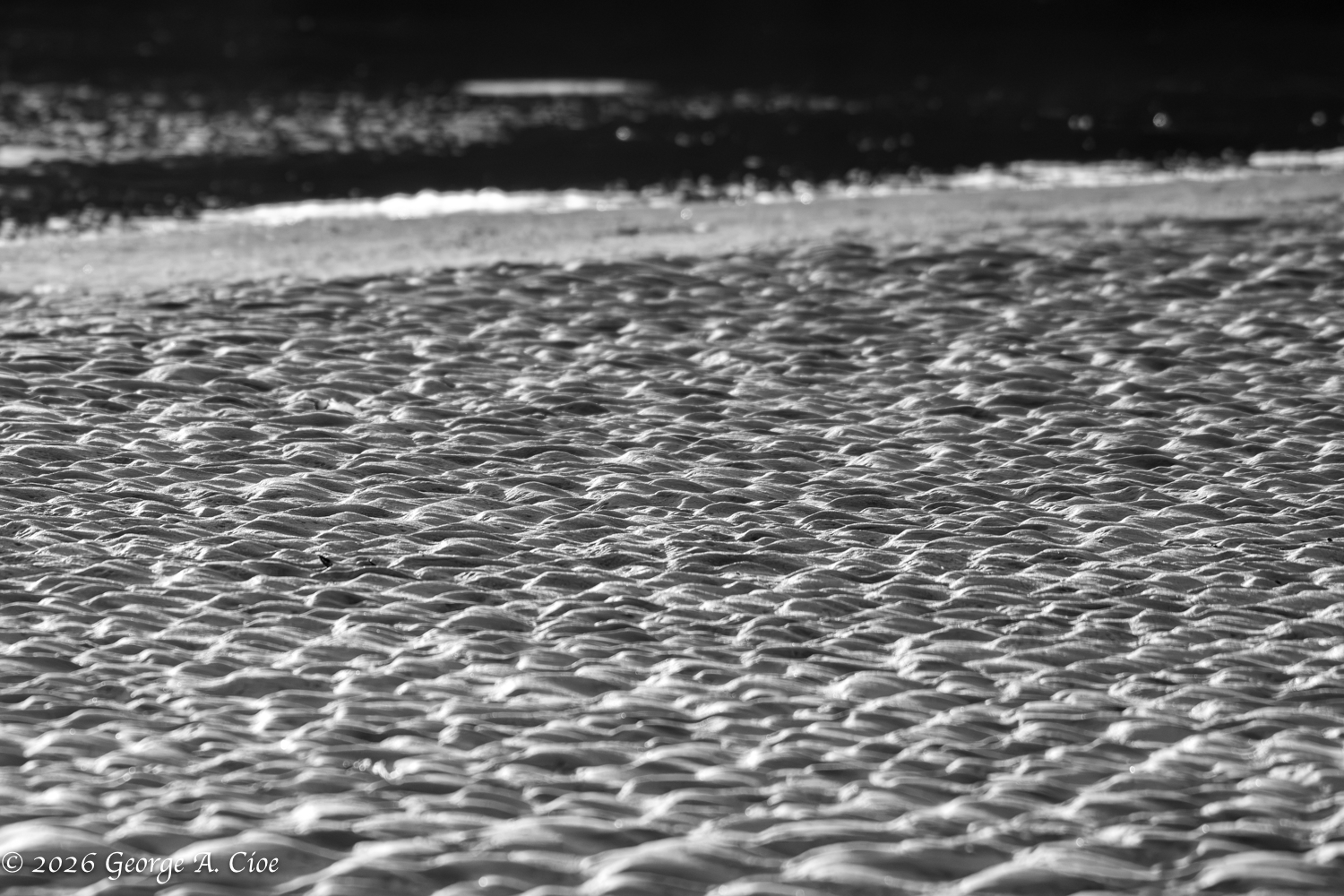
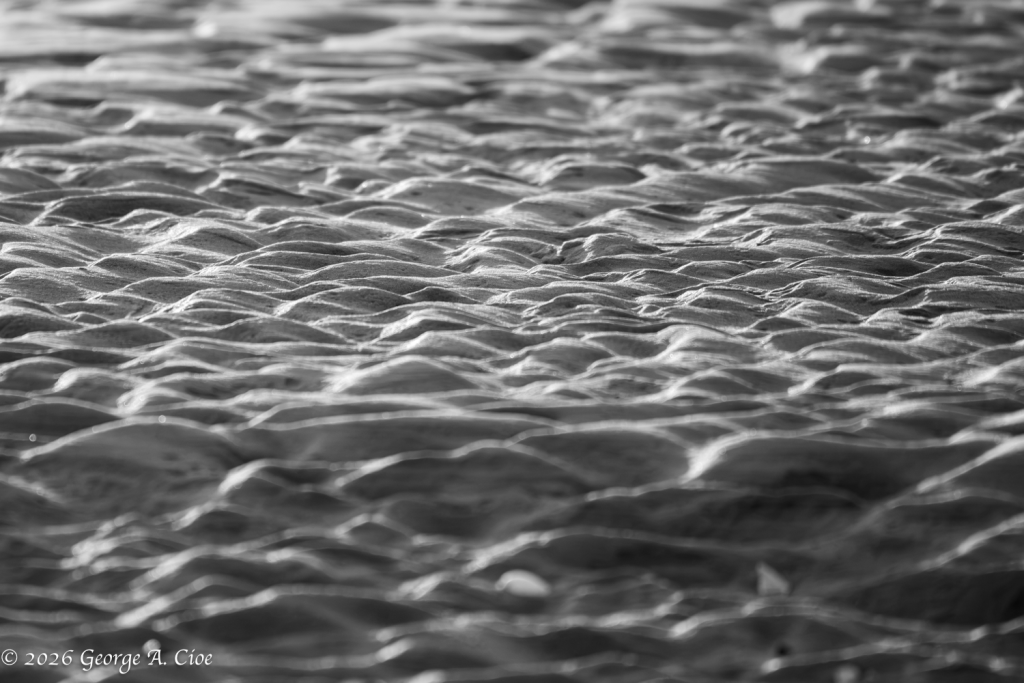
The sand was covered with thousands of little ripples.
Ridges.
Hollows.
Curves.
One after another after another, stretching across the tidal flat.
I raised my camera.
And suddenly I wasn’t on the Narrow River anymore.
I was back in Costa Rica.
Years ago, I was fishing offshore from Quepos when we encountered something I have never forgotten.
Dolphins.
Not ten.
Not fifty.
Not even hundreds.
Thousands of them.
A superpod.
They seemed to fill the ocean.
Backs broke the surface everywhere I looked. One would rise, arc and disappear while another appeared beside it. Then another beyond that. And another.
There was no place to look where the ocean wasn’t moving.
My God.
It took your breath away.
I remember standing there trying to comprehend the scale of what I was witnessing.
You couldn’t.
There were simply too many.
The ocean itself seemed alive.
Thousands of animals traveling together, their movements individual yet somehow connected—an enormous flowing congregation of wildness.
I have never seen anything like it since.
And yet…
there it was again.
On the Narrow River.
In the sand.
Not dolphins, of course.
Memory.
The ripples before me had that same extraordinary rhythm.
Thousands of rounded forms seemed to rise from the surface, one behind another, as though an immense pod were moving through an ocean frozen in time.
That’s the wonderful thing about nature.
She borrows from herself.
The curve of a wave becomes the curve of a dune.
A branching river resembles the veins of a leaf.
Clouds become mountains.
Sand becomes water.
And on one particular morning, a Rhode Island tidal flat became an ocean off Costa Rica filled with dolphins.
Scientifically, what I was photographing was the work of moving water.
Tidal currents push and tumble grains of sand across the bottom. Small irregularities become ridges. Flow changes around them. Sand accumulates, moves and settles again. The tide reverses, currents shift, and the patterns become more complicated.
Nature writes.
Then edits.
Then rewrites.
And when the tide retreats, she leaves the manuscript open for a little while.
We call them ripple marks.
But science explaining something doesn’t make it less beautiful.
For me, it makes it more beautiful.
Because those shapes were not random decoration.
The water made them.
The river had left behind a physical record of its movement.
And somehow the language it chose was one I had seen before.
Off Quepos.
Surrounded by dolphins.
Perhaps that is why certain photographs matter to us more than others.
A camera records what is in front of us.
But a photograph can contain something the camera cannot see.
Memory.
I photographed sand on the Narrow River.
But that’s not entirely what I saw.
I saw an ocean.
I saw Costa Rica.
I saw thousands of dolphins rising and falling across a seemingly endless sea.
And for just a moment, I felt again that wonderful sensation of witnessing something so magnificent that there really aren’t adequate words for it.
You simply stand there.
Look.
And realize how incredibly fortunate you are to have seen it.
Then the tide comes back.
The sand disappears.
The page is erased.
And nature begins writing her next story.
Maybe that’s why we should pay attention.
Nature is always writing.
Sometimes we just have to recognize a story we’ve read before.
I’d love to share my posts with you. If you subscribe, they’ll come straight to your inbox—most days, like a little note from me to you. It means a lot to know you’re reading along.
Browse my complete art portfolio and shop for prints at imagesbygacioe.shop


Leave a Reply