
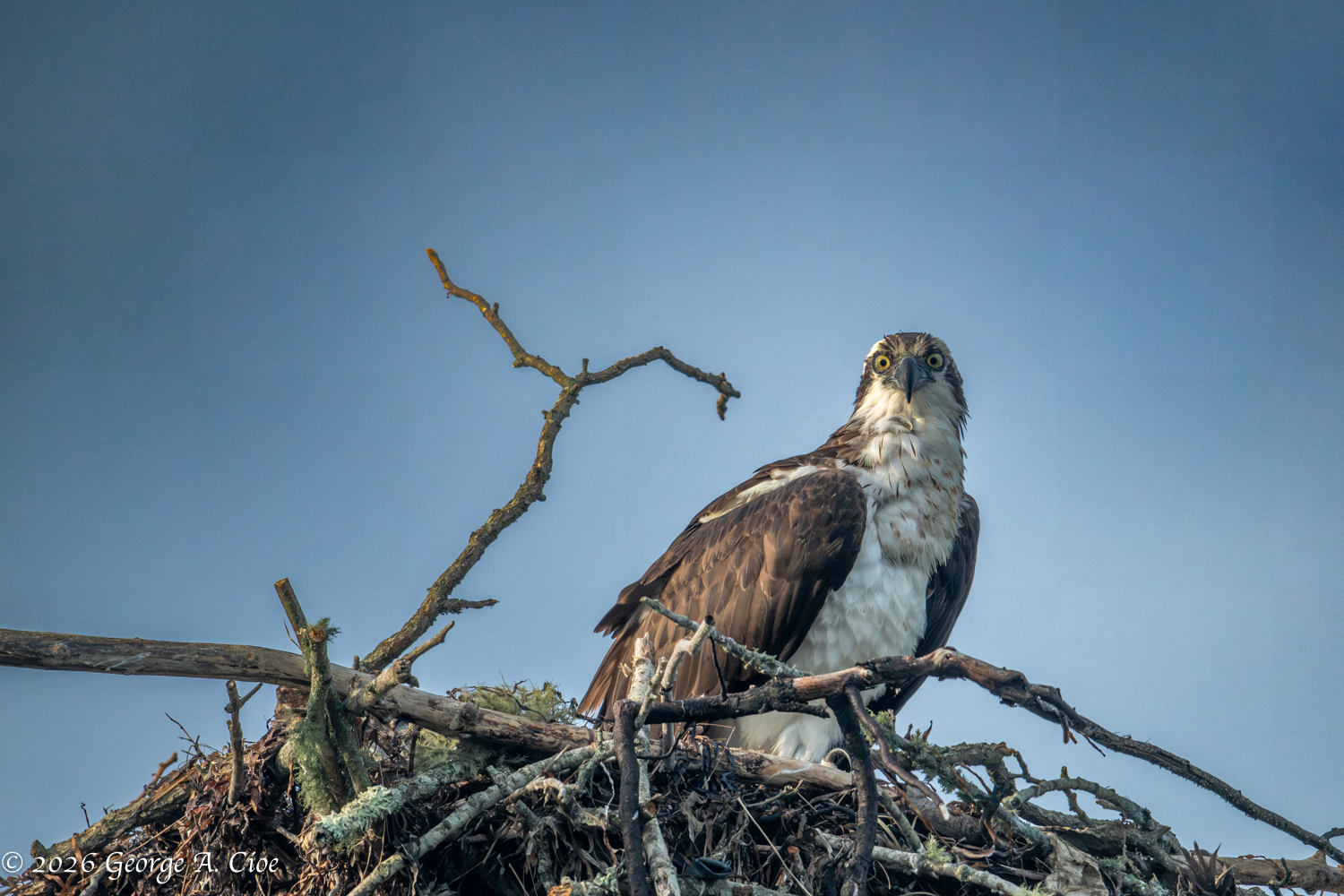
There was a time when seeing an Osprey above the Narrow River was becoming a rarity.
DDT had entered the food chain, accumulated in fish and weakened the eggshells of the birds that depended upon them. Osprey populations declined dramatically. Rhode Island was left with only a handful of active nests.
An empty nest can be remarkably quiet.
But people noticed.
They recognized the danger. DDT was banned. Nesting sites were protected. Platforms were erected. Habitat was preserved.
We changed our behavior.
And the Ospreys returned.
Today, they hover above the Narrow River, suspended against the sky as they search the water below. They plunge feet-first beneath its surface, rise carrying fish in their talons and return to nests where another generation waits to be fed.
Their recovery did not happen because nature was left to endure whatever we imposed upon it.
It happened because people acted.
That distinction matters.
Nature is resilient, but resilience should never be mistaken for invulnerability. A river can absorb a great deal before its losses become obvious. By the time wildlife disappears, shorelines collapse or underwater habitat dies, the damage may have been developing unseen for years.
Other estuaries show us the darker possibility.
In Florida’s Indian River Lagoon, the widespread loss of seagrass deprived manatees of their natural food. More than a thousand manatees died in a single year. The situation became so desperate that officials resorted to feeding lettuce to starving wild animals.
Imagine that.
One of Florida’s most beloved animals, living in an estuary that could no longer adequately feed it.
The crisis did not begin when the manatees started dying. It began beneath the surface, long before most people understood what was disappearing.
That is the danger of waiting.
By the time nature makes its distress impossible to ignore, it may already be asking us for far more than we are capable of giving back.
The Narrow River has not yet reached that moment.
And we must make certain it never does.
But protecting this extraordinary estuary is not solely about its marshes, eelgrass, shellfish beds and wildlife. It is also about protecting the people who enter the river in the most intimate way possible.
From the water.
Fishermen stand waist-deep along its sandbars and channels, reading the tide and waiting for the unmistakable pull of a fish.
Photographers carry expensive cameras and tripods into the shallows, concentrating on wildlife through long lenses that greatly restrict their field of vision.
Paddleboarders balance only inches above the surface.
Kayakers, canoeists and families move quietly through narrow passages where there may be little room—or little time—to escape a large and unexpected wake.
These people are not obstacles to navigation.
They are legitimate users of the river.
They are fishing its tides, photographing its wildlife, studying its natural history and introducing children to a world that can only be discovered when we slow down enough to see it.
A substantial wake can knock a paddleboarder into the water, roll a kayak, swamp a small vessel, or force someone standing in the shallows to choose between protecting themselves and saving their equipment.
For an older person, a child, or someone carrying fishing or photographic gear, that moment can become dangerous very quickly.
And here is something we should all remember:
A wake continues traveling long after the boat that created it has passed.
The boat moves on.
The consequences do not.
They reach the fisherman trying to maintain his footing.
The photographer struggling to lift a camera and tripod above the water.
The family whose kayak suddenly turns sideways.
The marsh bank absorbing wave after wave after wave.
That is why reasonable speed and no-wake protections are not an attack on boating.
They are an affirmation that the Narrow River belongs to all of us—the boater and the fisherman, the kayaker and the paddleboarder, the birder and the photographer.
Every person should be able to experience this extraordinary estuary without being endangered by someone else’s decision not to slow down.
But slowing the wake is only part of our responsibility.
During my time photographing the Narrow River, I have documented cigarette butts, soda cans, water bottles, bait containers, and other debris discarded along its banks.
These objects may seem insignificant to the person who leaves them behind.
They are not.
They remain in the marsh. They enter the water. They threaten wildlife. They diminish the natural beauty everyone came to enjoy.
A cigarette butt dropped on the riverbank and a damaging wake thrown against it may seem like very different acts.
Yet both carry the same message:
Someone else—or nature itself—will absorb the consequences.
To love the river means more than enjoying what it gives us.
It means accepting responsibility for what we leave behind, whether that is litter on the shoreline, a wake striking a kayaker, or repeated waves eroding a vulnerable marsh bank.
It means understanding that the river is not simply a channel through which we travel.
It is a living estuary.
It is a nursery for fish and shellfish, a feeding ground for migratory birds, a home for wildlife, and a place where people come to fish, paddle, photograph, explore, and breathe a little more deeply.
It is also a promise passed from one generation to the next.
The choice before us is not complicated.
We can protect the Narrow River’s marshes, eelgrass, shellfish beds, wildlife and people now.
Or we can wait until erosion, ecological decline, or a serious injury tells us what we should have understood all along.
Conservation works.
Responsible boating works.
Shared waterways work.
But only when respect travels with us.
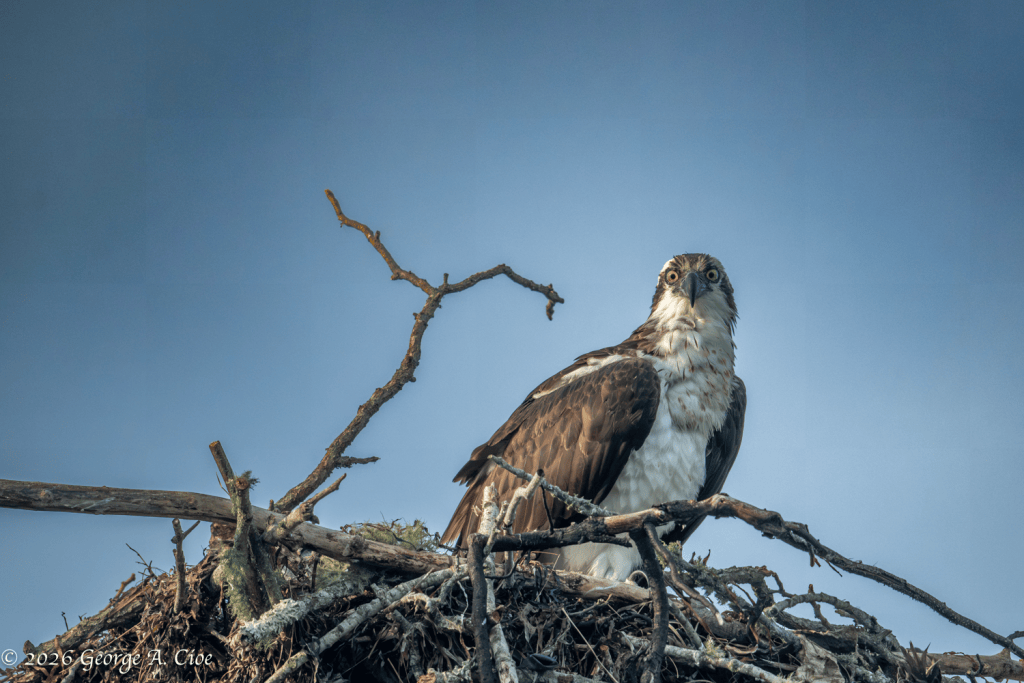
The Osprey in this photograph stands above its nest, looking directly toward me—alert, magnificent, and very much alive.
Its presence is not merely a beautiful moment in nature.
It is evidence.
Evidence that decline is not inevitable.
Evidence that our actions matter.
Evidence that when people recognize a danger, change their behavior, and commit themselves to protecting something precious, nature can respond.
The Osprey has already shown us what is possible when people act.
Now it is our responsibility to ensure that the wildlife—and the people who come quietly to witness it—remain safe enough to return.
Love the River. Slow the Wake. Leave No Trace.
I’d love to share my posts with you. If you subscribe, they’ll come straight to your inbox—most days, like a little note from me to you. It means a lot to know you’re reading along.
Browse my complete art portfolio and shop for prints at imagesbygacioe.shop




Leave a Reply