
I’ll be the first to admit it.
This time of year, things on the Narrow River begin to calm down.
The great seasonal evacuation is underway.
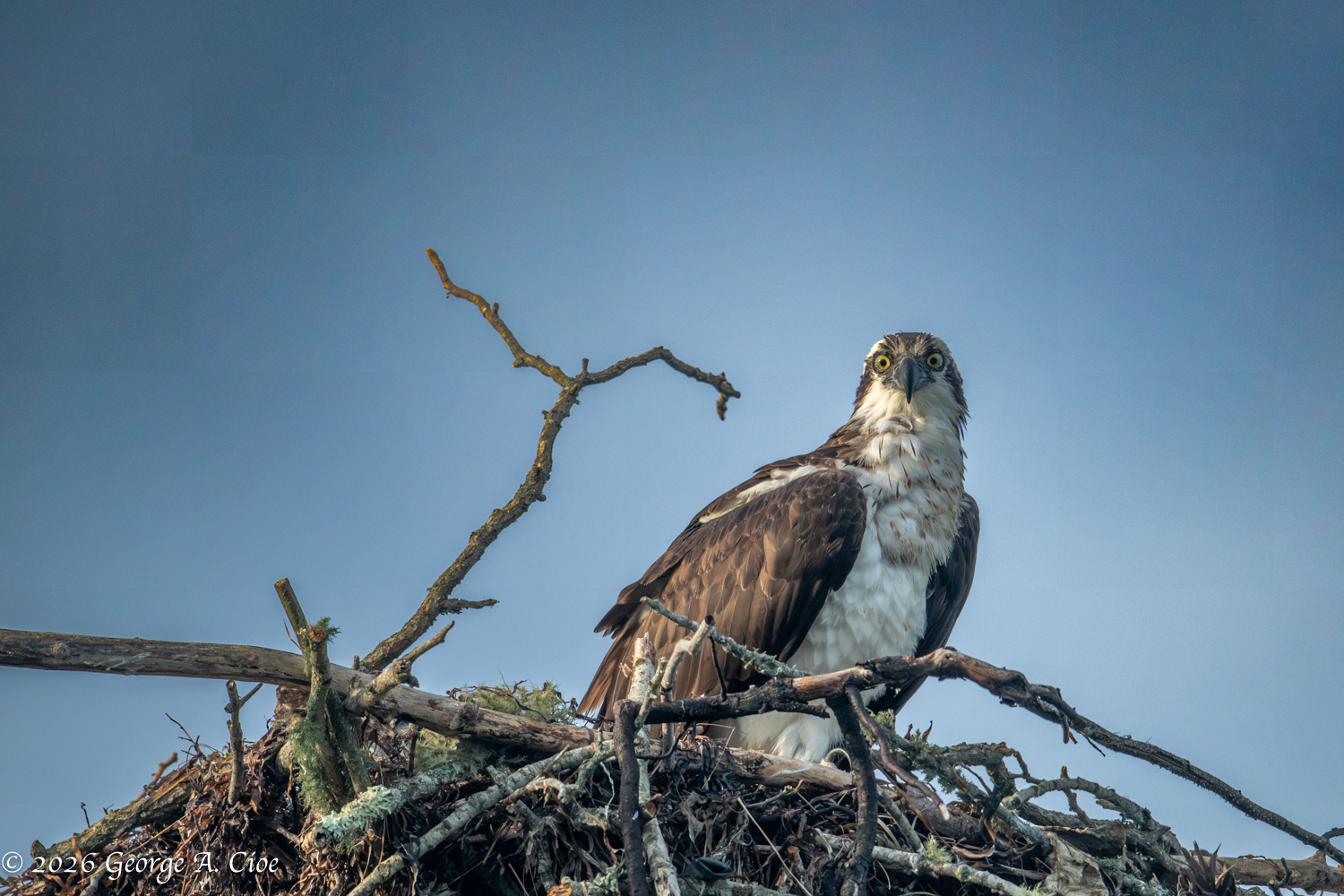
The Ospreys have packed up the family and headed south.
The shorebirds have checked their itineraries.
The swallows have vanished.
And the few migratory stragglers still hanging around have the nervous look of travelers who just realized their flight departed yesterday.
The river grows quiet.
Noticeably quiet.
Profoundly quiet.
The kind of quiet that settles into your soul.
And then—
RAT-TAT-TAT-TAT-TAT-TAT-TAT!
Apparently, someone has thrown a socket wrench into a blender.
I know that sound.
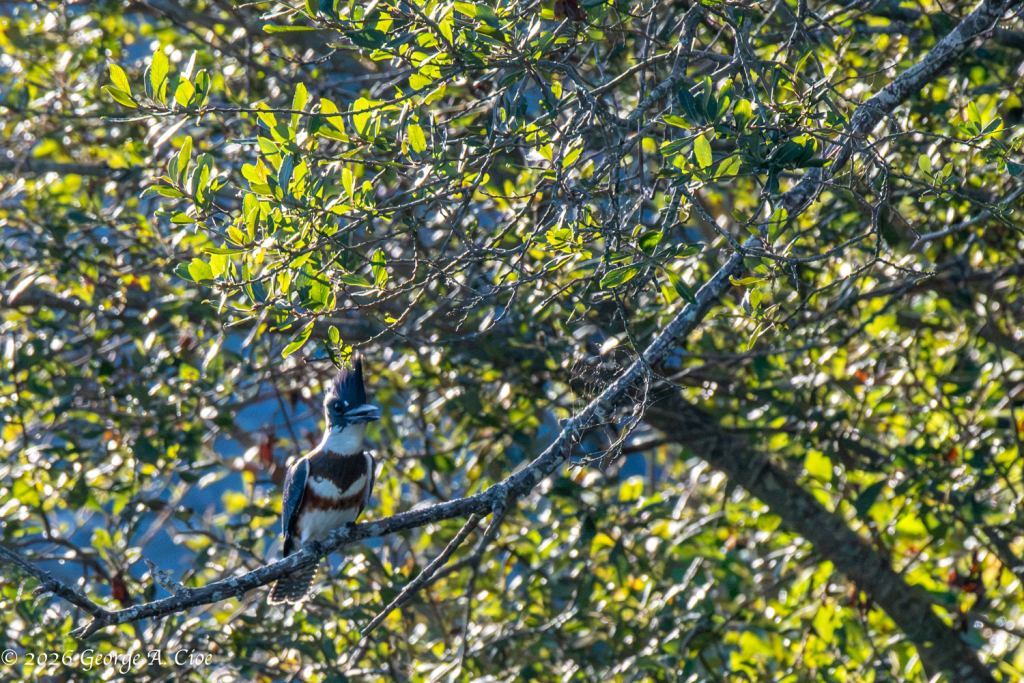
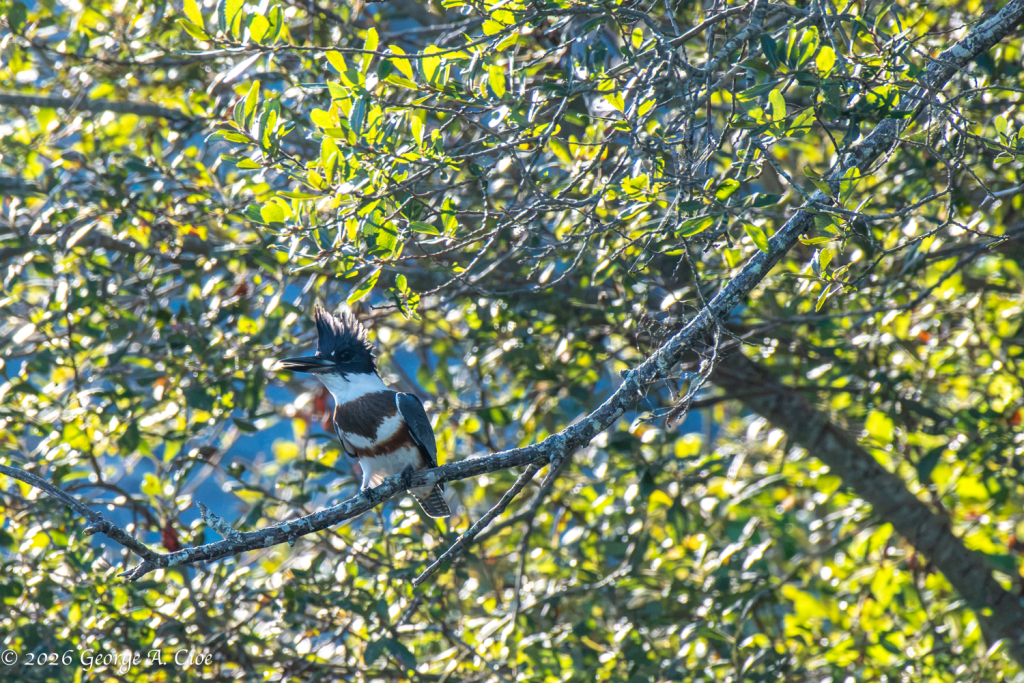
The Belted Kingfisher is back.
You rarely see a kingfisher arrive quietly.
That would be beneath her.
She makes an entrance.
Her call has been described as “ratcheting,” which is ornithological shorthand for:
“I am here, this is my river, those are my fish, and everyone within three-quarters of a mile needs to know about it.”
Subtlety is not part of the Belted Kingfisher’s brand.
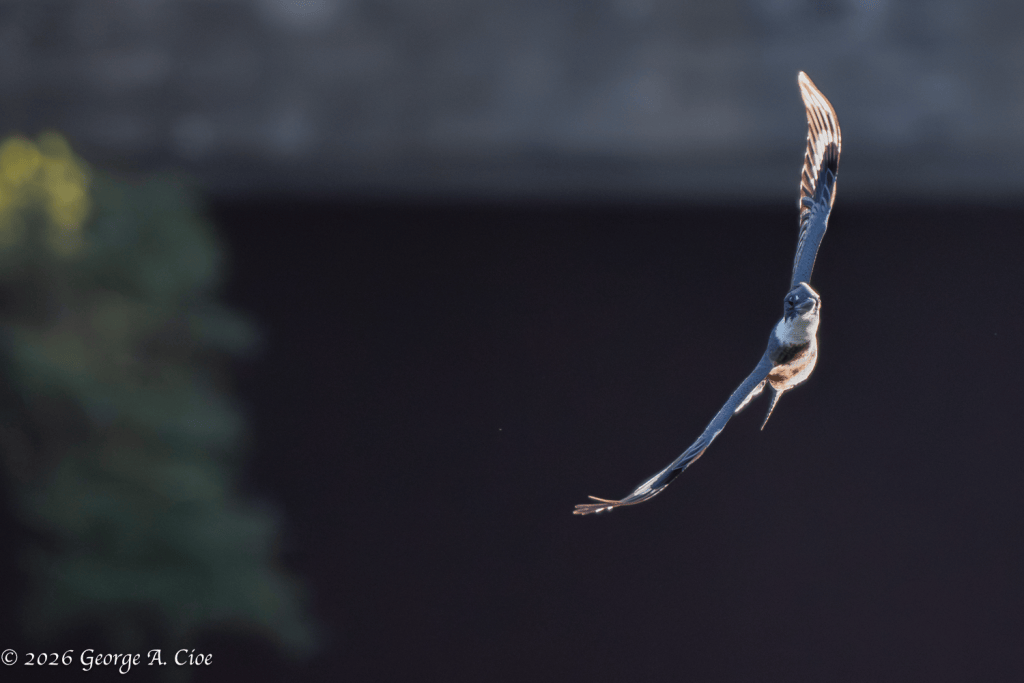
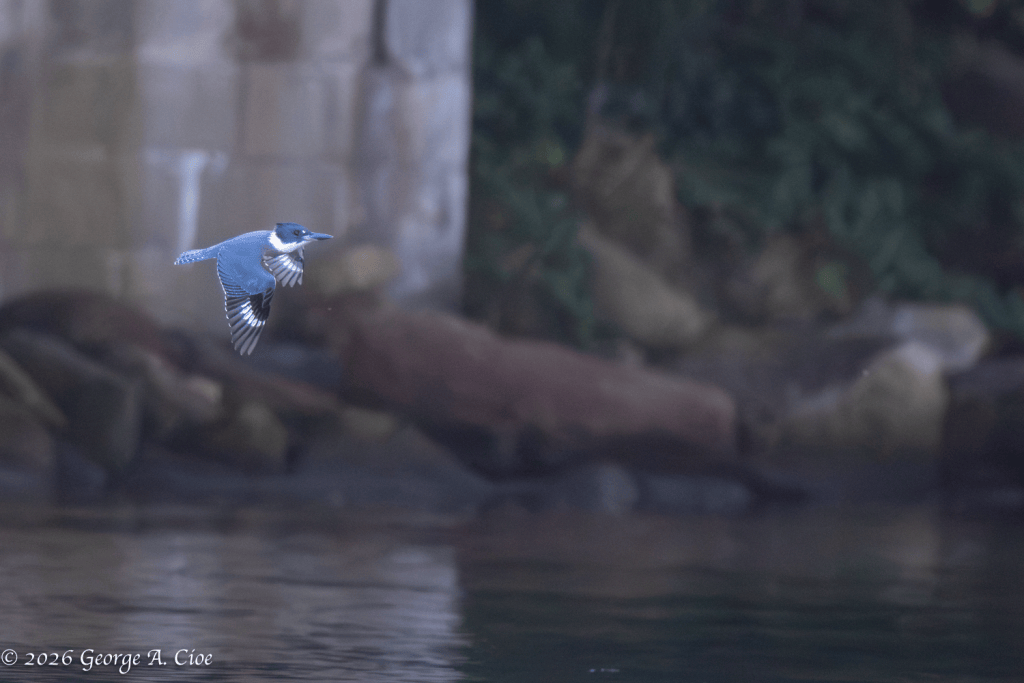
Neither is flying in a straight line.
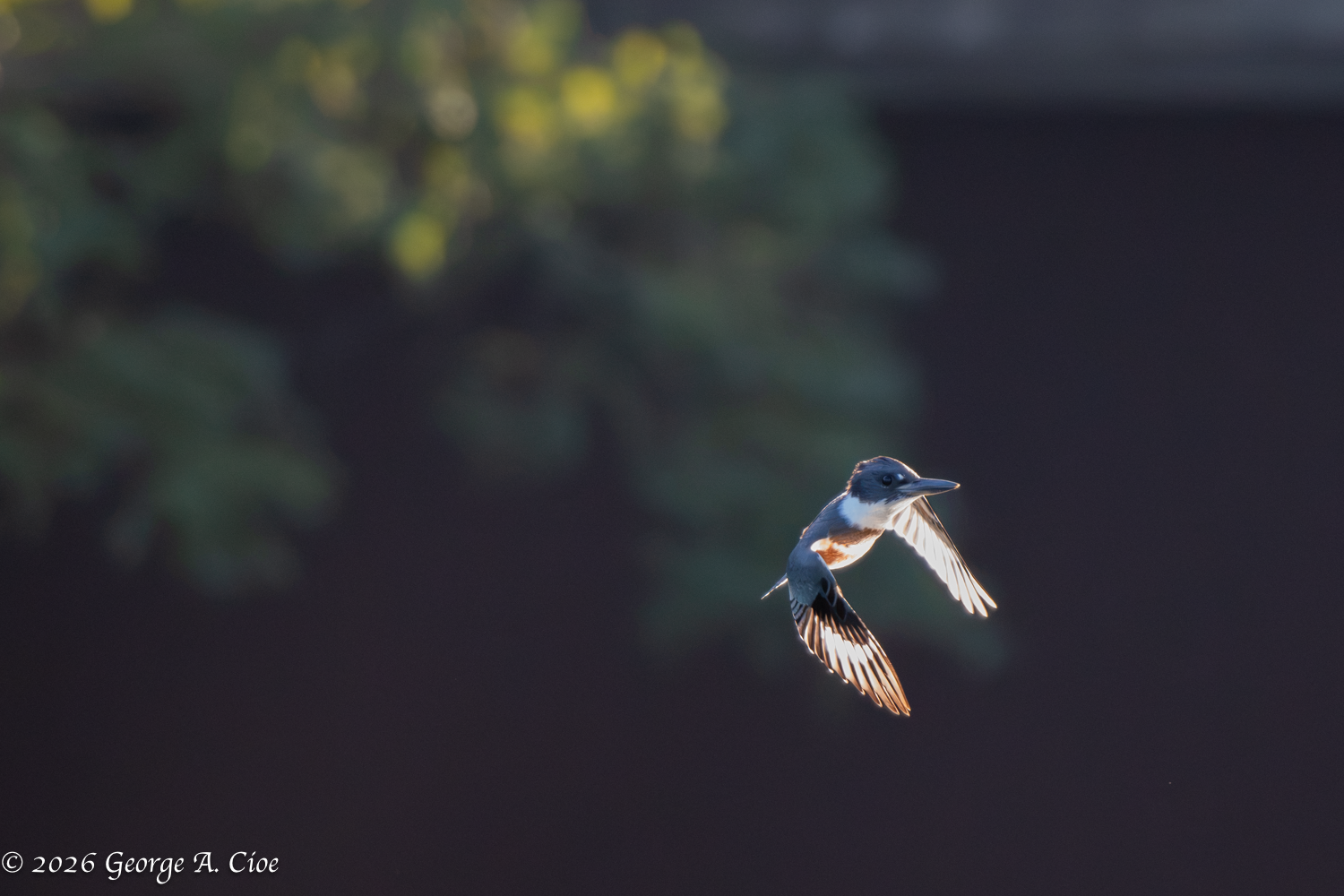
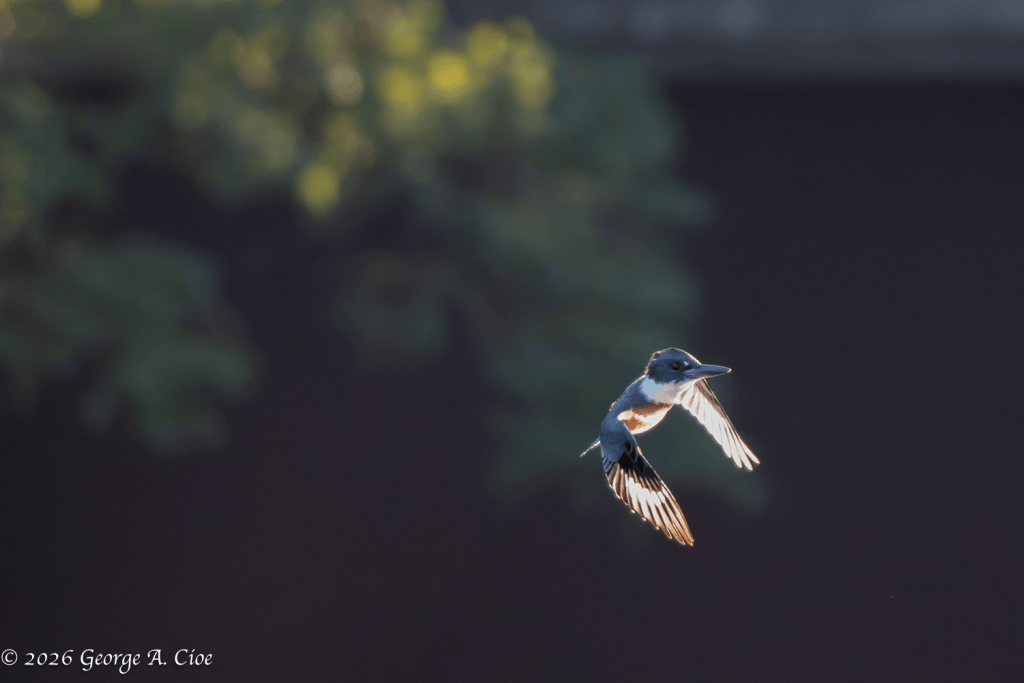
Photographing one in flight is less like photographing a bird and more like trying to photograph a bat, a butterfly and a bottle rocket—after introducing all three to espresso.
She flies left.
I move left.
She goes right.
I swing right.
She climbs.
I lift the camera.
She drops.
I drop.
She reverses direction.
At this point, my camera and I are no longer working together.
We are having a disagreement.
These photographs were taken at 1/3200 of a second—a shutter speed capable of freezing almost anything.
Almost.
The Belted Kingfisher apparently considers 1/3200 of a second a polite suggestion.
When I review my photographs afterward, I always find several beautifully exposed, perfectly focused images of absolutely nothing.
Water.
Sky.
Branches.
One particularly sharp leaf.
Everything except the bird.
She was there when I pressed the shutter.
I have witnesses.
Then there is that one miraculous frame.
Her body is banked so severely that her wings are nearly perpendicular to Mother Earth.
Yet her head remains perfectly horizontal.
Her body is performing advanced aerial combat maneuvers while her head appears to be riding on a luxury gimbal.
No shaking.
No tilting.
No concern whatsoever.
If I leaned that far to one side, my next photograph would be taken by an emergency-room technician.
And then there is the dive.
A hunting kingfisher may hover above the water, studying what lies beneath the surface. For a brief moment, she appears suspended—watching, calculating and allowing the photographer to believe he has finally caught up.
This is a trap.
Without warning, she folds, turns and plunges toward the water with extraordinary precision.
It is the avian equivalent of a 12-to-6 curveball.
It looks hittable.
It looks predictable.
It looks as though it is coming straight toward you.
Then, at the last possible instant, it drops out of the strike zone and makes you look foolish in front of everyone.
The kingfisher gets the fish.
The batter gets a strike.
The photographer gets another excellent picture of water.
Still, I am delighted to see her again.
The chestnut band across her belly identifies her as a female—one of those unusual bird species in which the female wears more color than the male.
She and her mate were both quite active.
And noisy.
Very noisy.
Naturally.
After weeks of profound seasonal silence, one of my favorite winter subjects has returned to the Narrow River.
Rattling.
Banking.
Hovering.
Diving.
Changing direction without notifying me.
And reminding me that nature does not always return with a whisper.
Sometimes it comes back sounding like a socket wrench falling down a metal staircase.
And I wouldn’t have it any other way.
I’d love to share my posts with you. If you subscribe, they’ll come straight to your inbox—most days, like a little note from me to you. It means a lot to know you’re reading along.
Browse my complete art portfolio and shop for prints at imagesbygacioe.shop
Leave a Reply