



The Day Curiosity Became Stewardship
When I was a boy growing up near a pond, I loved catching frogs.
Bare-handed.
You had to be fast.
And sneaky.
It was my purpose in life.
So far, at least.
We didn’t have nets.
Who had a net?
More importantly, who could afford one?
A ten-year-old had limited income.
As in none.
It was 1966, and near our old farm was a rock quarry that flooded seasonally.
To me, it was adventure with a capital A.
Fast-forward sixty years to Saturday, September 19, 2026.
The Narrow River Preservation Association held its annual What Lives in the River? event at Middlebridge.
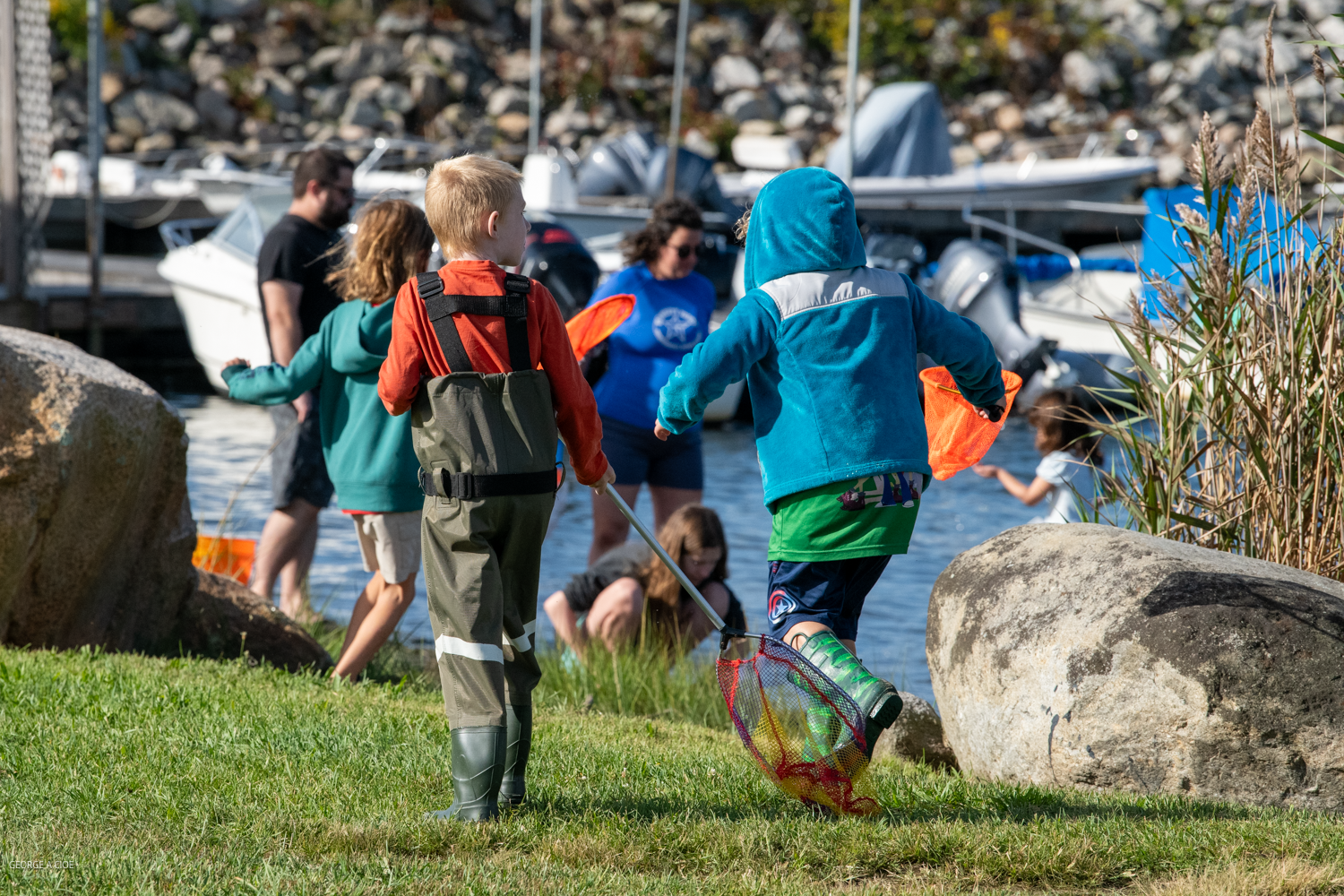
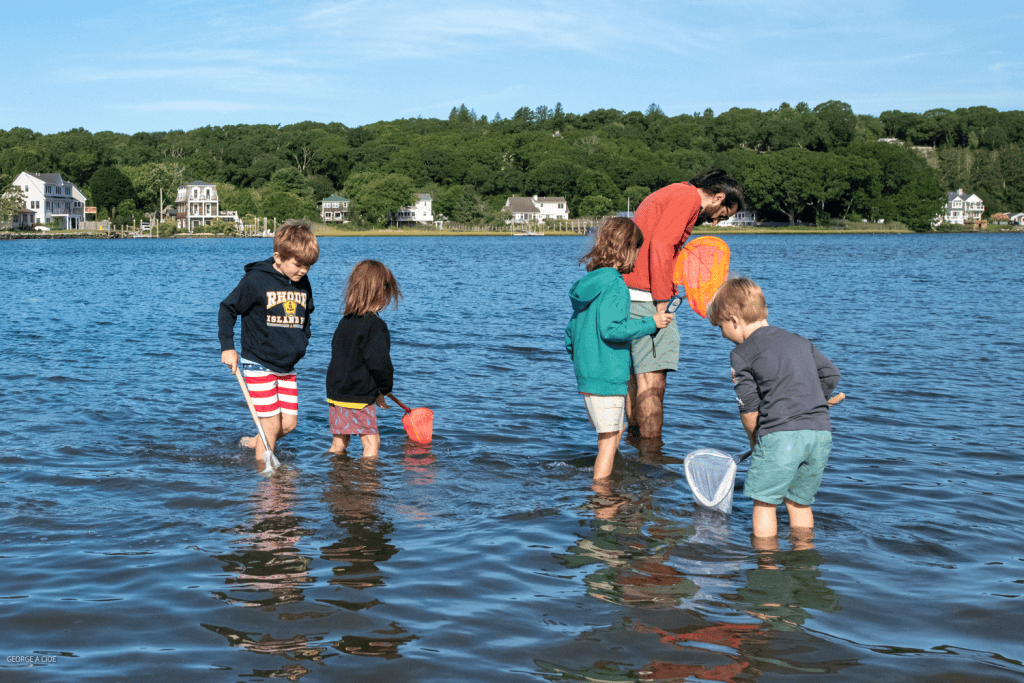
For two hours, children waded into the Narrow River carrying nets, buckets and the kind of curiosity that cannot be taught from a textbook.
It can only be awakened.
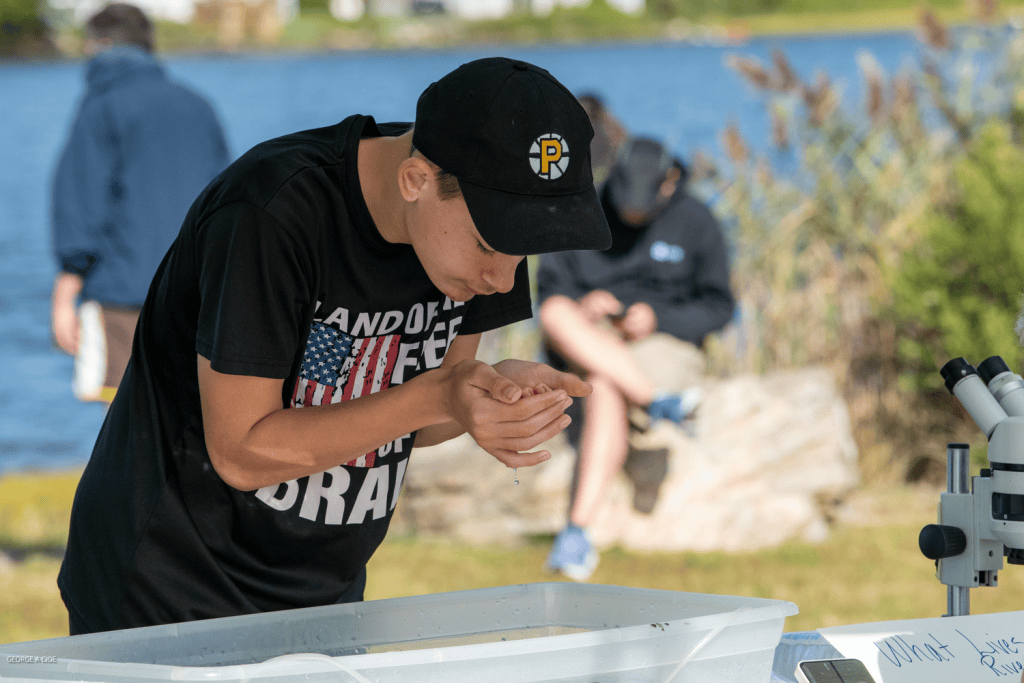
They helped pull a seine through the water. They searched along the shoreline and intertidal zone. They peered into tanks and microscopes. They gently held some of the river’s smallest residents in their hands.
Blue crabs.
Hermit crabs.
Mud snails.
Sticklebacks.
Winter flounder.
Sand shrimp and grass shrimp.
Pipefish.
Mummichogs.
Green crabs.
Spider crabs.
Slipper limpets.
Quite a cast of characters for a place many people see only as water beneath a bridge.
Experienced volunteers and educators were there to help the children identify what they had found and explain why it mattered.
And that was the real beauty of the morning.
It looked like fun.
It sounded like laughter.
It felt like an adventure.
But something much more important was happening.
The Narrow River had become a classroom.
Children were learning that an estuary is not simply a pretty place to swim, paddle or pass through in a boat. It is a nursery, a feeding ground, a resting place and a habitat supporting an extraordinary web of life.
Every tiny creature in those nets had something to teach them.
A young fish spoke of the river’s importance as a nursery.
A shrimp or crab became evidence of an ecosystem functioning beneath the surface.
A microscope revealed that even a single drop of river water may contain an entire world invisible to the unaided eye.
Questions led to answers.
Answers created understanding.
And understanding is where stewardship begins.
Children are far more likely to protect something after they have touched it, studied it and discovered that it is alive.
That may be the most lasting catch of the entire day.
The creatures were returned to the river.
The experience went home with the children.
Since 1970, the Narrow River Preservation Association has worked to preserve and protect the Narrow River—also known as the Pettaquamscutt Estuary.
That is more than half a century of stewardship.
More than half a century of education, observation, advocacy and people caring enough to stand up for a river that cannot speak for itself.
Events like this do not simply happen.
They require knowledgeable people.
Volunteers.
Equipment.
Organization.
Time.
And commitment.
The Narrow River we enjoy today did not remain special by accident. Generations of NRPA members and supporters have helped study it, teach others about it and keep its welfare before the public.
We owe them a debt of gratitude.
And gratitude is wonderful.
But participation is even better.
Membership in the NRPA is one way each of us can help ensure that programs like What Lives in the River? continue—and that the river itself remains healthy enough to keep providing the answers.
Perhaps one of those children will become a marine biologist.
Perhaps another will become a teacher, naturalist, photographer or conservationist.
Perhaps most will simply grow up remembering the morning they stood in the Narrow River, held a tiny creature in their hands and discovered that this remarkable place was alive.
That may be enough.
Because when children become curious about nature, they begin to care about it.
And when people care about a place, they protect it.
That is how curiosity becomes stewardship.
One small net—
and one future member—
at a time.
Naturally.
I’d love to share my posts with you. If you subscribe, they’ll come straight to your inbox—most days, like a little note from me to you. It means a lot to know you’re reading along.
Browse my complete art portfolio and shop for prints at imagesbygacioe.shop



Leave a Reply