


An Italian Love Story, Told in Sugar, Flour, and Family
Sometimes the best places to find something authentic are the places where the locals shop.
Or, in this case, eat.
Our guide, Valentina, was born and raised in Palermo.
She was married in Palermo.
So, when she recommended Forno Laboratorio Dolciario as one of the best places in Sicily for cannoli and traditional almond pastries, I took her recommendation very seriously.
Very.
There are certain things in life that should never be questioned.
A Sicilian’s recommendation for cannoli is one of them.
We had but one thought.
We shall return.
And we did.
Right after dinner.
Because apparently, having just eaten a wonderful Italian dinner is no excuse for passing up an extraordinary Italian dessert.
It’s called cultural appreciation.
And I take my responsibilities as a traveler very seriously.
Especially when pastry is involved.
But what we discovered at Forno was something much sweeter than dessert.
It was a story about family.
Craftsmanship.
Pride.
And love.
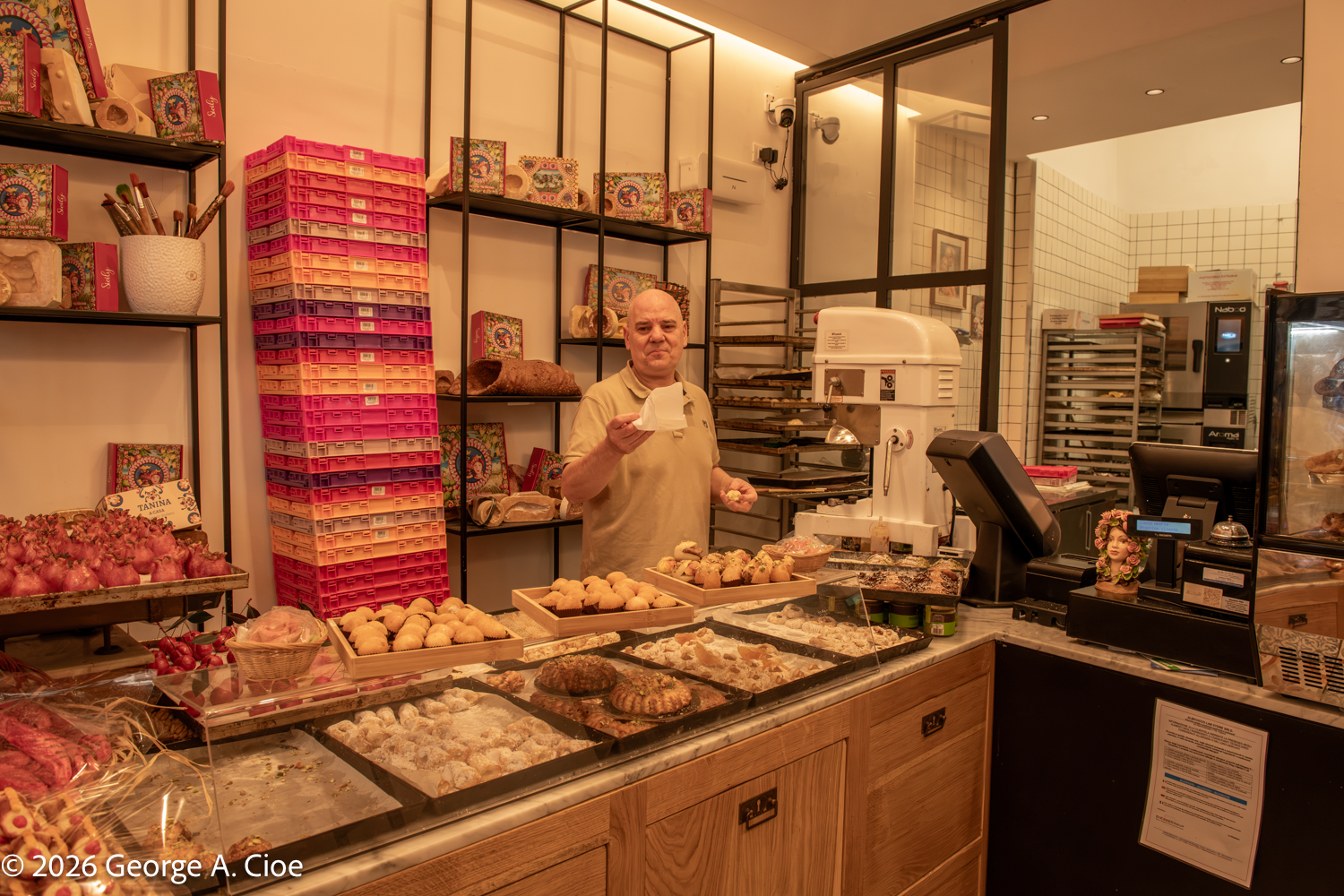
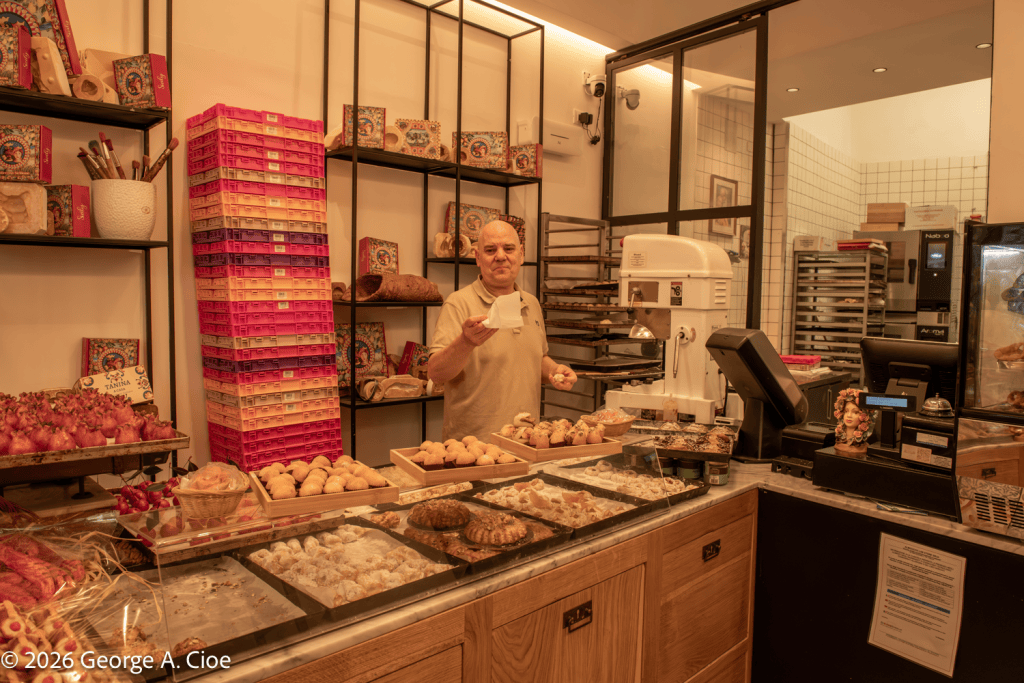
Forno Laboratorio Dolciario is a small artisan bakery in the historic center of Palermo. Its name translates roughly to Bakery and Confectionery Workshop.
An appropriate name.
Because what happens inside is much more than baking.
It’s art.
And I know a little something about that.
Not because I’m a baker.
Believe me, I’m not.
I can make a respectable dinner but put me in charge of a complicated pastry recipe and there’s a reasonable possibility the fire department will become involved.
No.
My appreciation comes from someone much closer to home.
My son, Chef Scott Cioe.
Scott is an internationally accomplished pastry chef working in New York City at Lafayette Grand Café & Bakery.
And through him, I’ve developed an enormous respect for a profession that too often gets reduced to the simple act of making something sweet.
There is nothing simple about it.
A great pastry chef is part scientist.
Part engineer.
Part sculptor.
Part painter.
And, occasionally, part magician.
Consider what it takes.
The chemistry of ingredients.
The precision of measurements.
The relationship between temperature, time, moisture, and texture.
The ability to transform flour, butter, eggs, sugar, and a handful of other ingredients into something that delights not only the palate but the eye.
And then do it again.
And again.
And again.
Perfectly.
Every single day.
A photographer can spend hours waiting for the perfect light.
A baker creates it.
In an oven.
At 350 degrees.
Or whatever precise temperature the recipe demands.
And unlike photography, where an unexpected result can occasionally become a masterpiece, an unexpected result in baking is frequently called a disaster.
Or breakfast.
Depending on how hungry you are.
There’s also the matter of getting up at three o’clock in the morning.
While the rest of us are dreaming, bakers are already working to make our mornings delicious.
Now that’s dedication.
And then there’s the artistry.
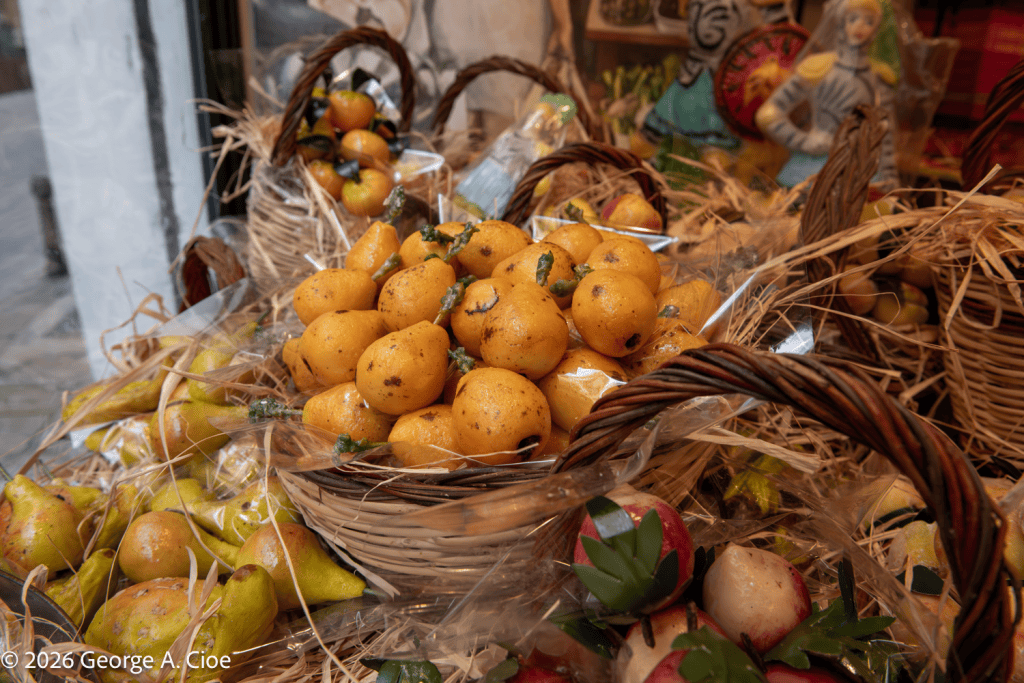
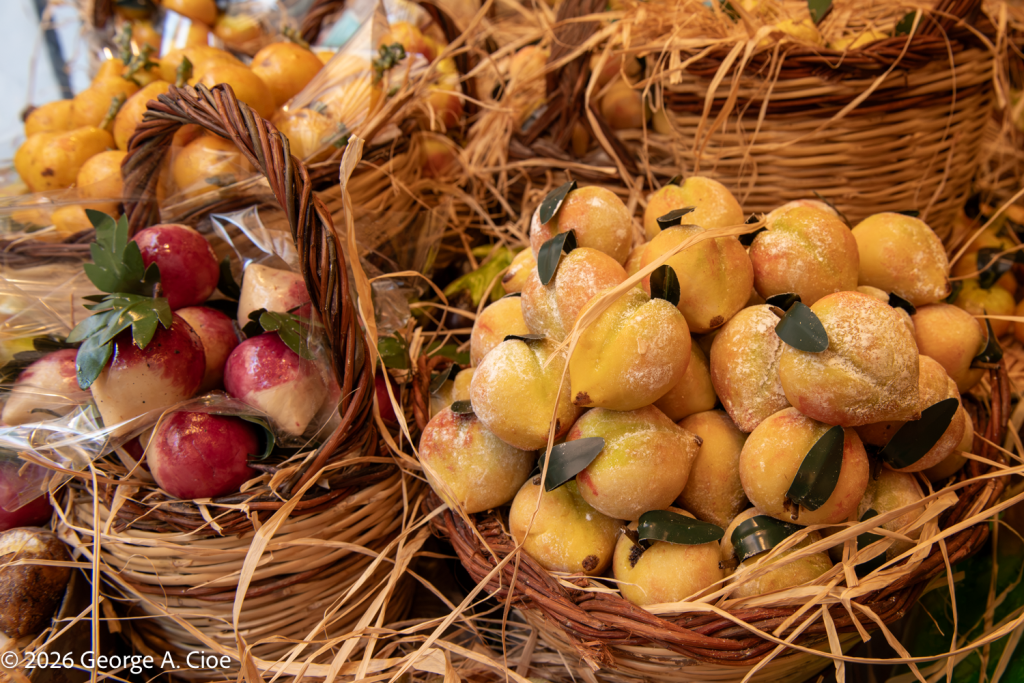
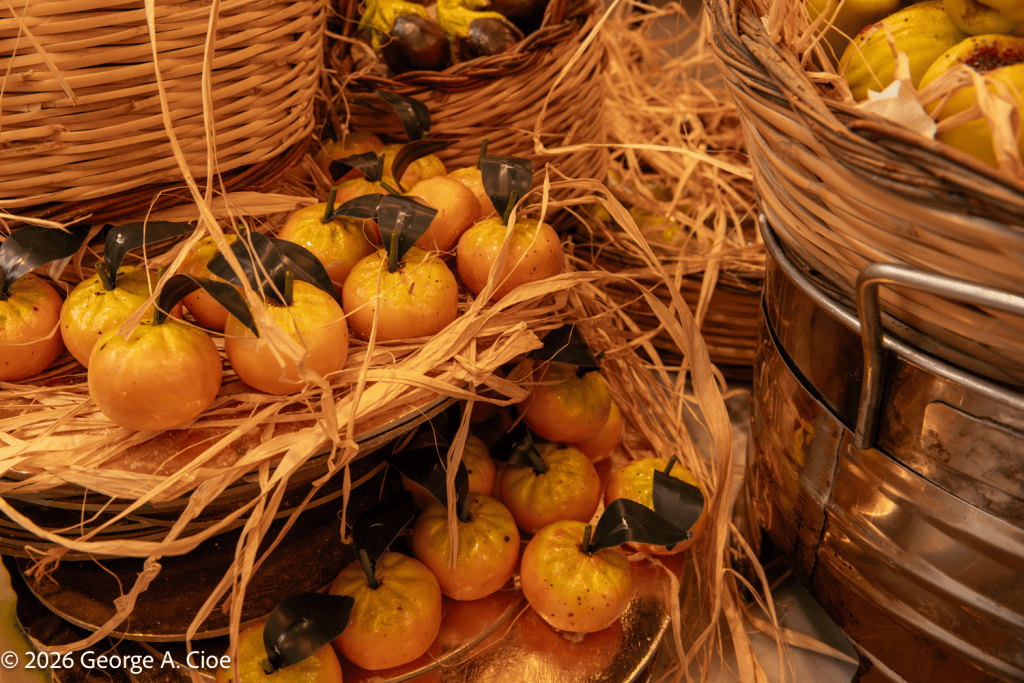
Look at the photographs.
Those aren’t baskets of fruit.
They’re pastries!
The miniature figs, peaches, oranges, and other fruits are examples of Frutta Martorana, a traditional Sicilian confection made from almond paste.
Each piece is shaped, colored, and finished to resemble actual fruit.
Some are so convincing that you might be tempted to peel one.
Don’t.
Trust me.
This is another situation where your dental insurance should be current.
The tradition has roots in Palermo’s historic convent kitchens, where generations of skilled confectioners transformed almonds and sugar into remarkable edible sculptures.
And Sicily’s culinary history helps explain why.
Arab influence introduced and popularized ingredients and techniques that became essential to Sicilian sweets, including sugar cultivation and the extensive use of almonds and citrus.
Over the centuries, those traditions evolved into something uniquely Sicilian.
A cuisine that reflects the island’s extraordinary history.
One delicious bite at a time.
But the most memorable thing about Forno wasn’t the beautiful pastries.
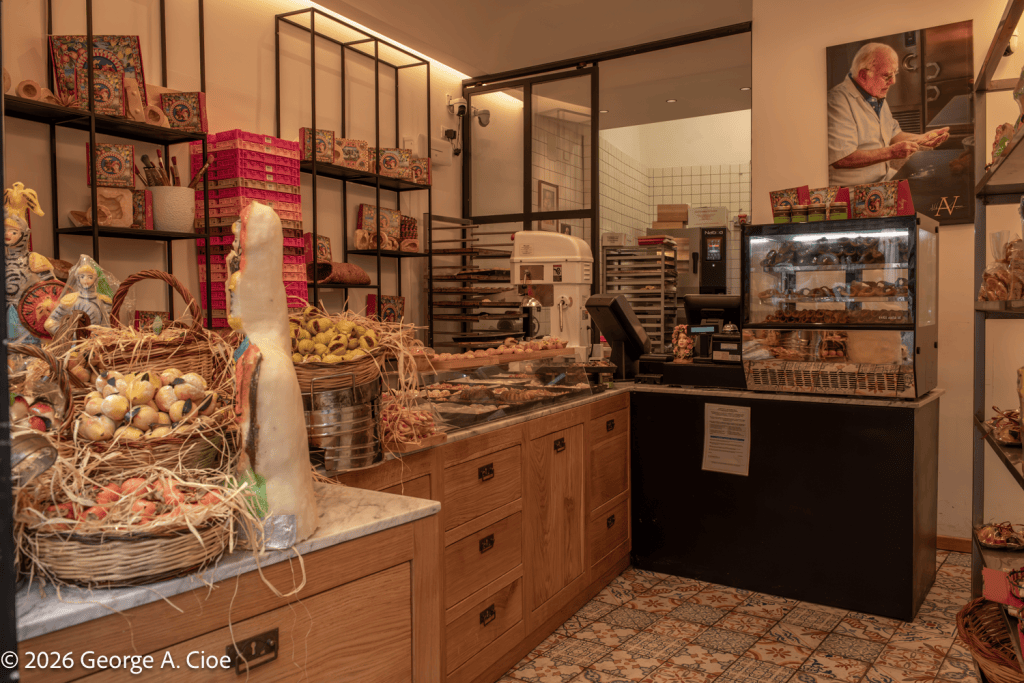
It was a photograph.
A rather large portrait hanging on the wall.
An older gentleman.
Working with his hands.
Concentrating on the pastry before him.
I recognized something in that photograph.
Not the man.
The expression.
The quiet concentration of someone who knows exactly what he’s doing.
Someone who has spent a lifetime mastering his craft.
I turned to the gentleman behind the counter.
“Is that your dad?”
He looked at the photograph.
Then he looked at me.
There was a pause.
“Si.”
And then he smiled.
Not a big, theatrical smile.
Something much better.
A son’s smile.
The kind of smile that says everything without saying another word.
Pride.
Respect.
Love.
And perhaps the quiet satisfaction of knowing that the work his father began continues.
I couldn’t help thinking about Scott.
About the years of practice, discipline, creativity, and sacrifice that go into becoming an exceptional pastry chef.
About the pride a father feels watching his son develop a talent into an art.
And here I was, thousands of miles from home, standing in a little pastry shop in Palermo, looking at another son who understood something about family and craftsmanship.
We didn’t need a translator.
Some things are universal.
Especially a father’s pride in his son.
Or a son’s pride in his father.
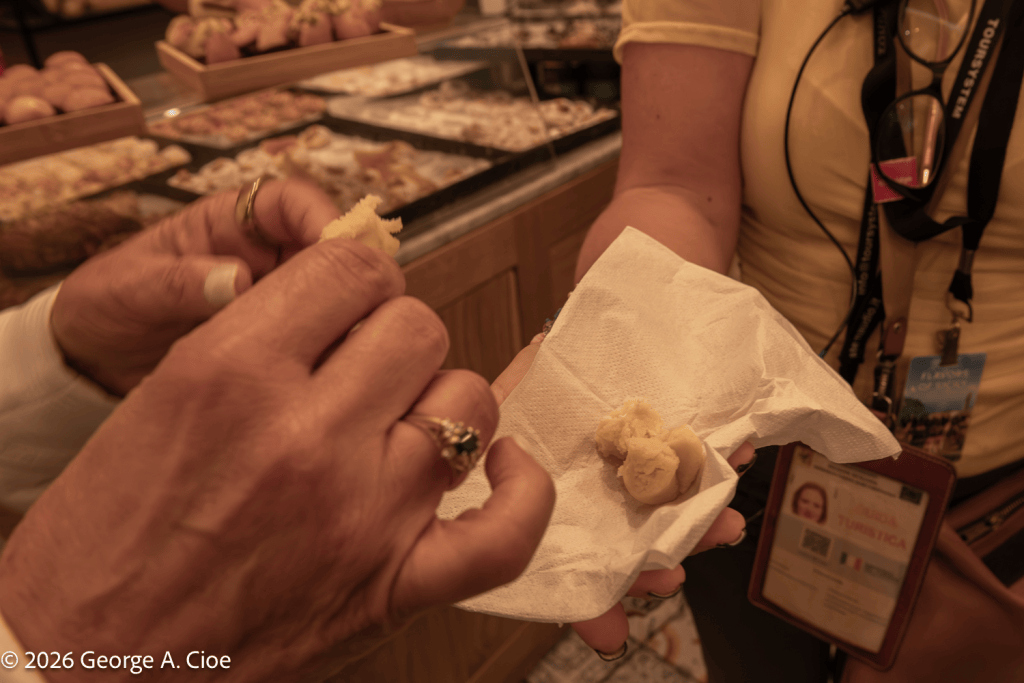
The gentleman offered us a taste of his pastries.
Naturally, we accepted.
It would have been rude not to.
And besides, we were conducting important culinary research.
The almond pastry was exquisite.
Delicate.
Fragrant.
Sweet without being overwhelming.
The kind of confection that makes you close your eyes for a moment because your taste buds have temporarily taken control of your brain.
And the cannoli?
Wonderful.
A crisp shell.
Rich, creamy filling.
A celebration of texture and flavor.
It was everything Valentina had promised.
But I found myself appreciating something beyond the taste.
The hands that made it.
The knowledge behind it.
The generations of culinary tradition that helped create it.
And the extraordinary dedication required to make something so beautiful that its existence lasts only a few delicious seconds.
That’s the paradox of pastry.
A painter creates a work that might hang in a museum for centuries.
A sculptor creates something that might endure for millennia.
A pastry chef creates a masterpiece that someone like me can make disappear in approximately twelve seconds.
Possibly nine.
If it’s really good.
And yet the artistry is no less remarkable.
Perhaps even more so.
Because a pastry chef knows, from the very beginning, that the ultimate purpose of the creation is for someone else to enjoy it.
And then it’s gone.
What remains is the memory.
The experience.
The pleasure.
And occasionally, a few crumbs on your shirt.
That’s a beautiful kind of art.
So here’s to the bakers.
The pastry chefs.
The confectioners.
The men and women who rise before dawn, master extraordinarily demanding techniques, and spend their lives making something wonderful for the rest of us.
Here’s to the gentleman at Forno Laboratorio Dolciario in Palermo, and to the father whose photograph hangs proudly above his work.
And here’s to my son, Scott, whose extraordinary talent and dedication have given me a deeper appreciation for the artistry of his profession.
Two cities.
Palermo and New York.
Two very different pastry kitchens.
And one shared language.
The language of craftsmanship.
Of creativity.
Of pride in a job beautifully done.
If your travels take you to Sicily, wander the streets of Palermo.
Find Forno.
Step inside.
Admire the pastries.
Have a cannolo.
Or two.
And look up at the photograph on the wall.
There’s a story there.
If your travels take you to New York City, visit Lafayette.
Discover what happens when the same dedication to culinary artistry finds expression in another extraordinary kitchen.
And remember that behind every beautiful pastry is someone who has spent years learning how to make it.
Someone who cares.
Someone who creates.
Someone who understands that the simplest pleasures in life are often the most difficult to perfect.
As for me?
I think I’ll have another cannolo.
Strictly for research.
I’d love to share my posts with you. If you subscribe, they’ll come straight to your inbox—most days, like a little note from me to you. It means a lot to know you’re reading along.
Browse my complete art portfolio and shop for prints at imagesbygacioe.shop

Leave a Reply