


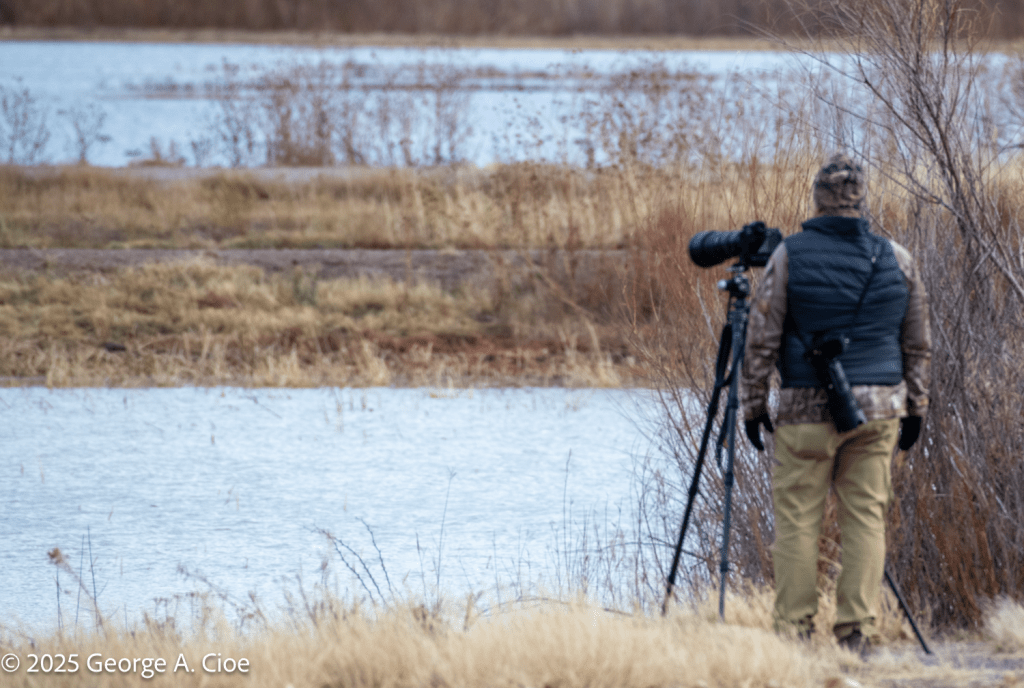
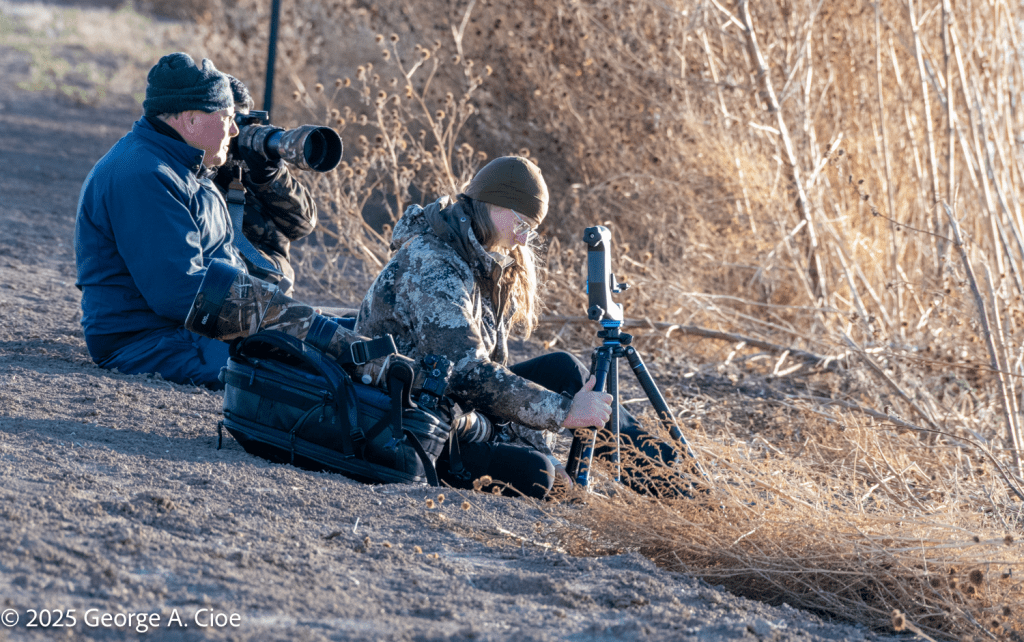
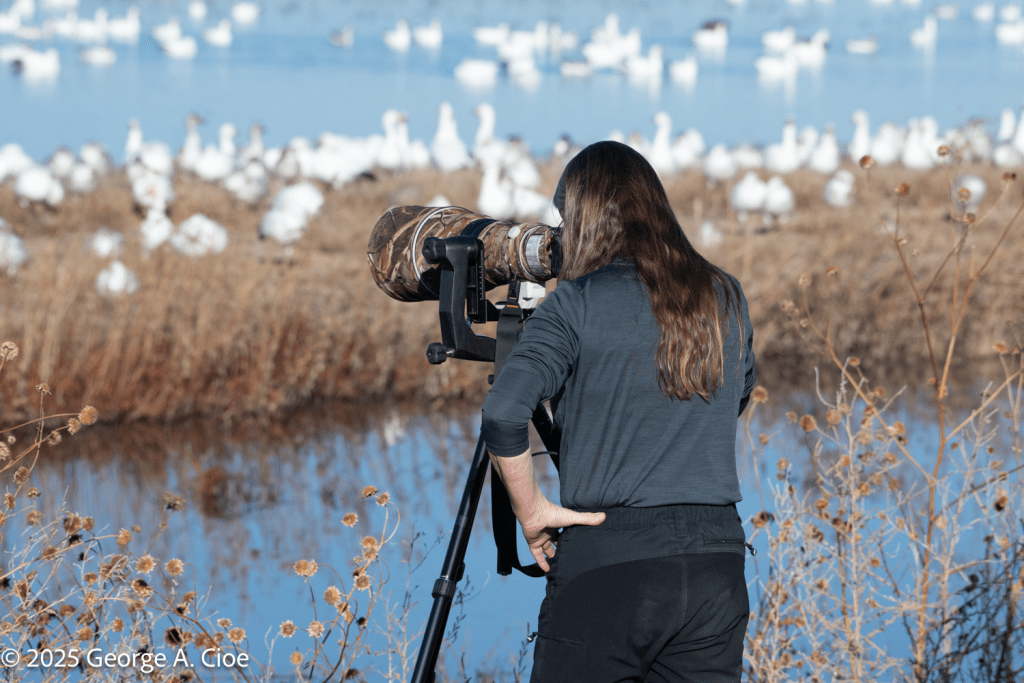
“Wow, that’s a big lens!”
If I had a dollar for every time I’ve heard that…
And when it’s a guy, nine times out of ten, the follow-up is, “Compensating for something?”
I smile and say, “Yes—distance.”
That’s not a joke. It’s the truth.
Every ethical nature photographer I know goes out of their way to ensure one thing above all else: the animals come first. We use long lenses not for bragging rights, but to keep our respectful distance. We stay back. We wait. We observe. Because getting the shot should never mean stressing the animal.
Unfortunately, not everyone who enters the wild feels the same responsibility.
When Loving Wildlife Isn’t Enough
It’s a painful irony: so many people claim to “love wildlife,” yet behave in ways that actively harm it. They walk into clearly marked restricted areas. They chase birds with phones held high. They flush nesting animals just to say they saw one. They walk up to dangerous animals to get a selfie!
So, I’ve started doing something that might raise eyebrows—but it’s working.
When I see someone step over a posted boundary into protected habitat, I wait. When they come out, I quietly take a photo of them, with the sign they ignored in the frame.
Almost every time, they notice.
“Did you just take a picture of me?”
“Yes.”
“Why?”
“What are you going to do with it?”
I answer calmly, “Nothing—unless I see you do it again. Then it goes on the wall of shame.”
The Fine Line We Must Defend
Now, I know that sounds confrontational. And yes, I’ve been sworn at. I’ve been lectured about how much someone “cares about animals.” But here’s the thing: when people realize they’ve been seen – really seen—and called out for it, they sometimes get it. I’ve seen the shift in their expression. Some sincerely apologize realizing their mistake.
This post is a thank you to all the photographers who understand what it means to be a steward of nature. To those who pack out more than they packed in. Those who use long lenses and even longer waits. Who whisper when others shout. Who’d rather miss the shot than cause harm.
You’ve seen the transgressions. You’ve cringed as someone stomped into the brush or banged on a tree to flush an owl. Maybe you’ve said something. Maybe you’ve stayed silent. Either way, you know the damage being done.
And if we don’t say something, it will only get worse.
Real Stories. Real Damage.
At Bosque del Apache National Wildlife Refuge, twenty of us stood frozen in a sacred hush—tripods planted, lenses locked, breath collectively held—as a real-deal roadrunner (not a jogger with a smoothie) crept toward us like a feathered ninja. It was magical. Spiritual. You could hear the desert sigh.
Then—SKRRRRT! The sound of gravel being murdered behind us.
We turned just in time to see a car door explode open like an action movie. Out launched a woman, iPhone held high like she was storming the beaches of Normandy. She sprinted—yes, sprinted—at the roadrunner, who took one look at this human missile and disappeared into cover like a magician’s final trick.
We stood there, mouths agape, looking around as if to say, “Did that actually just happen?”
And just like that, serenity was canceled.
At Sachuest Point National Wildlife Refuge, I witnessed a very special kind of wildlife encounter—the human kind. A woman, armed with binoculars and zero wildlife concern, marched straight past the AREA beyond this sign CLOSED, All Public Entry Prohibited, like it was mere decorative suggestion. Her binoculars bounced with determination as she scanned the horizon—presumably for the very birds she had just panic-flighted into the next zip code.
One wrong step and she could’ve crushed a clutch of eggs like a clumsy Godzilla. I snapped a quick photo to document the scene, but she got mad at me! Outraged! Like I’d violated her natural habitat with my lens.
She stormed off mid-rant, recounting her version of the tale to a couple walking their dog, arms flailing for dramatic effect. As they passed me, the couple smiled and gave a casual thumbs-up. The message was clear: “Thanks for defending the birds… and sorry about the drama llama.”
These aren’t minor slip-ups. They’re moments that change the fate of wildlife. There is extensive documentation showing that human intrusion—especially walking into protected breeding habitats—can cause significant harm to wildlife. This includes abandoned nests, increased predation, chick mortality, and long-term population declines.
If Not Us, Then Who?
I don’t know if my quiet protest makes a lasting difference. But I do know that it feels better than doing nothing. Our silence, after all, can look a lot like permission.
So, here’s my ask:
- Speak up when you see someone cross a line—especially the literal ones.
- Educate when you can.
- Photograph ethically, and share those values with your community.
- And if needed, take the photo that calls someone out, not to shame, but to protect.
Because if we care enough to capture nature’s beauty, we must care enough to guard it.
Long lenses. Longer respect.
Let’s lead by example.
Subscribe below and get my daily (okay, most days—let’s not get crazy) post delivered straight to your inbox. Like magic. But with fewer rabbits. 🐇✉️
Browse my complete art portfolio and shop prints at imagesbygacioe.shop




Leave a Reply