

I was still on my quest to photograph a Snowy Owl. It was January 11, 2025, when the quiet hush of dusk was shattered by the sharp crack of gunfire. A shotgun – At Sachuest Point National Wildlife Refuge? No doubt about it. At first, I brushed it off, assuming it was just a fisherman banging around in an aluminum boat. But no—turns out that hunting waterfowl is actually allowed even within the watery edges of a national wildlife refuge. Hunting waterfowl is permitted as long as they are in a boat and not on the shore. That certainly didn’t bode well for my chances of spotting the Owl.
The morning had started off in full grayscale—low light, heavy cloud cover, and intermittent snow. Not exactly ideal conditions, especially with both of my long lenses clocking in at a sluggish f/5.6. I didn’t expect to capture anything worth keeping.
But that’s the thing about the wild—it doesn’t care about your plans.
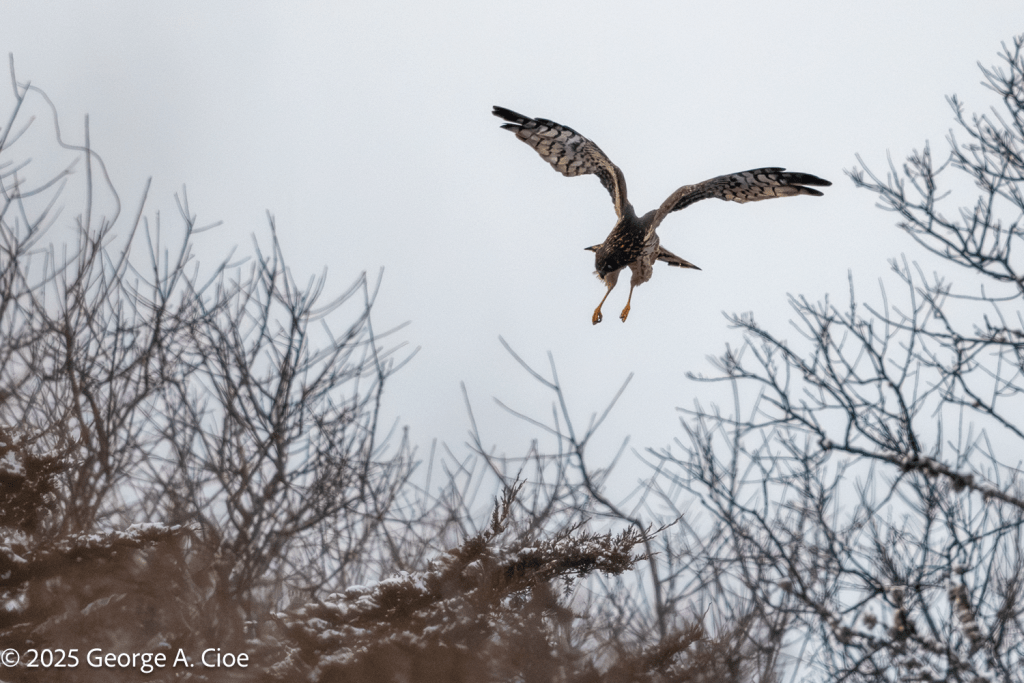
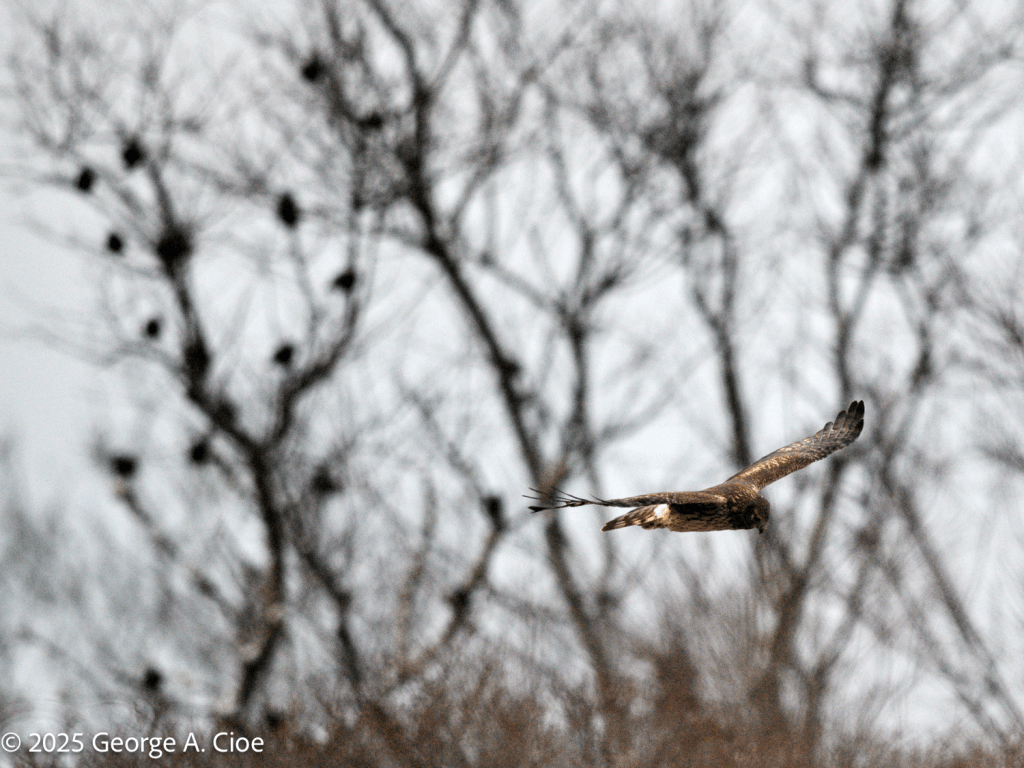
While scanning the horizon, I caught a flicker of motion—a Northern Harrier, low and ghostlike, gliding over the frosted marsh. Unlike most hawks, Harriers hunt by ear as much as by eye, skimming just feet above the ground to catch the faint rustle of prey. During breeding season, they go for reptiles, amphibians, birds, and small mammals. But this time of year, she was clearly focused on meadow voles—though her menu could also include deer mice, shrews, rabbits, and songbirds like meadowlarks and cardinals. In the South, Harriers switch things up with cotton rats, harvest mice, and even rice rats.
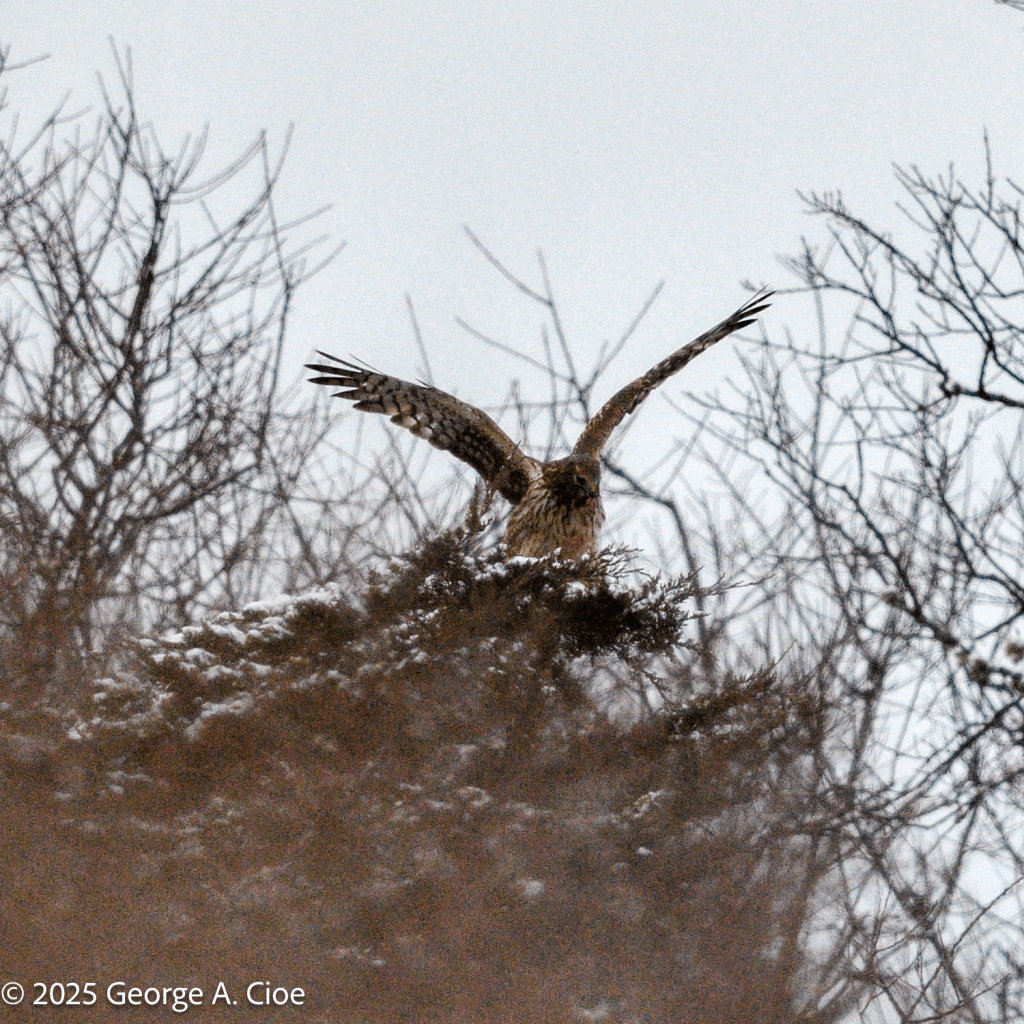
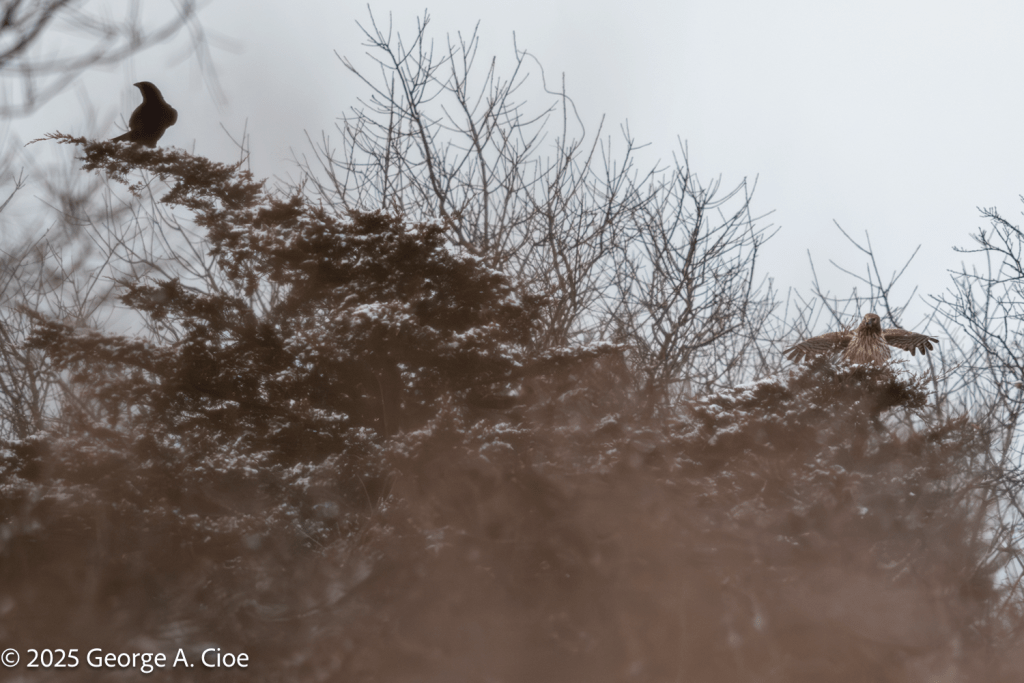
She landed lightly in the crook of a snow-covered pine tree, empty-taloned but alert. At first, I assumed she was simply resting. But then came the telltale lurch of movement—something small and alive, already there, already caught. A squirrel? Maybe?
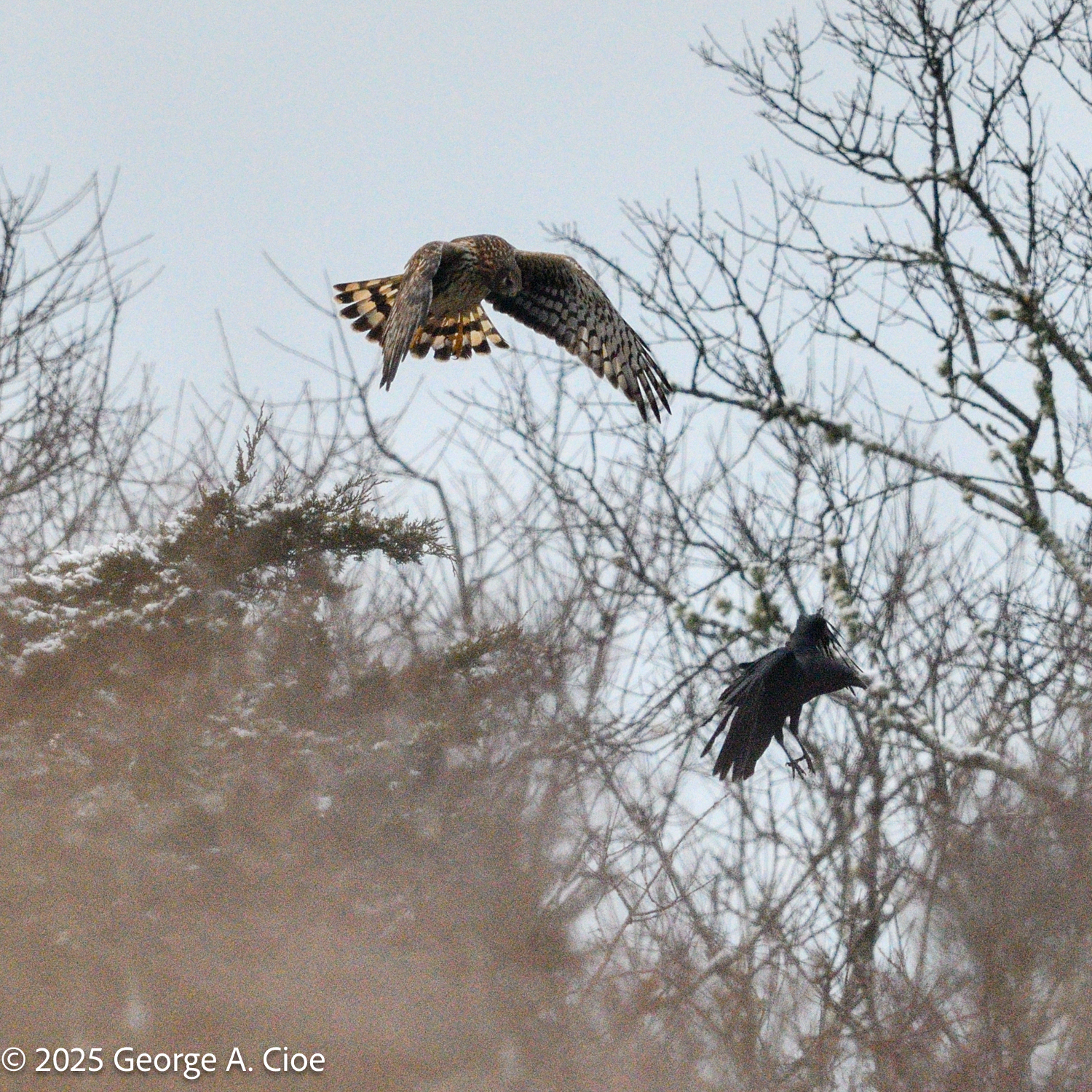
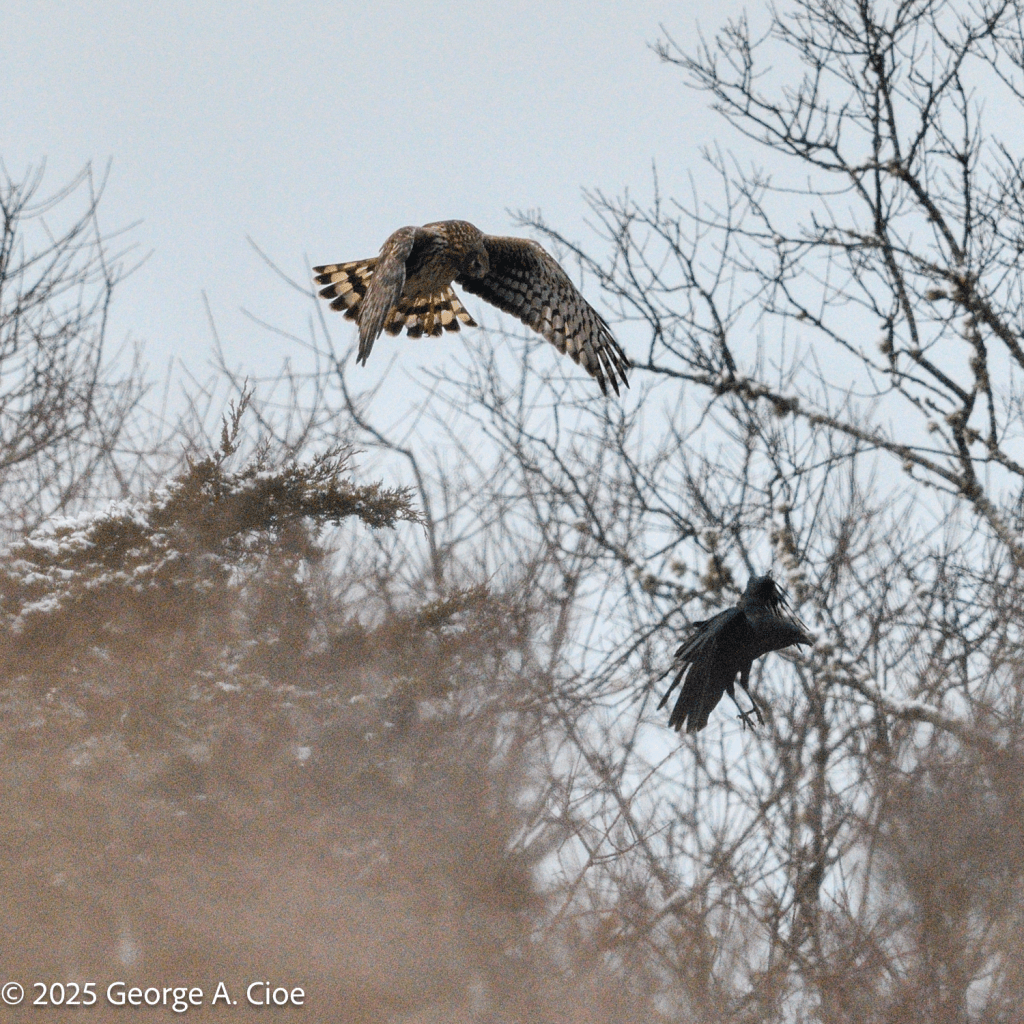
A fatal mistake for whatever it was. In a blink, she was on it. Wings flared, she crouched low and struck, feathers bristling with purpose. Blood spattered the branch as she began to feed, ripping flesh with ravenous force. The crows spotted her almost instantly. They descended in a noisy mob, diving and shrieking, furious that she’d claimed a kill in their territory. She responded with a crackle of wings and flared talons, leaping skyward in a burst of indignation, her meal unfinished. I managed some decent shots catching her in mid-rend, and another as she surged into flight. As she leaves, the crows are lurking and watching from the canopy behind her like ghosts.
No Snowy Owl this time. But in a place where the unexpected is always waiting just around the bend, it’s the journey—not just the subject—that makes it worthwhile.
Because every trip into a wildlife refuge is an adventure, whether you find what you’re looking for or not.
Subscribe below and get my daily (okay, most days—let’s not get crazy) post delivered straight to your inbox. Like magic. But with fewer rabbits. 🐇✉️
Browse my complete art portfolio and shop prints at imagesbygacioe.shop



Leave a Reply