



I had an idea.
Not a Nobel Prize-winning idea.
Not a “Call National Geographic!” idea.
Just a simple question.
How much wildlife could I photograph in exactly one hour while wandering around the Narrow River?
Sixty minutes.
That’s it.
No exotic destination.
No safari.
No helicopter.
No drone.
Just one pair of waders, one ridiculously large lens, and one incurable case of curiosity.
For the next hour, I became…
A very official-looking naturalist.
I even practiced saying scientific things.
“Subject observed exhibiting natural feeding behavior.”
Sounds much more impressive than…
“Hey! Look at that thing!”
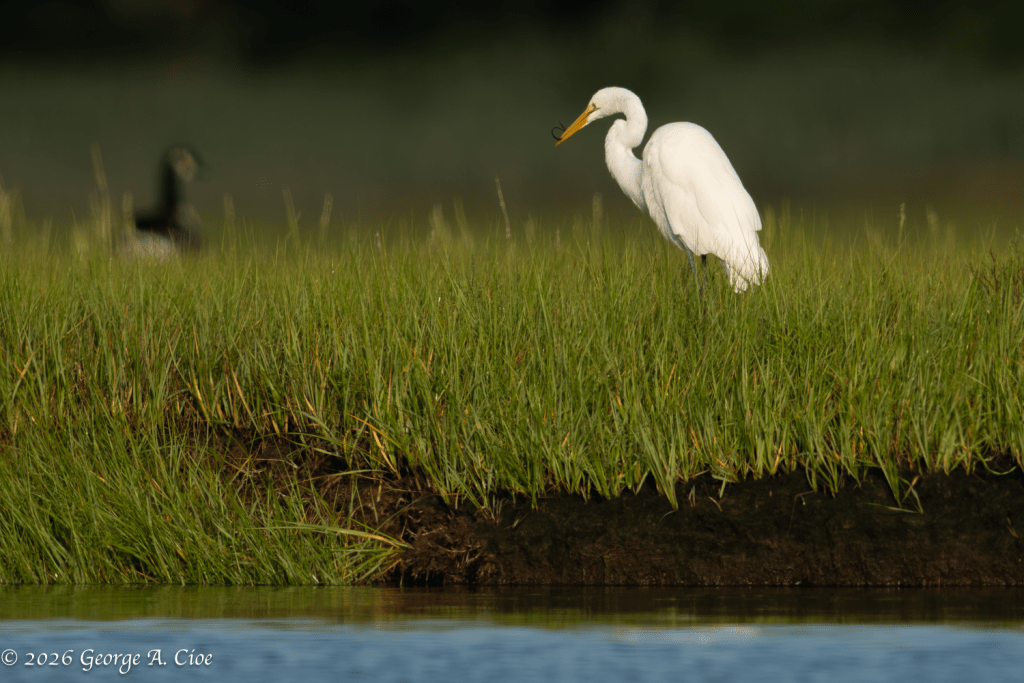
The morning barely started before the first Great Egret caught my attention.
Actually…
Several Great Egrets.
But one stole the show.
It reached into the marsh grass and emerged with what looked like a black shoelace that had suddenly decided it wanted to live.
Most likely…
A juvenile American Eel.
The eel twisted.
The egret twisted.
The eel slipped.
The egret looked mildly annoyed.
Eventually experience defeated enthusiasm, and breakfast disappeared.
Lesson number one:
Nature doesn’t hand out free meals.
Even breakfast comes with wrestling.
Next stop…
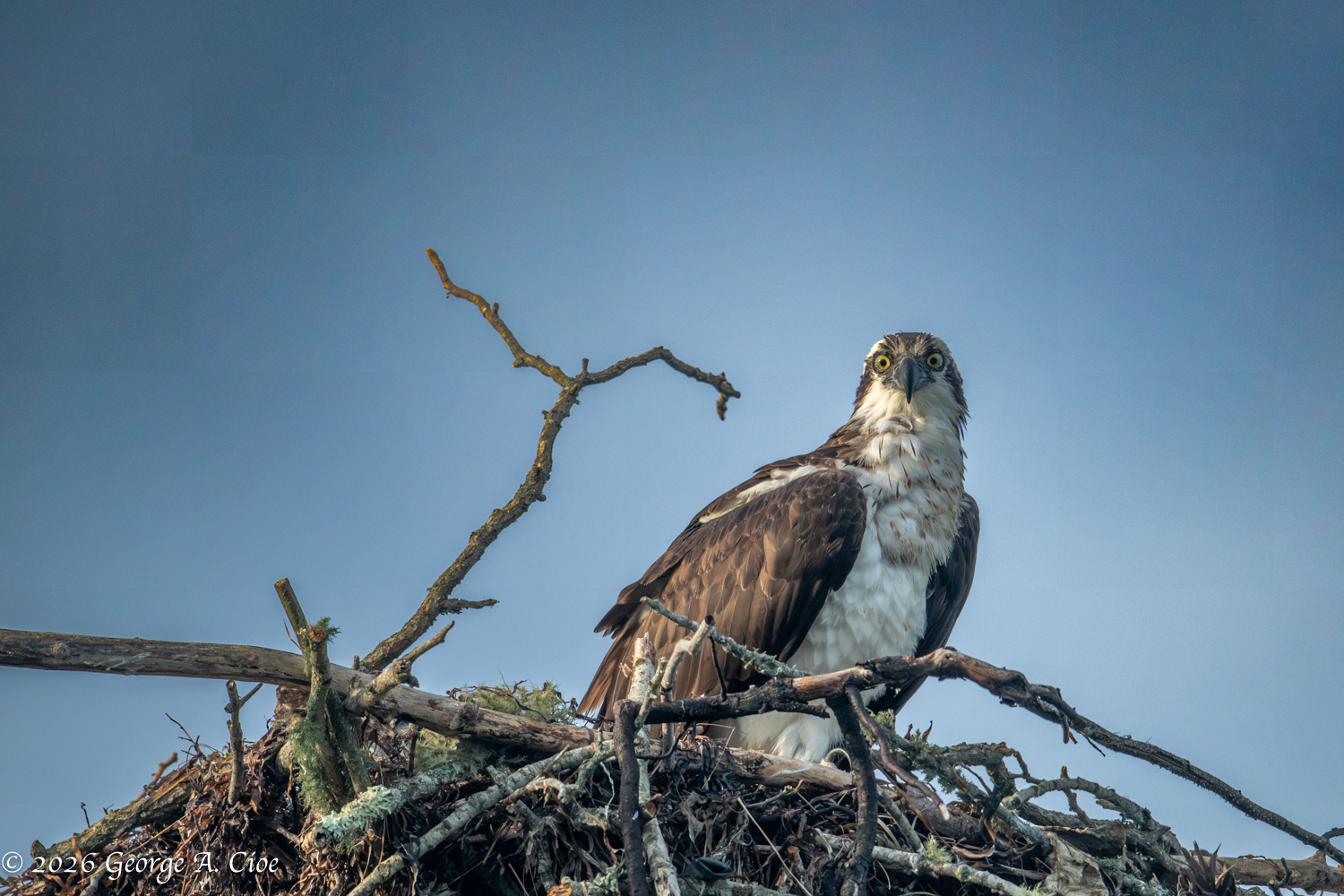
The osprey nest.
The male had already begun dismantling a freshly caught fish with all the etiquette of someone eating ribs at a backyard barbecue.
Meanwhile…
The female wasn’t eating at all.
She was simply sitting there.
Or trying to.
The wind had transformed her elegant head feathers into what can only be described as…
An avian rock star.
Think Tina Turner.
With talons.
Sometimes Mother Nature reminds us that dignity is highly overrated.
Then…
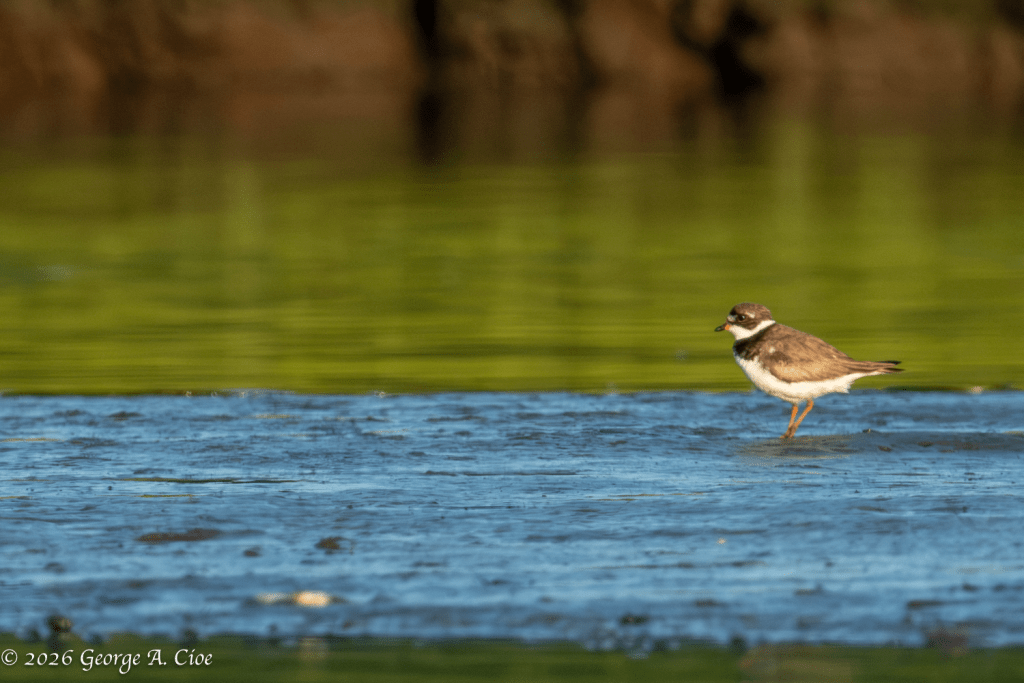
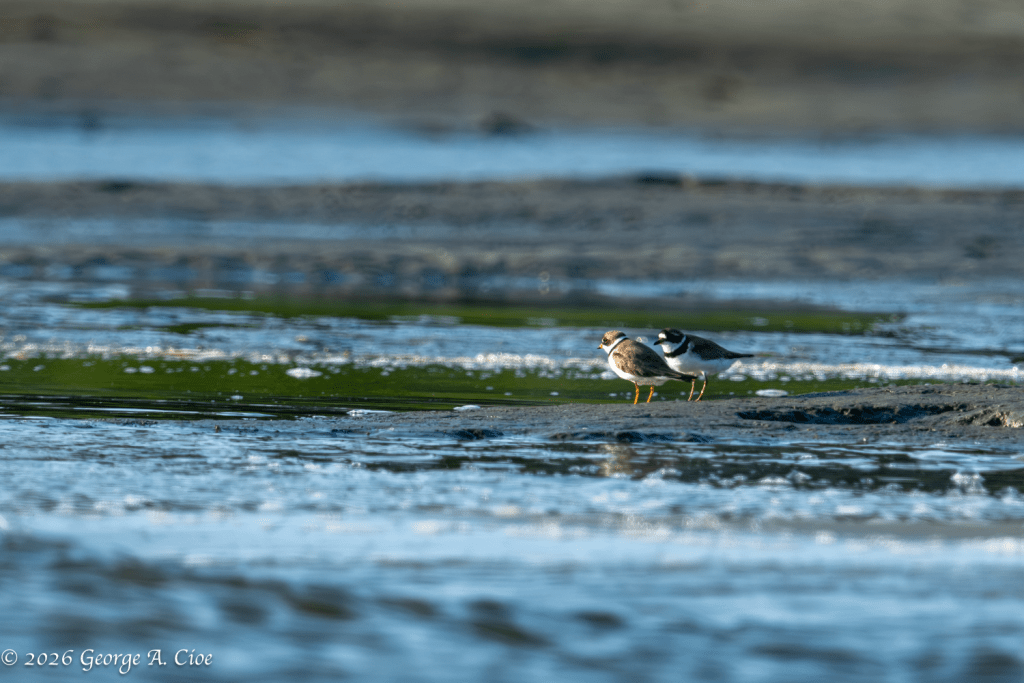
A tiny Semipalmated Plover appeared.
Unlike the egret, which relies on stealth and lightning-fast strikes, this little bird has perfected another strategy.
Run.
Stop.
Peck.
Run.
Stop.
Peck.
Imagine an executive who checks email every three steps.
Tiny worms.
Marine insects.
Amphipods.
Small crustaceans.
Nothing escaped its attention.
Sometimes success isn’t about giant leaps.
Sometimes it’s simply taking thousands of little steps in exactly the right direction.
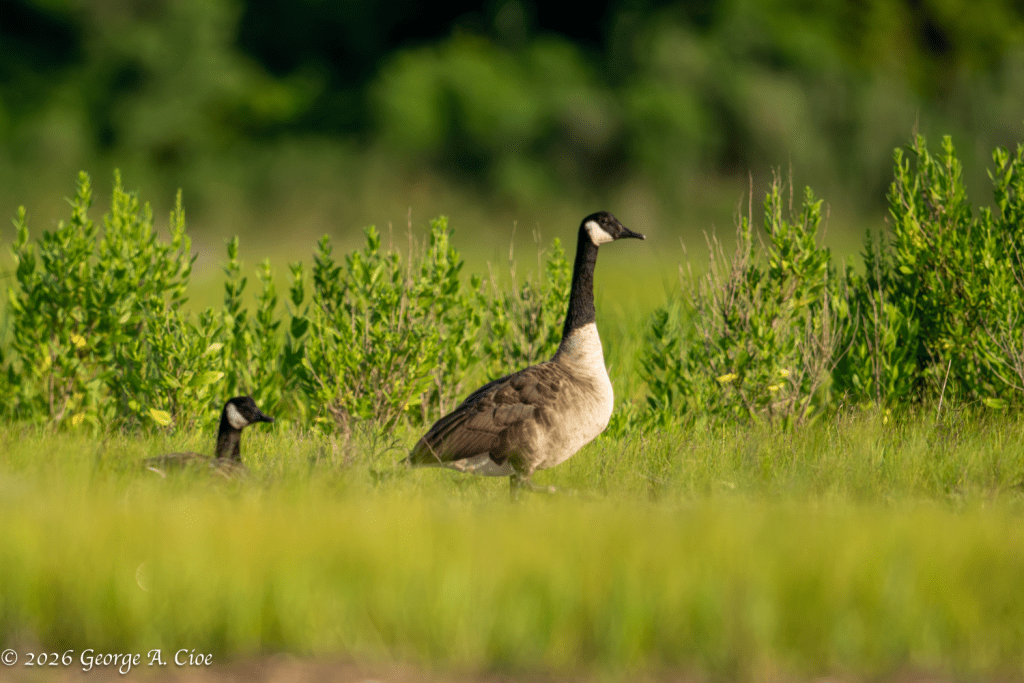
As I waded along Sedge Island, a pair of Canada Geese noticed me.
They immediately began announcing my arrival to every living creature within three zip codes.
“HONK!”
I chose to believe they were saying…
“Good morning, George!”
There’s another possibility.
“INTRUDER! INTRUDER!”
We’ll never know.
They soon lifted off.
Perhaps they thought I was collecting rent.
Then I noticed Old Blue Eyes.
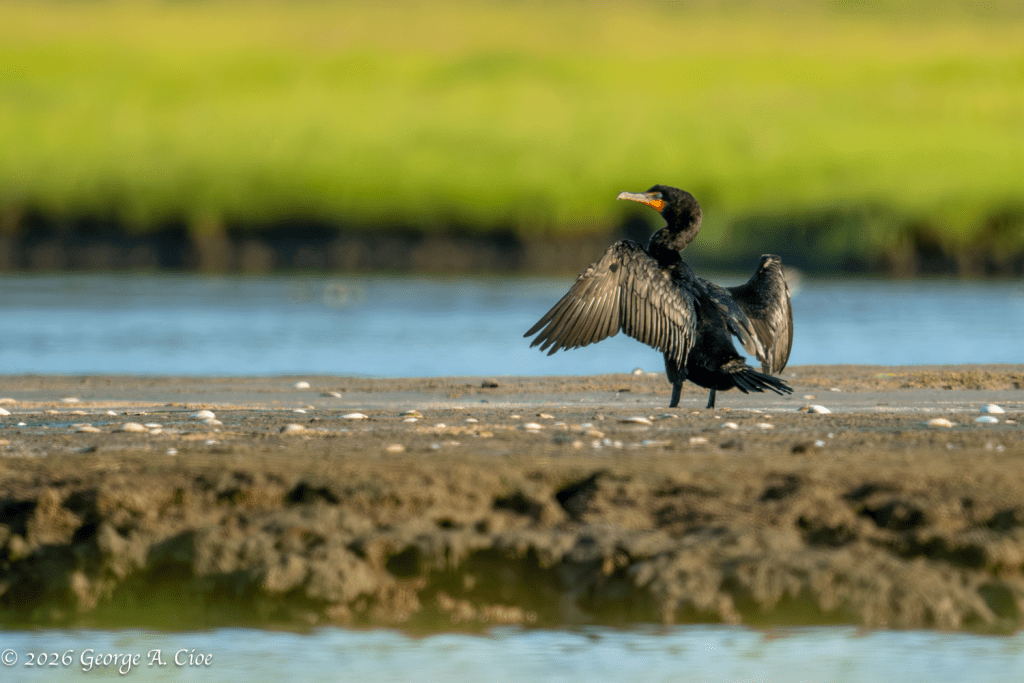
A Double-crested Cormorant stood on a sandbar with its wings spread wide.
People often wonder why cormorants do this.
Unlike ducks, their feathers aren’t completely waterproof.
That’s actually an advantage underwater because it reduces buoyancy and helps them dive.
The downside?
After fishing, they have to dry their wings.
The morning sunlight lit those remarkable turquoise-blue eyes and gave the feathers an iridescent sheen.
Some birds wear tuxedos.
Cormorants wear oil paintings.
The menu continued.
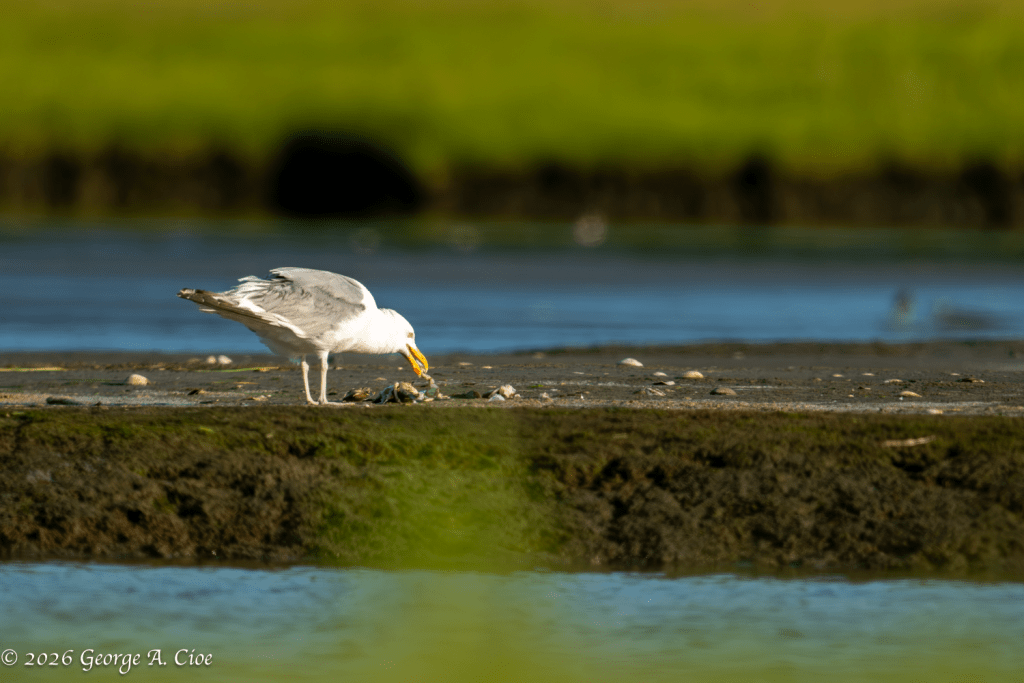
A Herring Gull was enthusiastically introducing a crab to the concept of mortality.
Crabs apparently never read the memo that gulls possess remarkably strong bills.
Breakfast ended exactly as you’d expect.
Then…
Whoosh!
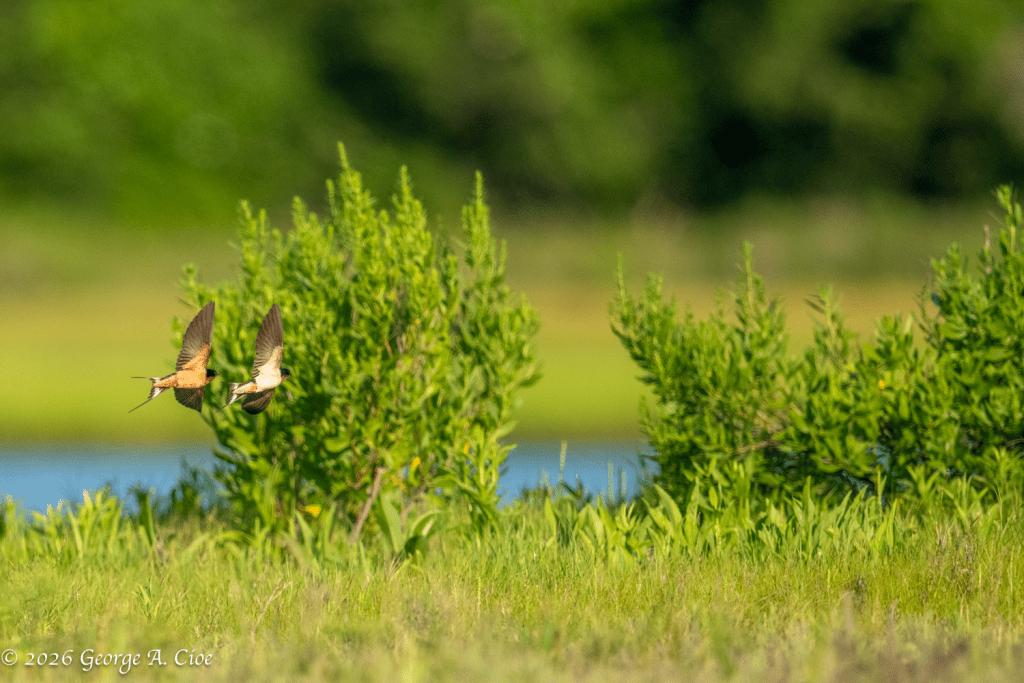
Two Barn Swallows screamed past my head at roughly the speed of regret.
Barn Swallows spend much of the day chasing flying insects.
Mosquitoes.
Gnats.
Flies.
If you’ve ever wondered why they seem incapable of flying in a straight line…
That’s because dinner refuses to cooperate.
It’s basically an all-you-can-eat buffet.
With wings.
Not far away…
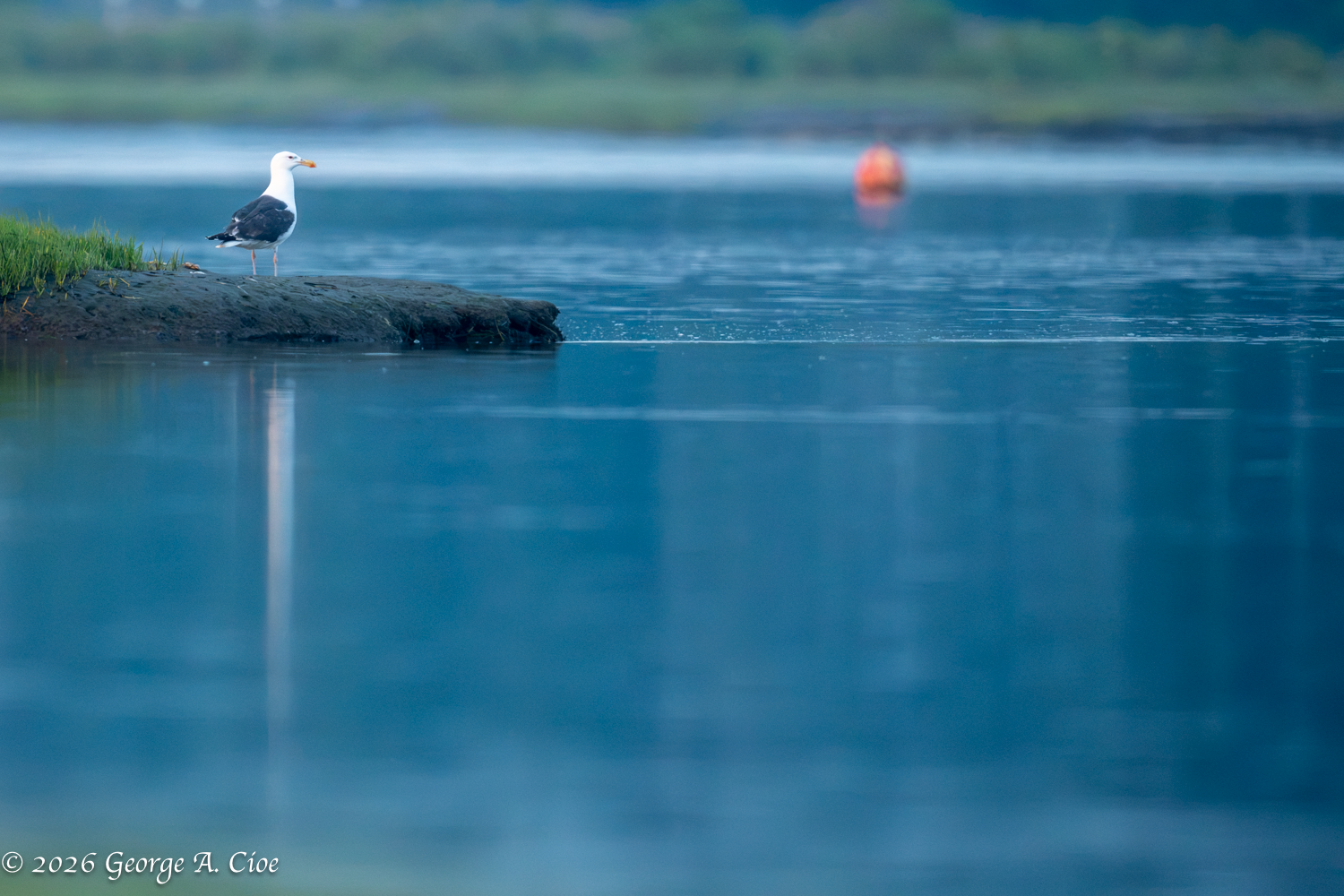
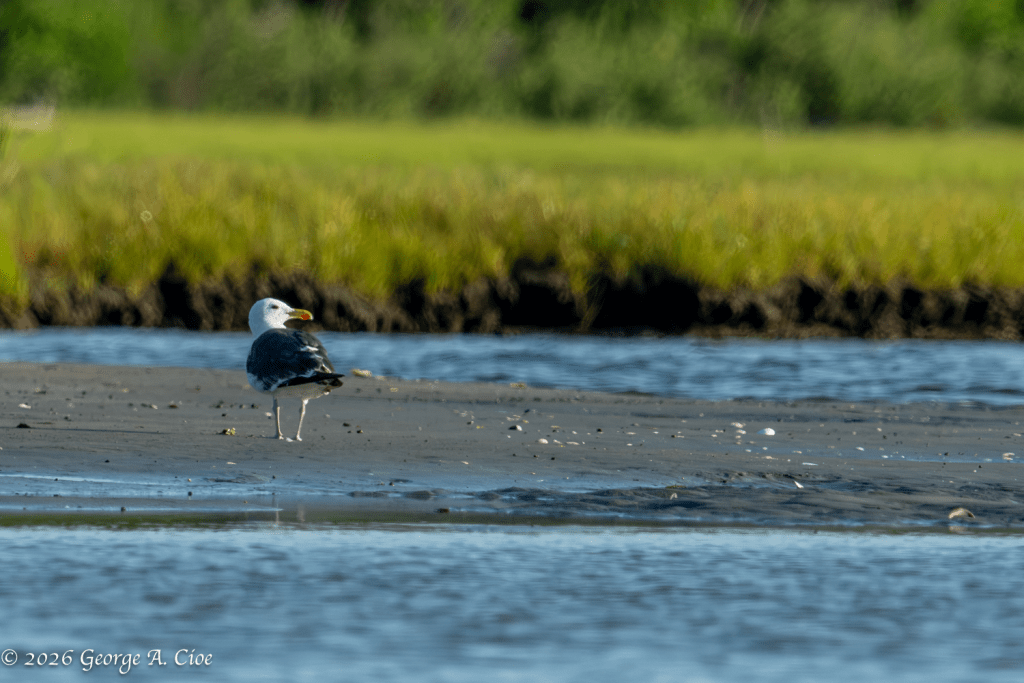
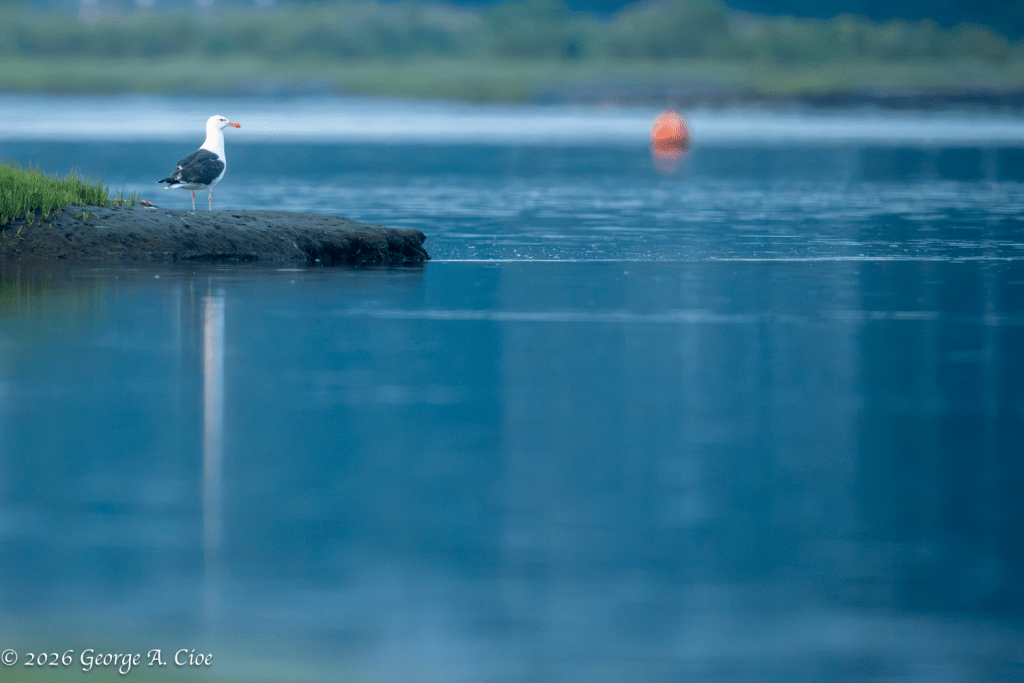
A Great Black-backed Gull stood quietly on a sandbar.
The largest gull in the world.
Completely relaxed.
Not hunting.
Not arguing.
Not stealing anyone’s lunch.
Which meant…
He had probably already eaten.
I’d bet lunch on it.
The mudflats were alive.
A small flock of Semipalmated Sandpipers busily probed between hundreds of periwinkles, searching for tiny invertebrates hidden beneath the mud.
They’d fly.
Circle.
Land.
Repeat.
Italian restaurants have one word for this.
Abbondanza!
Nature simply calls it migration.
Then came one of those moments photographers secretly love.
That strange sensation…
Someone is watching you.
Sure enough…
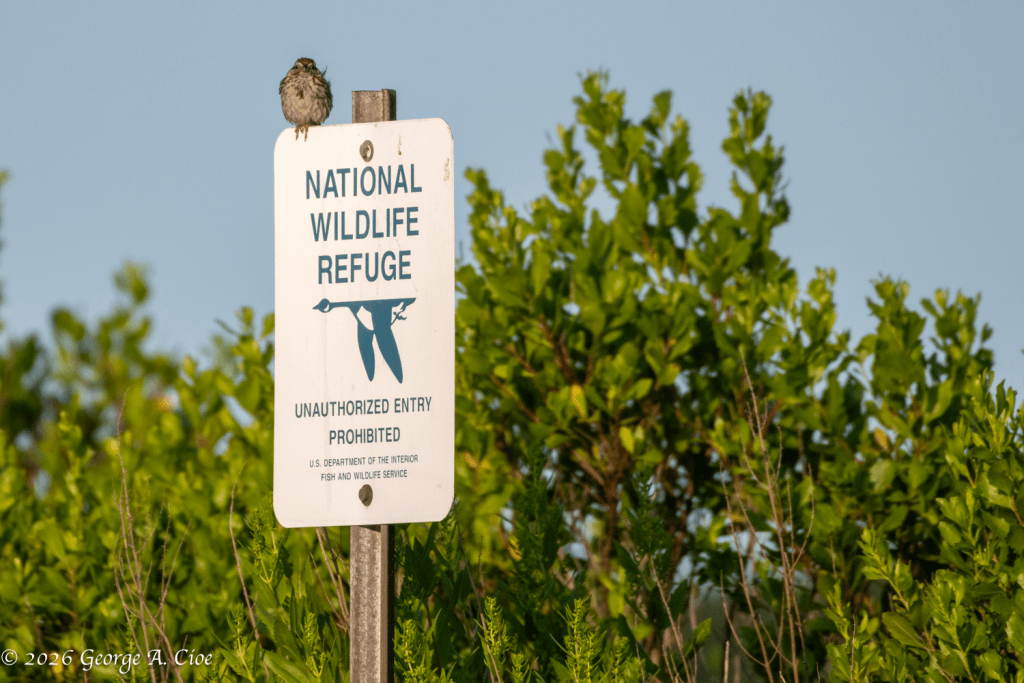
A Song Sparrow sat atop a National Wildlife Refuge sign.
Looking directly at me.
Completely unimpressed.
Almost as if he had questions.
“Really?”
“You carried an 800-millimeter lens all this way…”
“…and you’re photographing me?“
Yes.
Yes, I am.
But the greatest sight of the morning wasn’t feathered at all.
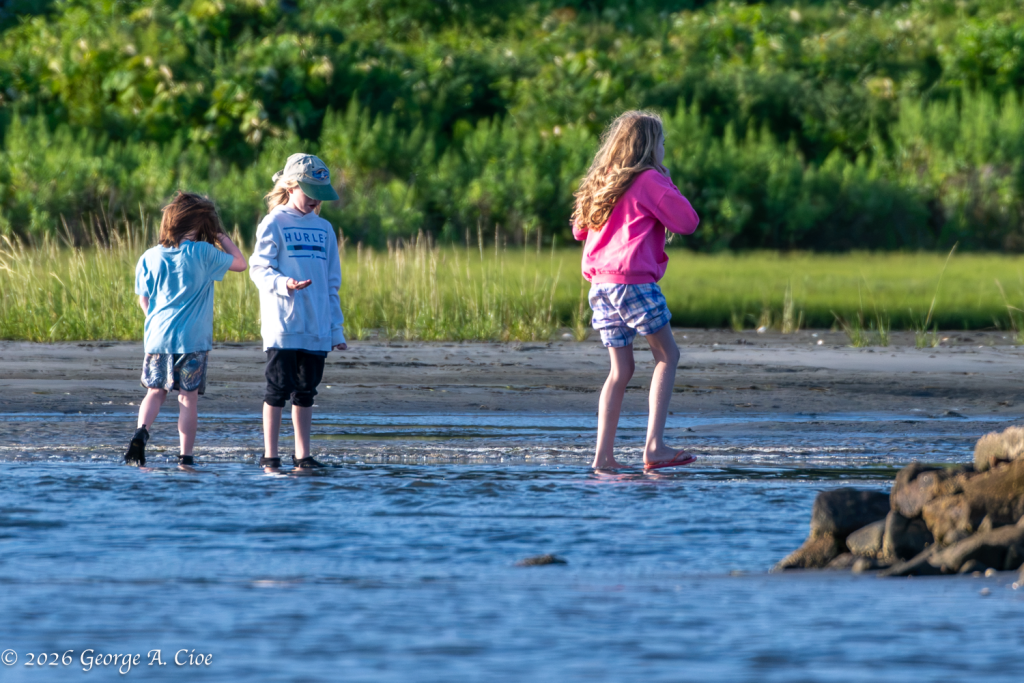
Three children.
Barefoot.
Splashing across the exposed mudflats.
Examining shells.
Looking under rocks.
Holding mysterious treasures they’d proudly discovered.
No phones.
No earbuds.
No screens.
Just curiosity.
Scientists call that observation.
Children simply call it fun.
Frankly…
I think the children have it right.
When my sixty minutes were over, I counted what I’d seen.
Great Egret.
Osprey.
Semipalmated Plover.
Canada Goose.
Double-crested Cormorant.
Herring Gull.
Barn Swallow.
Great Black-backed Gull.
Semipalmated Sandpiper.
Song Sparrow.
And three wonderfully inquisitive young Homo sapiens.
Not bad…
For one hour.
The Narrow River reminded me of something easy to forget.
Adventure isn’t measured in miles.
Wonder isn’t reserved for national parks.
Nature is putting on a spectacular show every single day.
Most people simply drive past without buying a ticket.
Fortunately…
Admission has always been free.
I’d love to share my posts with you. If you subscribe, they’ll come straight to your inbox—most days, like a little note from me to you. It means a lot to know you’re reading along.
Browse my complete art portfolio and shop for prints at imagesbygacioe.shop

Leave a Reply