

I’ll admit it: my birding apprenticeship comes with a quiet helper. The Merlin Bird ID app has become my compass in this world of wings and whispers. With a photo, a call, and a place on the map, it tells me what I would never have known on my own. It feels like magic, but also like joining a larger chorus—each sighting, each note added to a shared song of discovery.
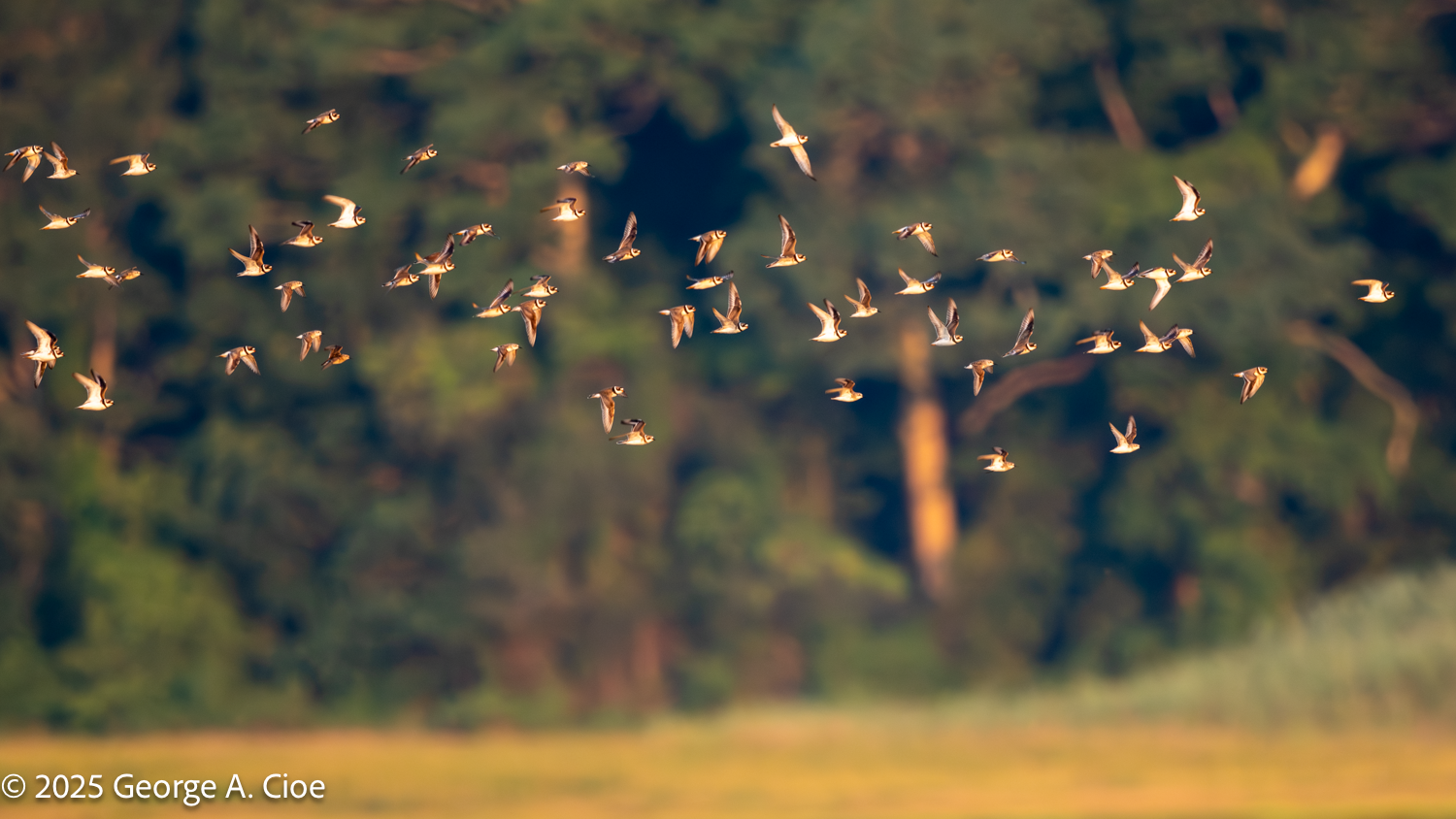
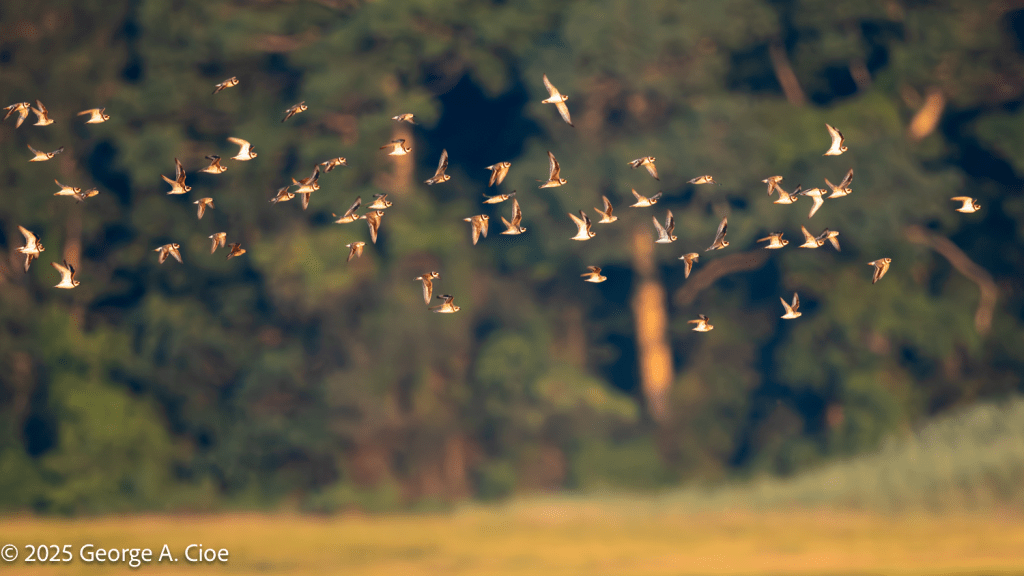
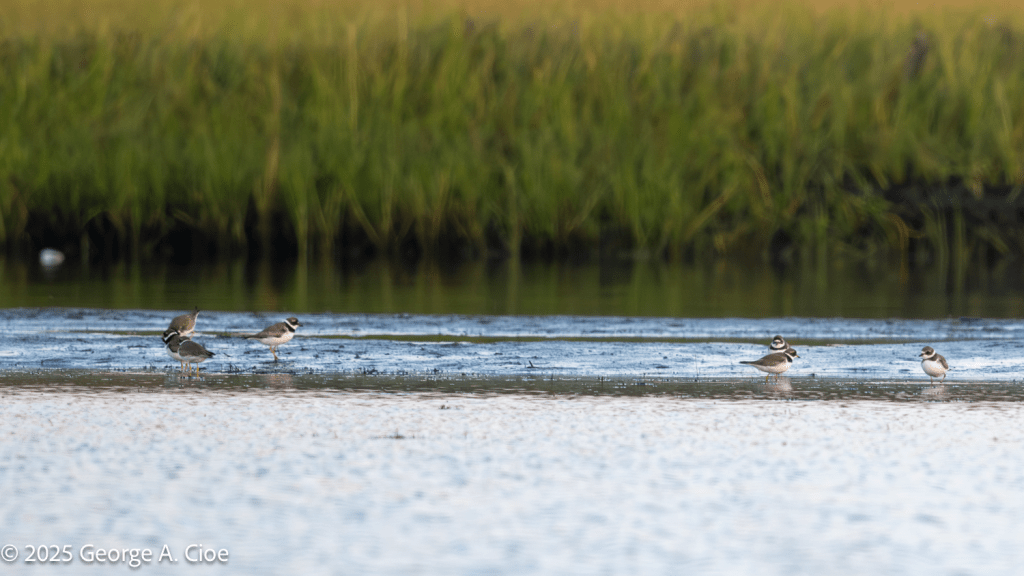
That’s how I learned that the little flock in my lens were Semipalmated Plovers. Tiny, brown-backed wanderers with a single black band across their chest, like miniature Killdeer dressed for modesty. They ran across the mudflat with that peculiar stop-and-go rhythm, stitching invisible lines across the earth.
And they were gathered on ground rich with memory. Here, just west of the Sprague Bridge, stood the little red shack on Sedge Island—an old, weathered icon of the Narrow River. For decades it watched over fishermen casting lines, kayakers drifting past, birders raising their binoculars, and passersby simply soaking in the view. It was part of the river’s heartbeat. In 2016, it was removed—too frail to stand, too beloved to forget.
The shack is gone, but the plovers remain. Their whistles carry over the flats, bright and insistent, as if to say: life continues, memory lingers, beauty endures.
When they suddenly lifted into the morning sky, their wings caught the sun and turned to gold. For a moment, it felt as if the past and present had risen together—shack and shorebird, memory and flight—reminding me that this place is not just for watching, but for remembering.
And so I stood there, humbled and grateful, learning again that birding is not only about naming what you see, but also about listening to what the land remembers.
Subscribe below and get my daily (okay, most days—let’s not get crazy) post delivered straight to your inbox. Like magic. But with fewer rabbits. 🐇✉️
Browse my complete art portfolio and shop prints at ImagesByGACioe.shop

Leave a Reply