
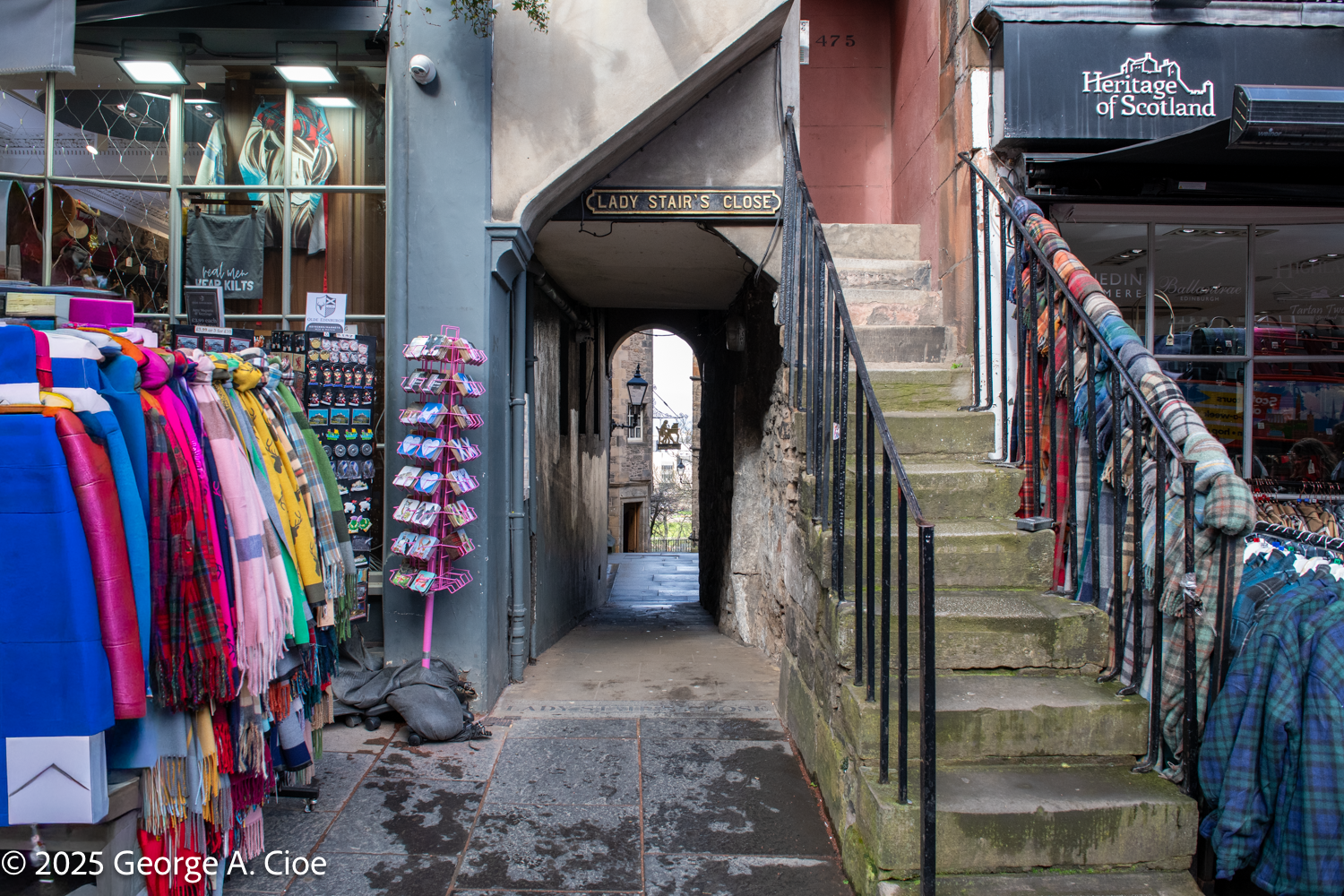
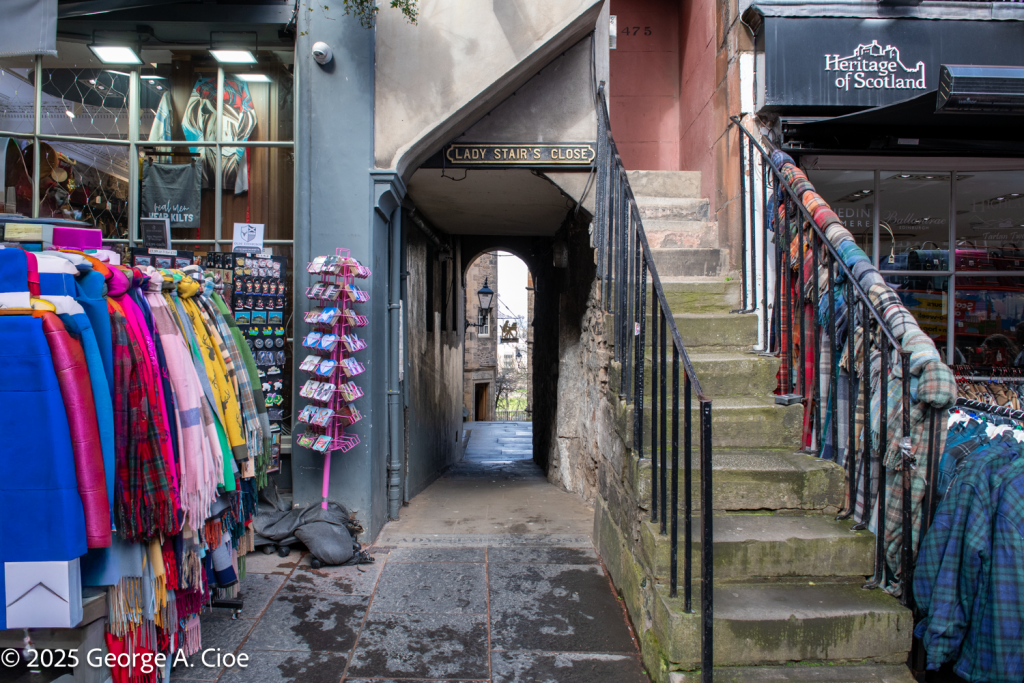
Lady Stairs Close, along The Royal Mile, is more than just a narrow passage in Edinburgh’s Old Town; it is a whisper of centuries past, a place where shadows cling to stone and stories linger in the air. At its heart stands the 17th-century Lady Stairs House, a townhouse of such character that it has charmed visitors for nearly four hundred years. Built in 1622 by Sir William Gray of Pittendrum for his young bride, Lady Gray, it was later named for Lady Stair, who inherited it in the 18th century. Its stones have witnessed the footsteps of nobility, poets, and dreamers alike.
The Close has seen its share of notable moments. In the early 18th century, it became a gathering place for Edinburgh’s literati, where whispered verses and bold ideas slipped through its arches like candlelight through cracks in a shutter. Later, when the Writers’ Museum opened within Lady Stairs House, the Close became forever bound to Scotland’s literary giants—Robert Burns, Walter Scott, and Robert Louis Stevenson. Their words still seem to echo off the close-set walls, as if the very stones remember.
Walking here feels like stepping into a romantic novel. The stairs rise and fall with dramatic flair, while the arched walkway frames the sky in perfect chiaroscuro—light and shadow in constant play. It is easy to imagine a tryst at twilight, a poet pausing to scribble lines by lamplight, or a traveler finding both mystery and comfort within its narrow embrace.
When I first photographed Lady Stairs Close, I was struck by the way geometry and atmosphere conspired together—the positive and negative dimensions of stair and stone, shadow and arch. Only later did I realize how much I had missed, and how much more there was to explore.
Lady Stairs Close is not just a passage—it is a love letter written in stone, waiting to be read again and again. And that, perhaps, is the perfect reason to return.
I’d love to share my posts with you. If you subscribe, they’ll come straight to your inbox—most days, like a little note from me to you. It means a lot to know you’re reading along.
Click on the link to view and purchase these images in my online gallery at ImagesByGACioe.shop

Leave a Reply