
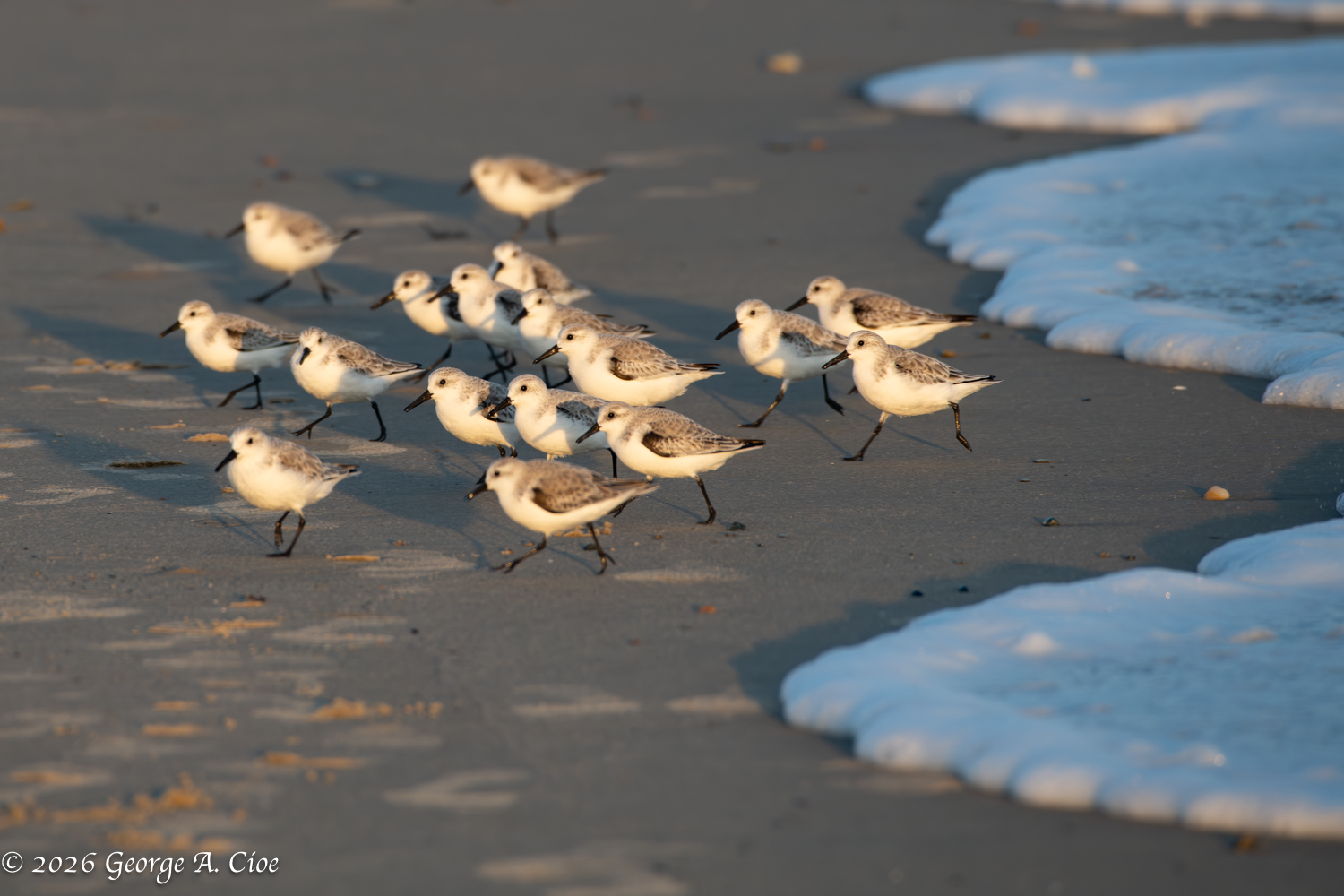
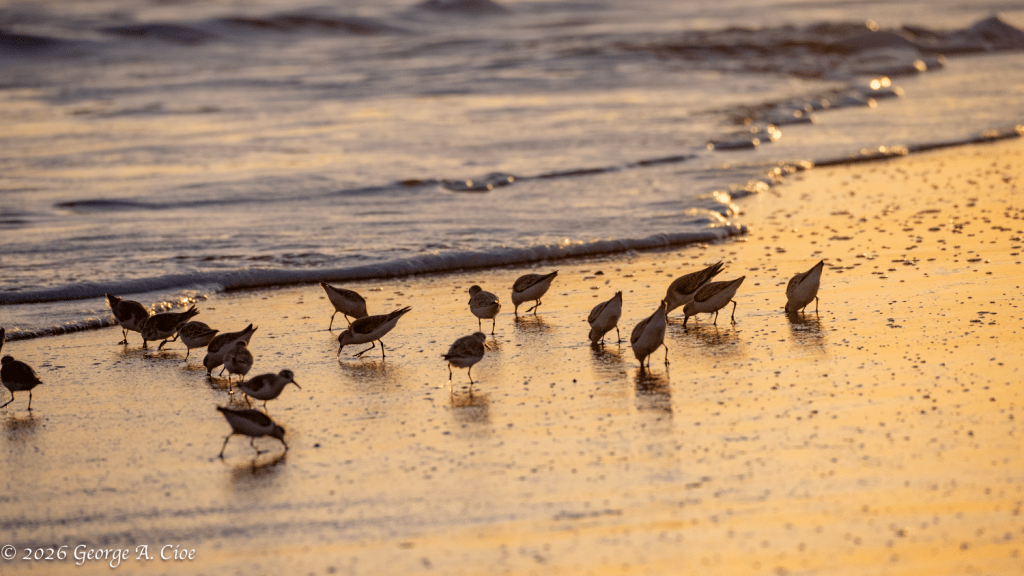
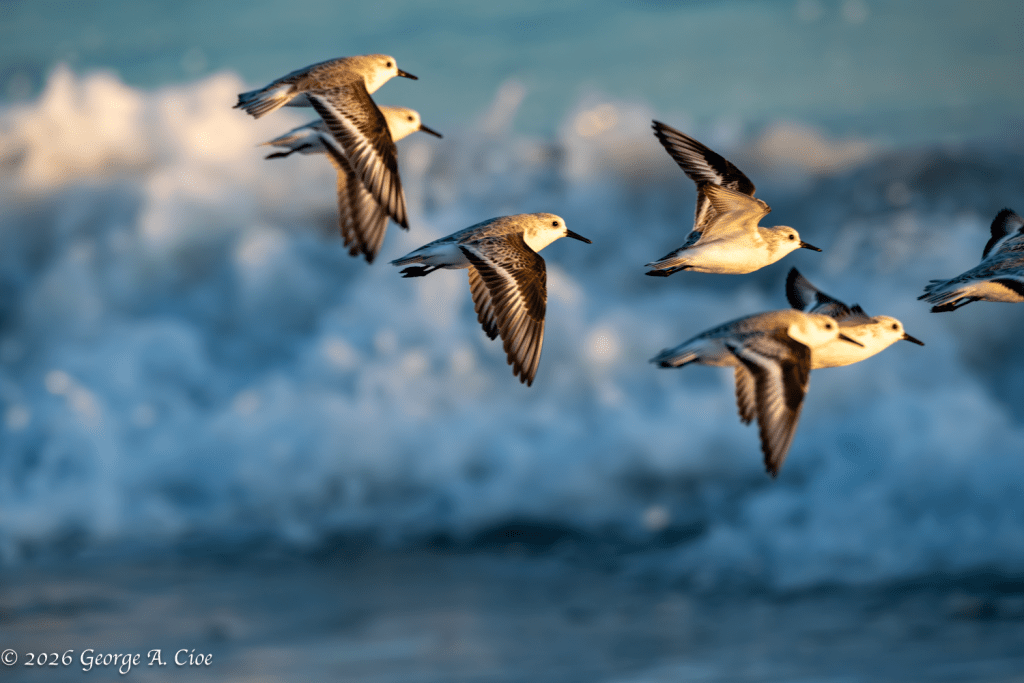


You can’t miss these little guys if they’re on the beach.
Sanderlings love wet sand.
The wetter the better.
But living at the edge of the surf means they have to dance and dodge their way to dinner.
They’ll happily share the shoreline with the occasional stroller, skimboarder, surfer, fisherman, and — you guessed it — photographer. But when one of us gets a little too close, they lift off as a group, skim down the beach, and land again at what they consider a politely safe distance.
Now here’s the really funny thing.
When I watch them working the shoreline, it always feels like they’re having a conversation.
“Hey Bill, over here!”
“Give me a second — I think I’ve got something promising here.”
“Too late… I ate it.”
And just like that — without so much as a crash or warning — the next wave comes charging up the beach.
You’d think it would be chaos.
Every bird for himself?
Nope.
It’s like a drill sergeant just blew a whistle.
Instantly, the whole flock pivots and runs up the beach in perfect formation, staying just ahead of the advancing water.
Then the wave retreats.
And just as quickly, they turn and charge the receding surf like a tiny feathered cavalry, probing the sand for the next meal.
It’s a beachside ballet.
And honestly, it’s quite entertaining.
Especially if you have nothing better to do on a beautiful summer day.
What They’re Actually Hunting
All that frantic running isn’t random.
Sanderlings are chasing dinner.
They forage at the water’s edge, hunting tiny invertebrates that are exposed when waves pull back. Their menu includes:
- Mole crabs (sand crabs)
- Amphipods
- Isopods
- Coquina clams
- Polychaete worms
- Horseshoe crab eggs
Because they probe into wet sand while feeding, they inevitably swallow some of it. Later, they regurgitate small pellets made of sand and indigestible shell fragments.
Charming table manners, but very efficient.
And they spend 40–85% of their day feeding.
Then again… what else are they going to do?
Fascinating Facts About Sanderlings
Unique Foot Anatomy
They’re the only sandpiper without a hind toe. This gives them their lightning-fast ability to sprint across wet sand.
Clockwork Feeding
Their famous wave-chasing behavior isn’t random — it’s strategy. As waves recede, buried prey briefly moves closer to the surface.
Sand Pellets
After feeding, they often regurgitate pellets made of sand and shell fragments.
Seasonal Wardrobe Change
In summer they wear rich reddish-brown breeding plumage.
In winter they become pale gray and white — the lightest shorebird coloration — perfect camouflage for sandy beaches.
Global Travelers
They breed in the High Arctic but winter on beaches across the world, including South America, Africa, and Australia.
Independent Chicks
Their chicks leave the nest within hours of hatching and can feed themselves within 12 hours. They’re flying in about 20 days.
Flocking Defense
When predators like Peregrine Falcons appear, Sanderlings form tight aerial flocks performing dazzling high-speed maneuvers over the ocean.
All things considered…
I think these little guys are the bomb.
I’d love to share my posts with you. If you subscribe, they’ll come straight to your inbox—most days, like a little note from me to you. It means a lot to know you’re reading along.
Browse my complete art portfolio and shop for prints at imagesbygacioe.shop





Leave a Reply