

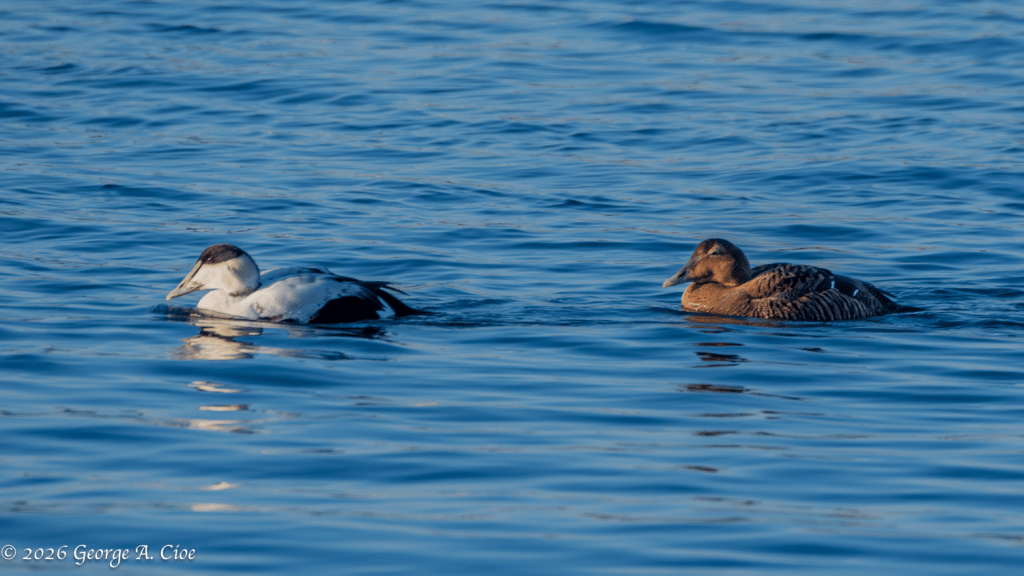
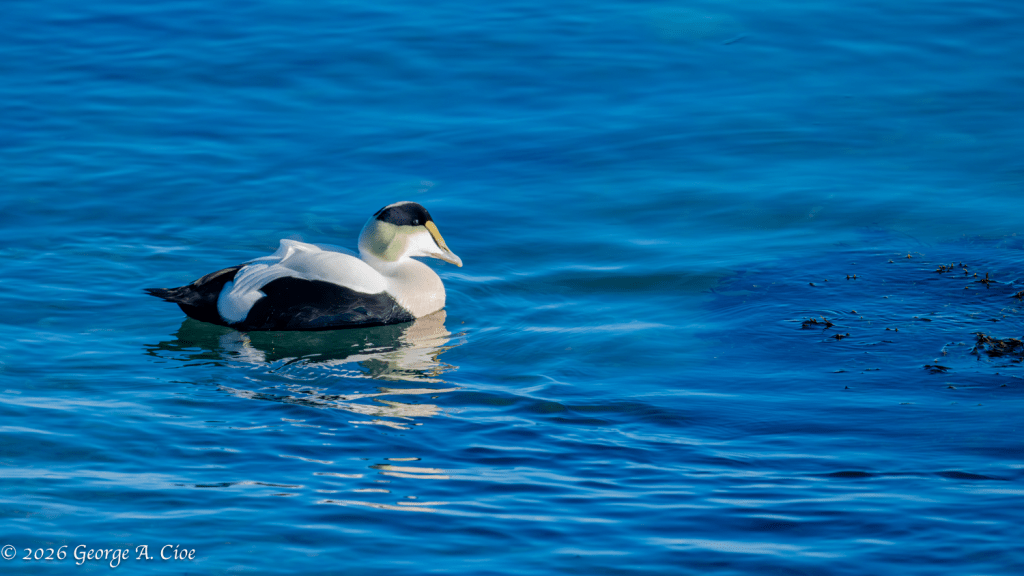

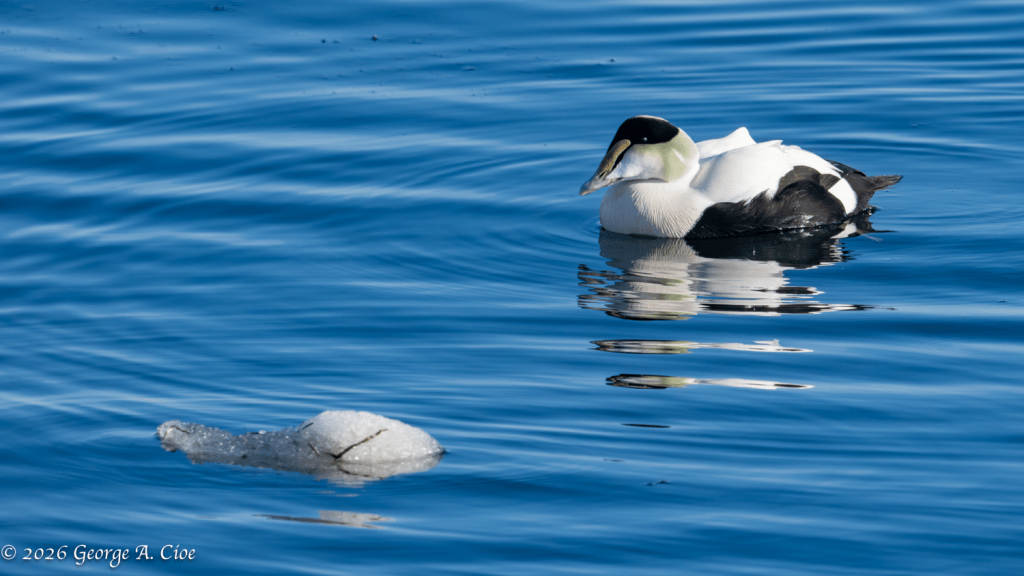
The Common Eider is…
Well.
Too common.
Which is unfortunate. Because there is absolutely nothing common about this bird.
If you’ve spent any time along the rocky Atlantic coast — the kind of places where wind has opinions and the ocean keeps score — you’ve probably seen one floating out there among the other sea ducks. Big. Calm. Completely unbothered by conditions that would send most sensible creatures back to shore.
And because they’re almost always around where waterfowl gather, we tend to treat them like background scenery.
Which is a mistake.
This is a bird of the cold north with a surprisingly warm reputation. The Common Eider is famous for producing one of the most remarkable natural insulators on the planet: eiderdown. When nesting, the female plucks soft down feathers from her own breast to line the nest — creating a cradle so warm that people have been collecting the abandoned down from nests for over a thousand years to make blankets and clothing.
In Iceland, humans even build small nesting shelters so the birds will return each year. Imagine that.
A farming operation where the livestock arrives on its own wings.
The breeding males look like they dressed for a formal event. Crisp white and black plumage with a subtle pistachio-green wash on the neck. Females wear a far more practical brown-and-black barring — perfect camouflage among rocks and seaweed.
And size matters here. These are the largest sea ducks in the Northern Hemisphere.
They patrol rocky shores like underwater construction crews, diving for mussels and shellfish and prying them loose from the rocks with long, chisel-like bills.
Family life is just as impressive. Mother eiders lead their ducklings to the water, often joined by other females acting as babysitters. Soon the youngsters form massive floating day-care centers called crèches, sometimes numbering 150 ducklings or more.
Picture that.
One hundred and fifty fuzzy little ducklings.
Supervised by a handful of very tired mothers.
And if you think sea life is rough, consider this: one male eider recorded in eastern Canada lived at least 22 years and 7 months.
Twenty-two years surviving North Atlantic winters.
And we call him Common.
Which brings me to my complaint.
Exhibit A: the only other eider most people have heard of is the King Eider.
So apparently the naming committee decided the entire genus needed just two career paths:
You’re either Common.
Or you’re King.
Really.
That’s the best they could do?
Because if you look at this bird — really look — its appearance alone could justify names like:
• Black-Crown Eider
• Iceback Eider
• White-Mantled Eider
• Arctic Saddle Duck
• Pale-Back Sea Duck
But noooo.
Someone somewhere said, “Let’s just call it Common.”
How underwhelming is that!
And the rest of the ornithological world nodded politely and went along with it.
Now, one of the great lessons in life — and photography — is learning coping skills.
You eventually realize there are things you simply aren’t going to change.
The tides.
The weather.
And apparently…
The name of the Common Eider.
So the bird and I are just going to have to live with it.
Horsefeathers.
I’d love to share my posts with you. If you subscribe, they’ll come straight to your inbox—most days, like a little note from me to you. It means a lot to know you’re reading along.
Browse my complete art portfolio and shop for prints at imagesbygacioe.shop





Leave a Reply