

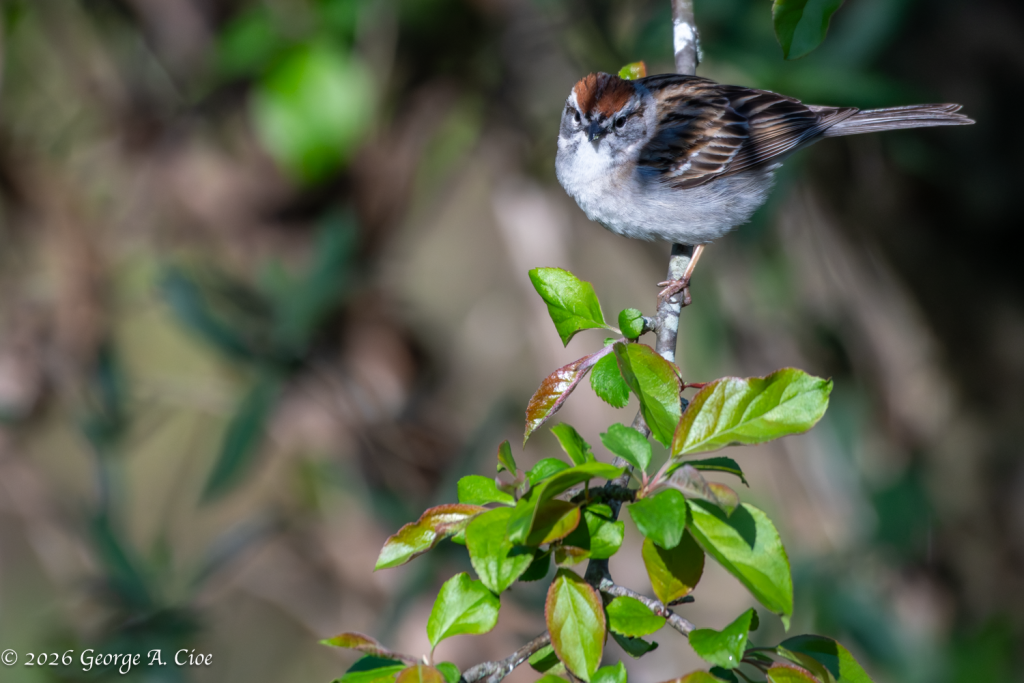

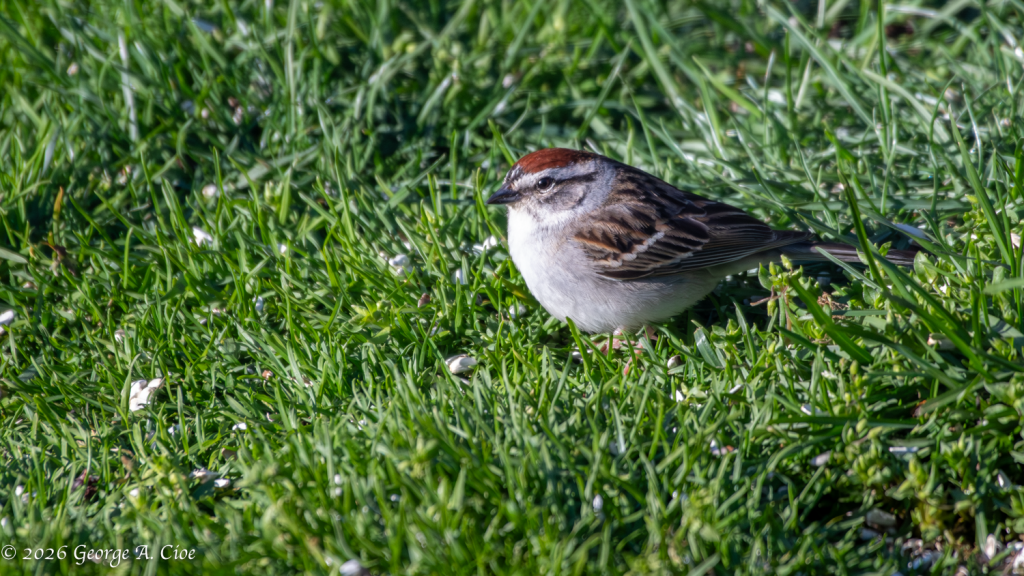
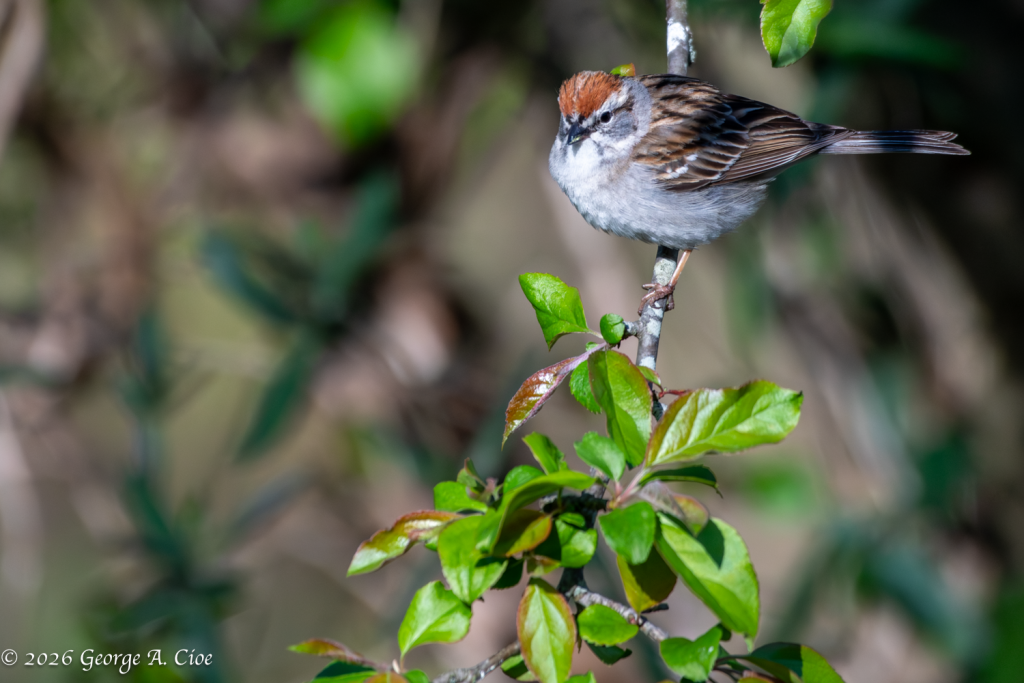
If you have a bird feeder in your backyard, chances are you’ve already met the Chipping Sparrow.
You just may not know it.
And apparently, neither did I.
Now before the birding community revokes my membership card and confiscates my coffee thermos, let me explain.
The Chipping Sparrow is actually a very handsome little bird. Crisp. Clean. Refined. Like the kind of bird that irons its feathers before leaving the nest.
They have frosty gray underparts, a pale face, a sharp black line through the eye, and the pièce de résistance — a bright rusty cap that looks like they dipped their head in cinnamon.
Tiny bird.
Big style.
And they are everywhere.
Open woods.
Suburbs.
Backyards.
Shrubs.
Grass.
Evergreens.
Basically, if there’s a tree and a seed within a quarter mile, there’s probably a Chipping Sparrow nearby judging your lawn care decisions.
Now here’s where the story takes a turn.
For weeks, I kept seeing these little birds hopping around my yard like tiny caffeinated wind-up toys. They would feed on the ground, dart into the shrubs, then suddenly appear at the top of a small tree like they had urgent stock market news to announce.
Very busy little creatures.
And every bird app, every bird book, every birding expert said the same thing:
“Oh yes, you’ll definitely HEAR them.”
Really?
Will I?
Because apparently the Chipping Sparrow operates in a frequency range designed exclusively for teenagers, bats, and maybe certain species of dolphins.
The song of the male Chipping Sparrow is described as a “long, dry trill of evenly spaced chips.”
Bird experts say it’s one of the most common sounds of spring.
Fantastic.
Unless you’re me.
To me, these birds are basically starring in a silent film.
I’m standing in the yard looking around like a confused tourist while the Merlin Bird ID app is having a full-blown emotional breakdown.
“CHIPPING SPARROW!”
“CHIPPING SPARROW!”
“ANOTHER CHIPPING SPARROW!”
Meanwhile, I’m hearing absolutely nothing.
Not a peep.
Not a chip.
Not even a courtesy squeak.
At this point, I’ve accepted that my hearing loss has created an unusual arrangement with nature.
The birds sing.
The app translates.
I nod thoughtfully as if I’m involved.
It’s essentially avian closed captioning.
And honestly, there’s something hysterical about photographing a bird whose primary identifying feature is a song I physically cannot hear.
That’s like being a food critic with no sense of taste.
Yet there I was in my backyard, camera in hand, stalking these tiny feathered introverts as they bounced through the grass searching for seeds.
And I have to admit, they are wonderful subjects.
The Chipping Sparrow doesn’t rely on flashy drama like a cardinal or a hummingbird. No neon colors. No theatrical entrances. No “LOOK AT ME!” energy.
They are subtle.
Elegant.
Understated.
The kind of bird you only fully appreciate when you slow down enough to really look at it.
Which, now that I think about it, may be the entire point.
Because nature doesn’t always arrive with fireworks and surround sound.
Sometimes it whispers.
And sometimes, apparently, it whispers just slightly above your hearing range.
Still…
I saw them.
I watched them cling to the outer branches of the tree.
I watched them hop through the grass.
I watched sunlight ignite that rusty crown like a tiny ember in the morning light.
And even though I couldn’t hear their famous trill, somehow I still heard the moment.
That’s the funny thing about nature.
Sometimes the experience isn’t diminished by what you lose.
Sometimes it’s sharpened by what remains.
I’d love to share my posts with you. If you subscribe, they’ll come straight to your inbox—most days, like a little note from me to you. It means a lot to know you’re reading along.
Browse my complete art portfolio and shop for prints at imagesbygacioe.shop


Leave a Reply