


There are moments in nature when things arrive so suddenly your brain doesn’t even have time to identify what you’re looking at before your finger is already hammering the shutter button.
That was this moment.
Out of nowhere, this tiny feathered projectile came streaking across the Narrow River at what appeared to be approximately Mach 3. For all I know, there may still be a sonic boom echoing around Narragansett.
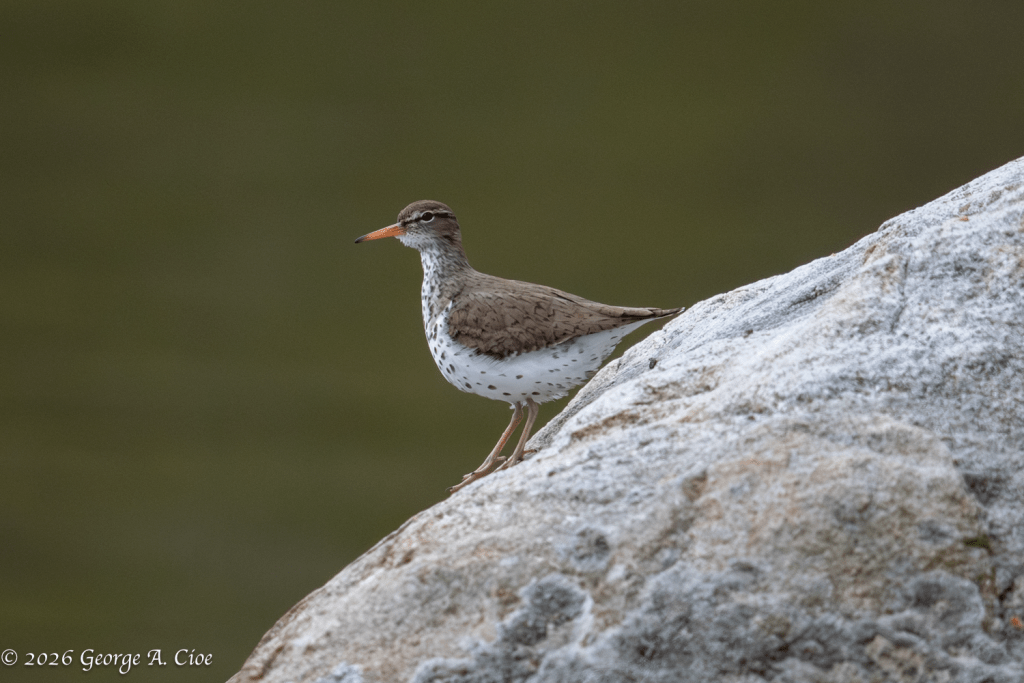
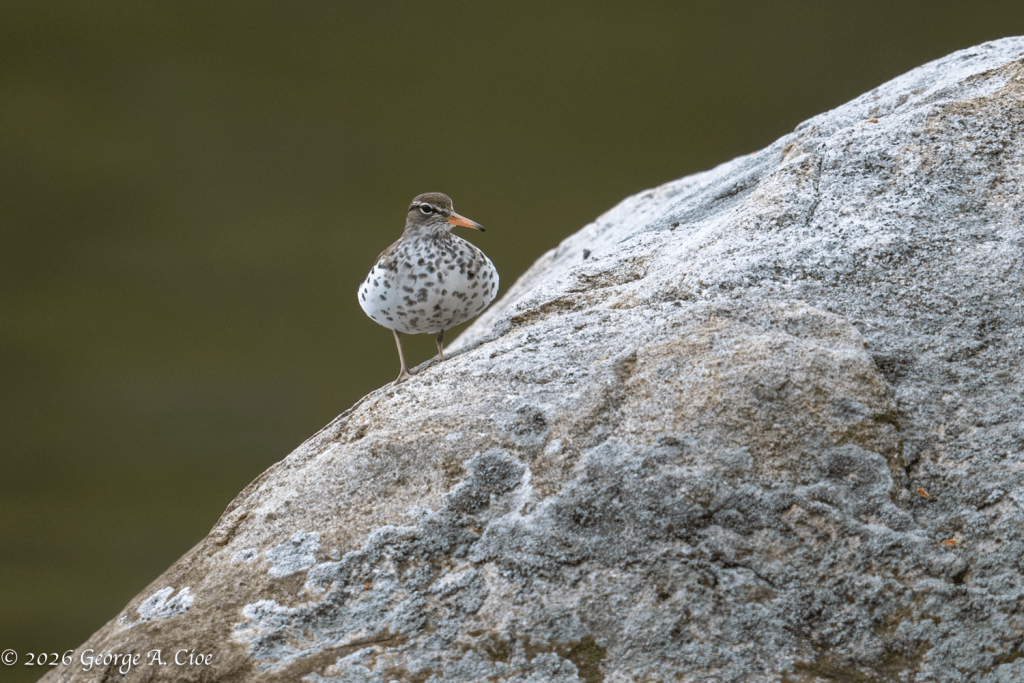
The bird banked hard, flared for landing, and touched down on a rock directly in front of me like a Navy pilot landing on an aircraft carrier.
Now we were getting somewhere.
No yellow legs.
No towering stance.
No “Greater” or “Lesser” identity crisis.
This one was definitely a sandpiper.
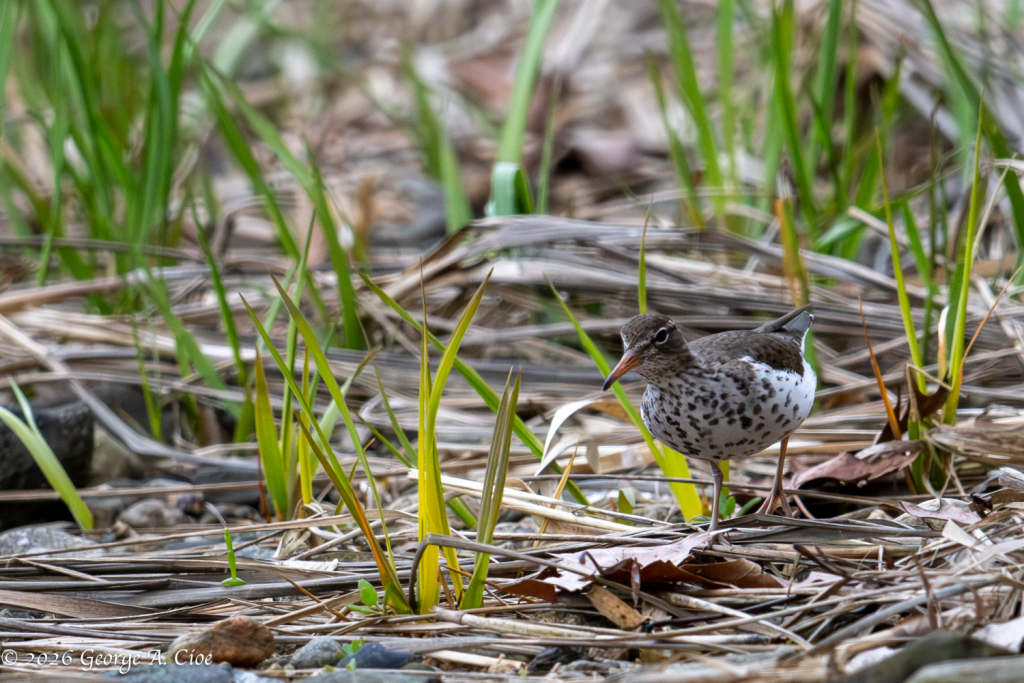
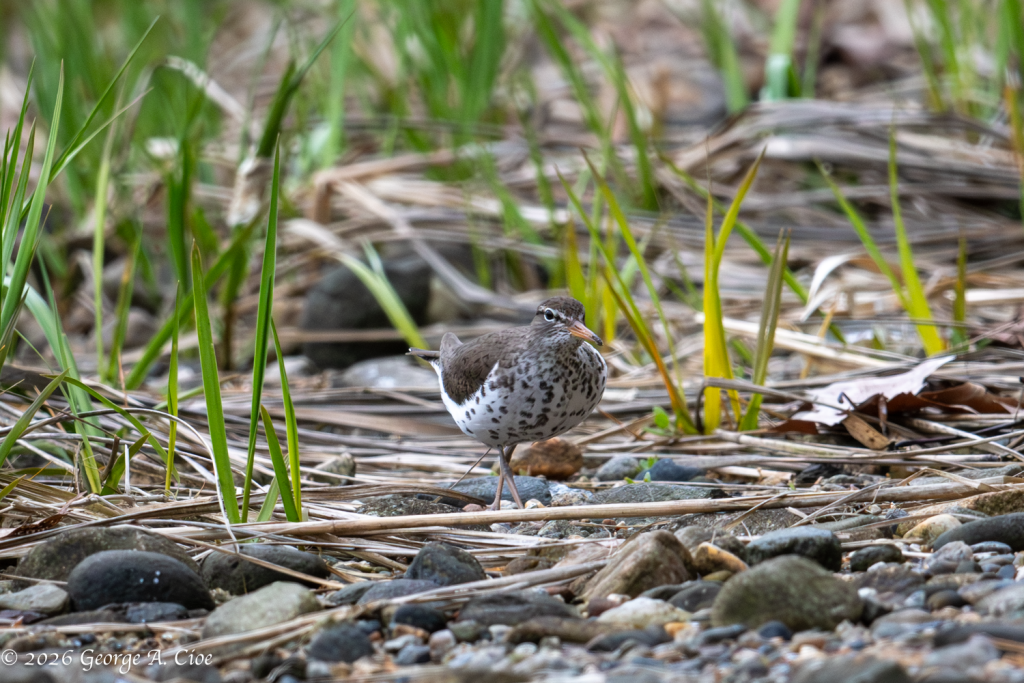
But then I noticed the spots.
Not stripes.
Not bars.
Not subtle markings requiring a PhD in Ornithological Pattern Interpretation.
Nope.
Spots.
Very obvious spots.
Like someone had been painting a fence nearby and this bird wandered through the splash zone.
And in keeping with one of the great traditions in bird naming history — where exhausted naturalists apparently looked at birds for six seconds before heading off to lunch — this species was boldly christened:
The Spotted Sandpiper.
Honestly, points for honesty.
No mythology.
No Latin drama.
No “Northern Lesser Semi-Palmated Something-Or-Other.”
Just:
“You see spots?”
“Yup.”
“Perfect. We’re done here.”
But the real entertainment started once the bird began moving.
On the rock, it walked cautiously. Deliberate. Careful. Measured. Like an elderly gentleman navigating icy steps while holding a cup of coffee.
Then it hopped down onto the shoreline.
And immediately transformed into a tiny ballroom dancer.
Head bobbing.
Tail twitching.
Body bouncing.
The Spotted Sandpiper does this constantly while walking — a rhythmic teetering motion so distinctive birders can often identify it from half a football field away.
And friends… once you notice it, you cannot unsee it.
It looked exactly like the bird had earbuds in and was grooving to samba music only it could hear.
Step.
Bob.
Step-step.
Bob.
I sat there completely mesmerized.
And then came the truly troubling moment.
I realized I had started bobbing my own head in sync with the bird.
Not subtly either.
Full participation.
Like some middle-aged wildlife photographer unknowingly auditioning for “Dancing With The Shorebirds.”
At that point I stopped immediately and looked around to see if anyone had witnessed my descent into interpretive bird choreography.
Because once you start dancing with a sandpiper, you are dangerously close to becoming “the guy people talk about at the refuge.”
Still… I have to admit, the little bird had style.
The Spotted Sandpiper is one of North America’s most recognizable shorebirds once you learn its habits. Medium-sized with a rounded breast, short neck, and slightly forward-leaning posture, they often appear busy, nervous, and late for an important meeting.
During breeding season, like this beautiful bird, they wear bold dark spots across a bright white chest, paired with warm brown upperparts and a striking orange bill tipped in black. In winter, the spots disappear entirely, leaving a much plainer bird that probably causes birders nationwide to mutter:
“Oh come ON…”
They are active hunters too.
Unlike some shorebirds that simply probe mud like tiny sewing machines, Spotted Sandpipers are energetic foragers. They chase insects, lunge at prey, snap at airborne bugs, pick through shoreline debris, and occasionally grab tiny fish or crustaceans.
Basically, they hunt like caffeinated toddlers.
This little performer spent nearly thirty minutes working the shoreline in front of me — dancing, bobbing, probing, pausing dramatically, then sprinting off again as though summoned by another song farther downriver.
Eventually it moved on.
Presumably to a venue with better music.
I’d love to share my posts with you. If you subscribe, they’ll come straight to your inbox—most days, like a little note from me to you. It means a lot to know you’re reading along.
Browse my complete art portfolio and shop for prints at this link: imagesbygacioe.shop




Leave a Reply