




This morning at Lake Canonchet started innocently enough.
Which is usually how nature tricks you.
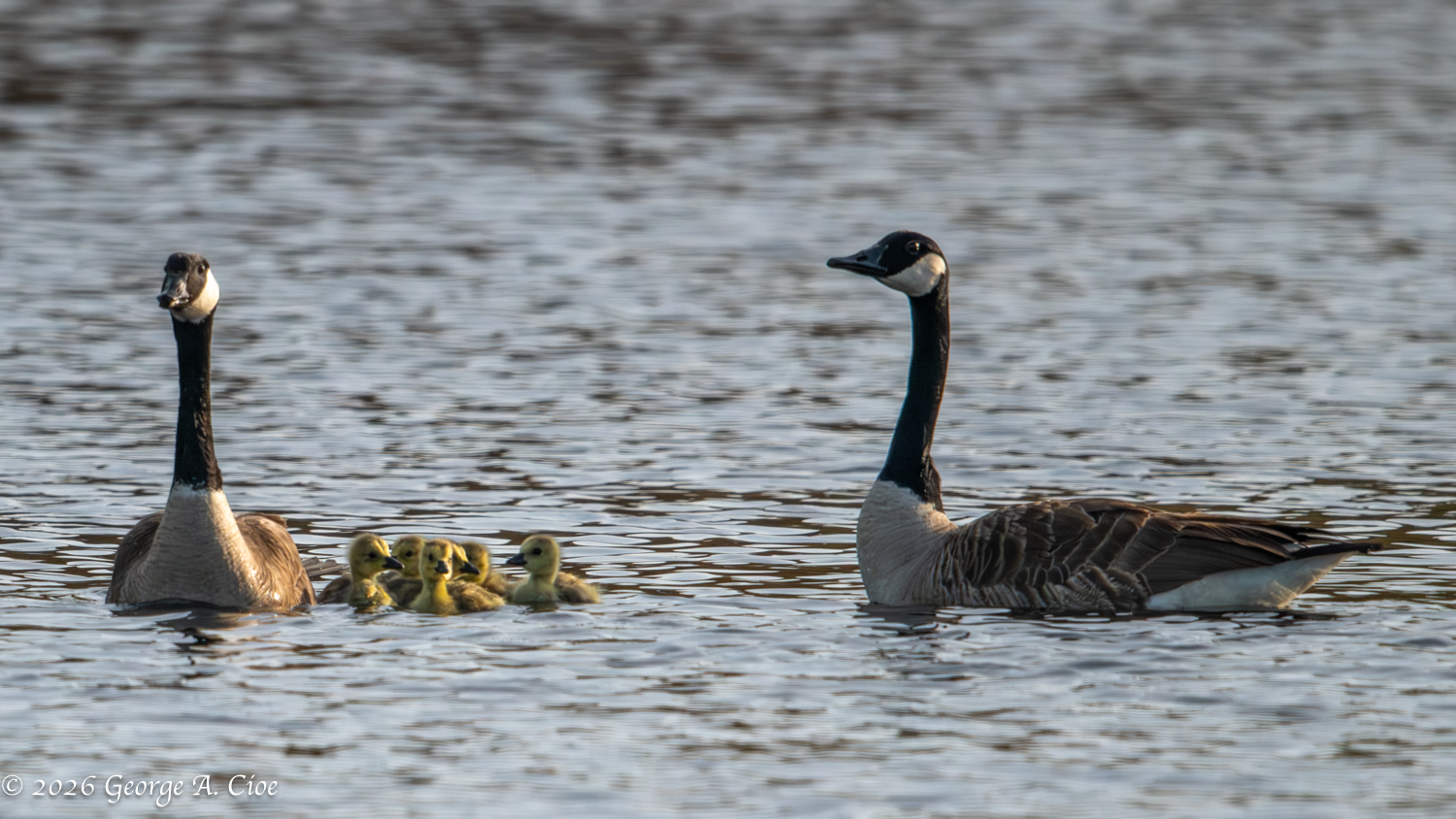
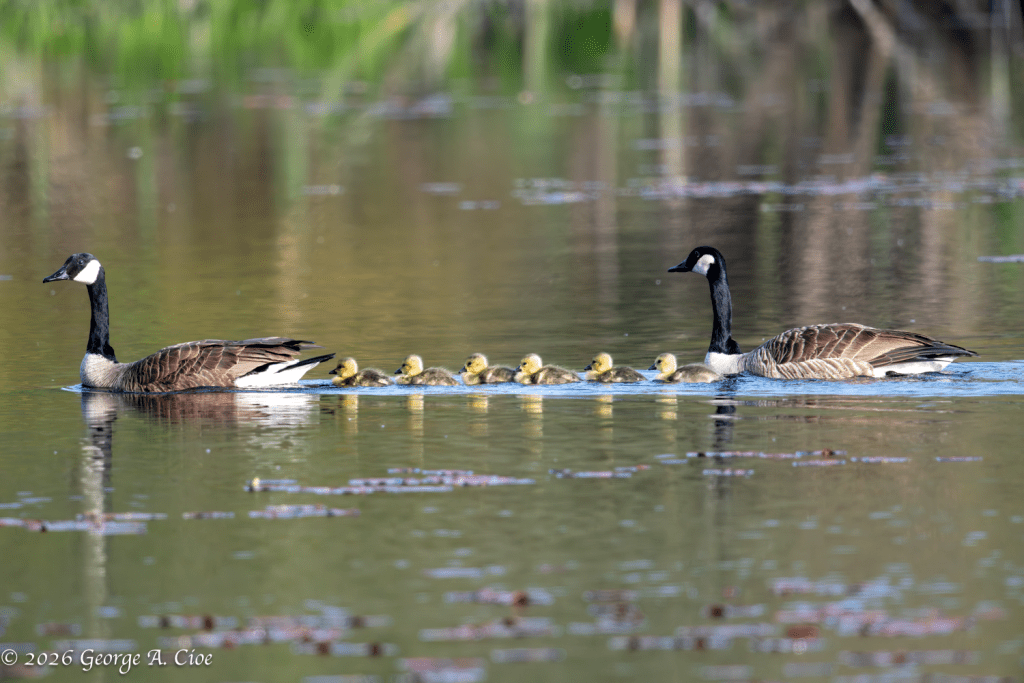
I spotted a pair of Canada Goose with their newly hatched goslings gliding across the lake and naturally pulled over to photograph them. Tiny yellow fuzzballs paddling in formation behind Mom and Dad are almost impossible to resist. It’s like nature weaponized cuteness.
Everything looked peaceful.
Too peaceful.
As I unloaded my gear, I noticed movement overhead.
Fast movement.
An Osprey came slicing across the lake low and hard like a feathered fighter jet with an attitude problem.
Once.
Twice.
Then again.
Now if you’ve spent any time around ospreys, you know they are not random flyers. These birds are precision specialists. Fish are their thing. Their feet are engineering marvels — reversible outer toes, barbed pads, talons built to grab slippery prey from the water with frightening efficiency.
But this osprey was not looking at fish.
It was looking at the goose family.
And suddenly the mood on the lake changed.
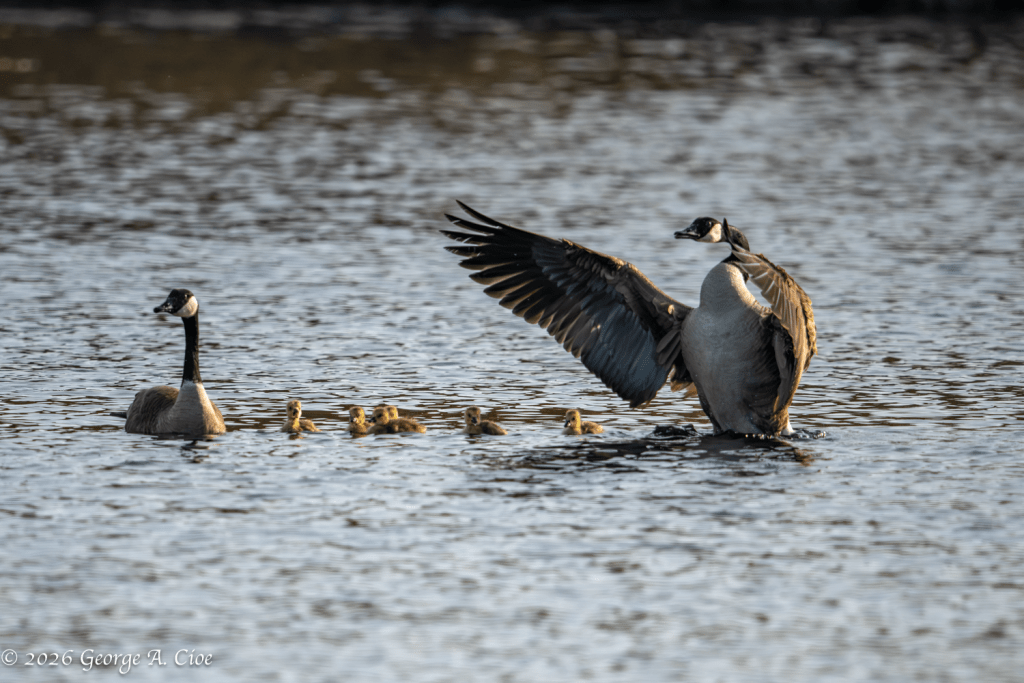
What had been a relaxed little parade instantly transformed into a defensive operation worthy of a military documentary. The goslings, who seconds earlier looked like they were debating snack options and nap schedules, immediately sprint-paddled toward their mother. Dad wheeled around and rose up in the water with wings spread wide like an angry nightclub bouncer announcing:
“Absolutely not.”
And honestly?
Dad Goose was impressive.
Canada Geese may look like oversized lawn ornaments at times, but when goslings are involved, they become floating tanks with anger management issues.
The osprey made another pass.
Low.
Deliberate.
Focused.
Now here’s where nature stops being a greeting card and reminds you that survival has teeth.
Ospreys are overwhelmingly fish eaters. About 99% of their diet is fish. But during nesting season, especially when hungry chicks are waiting back at the nest, even specialists can become opportunists. Tiny goslings can occasionally become targets. It’s uncommon, but it happens.
And in that moment, standing beside the road with camera in hand, I realized I was watching something far more important than a pretty wildlife scene.
I was witnessing the ancient math of survival.
Hunger.
Protection.
Risk.
Instinct.
The circle of life doesn’t always arrive with dramatic music and cinematic narration. Sometimes it arrives in silence across a quiet Rhode Island pond while golden light dances on the water and one family desperately tries to stay together.
Eventually the osprey broke off.
And the geese wasted no time.
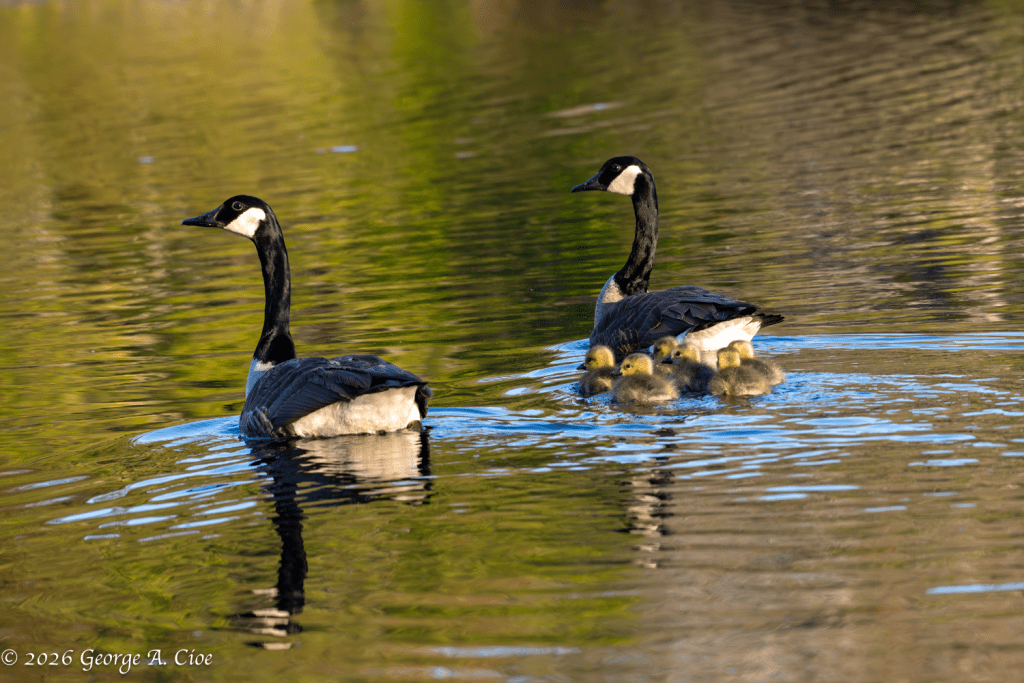
The family immediately headed for shoreline cover, the goslings tucked tightly between the adults like precious cargo under armed escort. Every movement suddenly cautious. Every shadow overhead now suspect.
And I stood there thinking about how much wildlife teaches us when we simply stop long enough to watch.
Field guides give us averages.
Nature gives us reality.
The more time I spend observing the natural world, the more I realize that survival is fluid. Rules bend. Behavior adapts. Hunger rewrites expectations. Opportunity changes outcomes.
And somehow, wrapped inside all that tension, there is still extraordinary beauty.
Tiny goslings following their parents across mirrored water.
An osprey riding the wind.
Parents willing to fight for their young.
Predators trying to feed theirs.
The circle continues.
Naturally.
I’d love to share my posts with you. If you subscribe, they’ll come straight to your inbox—most days, like a little note from me to you. It means a lot to know you’re reading along.
Browse my complete art portfolio and shop for prints at imagesbygacioe.shop


Leave a Reply