







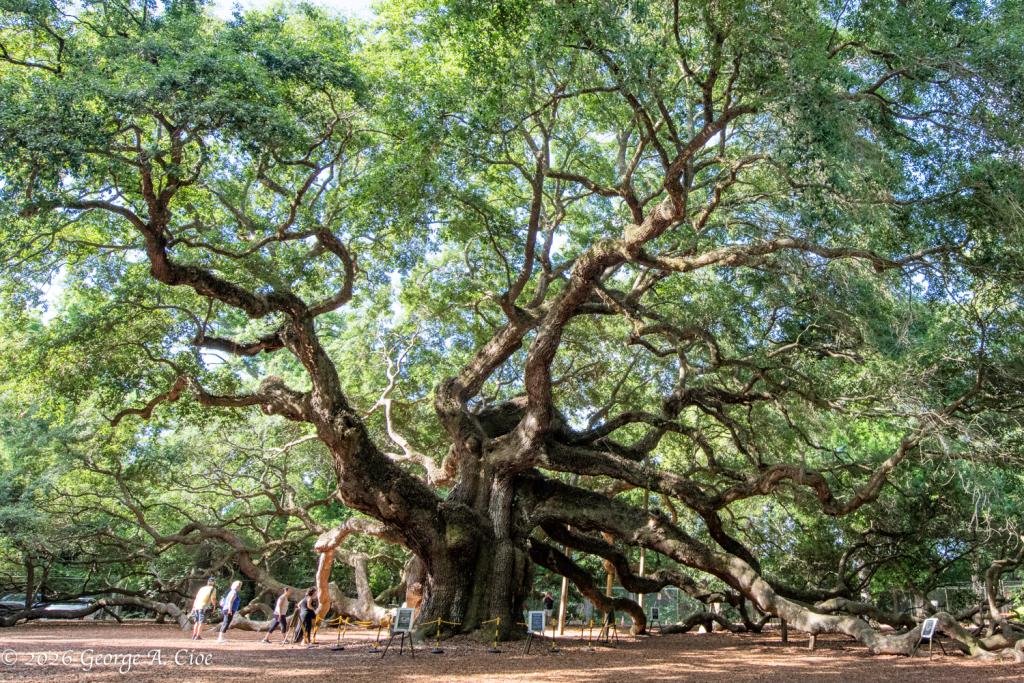
There are trees.
And then there is the Angel Oak.
Calling it a tree almost feels disrespectful.
This thing is less “landscaping” and more “ancient woodland wizard that decided to stay put.”
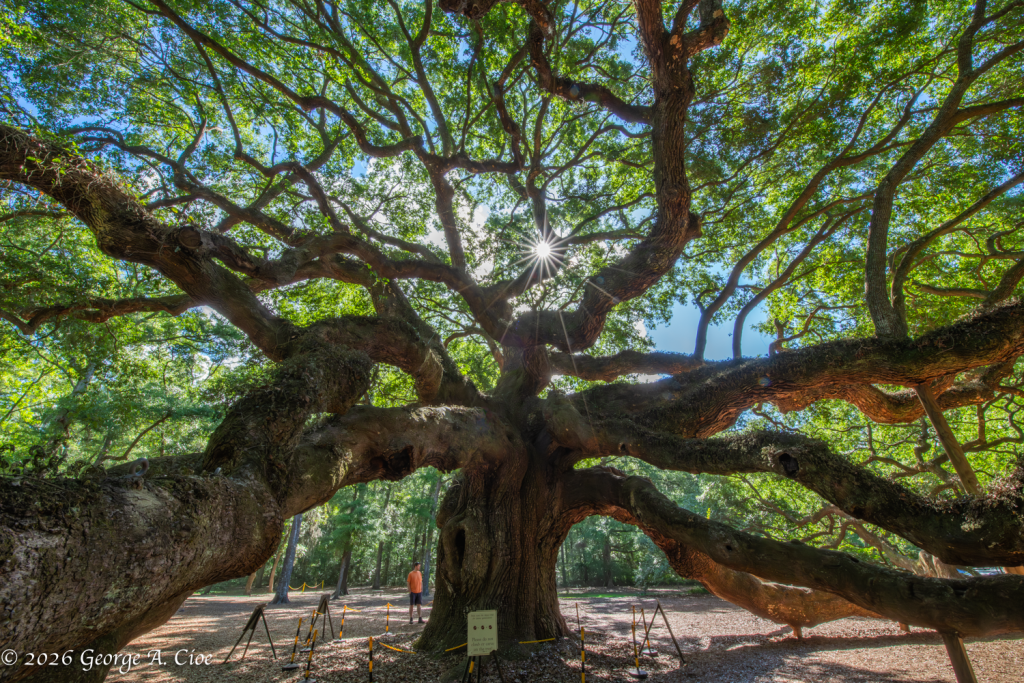
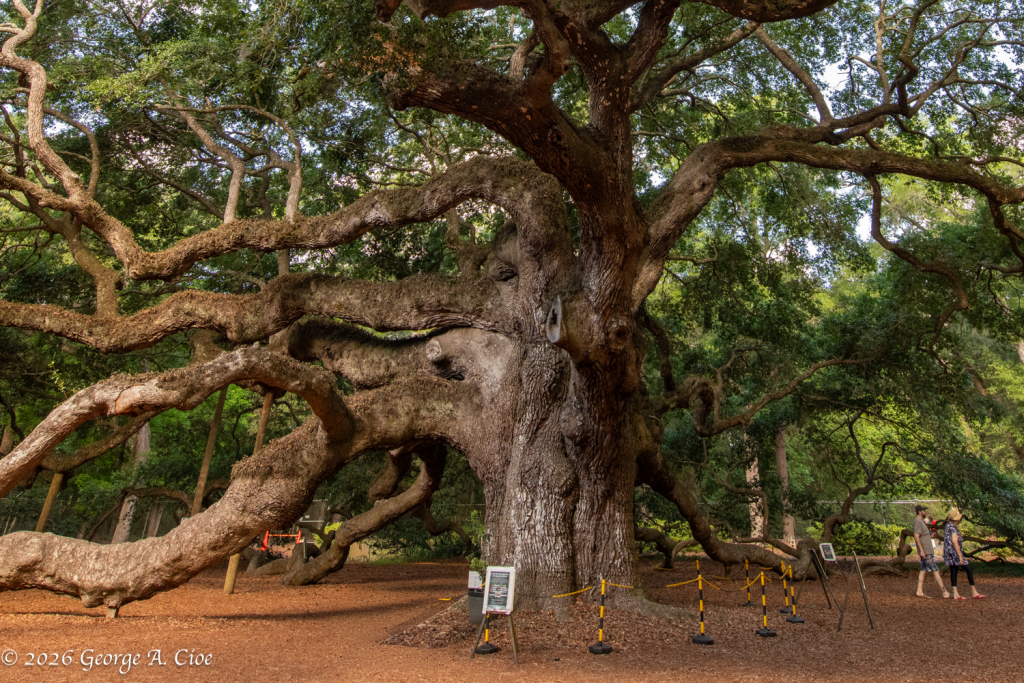
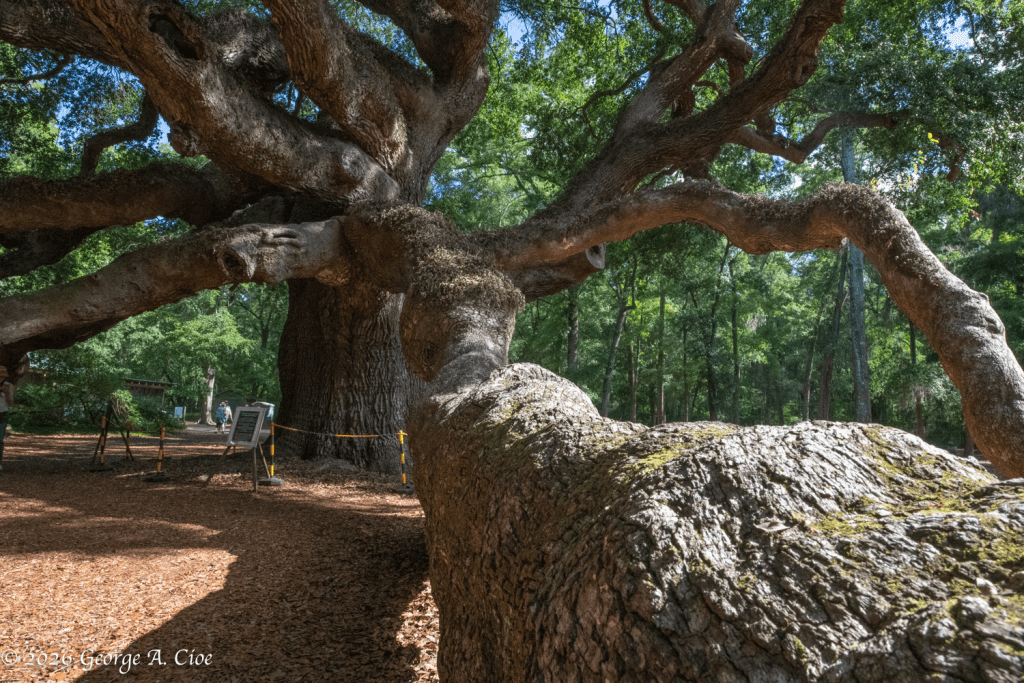
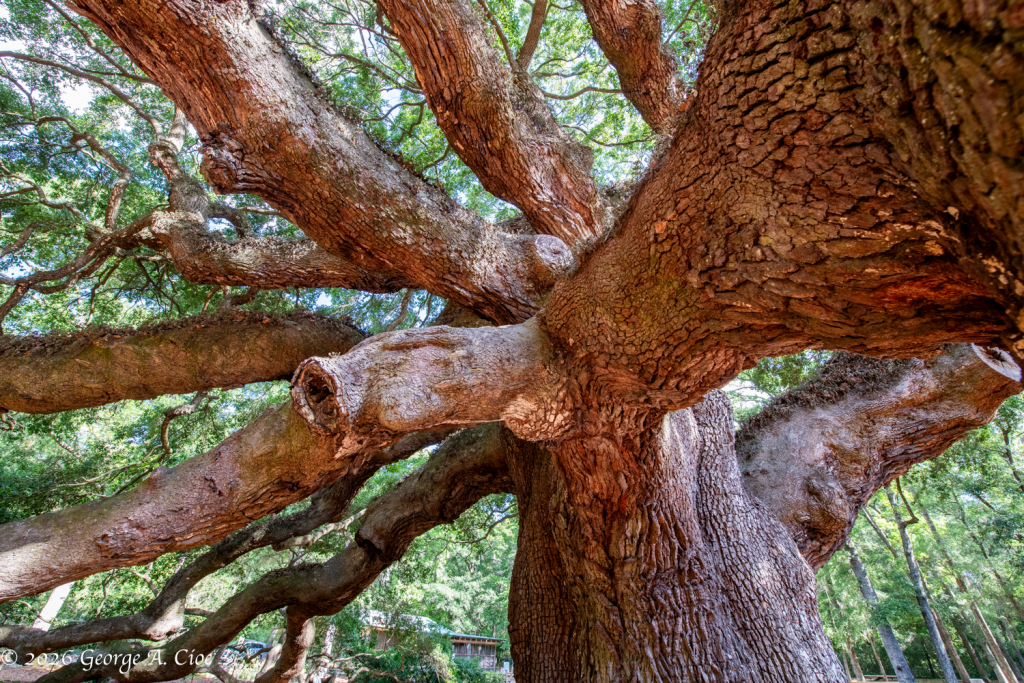
The first thing you notice is the scale. Not tall in the towering-redwood sense. No. The Angel Oak spreads outward like nature decided to build a cathedral entirely out of branches. Limbs twist, bend, dive toward the earth, then rise again like giant wooden rivers frozen in motion.
And every branch looks old enough to have opinions.
The Angel Oak is a Southern Live Oak (Quercus virginiana) estimated to be between 400 and 500 years old, though legends have pushed that number much higher over the years. Even the conservative estimates mean this tree was already alive before the American Revolution.
Think about that for a moment.
This tree was growing when pirates sailed the Carolina coast.
When Charleston was still a colonial settlement.
When horse hooves—not engines—were the loudest thing on the road.
And somehow…
through hurricanes,
wars,
floods,
earthquakes,
lightning,
development pressure,
and generations of humans making questionable decisions…
it’s still standing.
Not barely standing either.
Showing off.
The Angel Oak stands roughly 65 feet tall with a trunk circumference between 25 and 28 feet depending on where it’s measured. But the real jaw-dropper is the canopy. Its limbs spread over approximately 17,000 square feet of shade.
That’s nearly half an acre.
One branch alone stretches approximately 187 feet.
At that point it’s less a branch and more a zip code.
Some of the massive limbs are so heavy they rest on the ground for support. Others have support structures beneath them like architectural beams holding up a living building.
And here’s something many people don’t realize:
The name “Angel Oak” does not come from heavenly angels.
It comes from the Angel family, specifically Justus and Martha Angel, who once owned the property.
Of course, local folklore had other ideas.
Stories emerged over the years that spirits of formerly enslaved people appeared around the tree as angels. Whether folklore, legend, or simply the emotional weight of history lingering in the Lowcountry air… standing beneath those limbs does feel strangely spiritual.
And perhaps that’s because the Angel Oak has silently witnessed the entire complicated human story of the South.
The beauty.
The wealth.
The suffering.
The endurance.
The rebuilding.
All of it.
The tree survived Hurricane Hugo in 1989 despite significant damage and recovered beautifully in the decades afterward.
Honestly, if the Angel Oak had a personality, it would probably look at hurricanes the way Rhode Islanders look at a little snow forecast:
“Is that all you got?”
Today, the tree attracts hundreds of thousands of visitors every year.
And yet when you stand beneath it, people instinctively lower their voices.
That’s the fascinating part.
Nobody has to put up a sign saying:
“Please respect the ancient living masterpiece.”
The tree handles that itself.
Because once you walk under those sprawling limbs and look upward into that maze of twisting wood and filtered sunlight, you suddenly realize you are standing beside something very few humans ever truly experience:
Living time.
Not history in a book.
Not history in a museum.
History breathing quietly in the warm Charleston air.
Naturally.
I’d love to share my posts with you. If you subscribe, they’ll come straight to your inbox—most days, like a little note from me to you. It means a lot to know you’re reading along.
Browse my complete art portfolio and shop for prints at imagesbygacioe.shop

Leave a Reply