






Or: How I Accidentally Became Part of the Ecosystem
There are moments in life when you realize you’ve made a terrible mistake.
Not a catastrophic mistake.
Not a “call your insurance company” mistake.
Just a deeply irritating mistake.
The kind where you suddenly remember something important about thirty seconds too late.
Bug spray.
I forgot bug spray.
Now before you judge me, understand that I was excited.
This was my first wader walk of the year out to Sedge Island on the Narrow River. For photographers, that’s a little like opening day at Fenway.
The island offers something magical.
Three hundred and sixty degrees of unobstructed views.
Birds.
Fish.
Osprey.
Wildlife.
Adventure.
And apparently, blood-sucking insects that had spent the winter creating a strategic feeding plan specifically for me.
The moment I stepped onto the island, the attack began.
Not one bug.
Not ten bugs.
Thousands.
I don’t know the exact number because I was too busy fighting for my life.
They were in my ears.
My nose.
My eyes.
Places I didn’t even know bugs could access.
I stood there wondering how a species capable of putting men on the moon could still forget bug spray.
What am I?
A rookie?
I’ve been doing this for years.
Apparently experience is no match for enthusiasm.
Meanwhile, the insects were conducting what can only be described as an all-you-can-eat George buffet.
I was no longer a wildlife photographer.
I was wildlife.
The irony was that I was there to watch an osprey hunting.
Perched atop a weathered snag was one of nature’s great fishermen.
An osprey.
Patient.
Focused.
Waiting.
Not working particularly hard.
Just waiting.
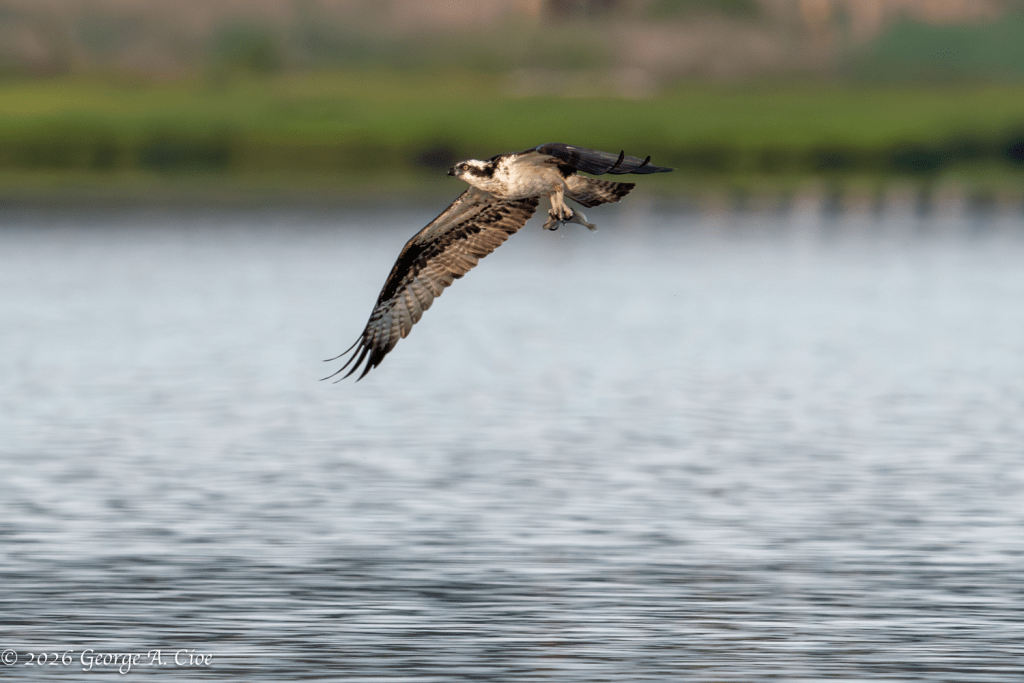
I’d missed an earlier plunge and watched him fly off with breakfast already secured.
But I’d seen this strategy before.
When tidal currents carry fish like a conveyor belt, some ospreys abandon the whole search-hover-dive routine.
Why work harder than necessary?
This particular bird had embraced what I call the “take-out” method of fishing.
Actually…
“Take-by.”
No soaring.
No hovering.
No dramatic plunge.
Just sit there.
Watch the current.
And wait for lunch delivery.
Frankly, if DoorDash operated underwater, this osprey would’ve subscribed to the premium plan.
So I waited.
The osprey waited.
And the bugs feasted.
As my suffering intensified, I started reflecting on something I’ve learned in business.
A poor plan perfectly executed and a perfect plan poorly executed often produce the same result.
Failure.
And standing there on Sedge Island without bug spray was Exhibit A.
I had excellent waders.
Excellent cameras.
Excellent lenses.
Excellent wildlife opportunities.
But one missing detail had turned me into an involuntary blood donor.
Then nature rewarded my persistence.
Or perhaps compensated me for my stupidity.
Wildlife was EVERYWHERE.
An Osprey with a fish.
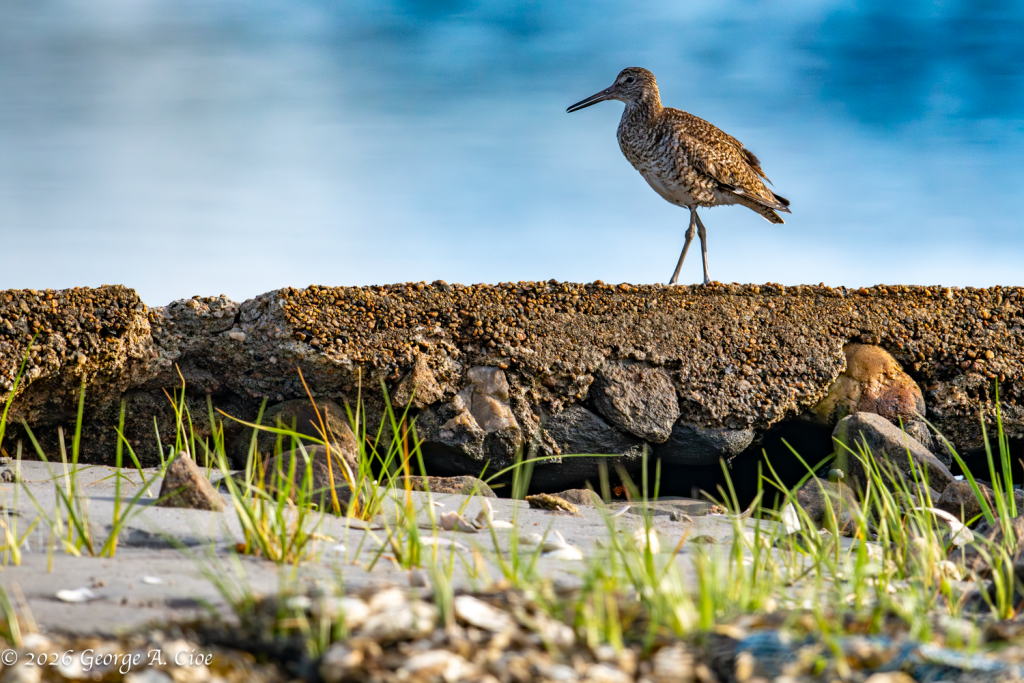
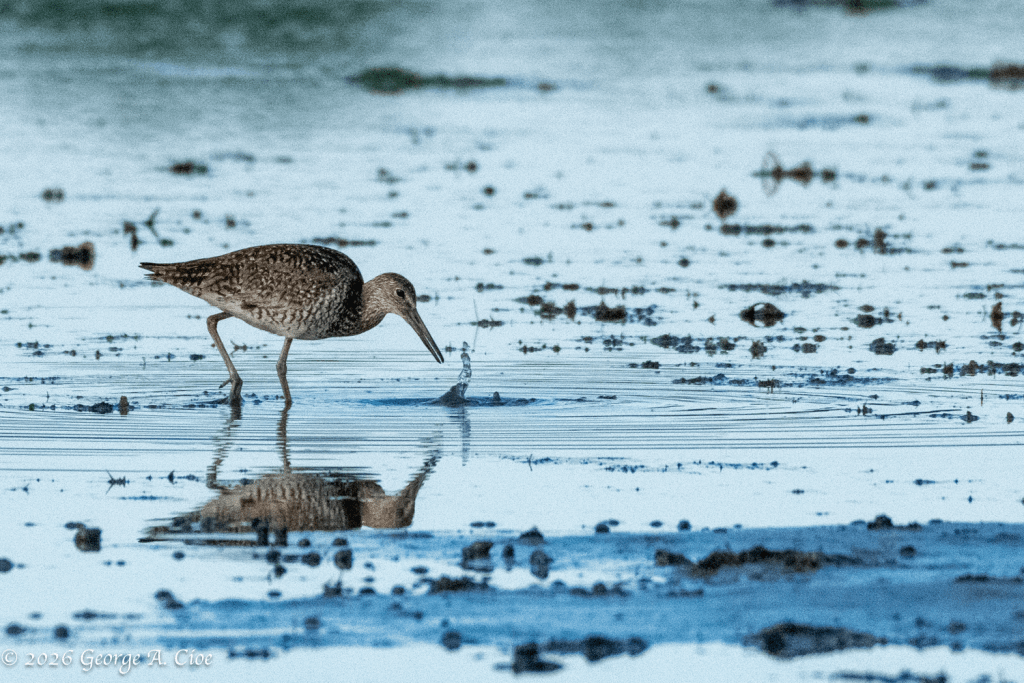
A Willet working on a crab.
A Cormorant drying its feathers for easier flight.
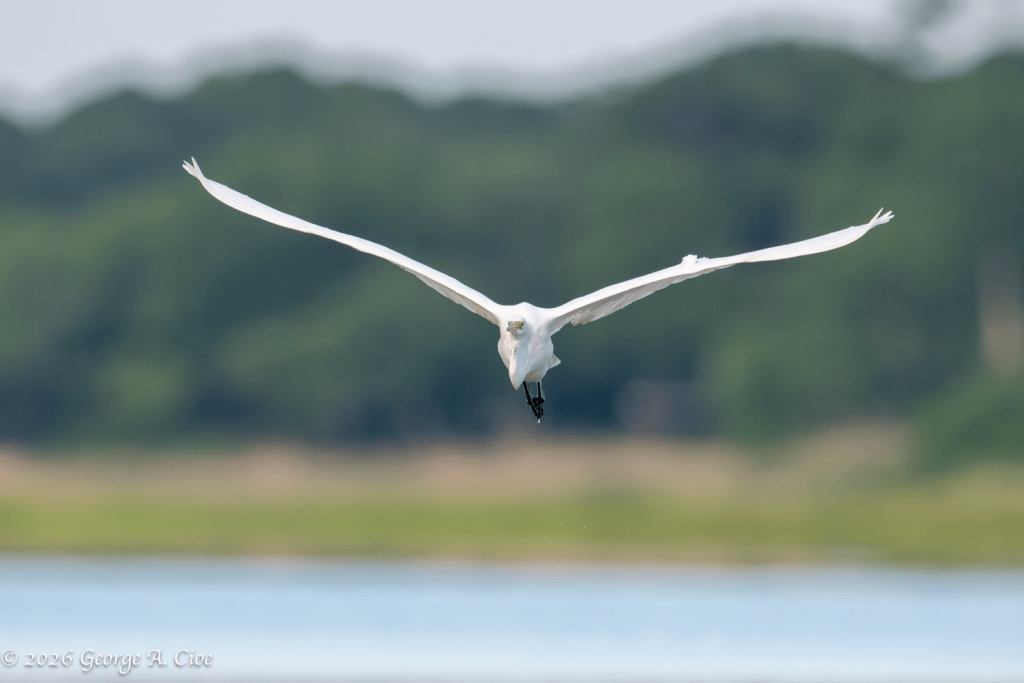
A Great Egret taking off and then flying straight at me.
Mallard Ducks having what looked like a very serious conversation.
“I don’t want to have ducklings.”
“OK, me neither.”
“Alright then, we’ll tell them in the morning.”
I decided to move to a more central location.
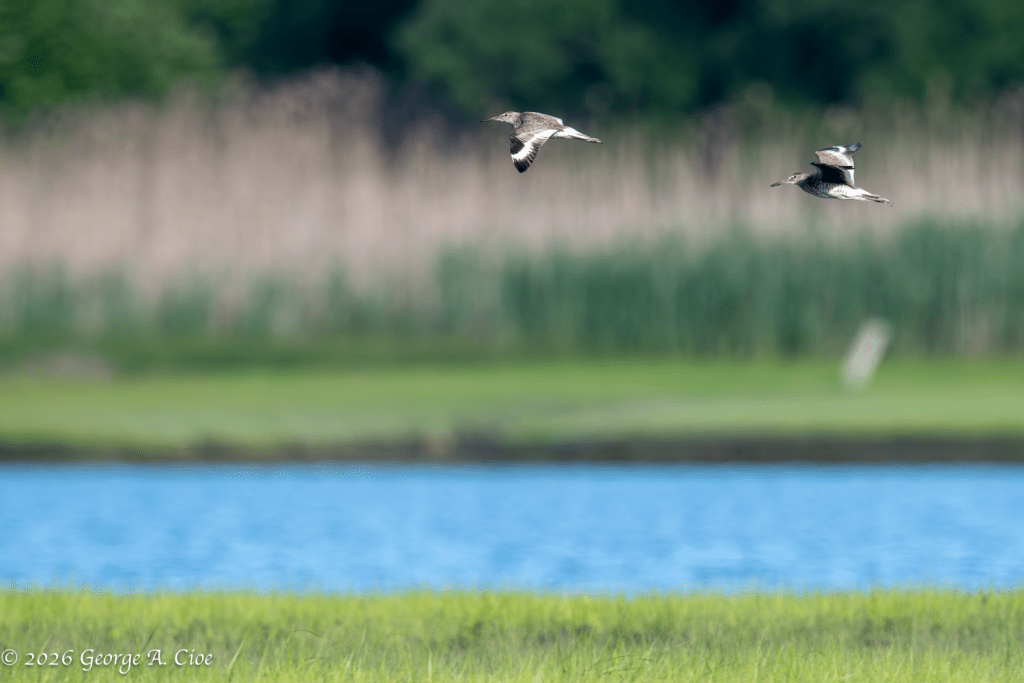
A pair of Willets appeared, making more noise than you’d hear in a nightclub.
Now Willets are fascinating birds.
Most people walk right past them because they’re dressed in subtle shades of brown and gray.
Nothing flashy.
Nothing dramatic.
Until they fly.
Then suddenly they reveal stunning black-and-white wing patterns that look like nature forgot to tell the rest of the bird to be modest.
Their piercing calls often give them away long before you see them.
And unlike many shorebirds, Willets can actually hunt day or night because the sensitive tips of their bills help them detect prey by touch, not just sight.
They’re also devoted parents.
Both adults incubate the eggs, though only the male takes the night shift.
Talk about earning your keep.
And when danger approaches, they’ll perform a remarkable broken-wing act, pretending to be injured in order to lure predators away from their nest.
Hollywood has nothing on a Willet trying to protect its family.
One of the adults landed in the grass.
Just stood there.
Perfectly still.
Something felt odd.
Then I noticed tiny shadows darting around her feet.
Little flashes of movement.
Gone.
Back again.
Gone.
I had stumbled onto their secret.
A nest.
Or at least a family hiding nearby.
Suddenly all the frantic flying and loud calling made sense.
They weren’t worried about me.
They were managing me.
Every pass overhead.
Every alarm call.
Every dramatic distraction.
Part of a carefully orchestrated deception.
“Look at me!”
“No, look over here!”
“Definitely don’t look at the babies!”
It was brilliant.
And every now and then, one tiny chick ignored the security briefing and popped into view.
Just for a second.
A fuzzy little rebel.
Enough to melt your heart.
Then gone again.
As I finally headed back through the water, itching from approximately seventeen thousand insect bites, I couldn’t help but laugh.
I’d come to watch an osprey.
Instead, I became lunch.
I forgot bug spray.
The osprey got breakfast.
The bugs got breakfast.
The Willets protected their family.
And somehow, despite everything, it was a perfect morning on the Narrow River.
Nature has a funny way of reminding us that we’re not always at the top of the food chain.
Sometimes we’re just another item on the menu.
I’d love to share my posts with you. If you subscribe, they’ll come straight to your inbox—most days, like a little note from me to you. It means a lot to know you’re reading along.
Browse my complete art portfolio and shop for prints at imagesbygacioe.shop


Leave a Reply